
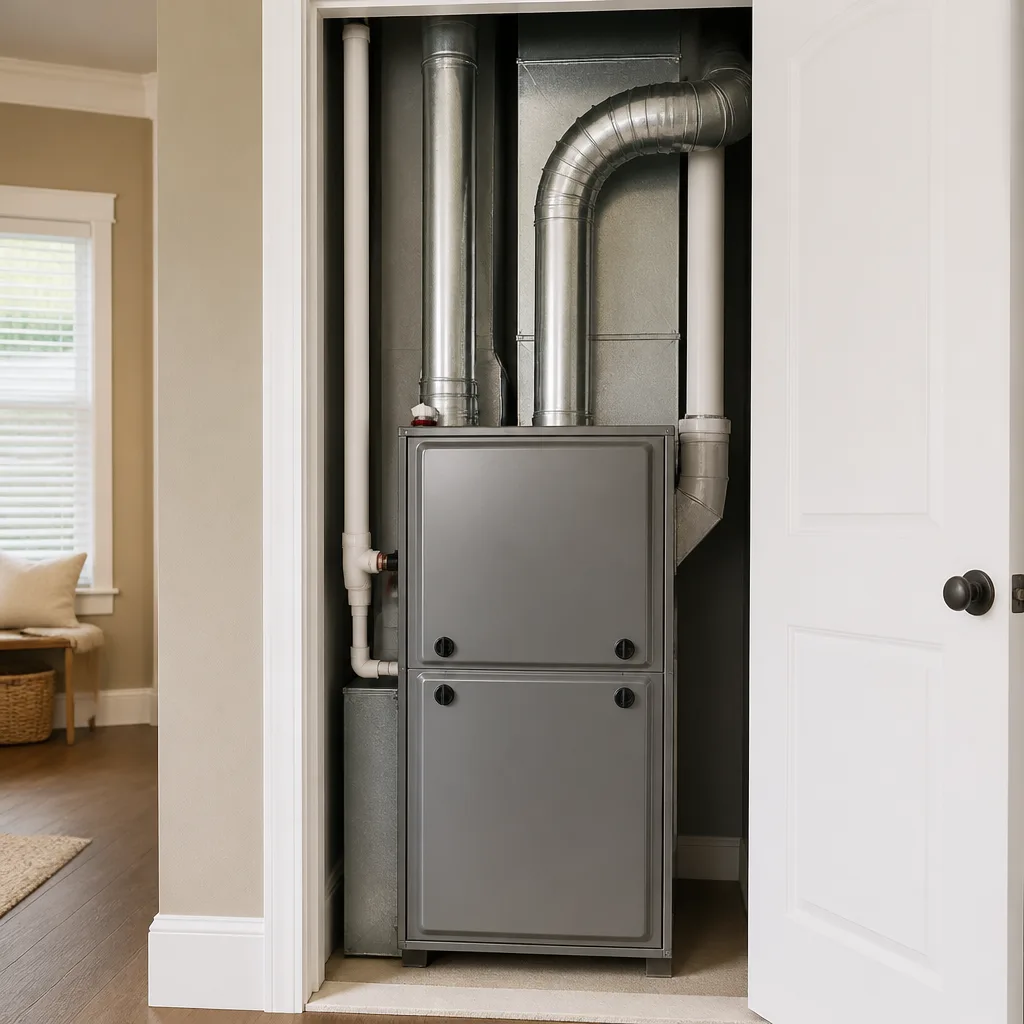
 Furnace & heating
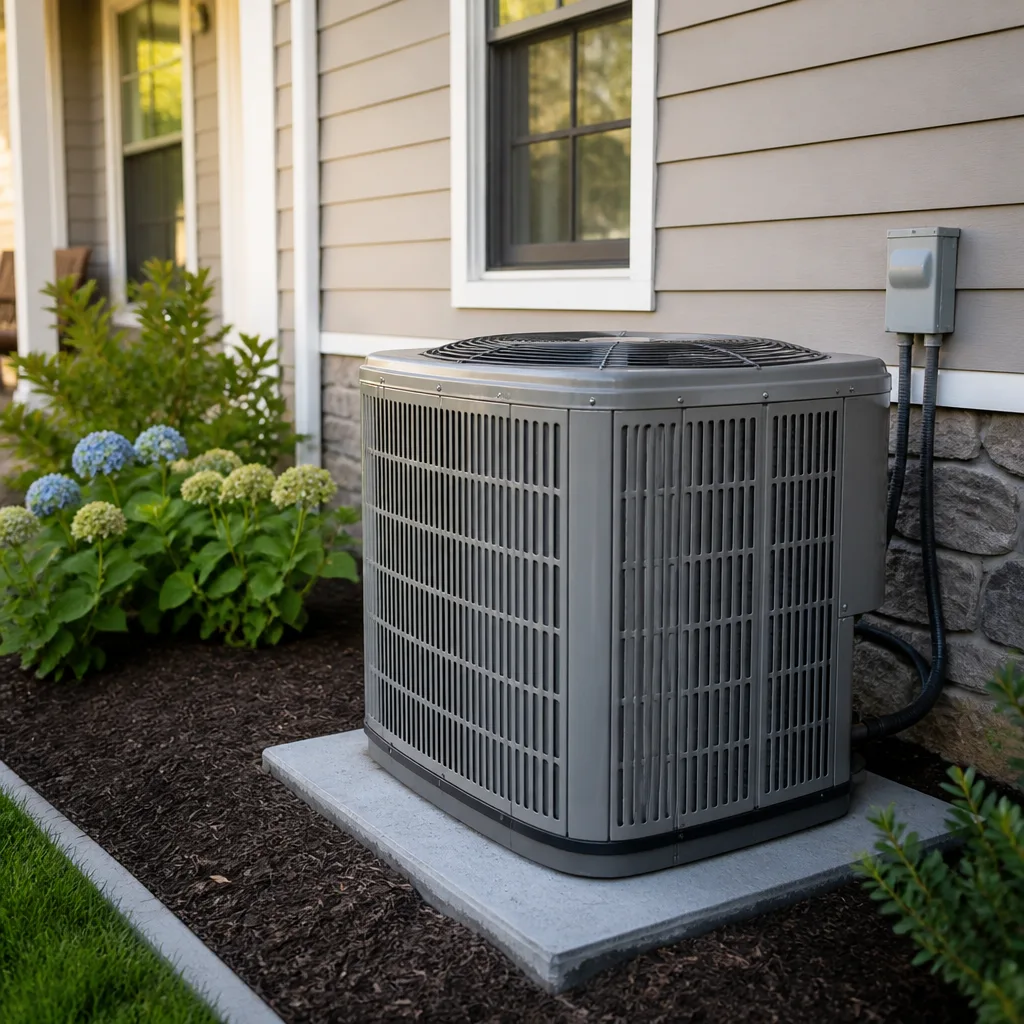 AC repair
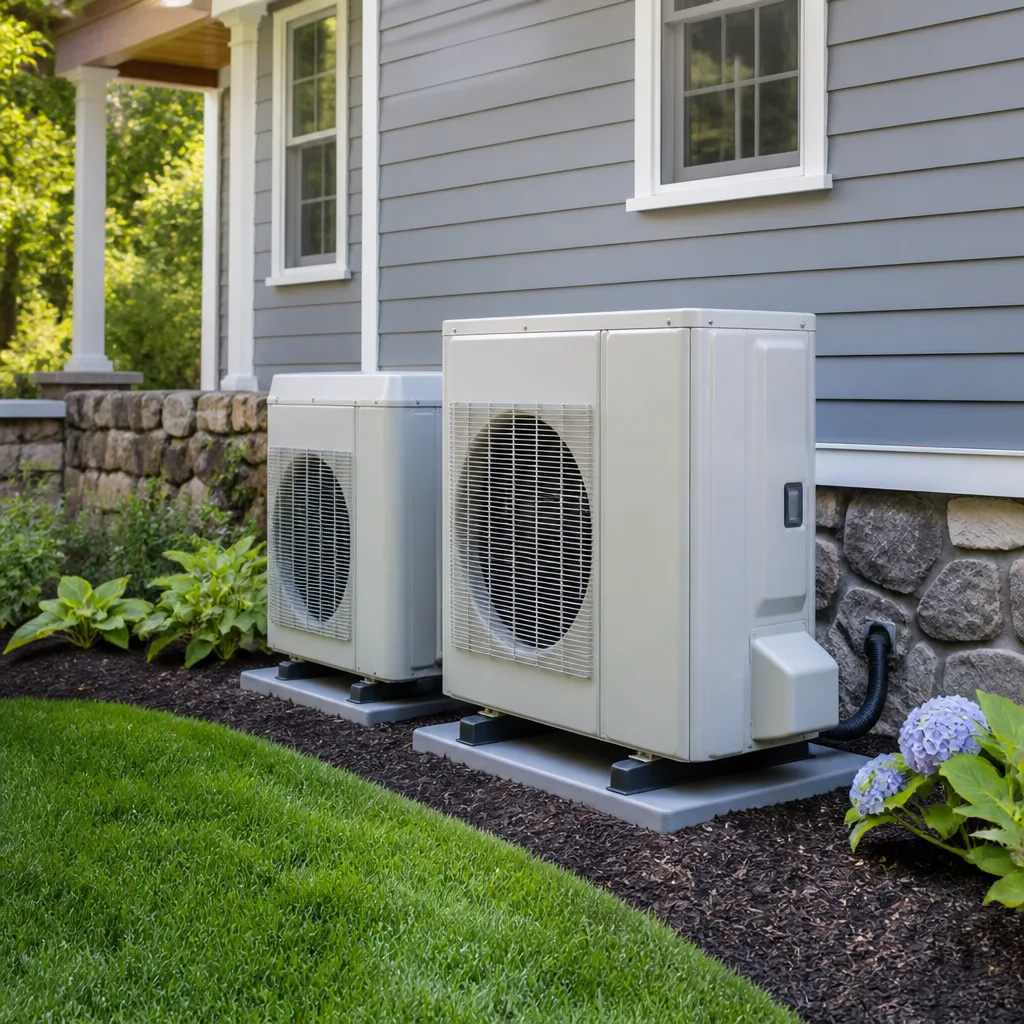 Heat pumps
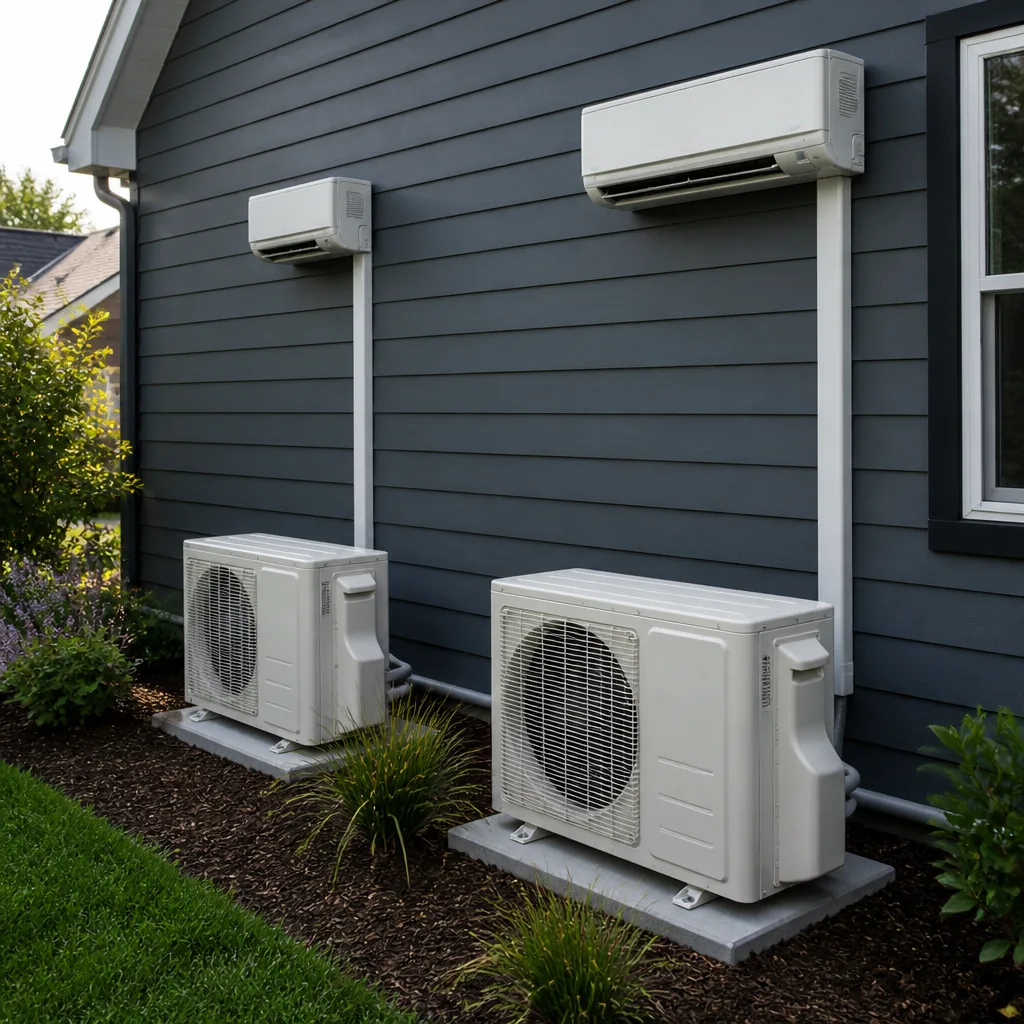 Ductless mini splits
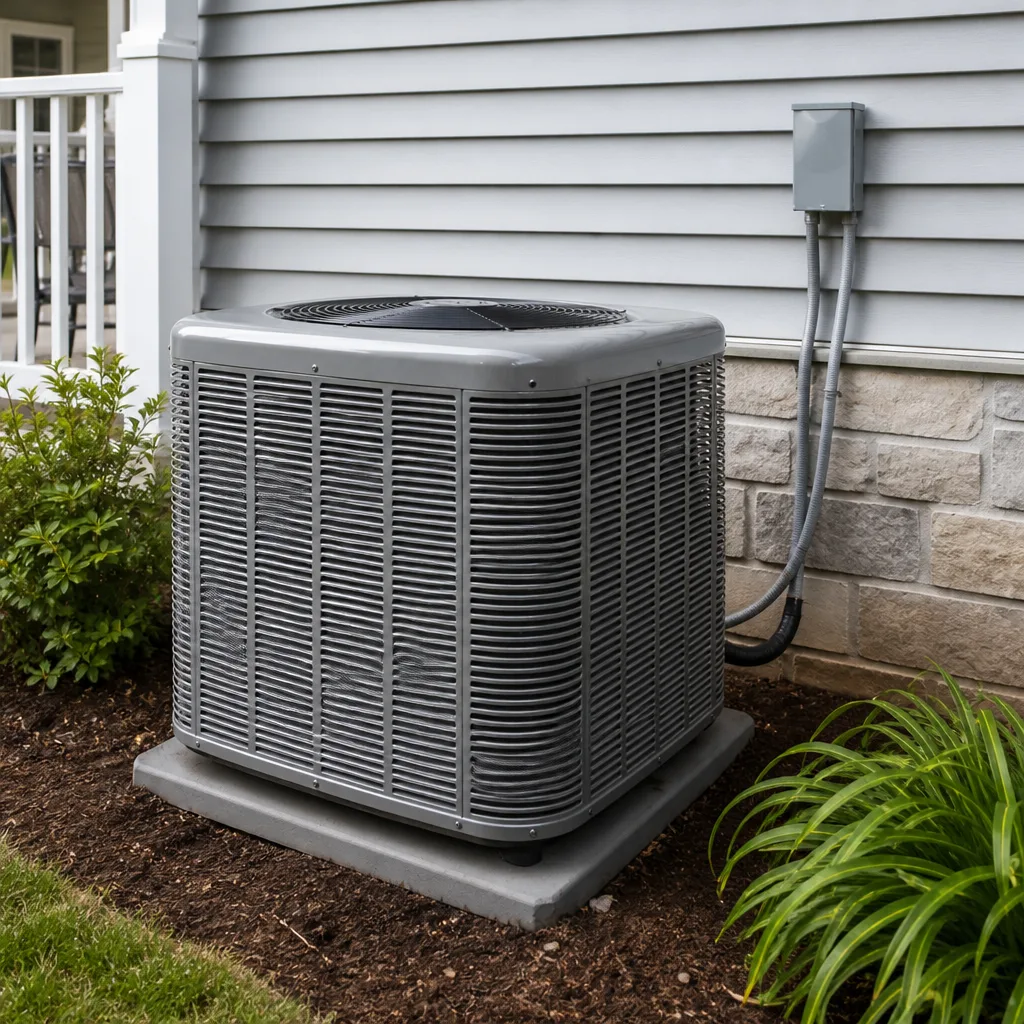 Carrier
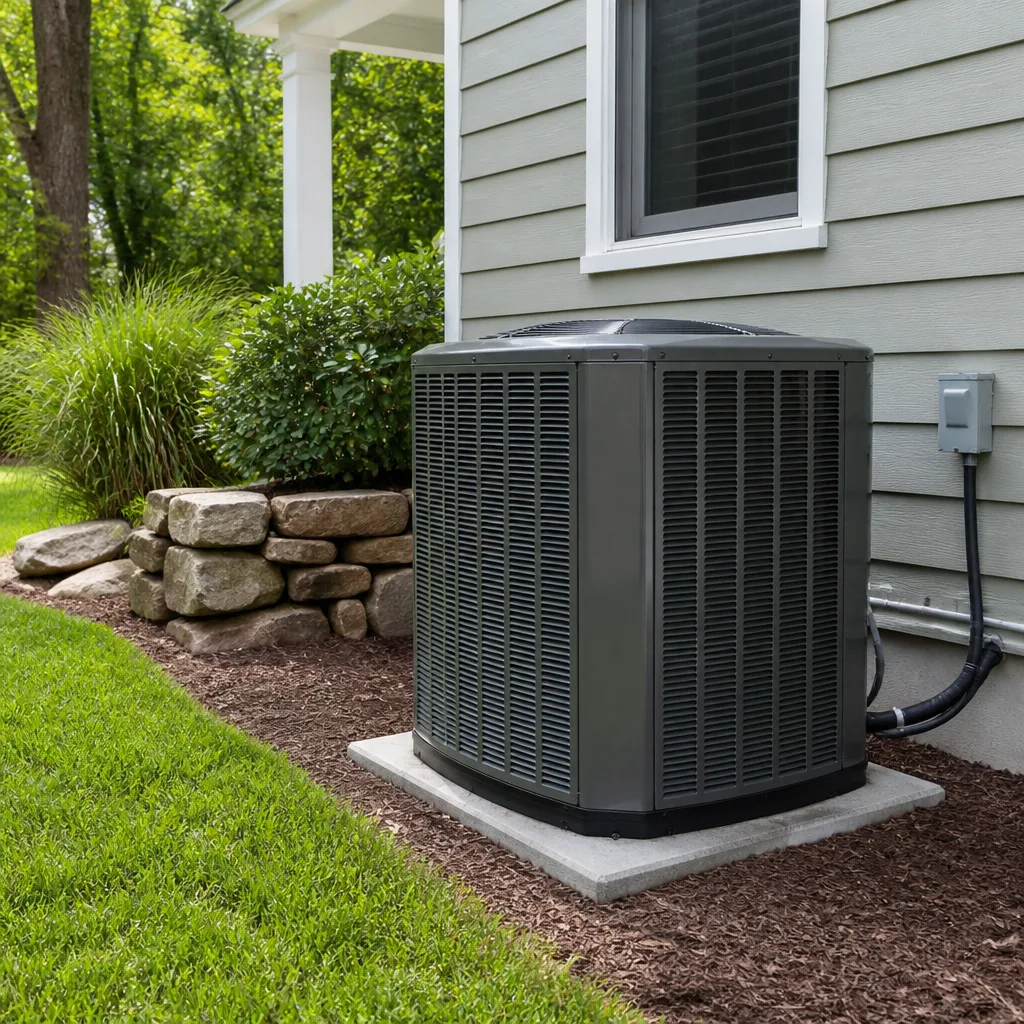 Trane
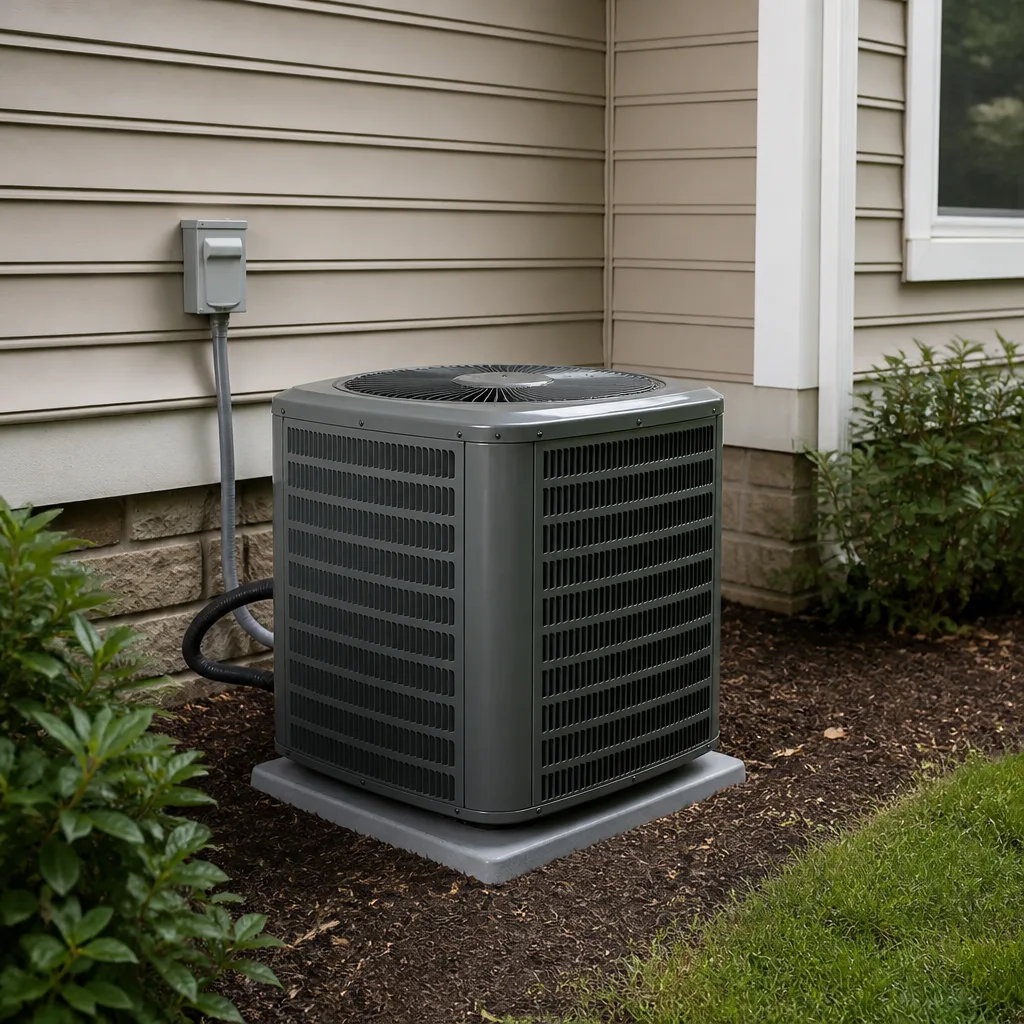 Goodman
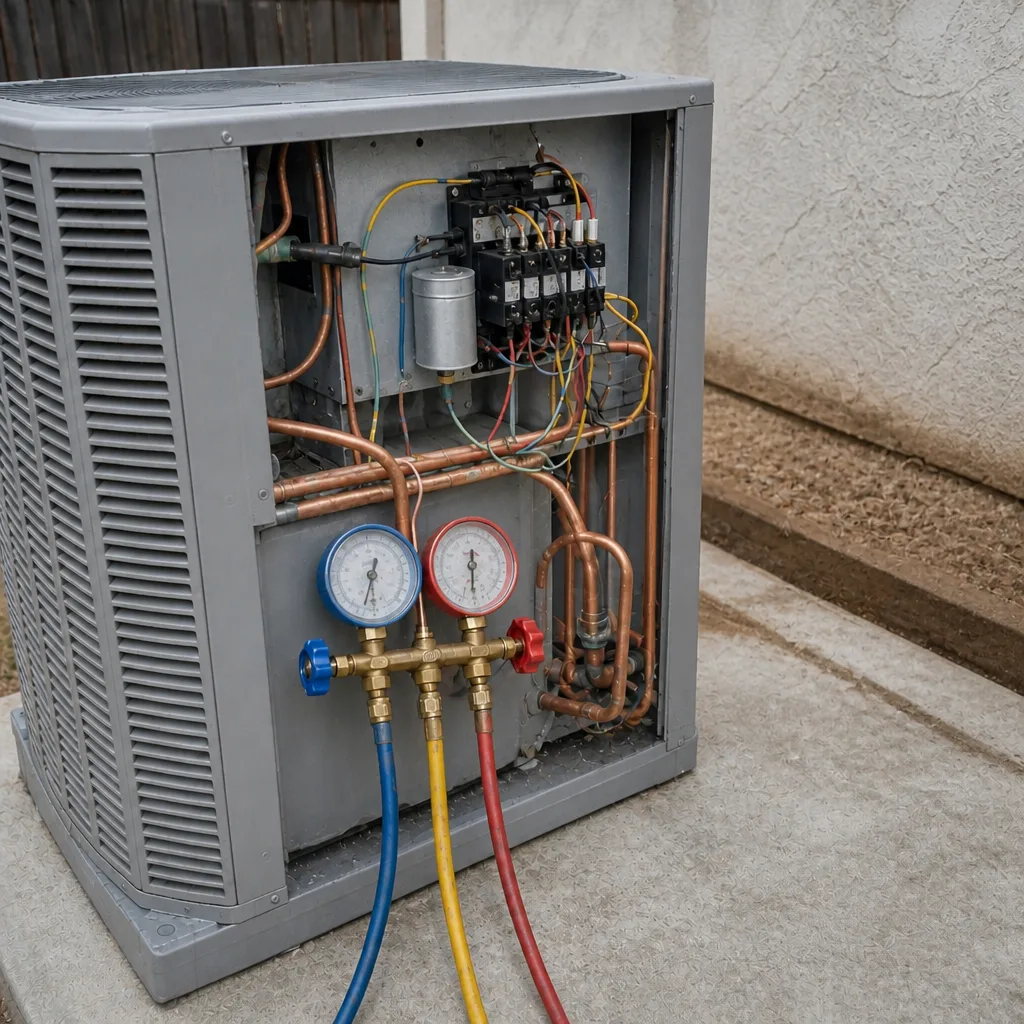
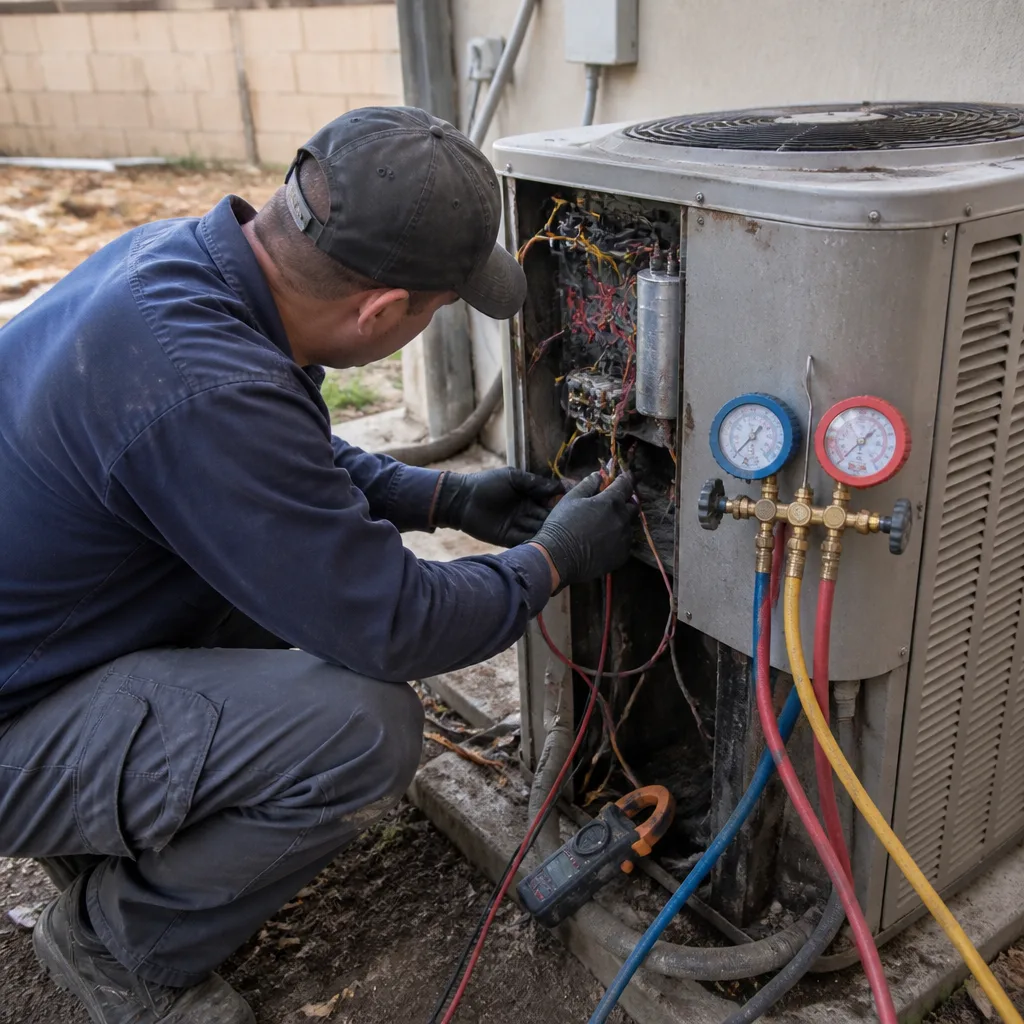
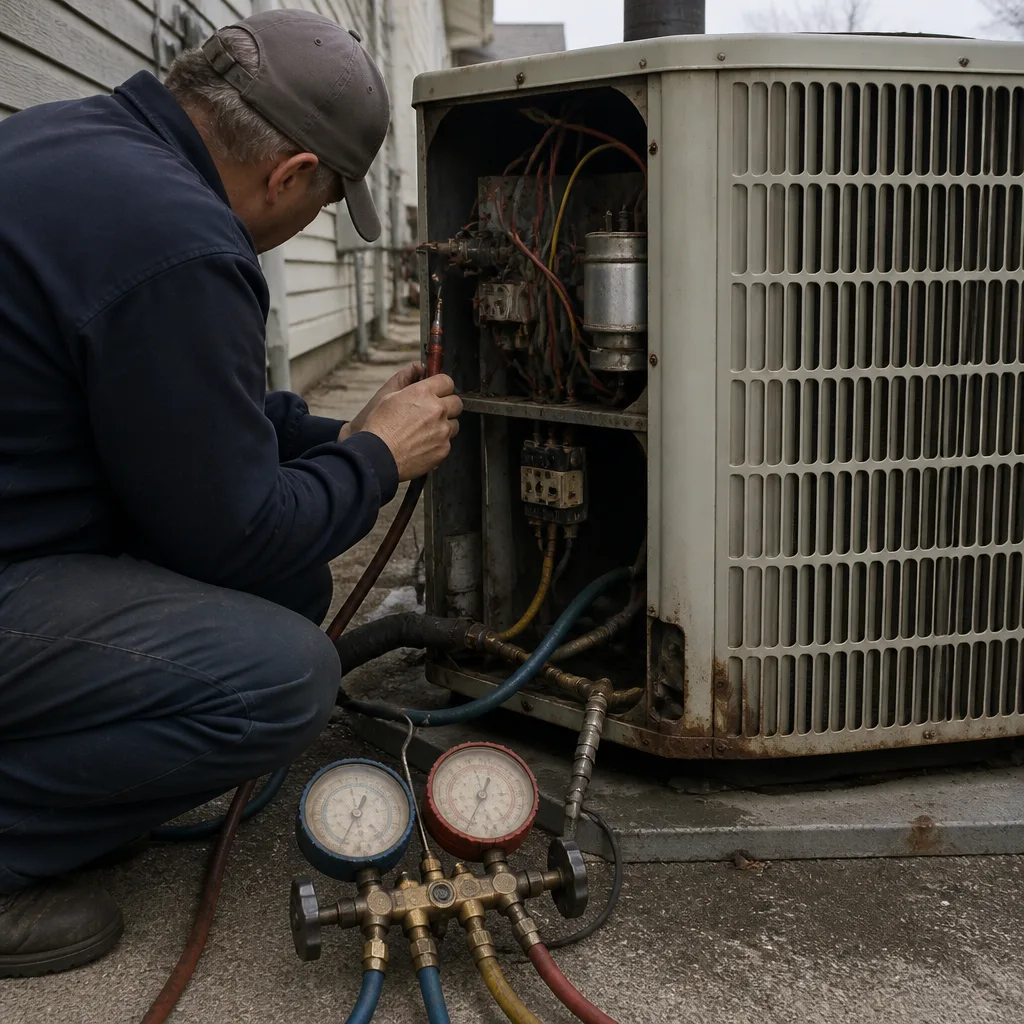
Seasonal tune-up and full diagnostic on your Carrier, Trane, or Goodman system - readings shown to you before any repair is proposed
Diagnosis first, numbers second - you approve the repair price before a single part goes in.
Get your free estimateStyles & brands we work with
- AC repair
- Furnace & heating
- Heat pumps
- Ductless mini splits
- Carrier
- Trane
- Goodman
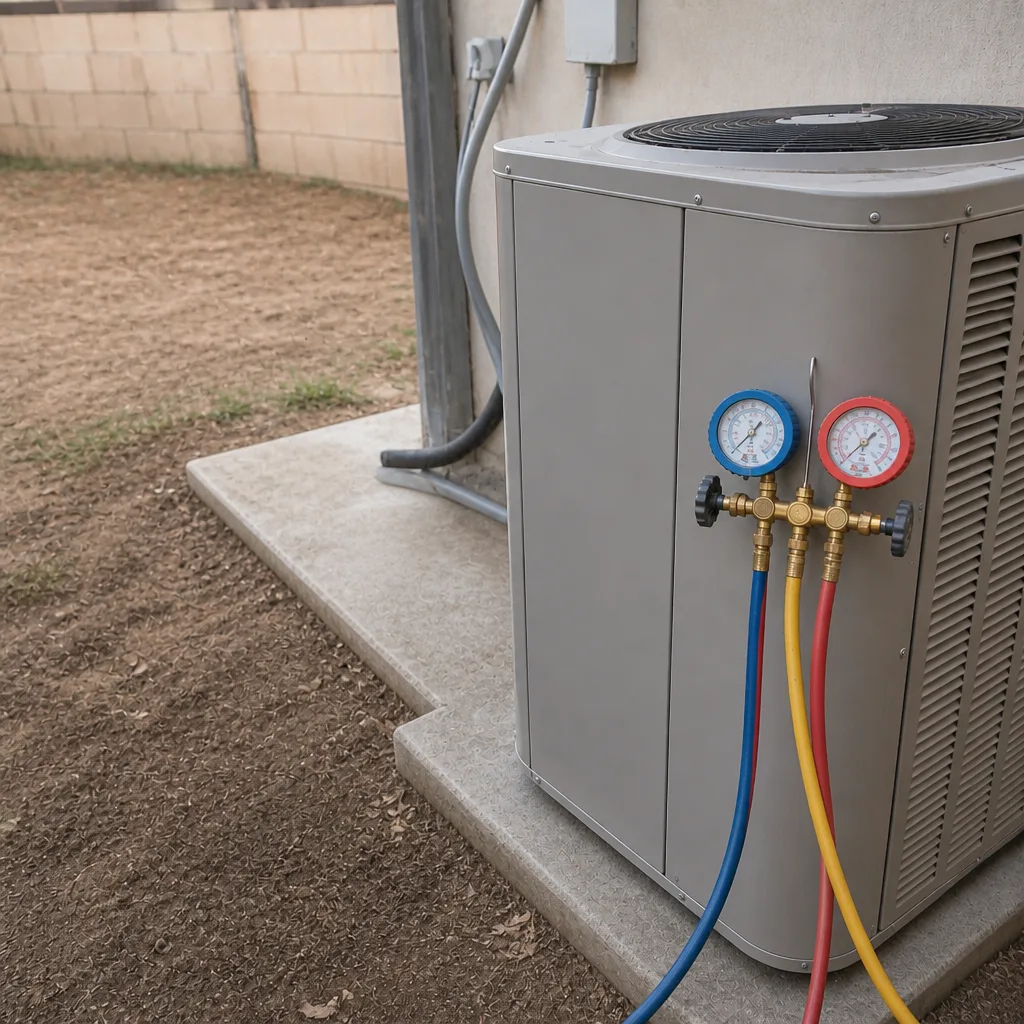
See the difference
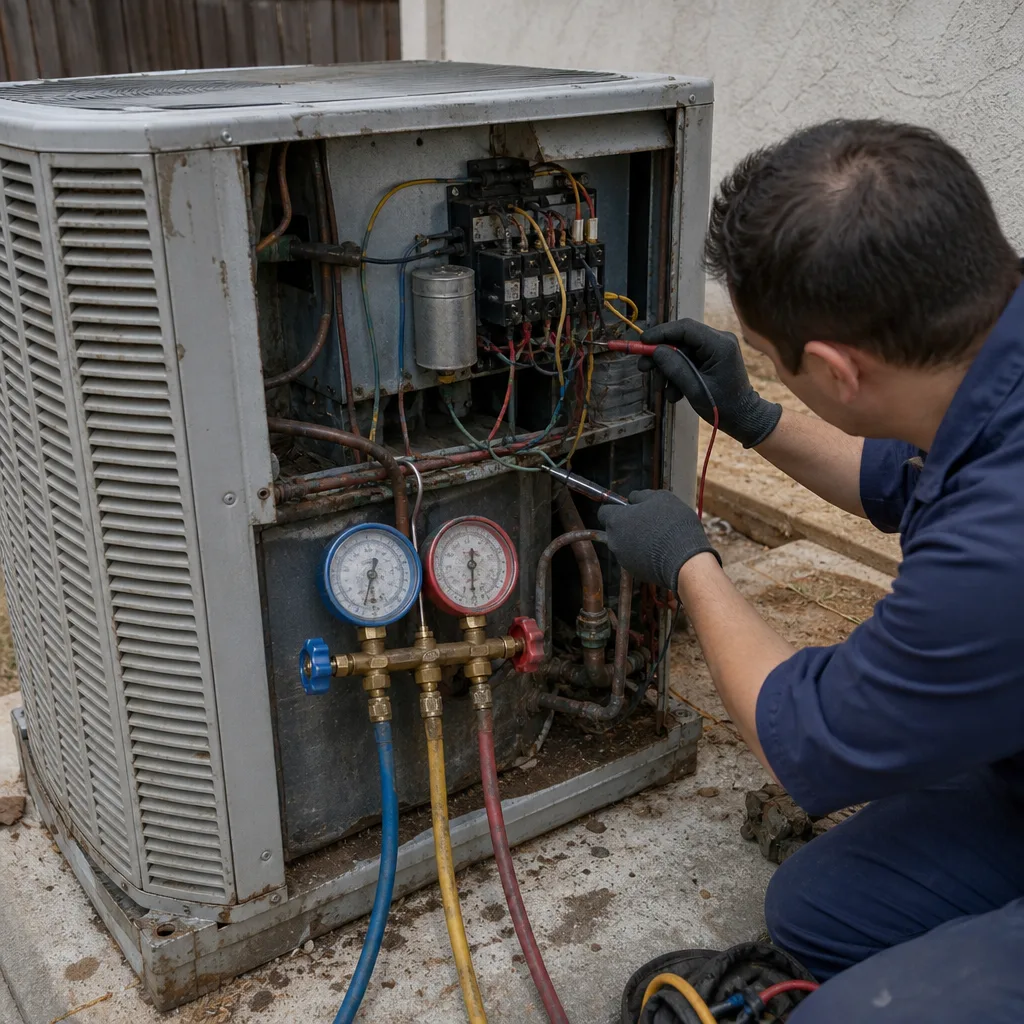 Before
 After
 Before
 After
 Before
 After
How Long Does a Furnace Last in Paradise, NV? The Honest Answer
A furnace in a cold climate typically lasts 20 to 25 years. In Paradise, the equipment doing that job usually isn’t a furnace at all – it’s the heat strip inside a packaged rooftop unit, and you should expect 12 to 18 years of useful service, not 20. The heat strips themselves can stretch to 15 or 20 years if the system is maintained and the limit switches aren’t tripping. The shorter window has nothing to do with brand quality. It’s the climate. If your unit is in that age range and acting up, call (855) 664-5714 and we’ll tell you straight what’s left in it.
Why Paradise Wears Equipment Out Faster Than the National Numbers Suggest
A gas furnace in Minnesota runs maybe 1,200 hours a year. The cooling side of a packaged rooftop unit here runs closer to 2,800 hours a year, in summer highs that sit above 105°F for weeks, with almost no rain and low humidity to soften the load. Condensers run near-continuous, refrigerant pressures spike, and the compressor and capacitors take a beating a cold-climate furnace never sees.
Then there’s the sun. On the east-side high-rises along the Strip corridor, rooftop units bake in reflected heat off glass facades and parking structures, so the air around them runs well above the official reading. That extra heat is why we schedule coil cleaning and refrigerant checks before 10 a.m. By afternoon, a rooftop unit is too hot to work on safely and the high-pressure lockouts start.
None of this shows up in the national “how long does a furnace last” articles, because those articles are written for houses with basements in Ohio. Paradise is an unincorporated town that exists as the Strip’s host jurisdiction, with no downtown and no historic core. The housing stock is mostly 1970s through 2000s apartment complexes and condos along Paradise Road and Flamingo, served by rooftop packaged units and fan-coil systems, plus resort towers running commercial-grade chillers and cooling towers. Single-family homes are rare. So the lifespan question almost never lands on a traditional furnace.
What actually ages out, and when
- The compressor – the first casualty of 2,800-hour summers. Once it starts short-cycling in July, the clock is running.
- Capacitors – cheap parts that fail early in extreme heat. We test the capacitor before anyone says the word compressor, because a $400 capacitor on a 14-year-old unit is a repair, not a replacement.
- Heat exchangers – the heating-side part that cracks with age and thermal cycling. This is the one to take seriously for safety.
- Heat strips and limit switches – the actual “furnace” in most Paradise units. They last if airflow is clean. Restricted airflow that hurts cooling also cooks the heat strips.
- Refrigerant type – an R-22 unit is past its useful economic life even if it still runs, because a recharge on a real leak costs more than the unit is worth.
What to Look For Before You Decide Repair or Replace
Here’s where we differ from the outfit that quoted you one number on the phone and another at the door. Readings first, numbers second. You see the gauge readings and the test results before anyone quotes you a thing. A 14-year-old packaged unit that needs a capacitor and checks out everywhere else gets a repair quote from us, not a sales pitch for a new system.
What tips the scale toward replacement in this climate:
- Age past 15 with a refrigerant leak. R-22 recharge costs make repair uneconomical. On a newer R-410A Trane or Lennox, a leak is worth fixing.
- A failed compressor on a unit over 12. The part plus labor usually runs past the value of the remaining equipment life.
- A cracked heat exchanger. That’s a safety call, not a budget call. Get it looked at before you run the heat again.
- Repeated limit switch trips on the heat strips. Often an airflow problem you can fix. Sometimes the strips are already gone.
- A Goodman or Rheem unit sized for 95°F design conditions. Paradise equipment needs to be sized for 110°F-plus. An undersized unit runs itself to death regardless of brand.
A quick reality check on costs
Repair versus replace usually comes down to simple math. These are the ranges we work in around Paradise:
| Job | Typical range |
|---|---|
| Furnace / heat-side repair | $150-$700 |
| AC repair (cooling side of a packaged unit) | $150-$650 |
| Tune-up (coil clean, refrigerant check, readings) | $80-$200 |
| Full system installation | $3,500-$7,500 |
A $200 tune-up every year is the cheapest way to stretch a rooftop unit toward the top of its 12-to-18-year range. Skip it and the same airflow restriction that chokes cooling takes the heat strips with it. For the full breakdown of heating-side work, see our Heating & Furnace in Paradise page and our main Heating & Furnace service page.
What Ray Has Learned Watching Paradise Equipment Cycle Through
Since 2002, Ray has watched the same buildings along the Paradise Road and Flamingo corridor replace rooftop units, then replace them again. That history is worth something. He knows which configurations hold up in reflected heat and which ones quit early. He knows the buildings where a Trane packaged unit outlasts a Goodman by years, and the ones where brand barely matters because the sizing was wrong from day one.
Ask about it before you buy. Our technicians have up to 24 years of experience in this climate, and every heating and cooling job carries the 90-Day Done Right Promise in writing – if it’s not done right, we make it right, and one call brings us back. Phones are answered by a live person around the clock. You can verify the name, address, and license number yourself before anyone shows up.
For a wider look at how we handle the area, start at our home page.
FAQs
Expect 12 to 18 years for the packaged rooftop units that do most heating and cooling work here, and 15 to 20 years for the heat strips inside them if maintenance stays current. That’s shorter than the 20 to 25 years quoted for gas furnaces in cold climates, because Paradise summers run equipment at near-continuous load in extreme heat and UV. Call (855) 664-5714 for a no-pressure assessment of your unit’s real remaining life.
It depends on the diagnostics, not the age. A 14-year-old unit that needs a capacitor and passes everything else is a repair. One with a refrigerant leak on R-22 or a failed compressor is usually a replacement. We test the capacitor and read the pressures before quoting anything. Call (855) 664-5714 and we’ll give you a real number – estimates are free.
Yes, by several years in this climate. The same airflow restriction that chokes cooling destroys heat strips, and dirty coils push condensers into high-pressure lockouts that shorten compressor life. A yearly tune-up runs $80-$200 and is the cheapest insurance against early failure. Call (855) 664-5714 to schedule one before summer.
Often, yes. We answer live around the clock, so call (855) 664-5714 and the person on the line will tell you honestly whether it’s a same-day visit or something that can wait. There’s a free second opinion on any written estimate and no trip charge inside the county.
Rather Have Someone Look at It?
If you’d rather have it looked at than guess at the age game, Ray’s Heating & Air Paradise offers a no-pressure assessment in Paradise – readings first, numbers second, and a straight answer on repair or replace. Call (855) 664-5714 for a free estimate.
Written by the team at Ray’s Heating & Air Paradise, serving Paradise, NV.