
Last updated November 18, 2026
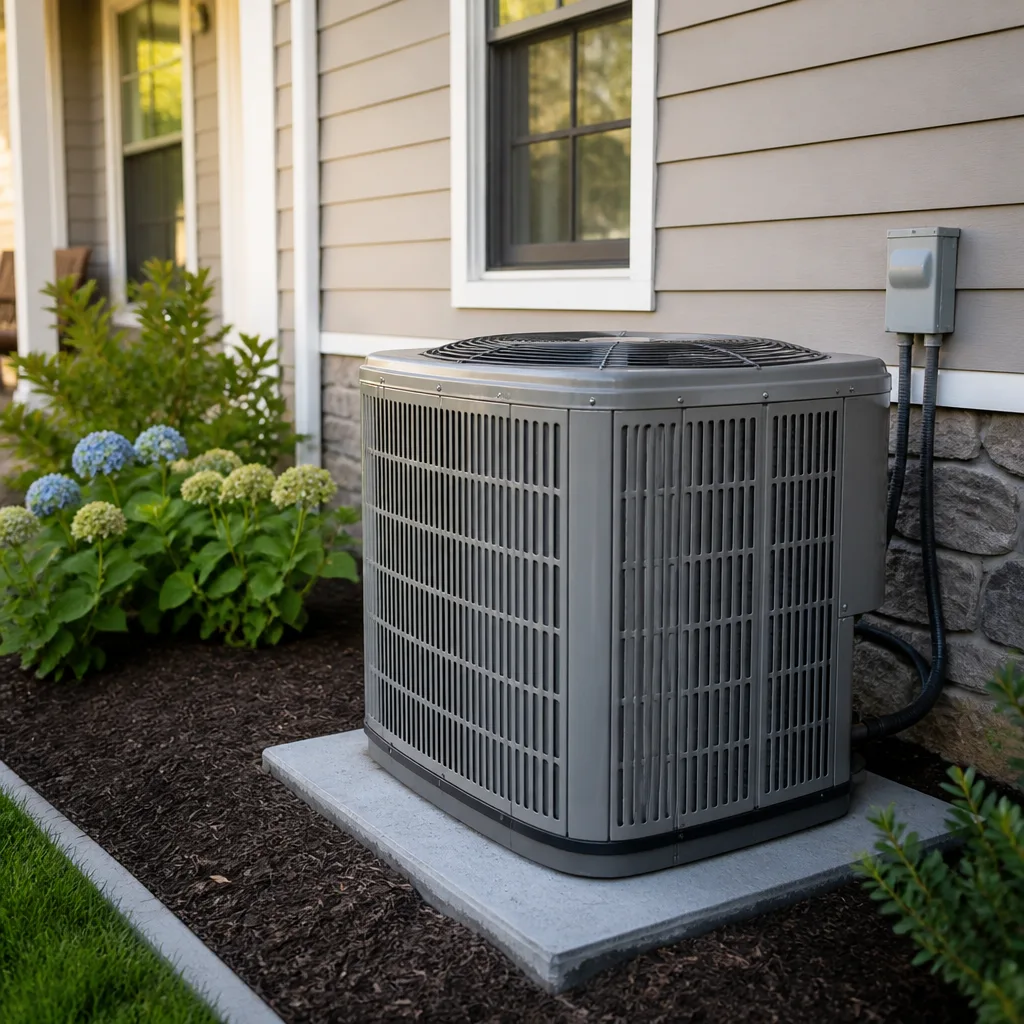 AC repair
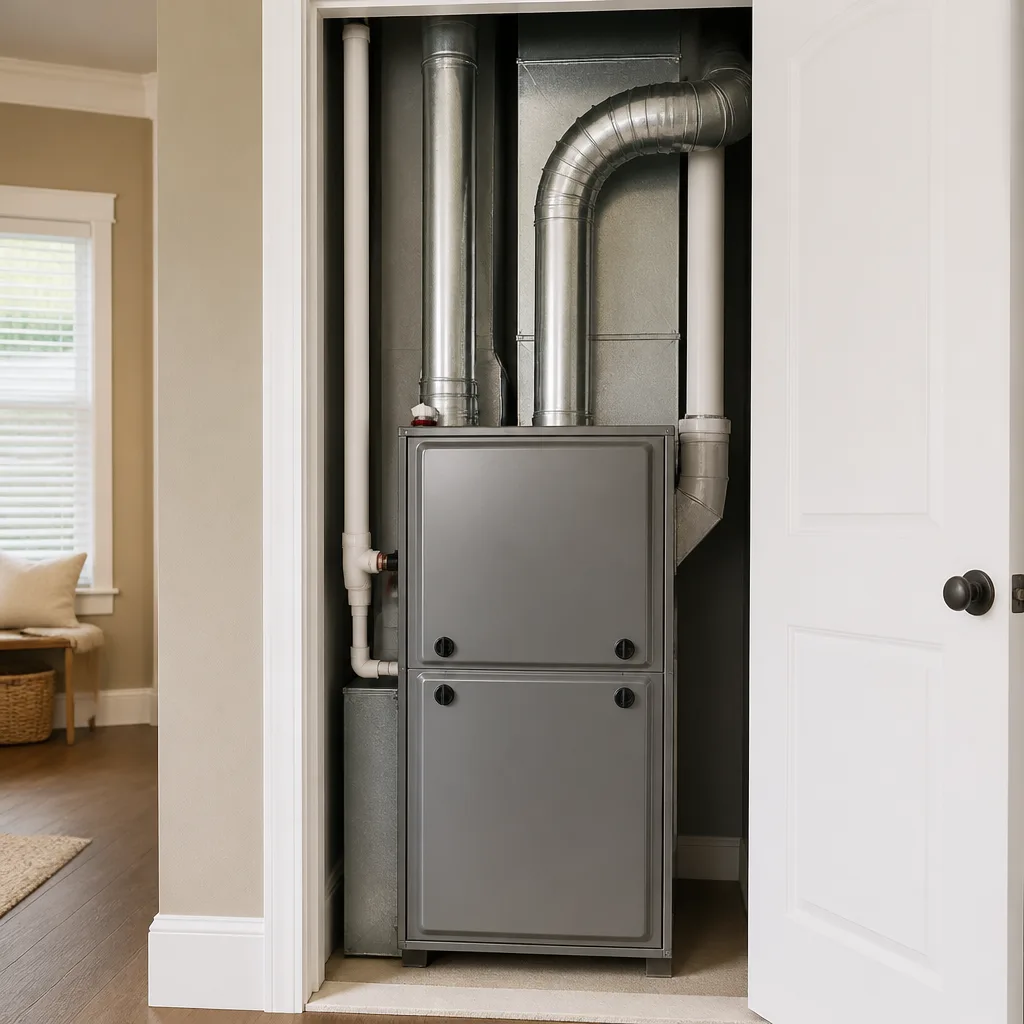 Furnace & heating
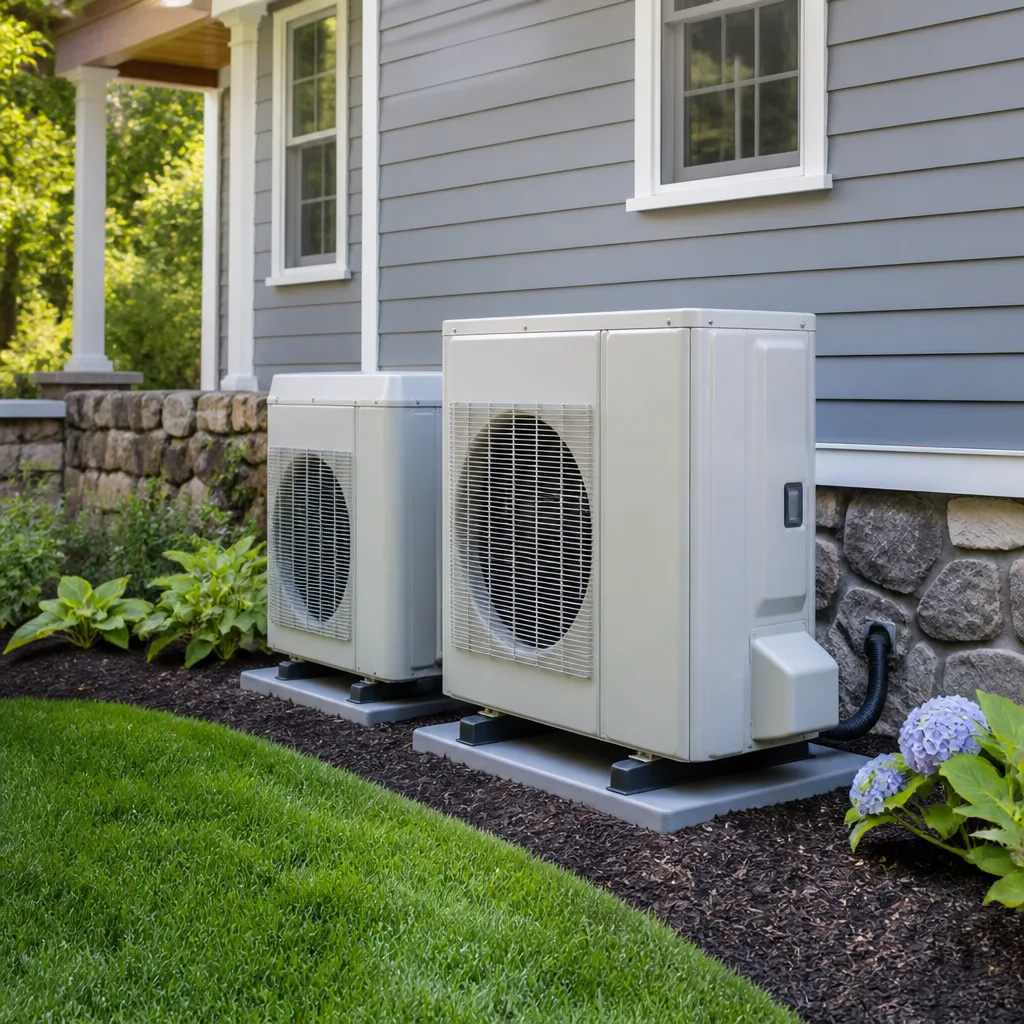 Heat pumps
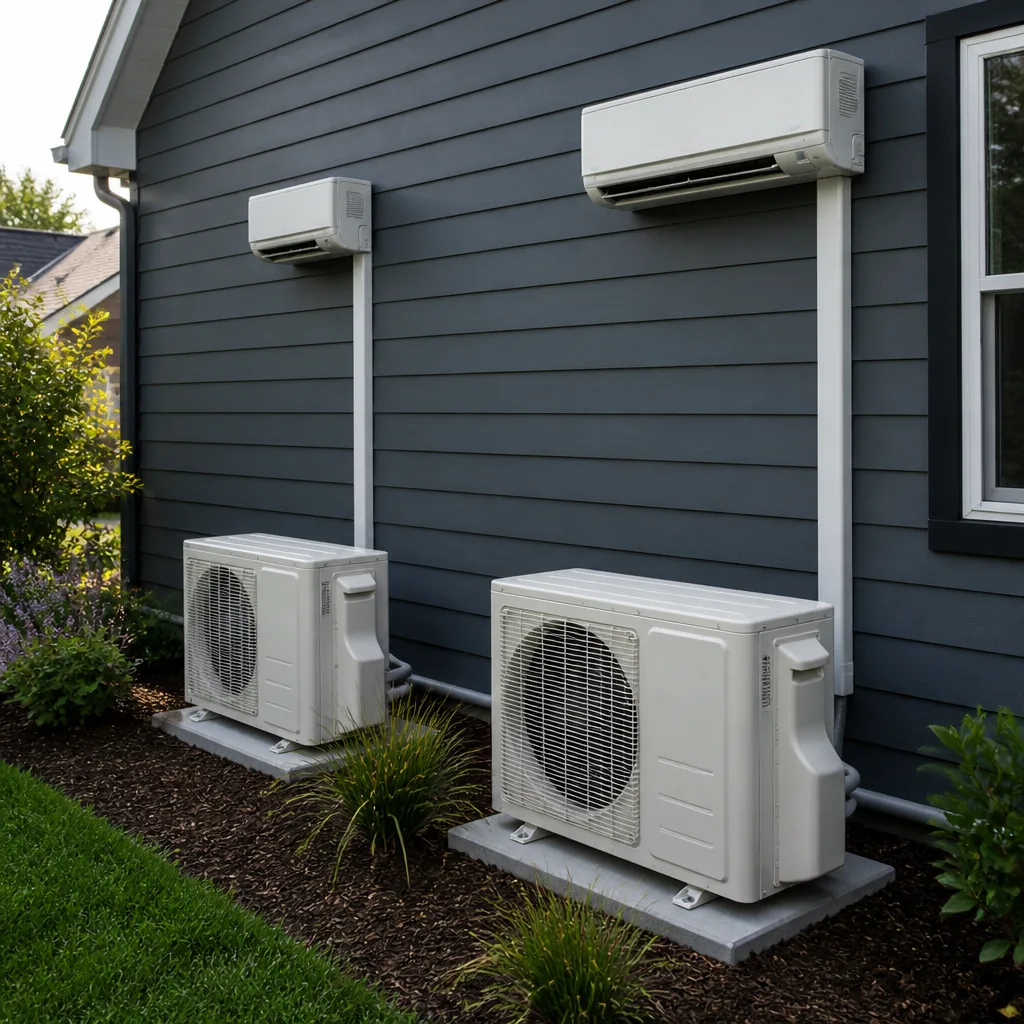 Ductless mini splits
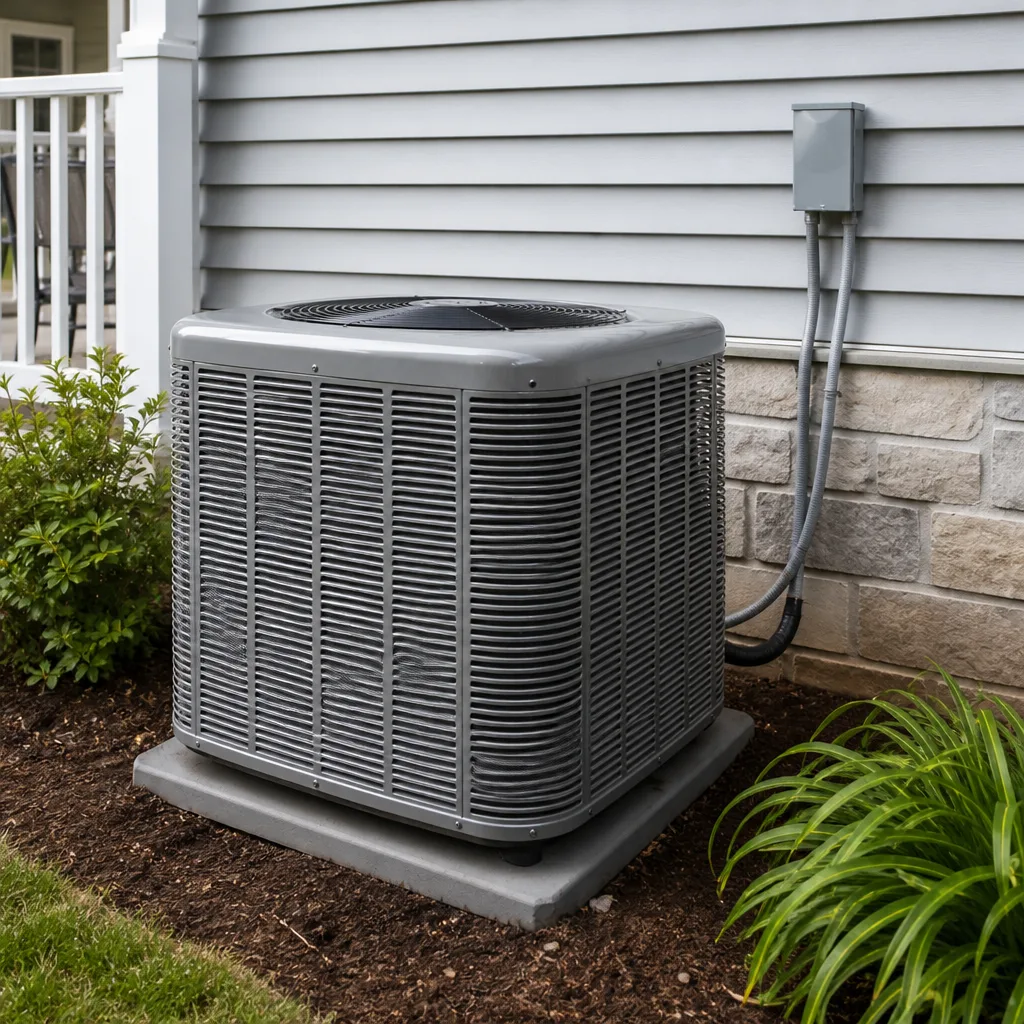 Carrier
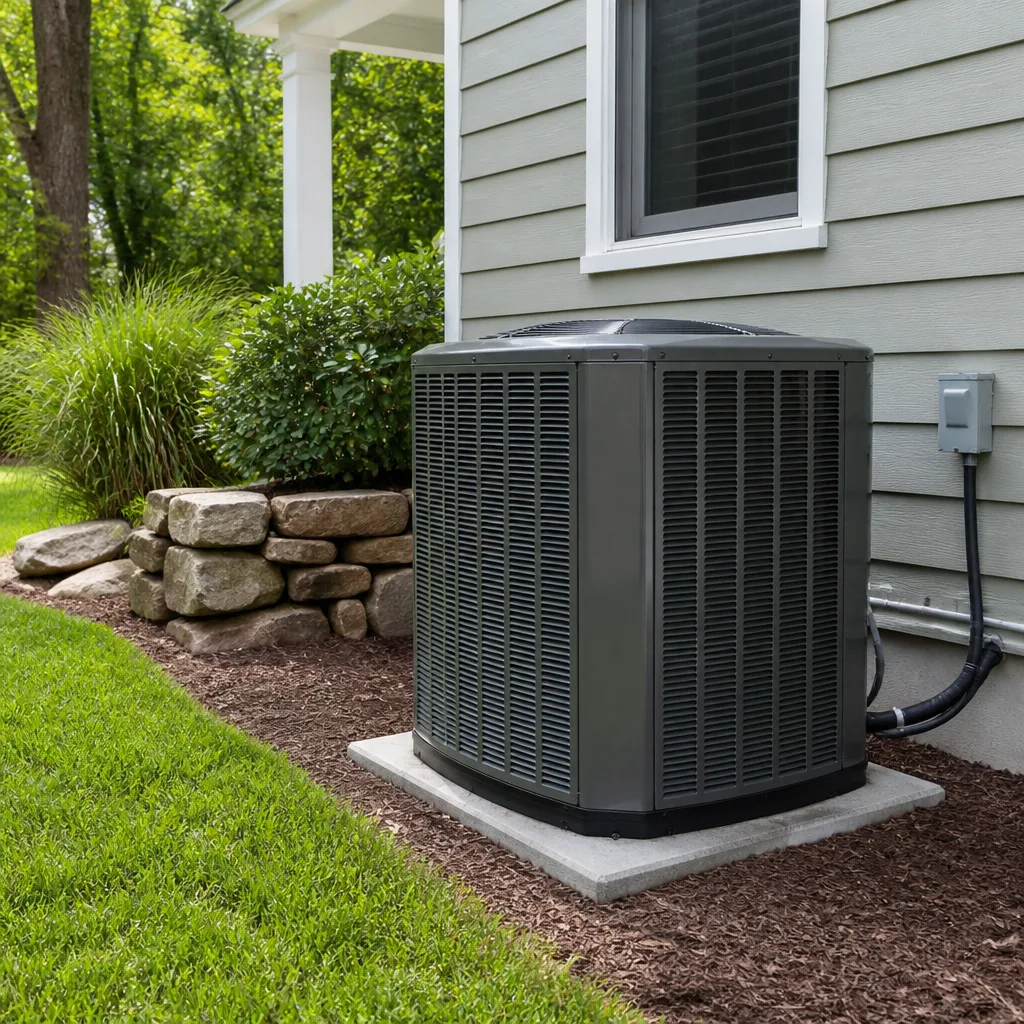 Trane
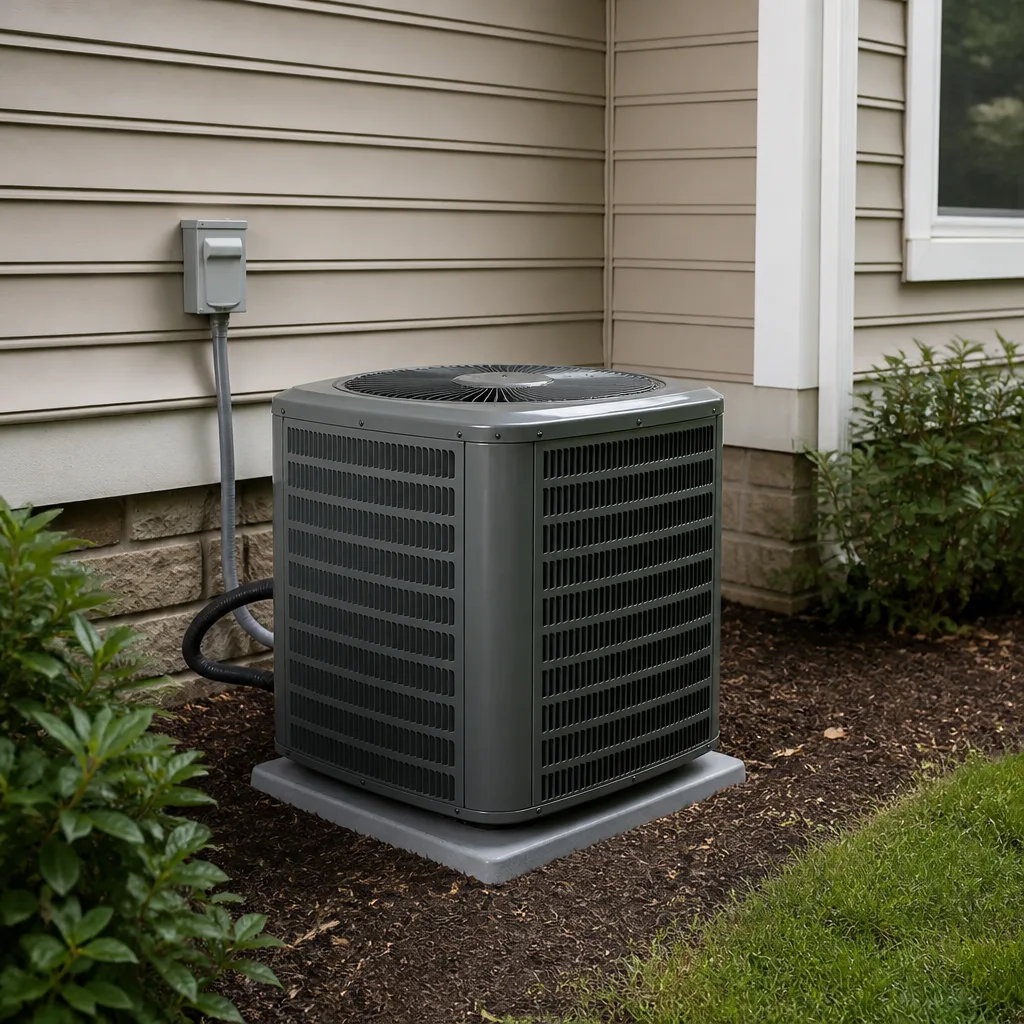 Goodman
Seasonal tune-up and full diagnostic on your Carrier, Trane, or Goodman system - readings shown to you before any repair is proposed
Diagnosis first, numbers second - you approve the repair price before a single part goes in.
Get your free estimateHow to Hire an HVAC Contractor in Paradise: A Step-by-Step Guide
The Nevada Contractors Board keeps public records on every licensed HVAC contractor in the state. You can look up any license at nvcontractorsboard.com in about 90 seconds. Fewer than one in ten homeowners ever does it before signing. That 90 seconds is the difference between a paper trail you can point to and a mess you’re stuck explaining at the door. We’ve talked to plenty of people in Paradise who learned that the hard way after someone else’s job went sideways. This guide walks you through the whole hiring process, start to finish, and it leans hard on red flags, because red flags tell you more than polished sales pitches ever will.
Quick Answer
To hire an HVAC contractor in Paradise, verify the Nevada contractor’s license, bond, and complaint history directly through the state board, then get written estimates covering identical scopes of work before comparing price. You want a contractor who pulls permits, puts a name and license number on the quote, and answers the phone after the invoice is paid. The best contractor wins on documentation, not the lowest number.
Styles & brands we work with
- AC repair
- Furnace & heating
- Heat pumps
- Ductless mini splits
- Carrier
- Trane
- Goodman
Table of Contents
- Step 1: Run the Nevada Contractors Board Lookup
- Step 2: Verify the Contractor Is Who They Say They Are
- Step 3: Ask the Five Telling Interview Questions
- Step 4: Standardize Three Quotes Before Comparing Price
- Step 5: Confirm Permits and Code Requirements for Paradise
- Step 6: Read the Written Warranty Line by Line
- Step 7: Watch for the Red Flags
- Common Mistakes to Avoid
Step 1: Run the Nevada Contractors Board Lookup
Before anyone steps foot in your home, pull their record. This is the first thing we do when we hear about a bad job, and it’s the first thing you should do before hiring anyone. The lookup costs nothing and tells you more than any truck wrap ever will.
- Go to nvcontractorsboard.com and open the license lookup.
- Search by the contractor’s name or license number. The number should be on the quote.
- Check the license status. It must read active, not expired, suspended, or revoked.
- Note the license classification. HVAC work falls under a specific category, and a general contractor without HVAC endorsement isn’t the right license for a compressor swap.
- Look at the bond amount and the insurance certificate on file. Low bond, no insurance, no work.
- Read the complaint history. Active or sustained complaints are a warning; dismissed or none are what you want to see.
What the results actually tell you: an active license with a current bond means the contractor has met Nevada’s minimum financial responsibility. A clean complaint history means nobody with a legitimate grievance has won a ruling against them recently. That doesn’t guarantee quality. It does guarantee they’re playing by the rules, which is the floor you should never go below in Paradise or anywhere else in the state.
Step 2: Verify the Contractor Is Who They Say They Are
Impersonation is real. People put up a website with a real contractor’s license number on it, collect a deposit, and disappear. The person who answers the phone isn’t always the person who shows up, and the person who shows up isn’t always who the paperwork says. Verification takes five minutes if you know what to look for.
- Match the license number on the quote to the board lookup. If the quote has no license number, that’s a hard stop.
- Match the business name on the truck to the business name on the quote. A mismatch is a problem unless the contractor explains it clearly (a DBA, for example), and even then, verify the DBA.
- Match the name of the person at your door to the business. If they say they’re from ABC Heating and their badge says XYZ, ask why before anyone enters your home.
- Check the address. A published physical address is verifiable; a PO box alone is not. You can search the address on a map and cross-reference with the business filing.
- Watch for cash-only, no-receipt, no-paperwork behavior. Legitimate contractors want a paper trail as much as you do.
In Paradise, we’ve seen the same names come and go over the years. The guys who stick around are the ones who don’t mind being looked up, because they know what the record shows. If you’re working out how to hire an HVAC contractor in Paradise NV without a hitch, verification is where you spend the most time and save the most money.
Step 3: Ask the Five Telling Interview Questions
Anyone can recite good answers. What you’re listening for is whether the answer is a script or a real reply. Ask these five questions, and pay attention to the hesitation as much as the words. The wrong answer is more revealing than the right one.
- “Do you pull permits for this type of job?” The right answer is yes, with an explanation of which permit and who inspects. “For this job, no permit’s needed” is only true for narrow work like swapping a thermostat or changing a filter. Anything involving refrigerant lines, gas connections, or a new circuit needs a permit. A contractor who skips permits skips inspections, and inspections are your independent quality check.
- “Who actually does the work?” You want to know if it’s the company’s own people or a rotating subcontractor crew who have never seen your system. Ask if the person showing up will be the person you talk to if something goes wrong. Continuity matters, and you have every right to ask for it.
- “What does your warranty actually cover, and for how long?” Equipment warranty is one thing. Labor warranty is another. Ask for the written document, not the verbal version.
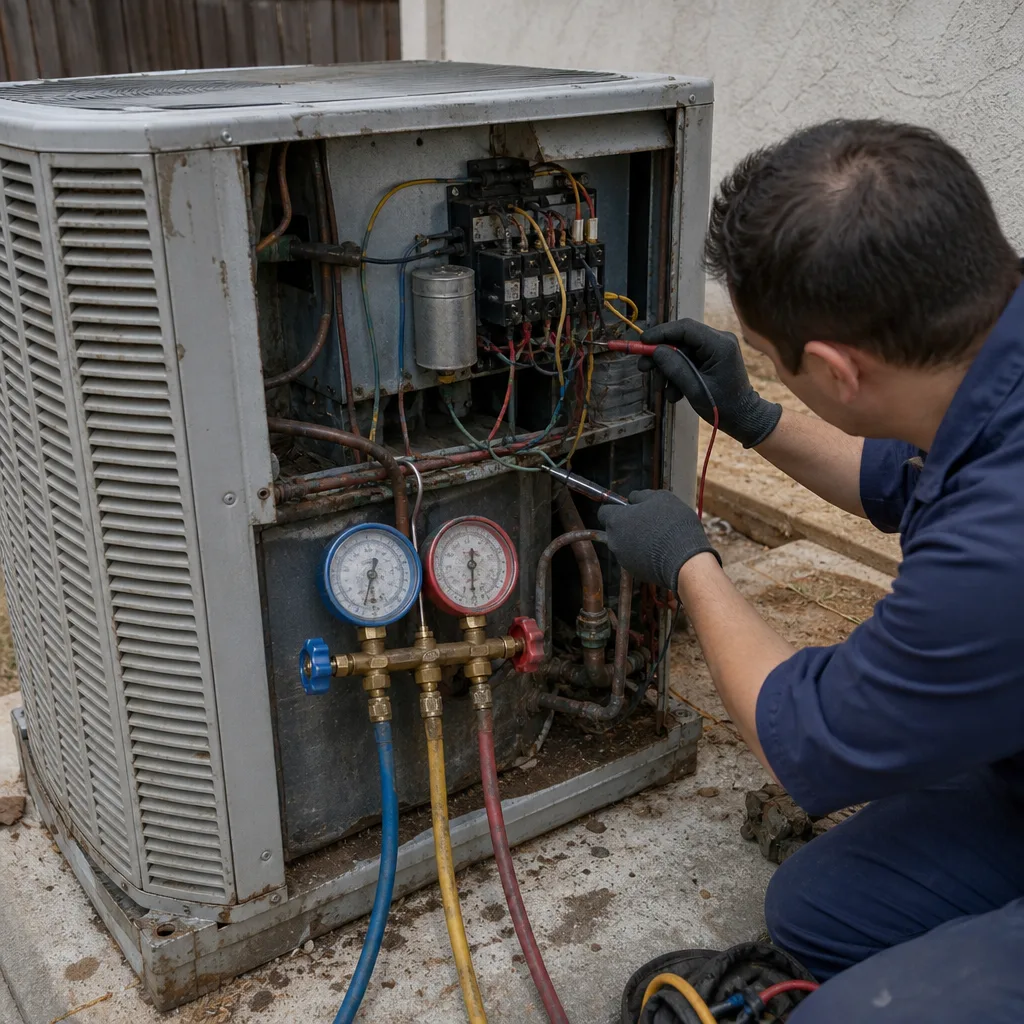
- “What are the readings from your diagnostic, and can I see them?” A contractor who tests a capacitor before saying the word “compressor” is a contractor who does real diagnostics. Readings first, numbers second – you should see both before work begins.
- “Can you show me one job you’ve done in this area?” Refs you can call beat marketing copy every time. Ask for a street name, not a full address to protect privacy, and follow up.
Ray’s Heating & Air has been locally owned and owner-operated since 2002, and that’s the reason we can answer these questions with specifics rather than slogans. Our technicians have up to 24 years of experience, and we still get second opinions from other contractors, which is why we offer a free second opinion on any written estimate. We’d rather you trust us because you checked than because we told you to.
Step 4: Standardize Three Quotes Before Comparing Price
Three quotes can mislead you if the scopes of work aren’t identical. One quote includes a new disconnect and line set; another reuses the old parts; a third leaves out the filter housing. The numbers look comparable on the page, but they aren’t, and comparing them is a trap. Before you collect bids, build a scope sheet and give it to every contractor you talk to.
- Equipment brand and model number, both indoor and outdoor units. If they write “Rheem or equivalent,” ask for the exact model. (We install Rheem, York, Daikin, and Bryant, among others, and we always specify the model.)
- Refrigerant lines: replace or reuse, and if reused, what condition are they in and is the size verified.
- Electrical: new disconnect included or not, voltage verified, permit pulled.
- Drainage: new condensate line and safety switch.
- Filter housing and filter, plus any air quality accessory or ventilation components. Read more on our Heat Pump & Mini Split in Paradise page if a pump is part of the plan.
- Labor warranty length, in writing, with parts warranty noted separately.
- Permit and inspection handled by the contractor, in writing.
- Startup checklist and commissioning report.
- Payment schedule and cancellation terms.
Give that list to three contractors. Compare what’s included, then compare price. You’ll often find the cheapest bid is the least complete, and a “low” bid becomes expensive fast. When you’re reading quotes, also look at AC Repair & Installation in Paradise and Heating & Furnace in Paradise for what the components in those bids should look like on paper.
Step 5: Confirm Permits and Code Requirements for Paradise
Paradise is in Clark County, and the county enforces its own permitting and inspection rules for HVAC installations. Most repairs and like-for-like replacements require a permit, and the inspections catch a lot: improper line set support, missing condensate traps, sloppy electrical, refrigerant leaks that would drain a system’s charge before the season ends. This is where Paradise’s climate makes the requirements matter.
The Valley’s summers hit triple digits and routinely stay over 100 for weeks, and the winters swing cold enough at night to hit the heat pump hard. Systems here run at high load for months at a time. That’s why we see start-capacitor failures packed into the first hot week of June, and heat pump defrost boards acting up in the middle of January. If a contractor skips the permit and inspection, all those climate stress points go unchecked, and you’re the one who finds out in August.
Ask the contractor for the permit number and the inspection schedule. If they hand you a permit you can track through the county, you’re on the right path. If they don’t, you know a lot more about that contractor than you did an hour ago.
Step 6: Read the Written Warranty Line by Line
A legitimate warranty names what’s covered, names what isn’t, names who pays for what, names how long it lasts, and names a process for making a claim. Boilerplate that protects nobody but the contractor usually has three tells: it excludes labor entirely, it has vague language about “workmanship” with no time limit, or it requires you to call a national number that routes to a call center.
What to look for in writing:
- Labor coverage length in days or years, spelled out. A 90-day workmanship promise is common; 30 days is common; “until you leave the driveway” isn’t a warranty.
- Equipment manufacturer warranty start date and transferability. Ask how registration works, and confirm it in the paperwork so you don’t lose the term.
- What happens if a repair fails. The right answer is a callback at no charge, and a documented process for getting it.
- Who signs the warranty. A business name, license number, and a signature line. Not a first name scribbled on a receipt.
Every job we do at Ray’s Heating & Air Paradise carries the 90-Day Done Right Promise in writing: if it’s not done right, Ray makes it right, and one call brings him back. Compare that language with whatever you’re holding in your hand. If the contractor’s warranty doesn’t commit to a time and a process, it isn’t a warranty – it’s a slogan.
Step 7: Watch for the Red Flags
Here’s what we tell people at the door in Paradise when they’re deciding whether to sign a bid. These are the patterns that show up over and over.
- “That price is only good today.” Real contractors with real schedules don’t need a same-day close. Pressure means something is off.
- No written estimate before the work begins. A verbal price is unenforceable. Ask for it in writing with the scope spelled out.
- No license number on the quote. Covered in Step 2 – if it’s missing, stop.
- Cash only, no receipt. The only reason to avoid a paper trail is that you don’t want one.
- “You need a whole new system.” Sometimes that’s true, and a good contractor will show you the readings that prove it. But when a contractor goes straight to a new system without testing the capacitor, the compressor, and the refrigerant charge, walk away. Readings first, numbers second.
- Pressure to skip the permit. Saves the contractor an inspection and costs you the record of the work.
- Voicemail-only after the invoice. If they won’t answer the phone after they have your check, they won’t answer it when something fails.
Common Mistakes to Avoid
- Hiring the first name on a yard sign. It feels easier than a lookup, but the sign has no complaint history on it. Run the board lookup first and save the surprise for later.
- Comparing three quotes without standardizing scope. A “better” price on a smaller job is just a different job. Build the scope sheet before you collect bids.
- Skipping the permit and inspection. In Paradise, the permit is the county’s stamp of approval on the work. No permit means no inspection, and no inspection means nobody double-checked the install.
- Accepting a verbal warranty. Ask for the written document. A promise you can’t point to isn’t enforceable when the compressor dies at the start of June.
- Paying the whole bill up front. Progress payments tied to completion are the norm. A contractor who needs all the money before the truck leaves is a contractor to think twice about.
- Assuming the cheapest quote wins. The cheapest quote is often the least complete. Add the missing parts and it’s rarely the cheapest anymore.
- Not asking what happens if the repair fails. The right answer is a callback at no charge. The wrong answer is “that never happens.”
See the difference
 Before
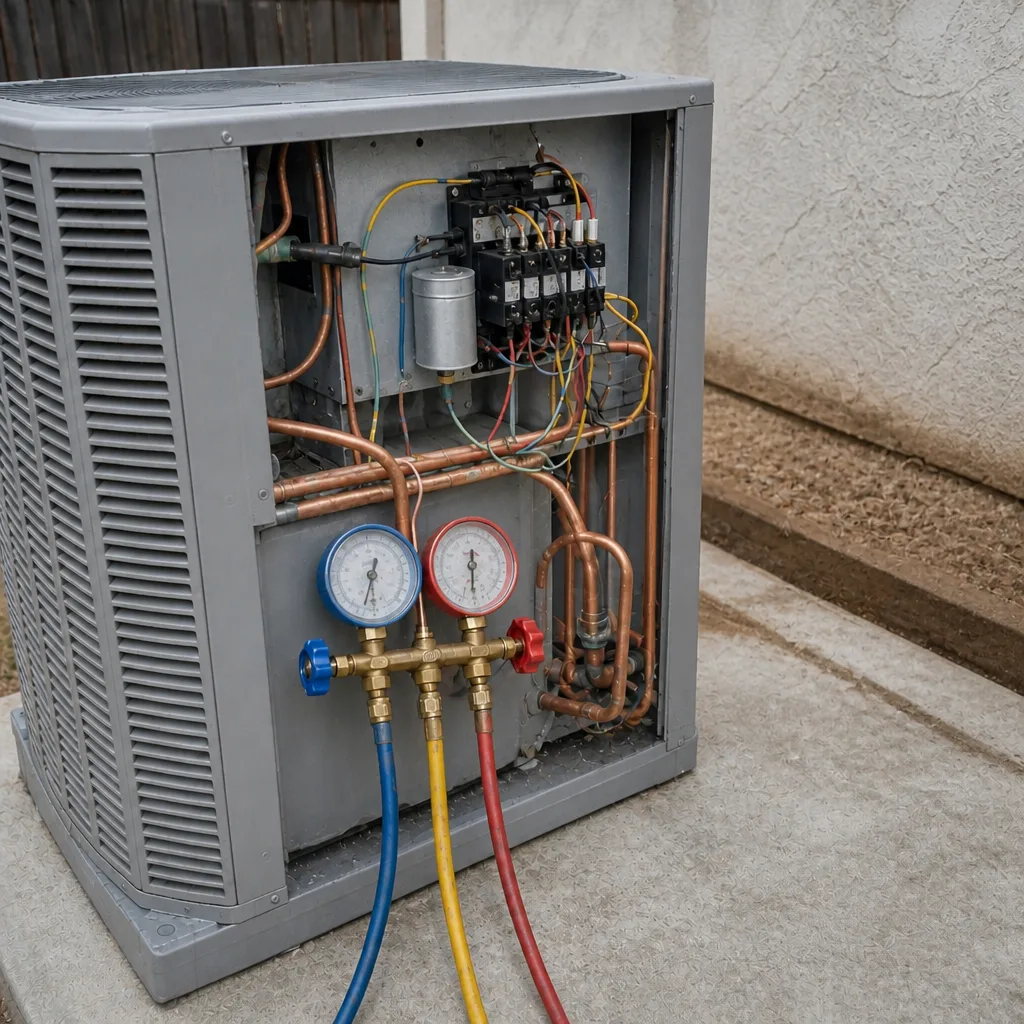 After
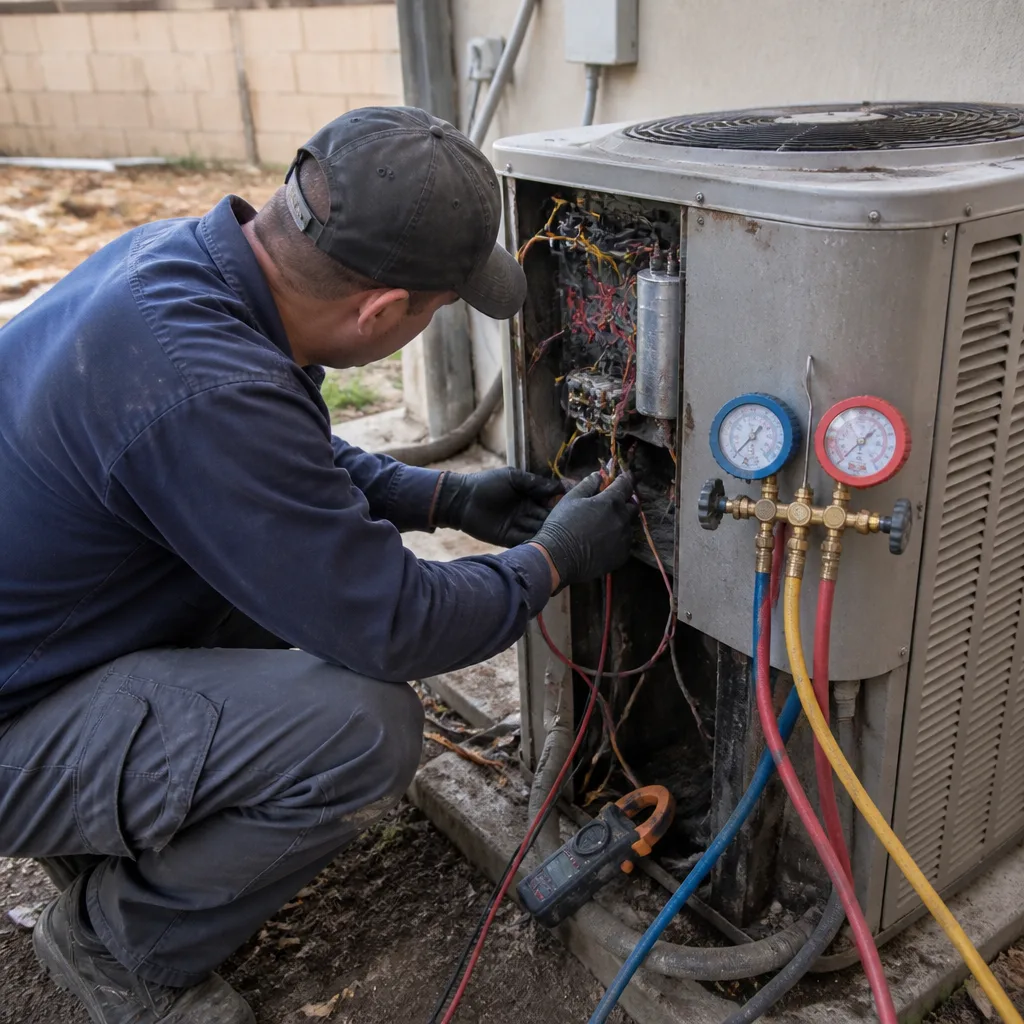 Before
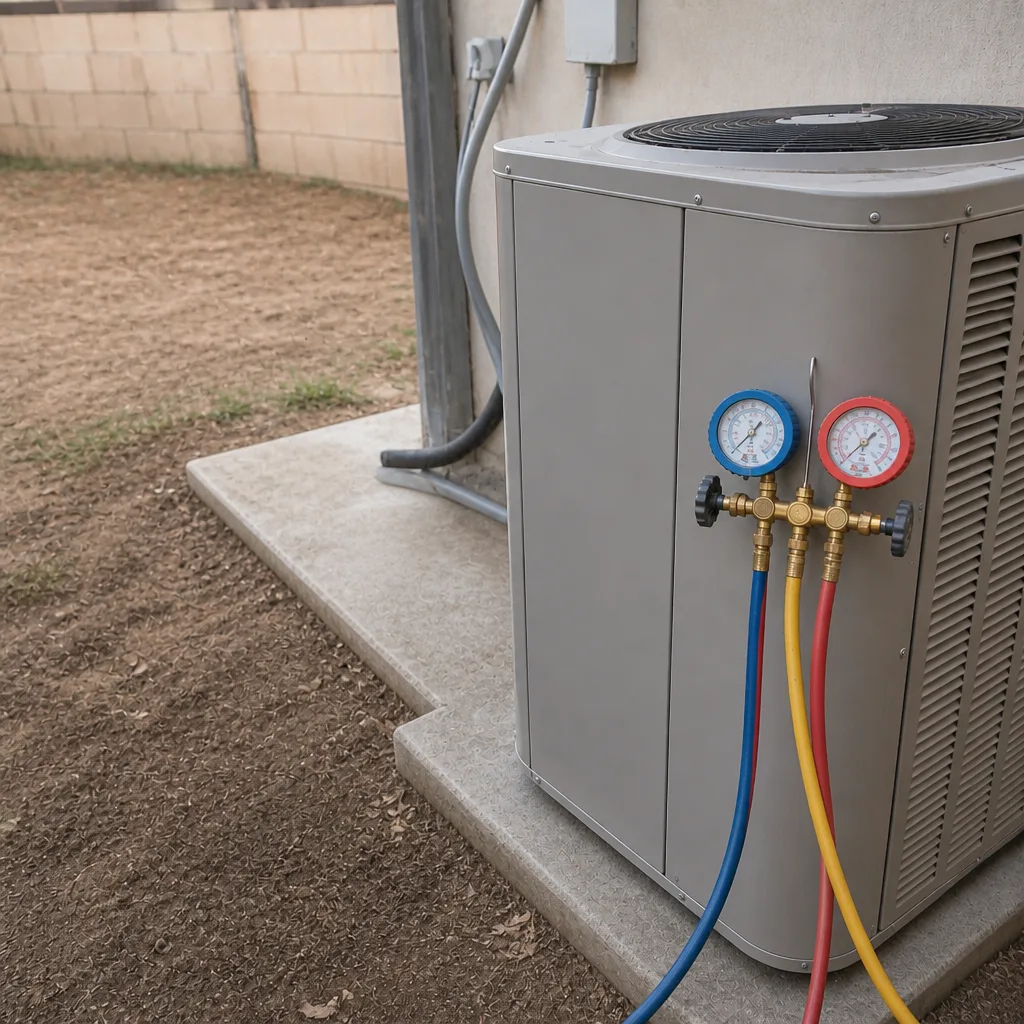 After
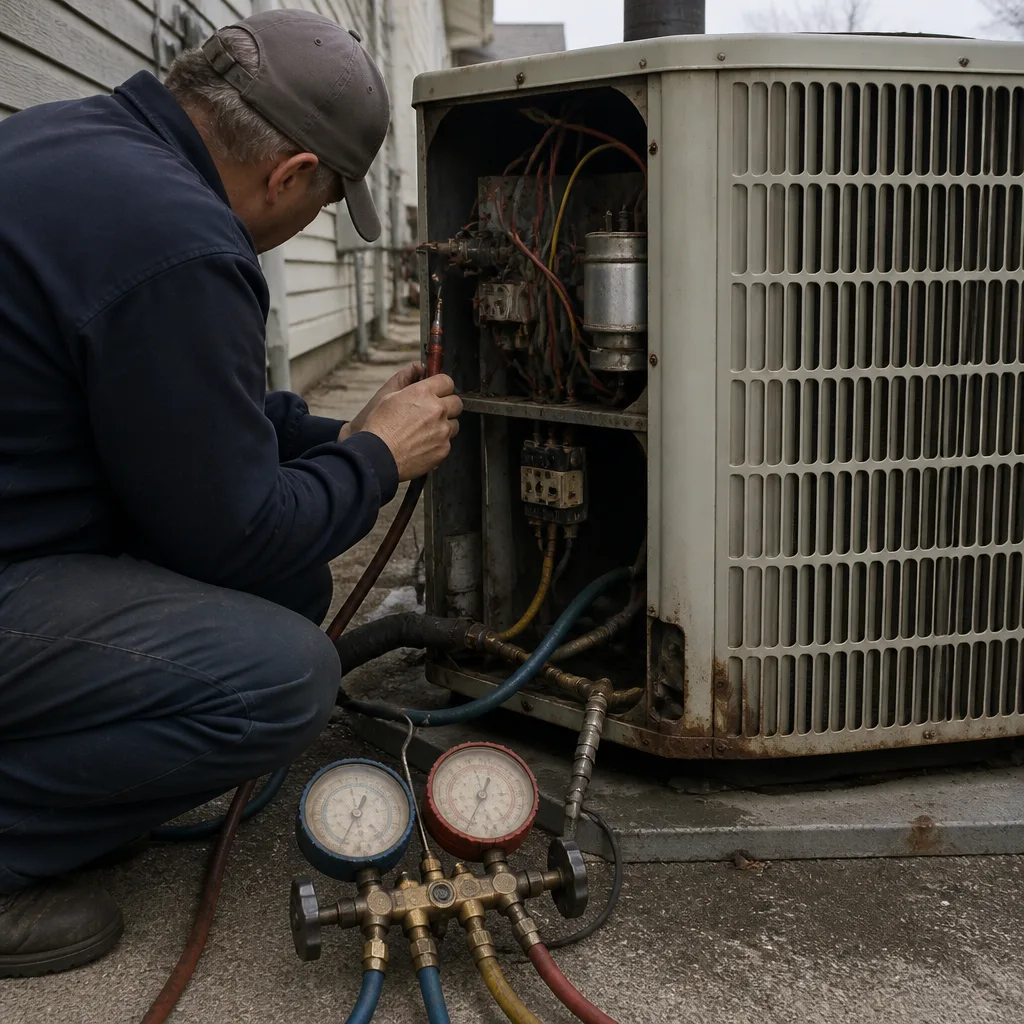 Before
 After
When to Call a Professional
Some HVAC problems don’t belong in a DIY weekend. Gas connections on a furnace, refrigerant line work, compressor swaps, and anything involving electrical panel work on a new circuit are the big four. The components involved can injure or kill you if you get them wrong, and no homeowner deserves to find that out the hard way. Capacitors – even with the power off, they hold a charge. Spring-loaded HVAC contacts and live 240-volt circuits don’t forgive mistakes. If a repair touches the gas line or the panel, stop, and call a professional.
If your system is blowing warm air in July, tripping the breaker every time it kicks on, or making a hard-luck buzzing sound when the thermostat calls, those are the calls where same-day service actually matters. The summer heat in Paradise is a health risk to anyone older or without backup cooling, and we treat it that way. Live person answers every call, 24/7. Call (855) 664-5714 for a free estimate.
Frequently Asked Questions
Search the Nevada Contractors Board’s public lookup at nvcontractorsboard.com by name or license number and confirm the license status is active, the bond and insurance are current, and the complaint history is clean. The lookup takes about 90 seconds and costs nothing. If the contractor’s name and license number don’t appear, don’t sign. For an exact quote on a specific job, call (855) 664-5714.
Most installations and replacements in Paradise require a permit through Clark County, and the work needs an inspection before it’s signed off. Repairs like a capacitor swap may not require one, but any job involving refrigerant lines, gas connections, or new electrical work does. Ask the contractor for the permit number and the inspection schedule. We pull permits on jobs that require them. Call (855) 664-5714 to confirm what your job needs.
A full replacement in the Paradise area typically runs between $6,500 and $14,000 depending on system size, efficiency, and whether ductwork or line sets are part of the job. Heat pump and dual-fuel systems sit in the same range. The only way to know your number is a written estimate based on the readings from your system, not a phone quote. Call (855) 664-5714 – estimates are free.
If the system is under 10 years old and the repair is a capacitor, blower motor, or contactor, repair almost always makes sense. If the compressor has failed on a system over 12 years old, replacement is usually the better math, but you should see the readings before anyone says the word “compressor.” We offer a free second opinion on any written estimate, so you can compare without pressure. Call (855) 664-5714.
Different quotes are almost always different jobs. One contractor includes the new disconnect, the other reuses the old one. One replaces the line set, the other doesn’t. Standardize the scope with a written list before you compare price. Once the scopes match, the remaining differences are labor, equipment tier, and overhead, and you can weigh those. Call (855) 664-5714 and we’ll walk through your scope sheet with you.
A real written warranty names the coverage period in days or years, names what’s excluded (like labor), names who pays for a callback, and gives you a signed document with a license number on it. Boilerplate language that’s vague on time and process isn’t a warranty. Our 90-Day Done Right Promise is in writing on every job: if it’s not done right, Ray makes it right. Call (855) 664-5714 to see the actual document.
The Bottom Line
Hiring an HVAC contractor in Paradise comes down to documentation, not salesmanship. Run the Nevada Contractors Board lookup first. Verify the person, the truck, and the license number match the quote. Standardize your scope sheet before comparing price, ask the five questions, confirm the permit, and read the warranty in writing. The red flags are more useful than the green ones, because anyone can recite a good answer – but only some contractors will pull a permit, leave documentation behind, and answer the phone after the invoice is paid. Spend the 90 seconds. It’s the cheapest part of the whole project. And if you’d rather start with a contractor who already publishes his name, address, and license number, you know where to find us. Head back to the Ray’s Heating & Air Paradise home page for the full picture, or call us for a free estimate.
Ray’s Heating & Air Paradise offers free estimates throughout Paradise. Call (855) 664-5714 and a live person picks up, every time.
Written by the team at Ray’s Heating & Air Paradise.