
Last updated November 18, 2026
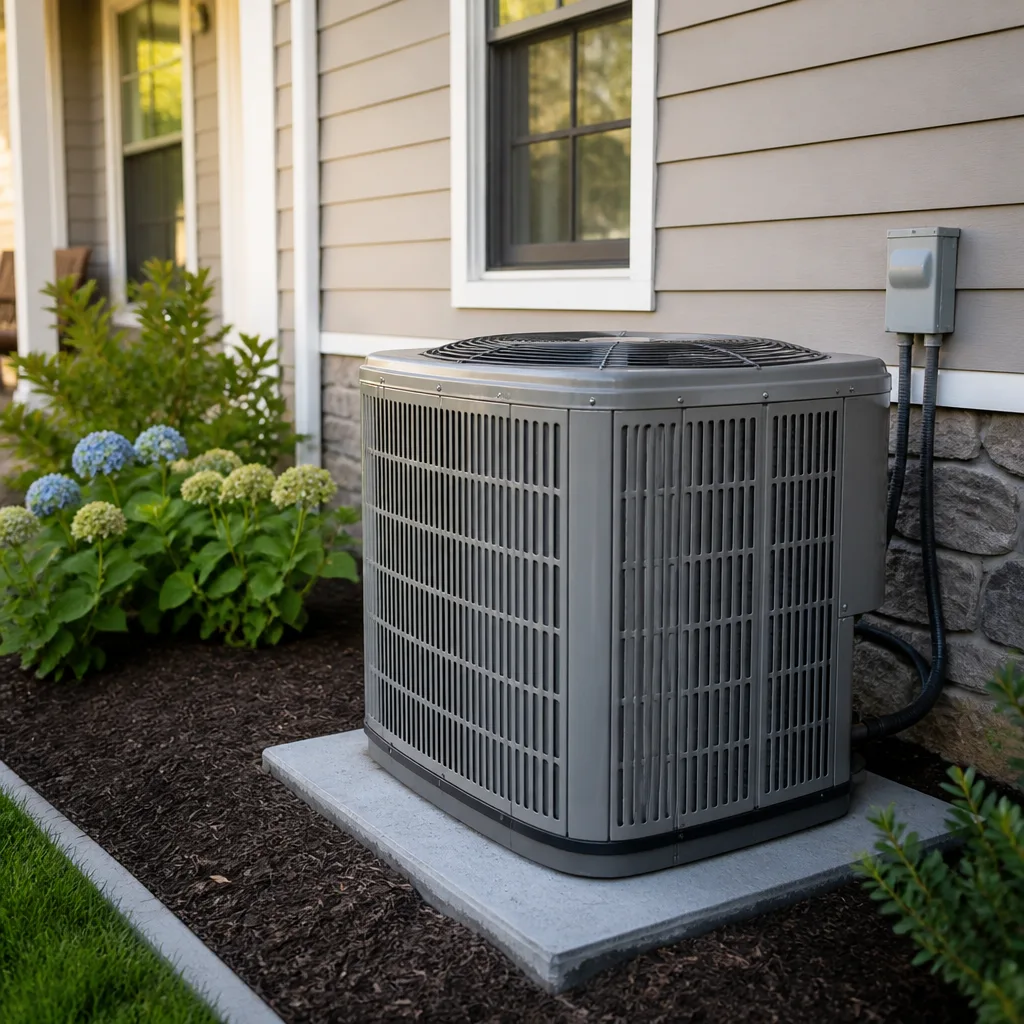 AC repair
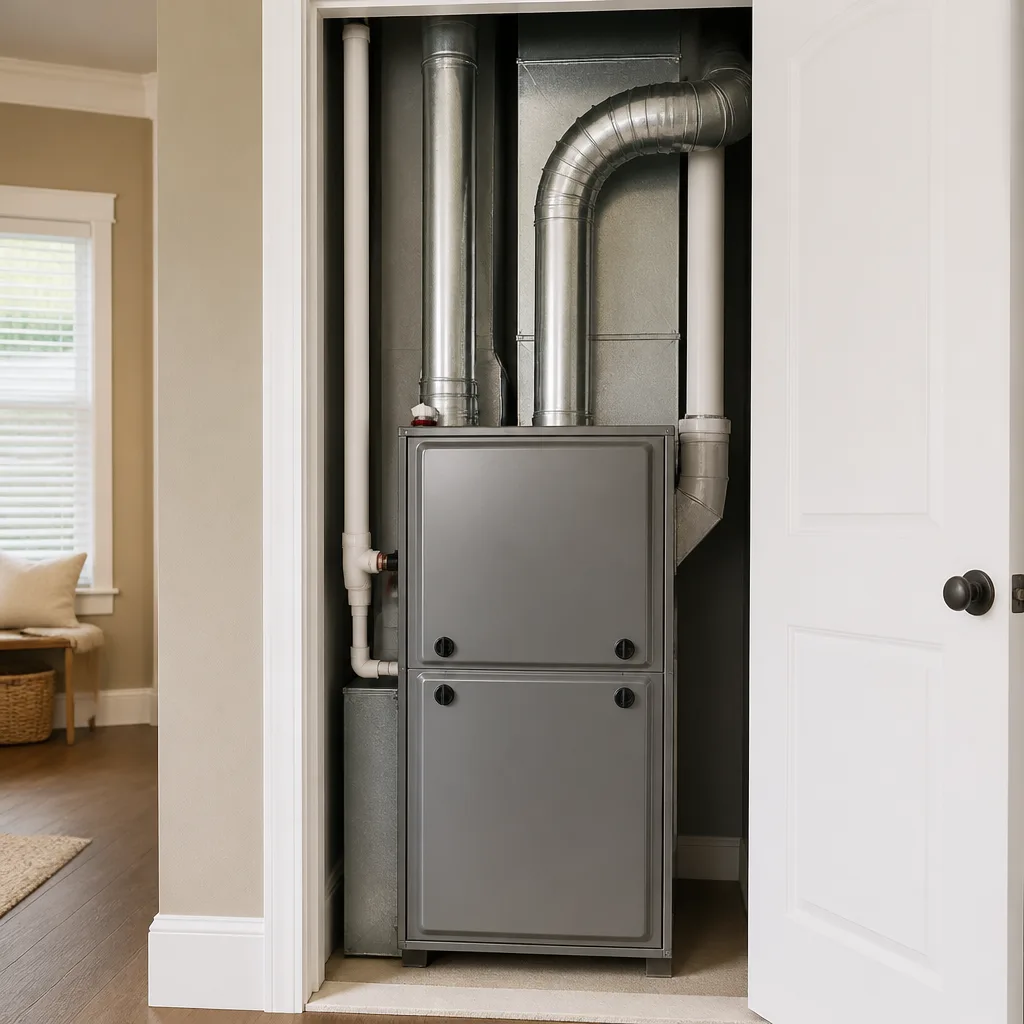 Furnace & heating
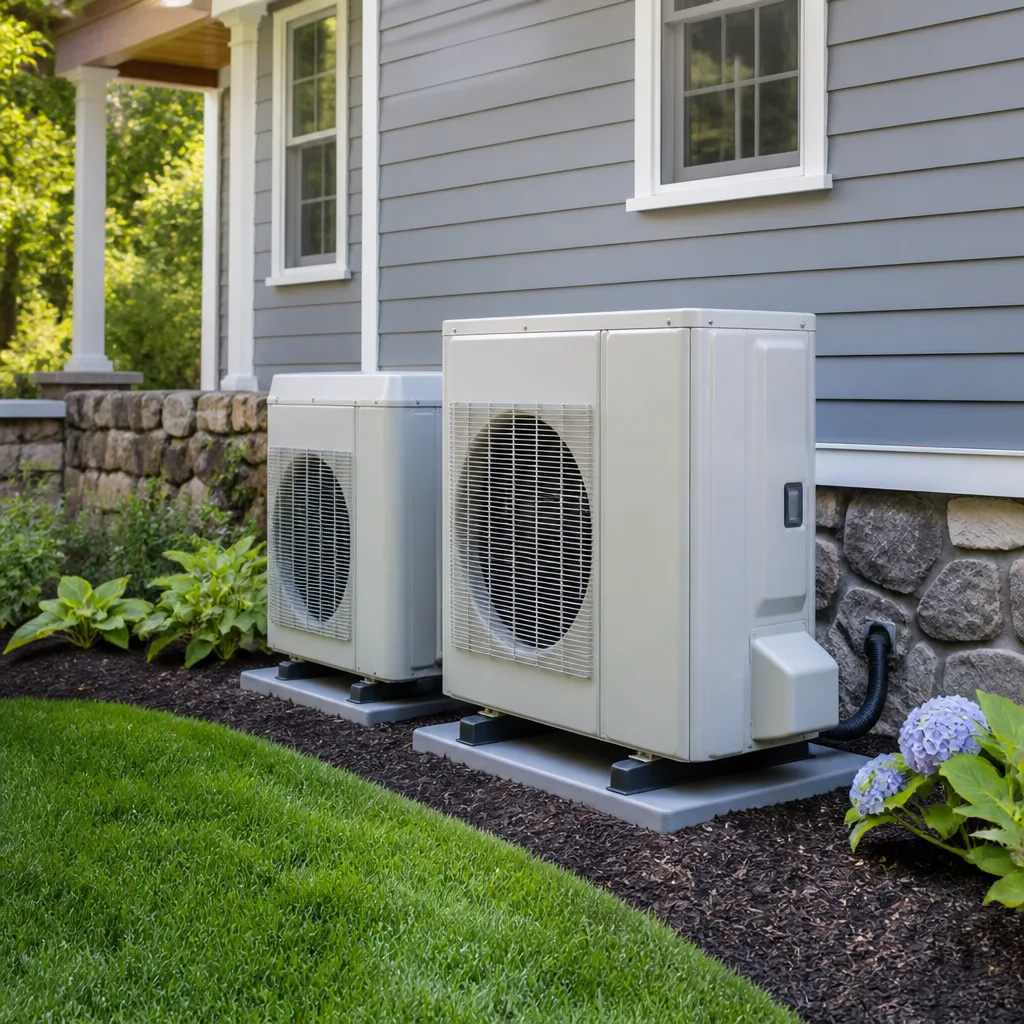 Heat pumps
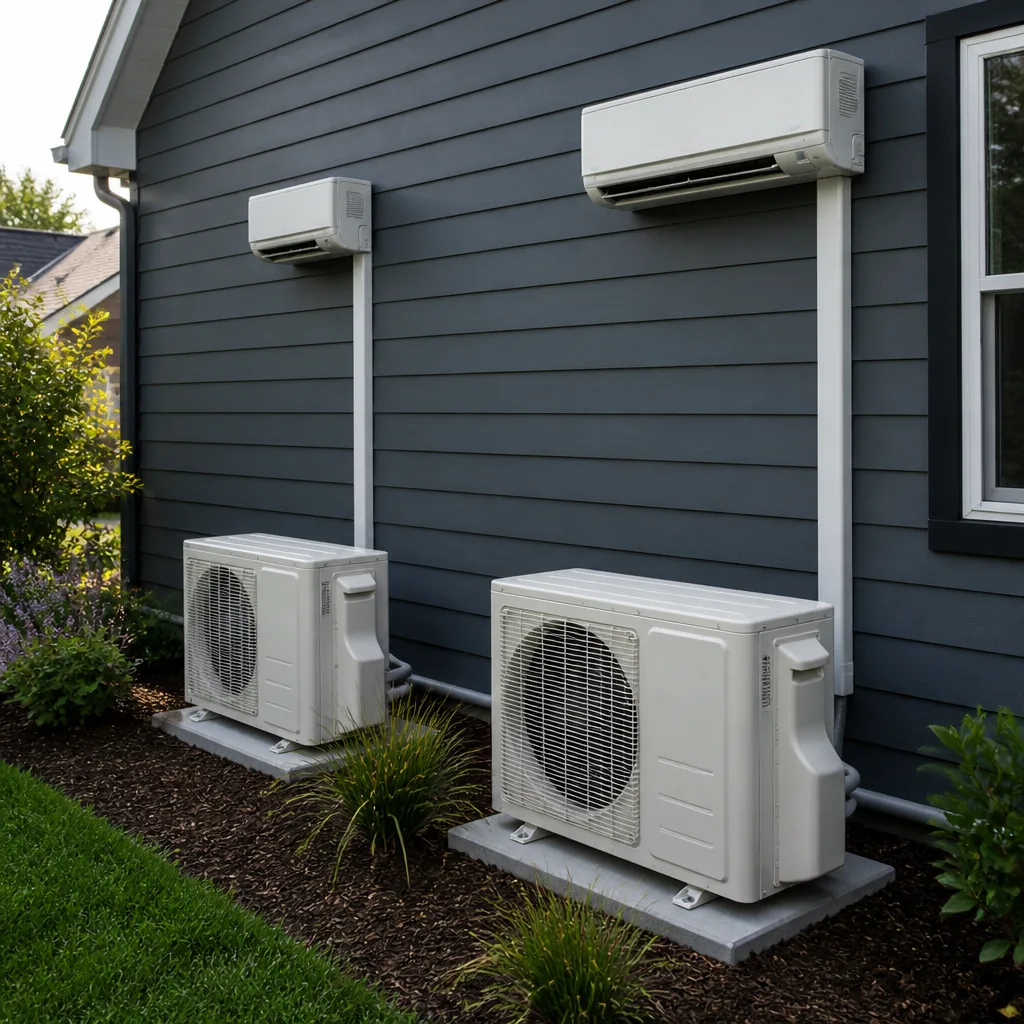 Ductless mini splits
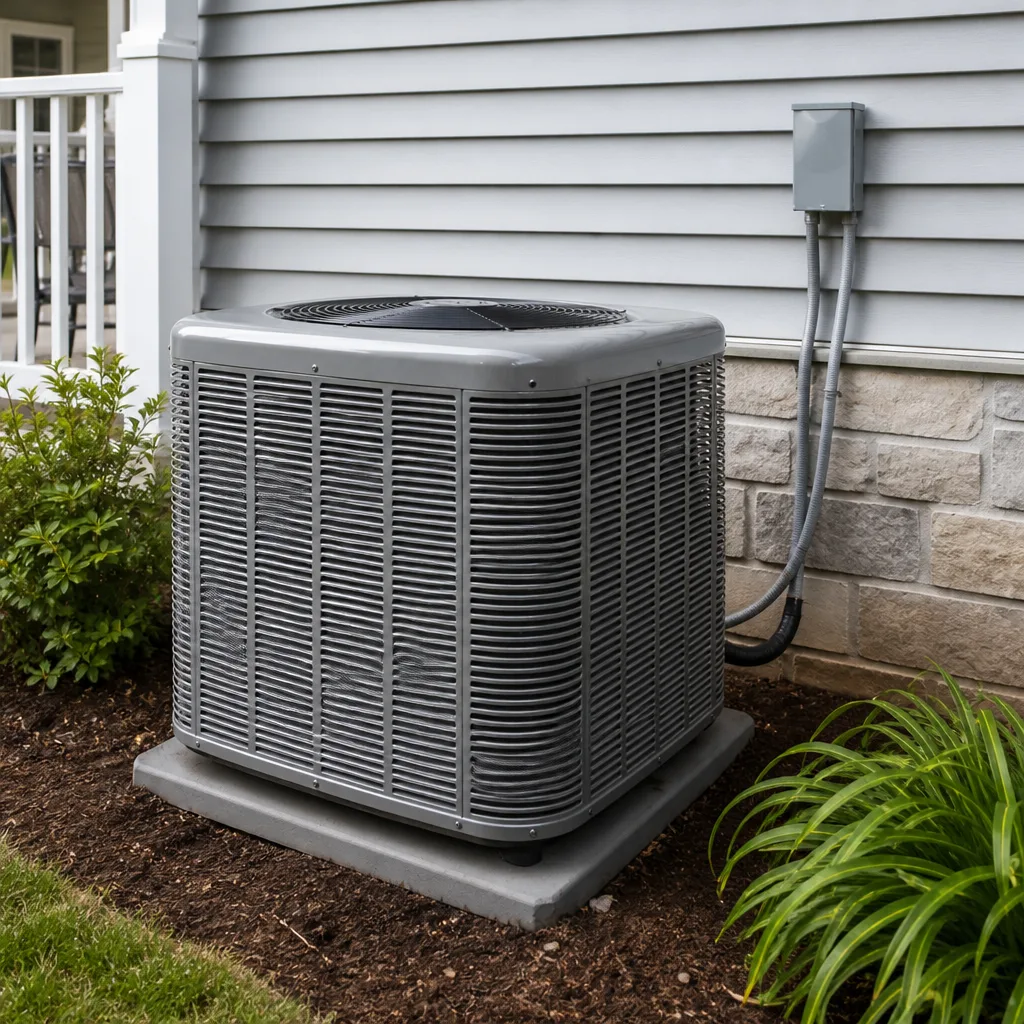 Carrier
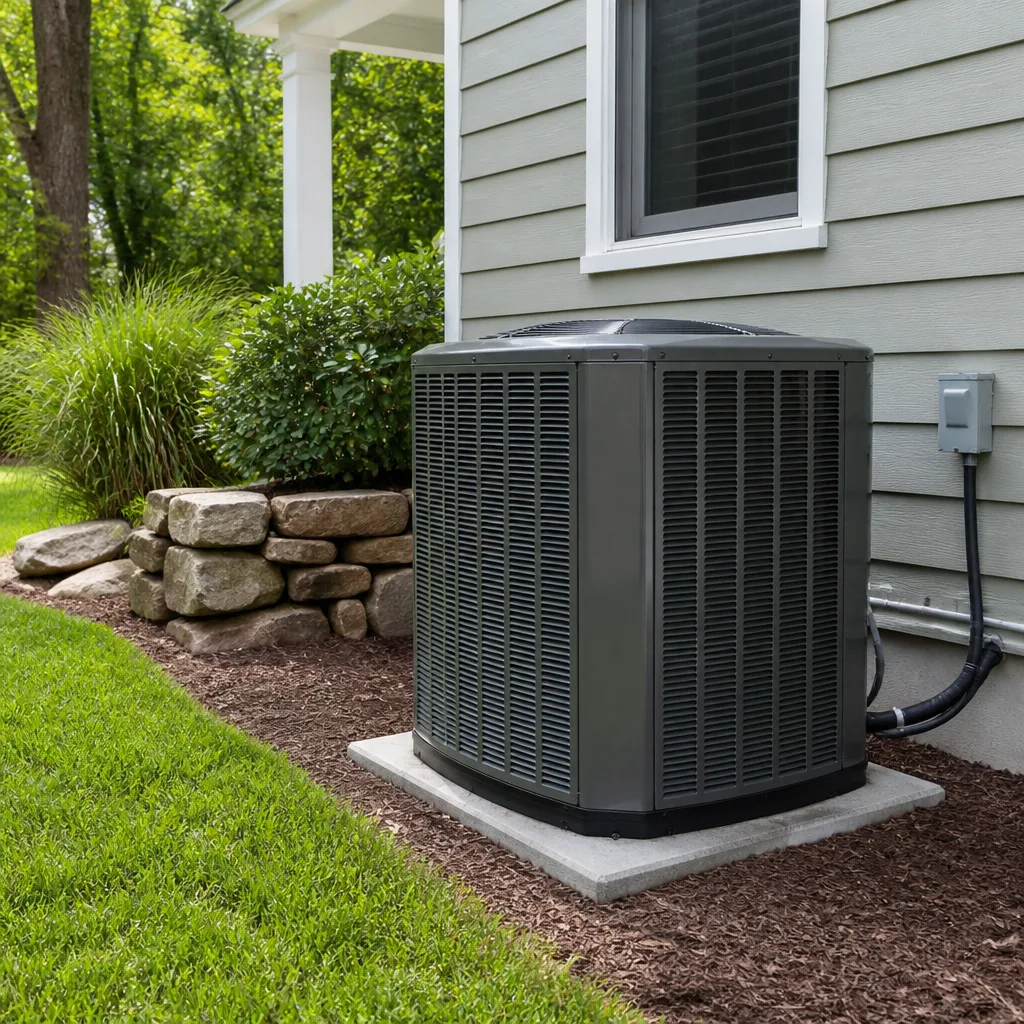 Trane
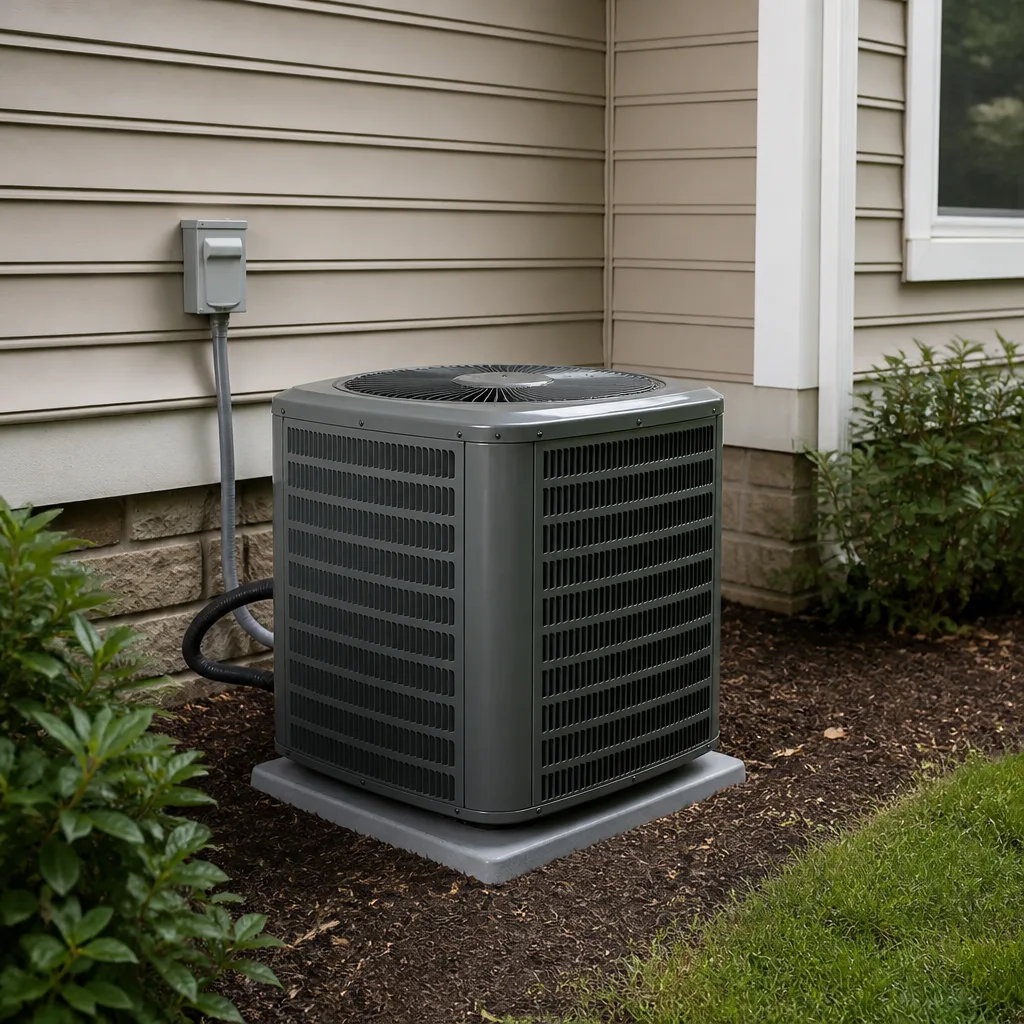 Goodman
Seasonal tune-up and full diagnostic on your Carrier, Trane, or Goodman system - readings shown to you before any repair is proposed
Diagnosis first, numbers second - you approve the repair price before a single part goes in.
Get your free estimateAC Repair & Installation Troubleshooting: Common Problems and How to Fix Them
About half the calls we get in July are from homeowners whose unit tripped a breaker or clogged a drain line. Problems that take three minutes to fix if you know where to look, and $150 if you don’t. Paradise summers run hot enough that a dead AC isn’t a small annoyance, it’s a health concern, especially for folks in their 60s and 70s. So before you pick up the phone, here’s the honest sequence we’d walk through at your own house. You’ll learn what to check, what to leave alone, when to stop running the unit, and how to describe what you’re seeing so the person at your door shows up actually ready to fix it.
Quick Answer
If your AC stops cooling in Paradise, check four things in order before calling anyone: the breaker in your panel, the batteries in your thermostat, the air filter, and the condensation drain pan. Those four account for the majority of “dead AC” calls we run, and three of them are free fixes. If the unit is frozen, hissing, or tripping the breaker repeatedly, stop running it and call someone – those are refrigerant or electrical problems you can’t safely diagnose yourself.
Styles & brands we work with
- AC repair
- Furnace & heating
- Heat pumps
- Ductless mini splits
- Carrier
- Trane
- Goodman
Table of Contents
- The Four-Step Check Sequence Before You Call Anyone
- Refrigerant Problem or Airflow Problem? How to Tell Without Touching Anything
- What a Freeze-Up Looks Like on a Paradise Rooftop Unit Versus a Split System
- The Two Sounds That Mean Stop Running It Now (and the Three That Can Wait)
- How to Describe the Problem So the Tech Brings the Right Parts
- Installation Problems That Look Like Repair Problems
- What AC Repair Actually Costs in Paradise
The Four-Step Check Sequence Before You Call Anyone
Work through these in order. Don’t skip. We’ve had customers call us out on a 108-degree afternoon only to find a tripped breaker they never looked at, and we’d rather save you the diagnostic fee than take a check for nothing.
- Check the breaker. Find the double-pole breaker marked for the AC in your main panel. It’s usually a 30- or 40-amp breaker, two switches tied together. If it’s sitting in the middle, not fully on and not fully off, it tripped. Flip it fully off, then fully on. If it trips again within a few minutes, stop there – that’s a real electrical problem, not a fluke.
- Change the thermostat batteries. Most modern thermostats take two AA batteries. A dying battery can make a screen flicker, show a blank display, or just stop sending the signal to the unit. Pull the batteries, put in fresh ones, wait a minute for the display to reset.
- Check the air filter. A filter so packed with dust and hair that a car could drive through it will choke your system and freeze it up. Pull it out, hold it up to the light. If you can’t see through it, replace it. In Paradise, allergy season and the dust from spring winds mean we tell folks to check it monthly from May through September, not every three months like the manufacturer sticker says.
- Look at the drain pan. Follow the PVC line away from the indoor unit or the air handler. If your system has a safety float switch, a full drain pan will shut the whole thing off. Empty the pan, clear the visible clog in the line with a wet-vac, and try the system again.
We’ve run this sequence with dozens of Paradise homeowners, and roughly a third of them have the unit running before we finish the conversation. The rest need us on-site, but at least they can tell us which of the four checks they already cleared.
Refrigerant Problem or Airflow Problem? How to Tell Without Touching Anything
This is the single most useful distinction you can make on your own. Refrigerant problems and airflow problems both make your house hot, but they behave differently, and knowing which one you’re facing helps the person answering the phone ask the right questions.
Airflow problems show up like this:
- Air coming out of the vents feels weak, like breathing through a straw
- Some rooms are cold and others are warm
- The filter was filthy or the return grille is blocked by furniture
- The indoor blower runs, but it doesn’t have force behind it
- The evaporator coil (the inside part) ices up
Refrigerant problems show up differently:
- Air feels like it’s blowing room temperature, not cold
- The outdoor unit runs constantly but the house never gets cool
- You see frost on the large copper line going to the outdoor unit
- The unit hisses, gurgles, or the compressor cycles on and off rapidly
- The coil ices up no matter how clean the filter is
Notice we’re not telling you to hook up gauges or add refrigerant. That’s not a homeowner job, both because the equipment is expensive and because it’s illegal in Nevada to handle refrigerant without EPA Section 608 certification. What we’re saying is: if you can tell it’s an airflow issue, we’ll probably diagnose and fix it in one visit. If you can tell it’s refrigerant, we know to bring the recovery machine and the leak detection gear on the first trip.
Your system tells us what’s wrong. We just listen first – but you can do a lot of the listening yourself before we get there.
What a Freeze-Up Looks Like on a Paradise Rooftop Unit Versus a Split System
Freeze-ups happen for different reasons depending on what kind of system you have, and they look different on the outside. This matters because Paradise has both kinds of homes – the older single-story houses with rooftop package units and the newer construction with split systems tucked in the side yard.
Rooftop package units
If your whole system sits in one box on the roof, check the copper lines running down into the box. Frost or a block of ice around the line set is the giveaway. The most common cause we find on Paradise rooftops is a clogged filter or a failed blower – the outdoor coil runs but the indoor section can’t move the air, so the coil gets cold enough to freeze. The other common cause is low refrigerant, especially as the rooftop units on homes built in the late ’90s and early 2000s start leaking at fittings after 20-plus years in the desert sun. Rubber seals dry out, copper gets brittle from heat cycling, and pinhole leaks show up.
Rooftop systems are also vulnerable to the June-to-September monsoon dust that comes with the afternoon thunderstorms – it coats coils faster than most homeowners realize. If you’ve been in Paradise for a few summers, you know the pattern: hard rain, then fine dust drying on everything.
Split systems
On a split system, you’ll typically see ice on the indoor coil or the large copper suction line running to the side-yard condenser. Common culprits are the same (dirty filter, low refrigerant) with one addition: the air handler in a garage attic or closet gets so dusty in Paradise that the coil fins clog and the airflow drops. We’ve pulled coils out of Paradise garages where the dust mat was a quarter-inch thick.
Whatever the system type, do this: turn the system off at the thermostat, switch the fan to “on” if your thermostat allows it to run without cooling, and let it thaw for a few hours before you try again. Running a frozen system can damage the compressor. If it freezes again after a fresh filter and a full thaw, that’s a call-someone situation.
For deeper help on the different system types, see our guide to Heat Pump & Mini Split in Paradise and our AC Repair & Installation in Paradise page.
The Two Sounds That Mean Stop Running It Now (and the Three That Can Wait)
You have a window unit of time – sometimes hours, sometimes days – before a minor noise becomes an expensive repair. Here’s how we sort the sounds over the phone.
Stop the unit right now
- A loud metallic scraping or grinding from the outdoor unit. That’s usually the fan blade hitting the shroud, a failed bearing, or a compressor coming apart internally. Every minute you run it makes the damage worse.
- A buzz followed by a click and then silence, repeating. That’s the compressor trying to start and short-cycling on a bad capacitor or a locked rotor. Keep letting it try and you’ll burn out the compressor – a $2,000-plus problem on most systems.
Turn the thermostat to off, flip the AC breaker to off, and call us. Don’t try to reset the breaker more than once. A breaker that trips repeatedly is doing its job, and the thing it’s protecting is expensive.
Can wait until morning
- A slight rattling from the outdoor unit. Usually loose screws on the grille or a small amount of debris bouncing around. Not an emergency, but worth mentioning on the call.
- A high-pitched squeal at startup that stops after a few seconds. Often a belt on an older furnace air handler that needs tensioning or replacing.
- Water dripping or a gurgling noise near the indoor unit. Usually a clogged drain line with a partial blockage. Catch the drips in a bucket, turn the system off overnight, and we’ll clear it during the day.
Here’s the thing about a Paradise summer: what would wait until morning in April can become an emergency in July, because the house will hit 95+ degrees inside by mid-morning without cooling. Use your judgment. If someone in the house is elderly, has medical equipment, or has breathing trouble, treat every failure as the first category.
How to Describe the Problem So the Tech Brings the Right Parts
Here’s the single biggest thing you can do to make your repair cheaper and faster: tell us exactly what the unit is doing, in order, in plain language. The phrase “it’s just not working” makes the person on the phone guess. A description like the one below lets us load the right parts before we roll.
What to have ready when you call:
- The brand and model number of both the indoor and outdoor unit (sticker on the side of each)
- The approximate age of the system
- Whether the thermostat display is on, blank, or showing an error code
- Whether the outdoor fan is spinning and whether the compressor sounds like it’s running
- Whether you see frost or water anywhere on the lines or in the pan
- Whether the breaker has tripped and whether it held after reset
- Exactly what led up to the failure – a storm, a power flicker, a filter change, someone bumped the thermostat
If you can tell us “Goodman, 2018, outdoor unit humming but the fan’s not spinning, breaker’s holding, filter was clean,” we know that’s almost always a capacitor. We bring one. We test it before anyone says the word compressor. You see the readings, then the numbers, and you decide.
Compare that to “AC’s broke” – now we’re guessing, we bring three kinds of parts and hope, and we might not have the exact one your Lennox or Rheem needs, which turns one visit into two. In Paradise, where the drive from our side of town can take longer in afternoon traffic, a second trip is a second day without cooling.
Installation Problems That Look Like Repair Problems
A surprising number of “my AC keeps breaking” calls are actually installation problems that have been limping along for years. Here’s what we look for.
Undersized return duct. The installer saved money by dropping in one small return grille instead of engineering the airflow the system needs. The unit runs, but it’s choking on its own return. Shows up as repeated freeze-ups and short compressor life.
Wrong refrigerant charge from day one. A system that’s been overcharged or undercharged since installation will never cool right, and the compressor will fail years early. We see this on systems installed during the big building booms in Paradise, when crews were stretched thin and every house got the same treatment.
Condensate line with the wrong slope or no trap. Roofers and handymen install drain lines with the slope going the wrong direction, or forget the trap entirely. Water backs up, the float switch shuts the system off, and the homeowner thinks the AC “died.”
Wrong size equipment for the house. Installing a 4-ton system where the house needs a 3-ton isn’t a bonus – it means short cycling, poor dehumidification, and a system that quits early. If your current unit has been a headache since day one, this might be why.
If you’ve had repeated failures on a system that’s only 8-10 years old, ask for the install reviewed before you spend more money on repairs. A free second opinion on a written estimate will tell you whether the fix is a part or a whole new install. For the full picture on what replacement involves, see our AC Repair & Installation in Paradise guide.
What AC Repair Actually Costs in Paradise
Here are honest ranges based on the calls we run in Paradise and the surrounding county. These are typical figures for this market, not promotional. Your exact number depends on the system and the diagnosis, and you should see both the readings and the price before anyone starts work.
- Diagnostic visit: $79-$129 (often waived or applied to the repair, and there’s no trip charge inside our county)
- Capacitor replacement: $180-$340 installed
- Contactor replacement: $180-$320
- Blower motor replacement: $450-$900 depending on the motor
- Condensate drain clearing: $125-$250
- Refrigerant leak search: $250-$500
- Refrigerant recharge (R-410A, per pound): $75-$150
- Compressor replacement: $1,800-$3,200 depending on tonnage and warranty
- Full system replacement: $6,500-$13,000 depending on size, efficiency, and whether ductwork needs work
If that replacement number shocks you, it should. Paradise sits at a latitude where a properly sized system with a good install gets 15 years and a poorly installed one gets 8. That’s why the install matters more than the badge on the box. For heating side questions too, see the Heating & Furnace in Paradise page.
Common Mistakes to Avoid
- Resetting the breaker over and over. If it trips twice, stop. A breaker that keeps tripping is protecting your compressor from a $2,000 failure. Every reset is a bet against the compressor.
- Running the system with a frozen coil. It cools worse, not better, and it can slug the compressor with liquid refrigerant. Turn it off and let it thaw, or call us and we’ll talk you through it.
- Adding refrigerant yourself with a can from the hardware store. Aside from the legal issue, the cans don’t tell you how much is already in the system or whether there’s a leak. We’ve seen homeowners overcharge a system trying to fix a leak, and the compressor paid for it.
- Trusting the sticker on the filter instead of looking at it. Paradise dust and pollen will plug a filter in six weeks during peak season, no matter what the label claims. Check it, don’t trust the calendar.
- Hiring the first number that answers. In July, national call centers quote one price on the phone and a different one at the door. Get a written estimate and ask who’s actually coming – the name on the license should match the person at your house.
- Ignoring small leaks in the drain pan. Slow drips in an attic or closet cause mold and rot in Paradise’s humidity, and by the time you see the water stain, the damage is done.
- Letting a rooftop unit go three years without a cleaning. The coils on Paradise rooftops collect dust fast. A $150 coil cleaning every other spring saves you a $900 blower motor later.
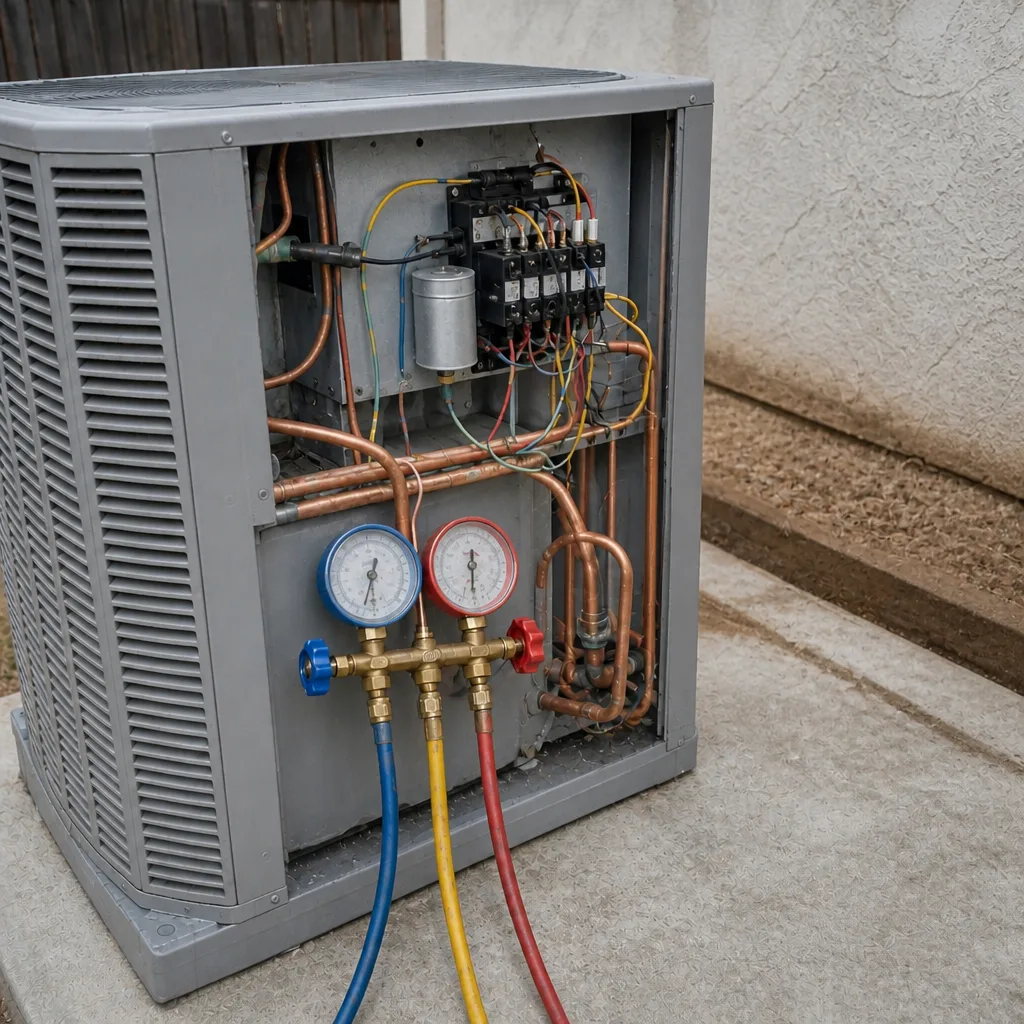
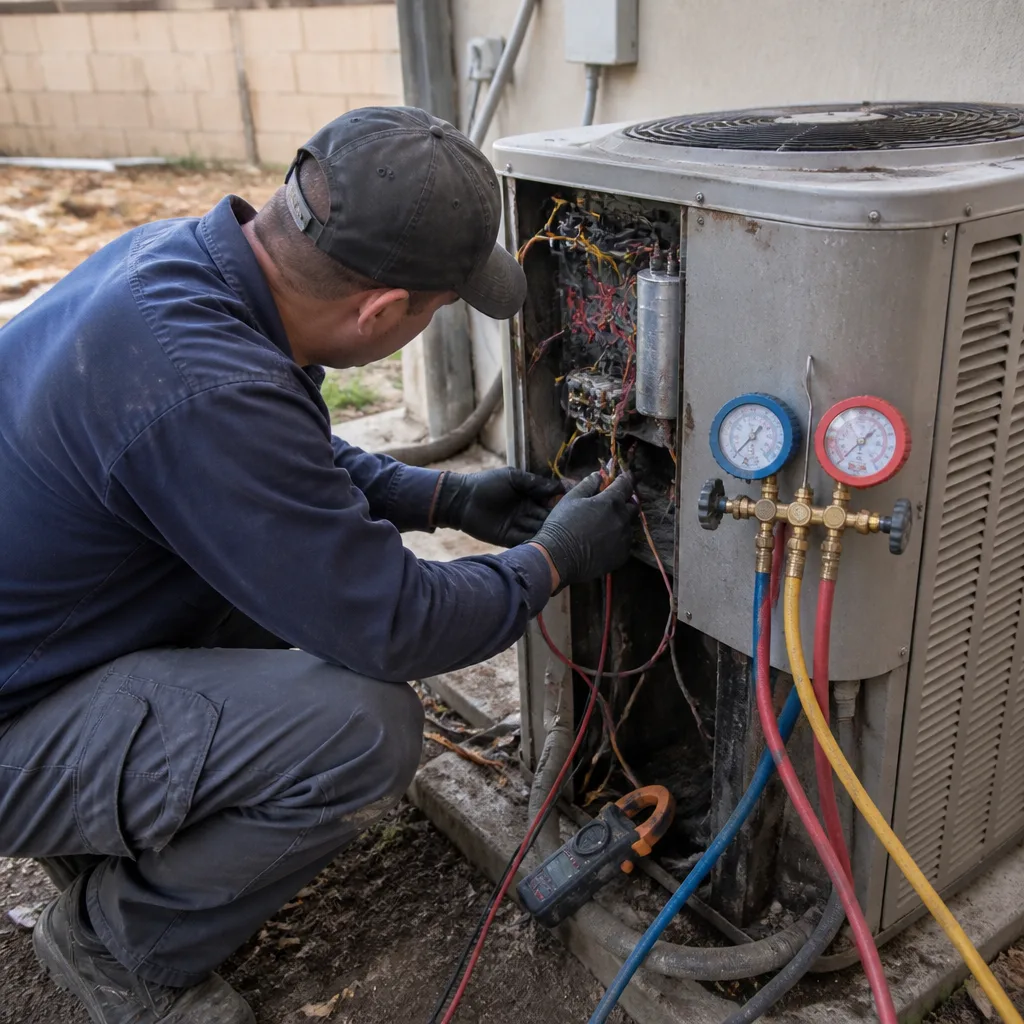
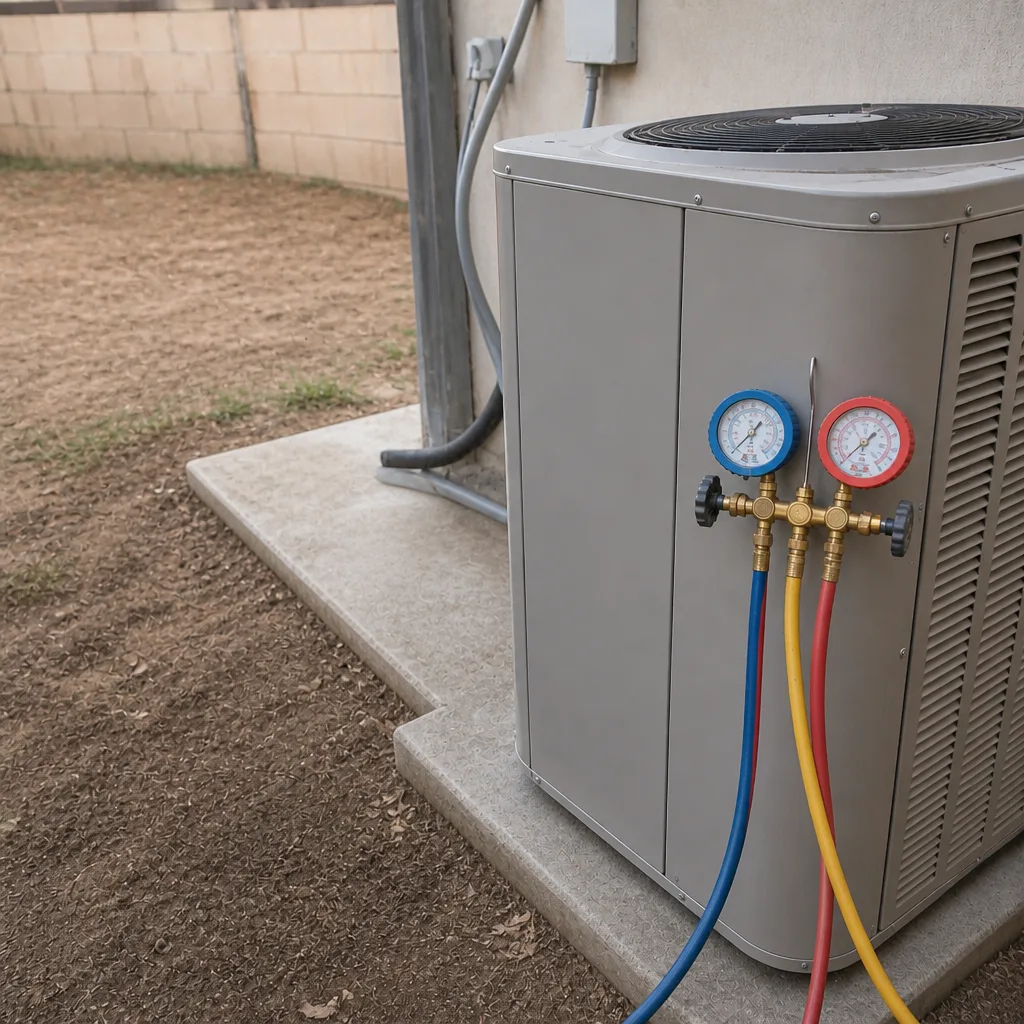
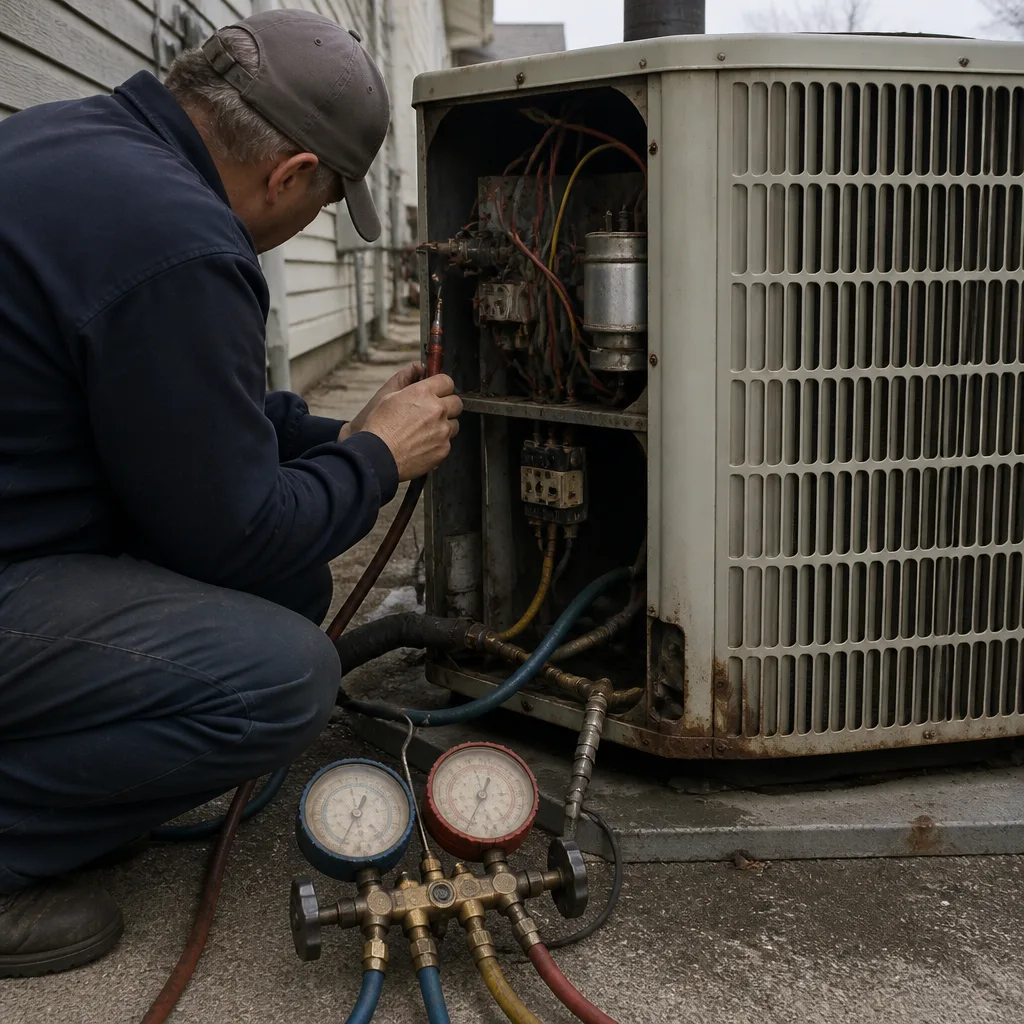
See the difference
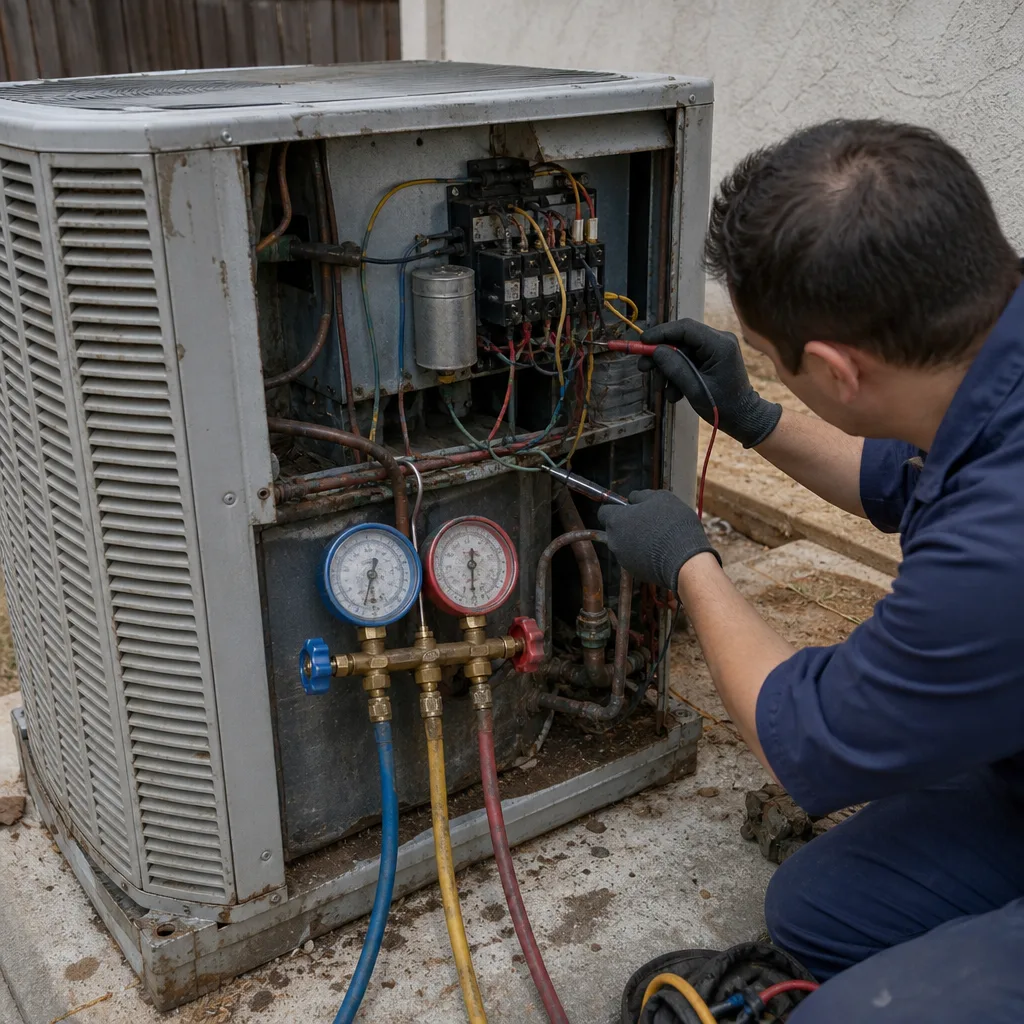 Before
 After
 Before
 After
 Before
 After
When to Call a Professional
Some things just aren’t a homeowner job, and pretending otherwise costs money and sometimes safety. Call us when: the breaker trips more than once, the system won’t start after all four checks, you see ice or frost on the lines, the outdoor unit is making a grinding sound, you smell refrigerant or burning, or the thermostat is showing an error you don’t recognize. Also call if the system is old, the repair bill is climbing, and you want an honest repair-or-replace conversation.
Ray’s Heating & Air Paradise offers free estimates in Paradise – call (855) 664-5714 for a free estimate. We answer 24/7, live person, including late at night when the house is hot and you can’t sleep.
Frequently Asked Questions
Most often it’s one of three things: low refrigerant from a leak, a dirty filter or coil choking the airflow, or a failing capacitor on the outdoor unit. If the outdoor fan isn’t spinning while the compressor hums, it’s almost always the capacitor. Turn the system off and call (855) 664-5714 – we test the capacitor before we suggest anything bigger.
Freeze-up almost always means restricted airflow or low refrigerant. In Paradise homes, the most common cause is a filter that’s plugged faster than expected because of our dust and pollen. Replace the filter, thaw the system fully, and try again. If it freezes a second time, you have a refrigerant leak or a blower issue – that’s a pro call.
No. Aside from federal law requiring EPA Section 608 certification to handle refrigerant, the cans don’t tell you whether your system actually needs refrigerant or has a leak. We’ve seen more compressors ruined by DIY recharge than any other single cause. Call (855) 664-5714 and we’ll find and fix the leak first.
A rough rule: if the repair costs more than 40% of a new system and the unit is over 12 years old, replacement is usually the better money. If it’s under 10 years old and this is the first major repair, fix it. For a written second opinion on any estimate, call us – it’s free, and there’s no pressure attached.
No trip charge inside our county. Everything’s quoted up front, and you see the readings before you see the numbers. If you’re not sure whether you’re inside the county line, call (855) 664-5714 and the person who answers will tell you.
Because it’s the same person every time, and he remembers your system. That’s the difference between an owner-operated shop and a rotating crew that’s never seen your equipment. When a call comes in at two in the morning, Ray answers his own phone. Ask anyone on your street.
The Bottom Line
Most “my AC is dead” calls are one of four things: a tripped breaker, dead thermostat batteries, a plugged filter, or a full drain pan – and you can check all four in ten minutes without any tools. The rest of the time, the difference between a cheap fix and an expensive one is how fast you act and how well you describe what’s happening. Stop the unit when you hear grinding or repeated clicking. Thaw a frozen coil and change the filter before you try again. And when you call, have the brand, age, and symptoms ready so the right part makes the first trip. That’s the whole game. For the broader picture on your whole system, start at Ray’s Heating & Air Paradise home and we’ll get you pointed the right way.
Call (855) 664-5714 for a free estimate in Paradise. Live person answers, day or night.
Written by the team at Ray’s Heating & Air Paradise.