
Last updated November 18, 2026
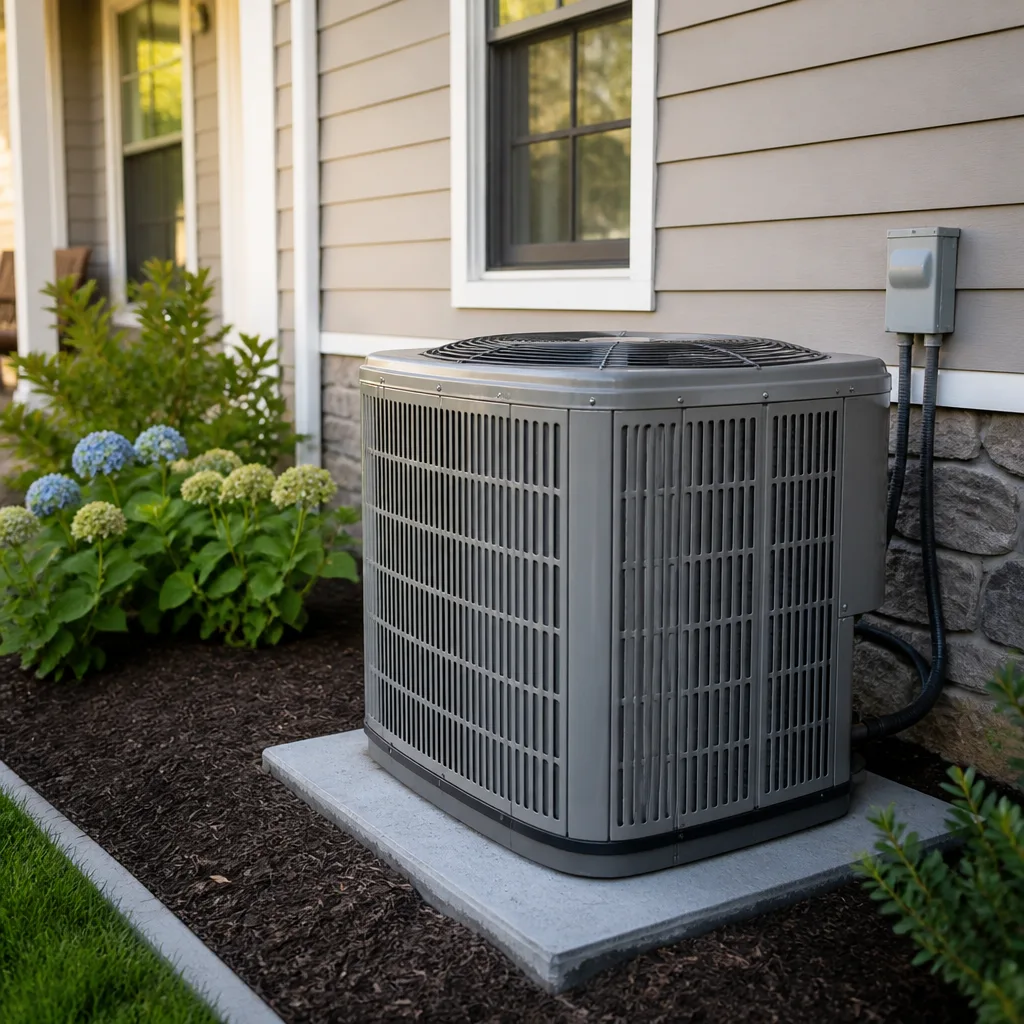 AC repair
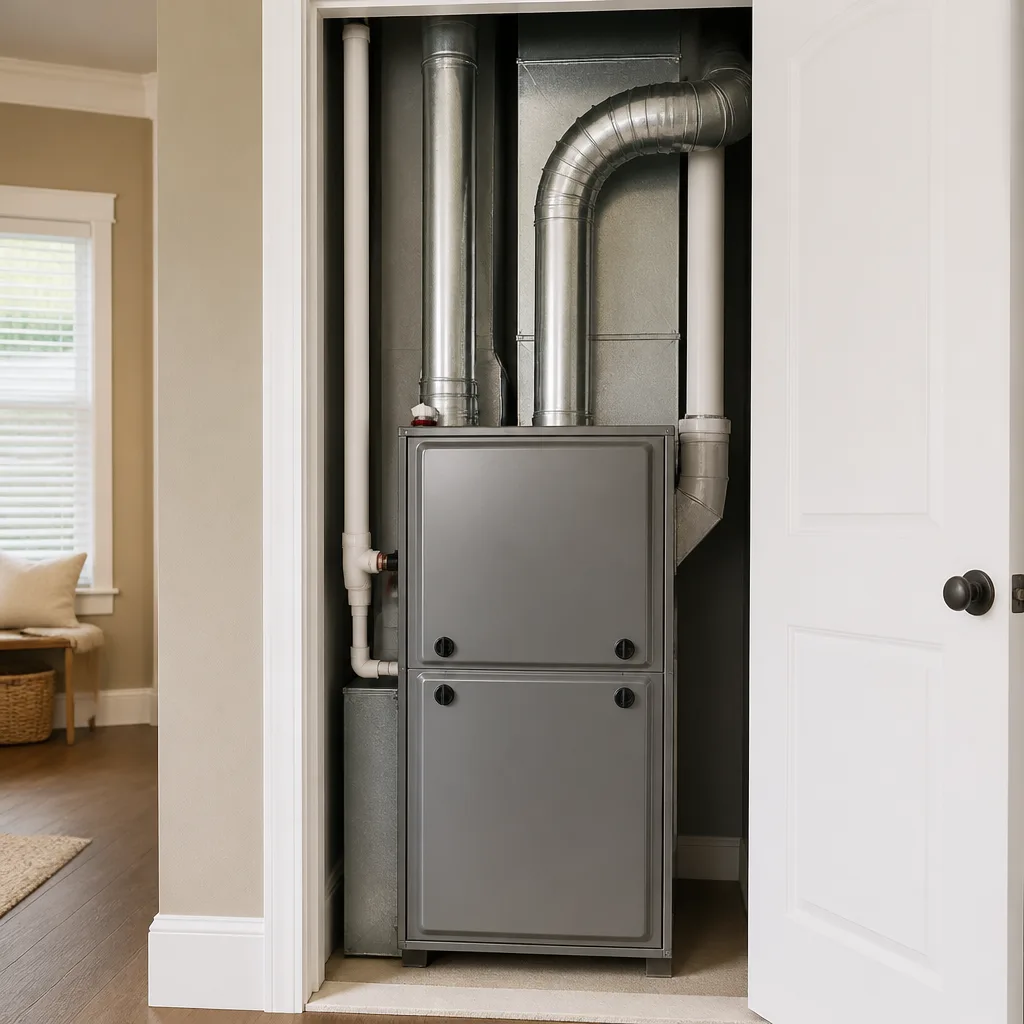 Furnace & heating
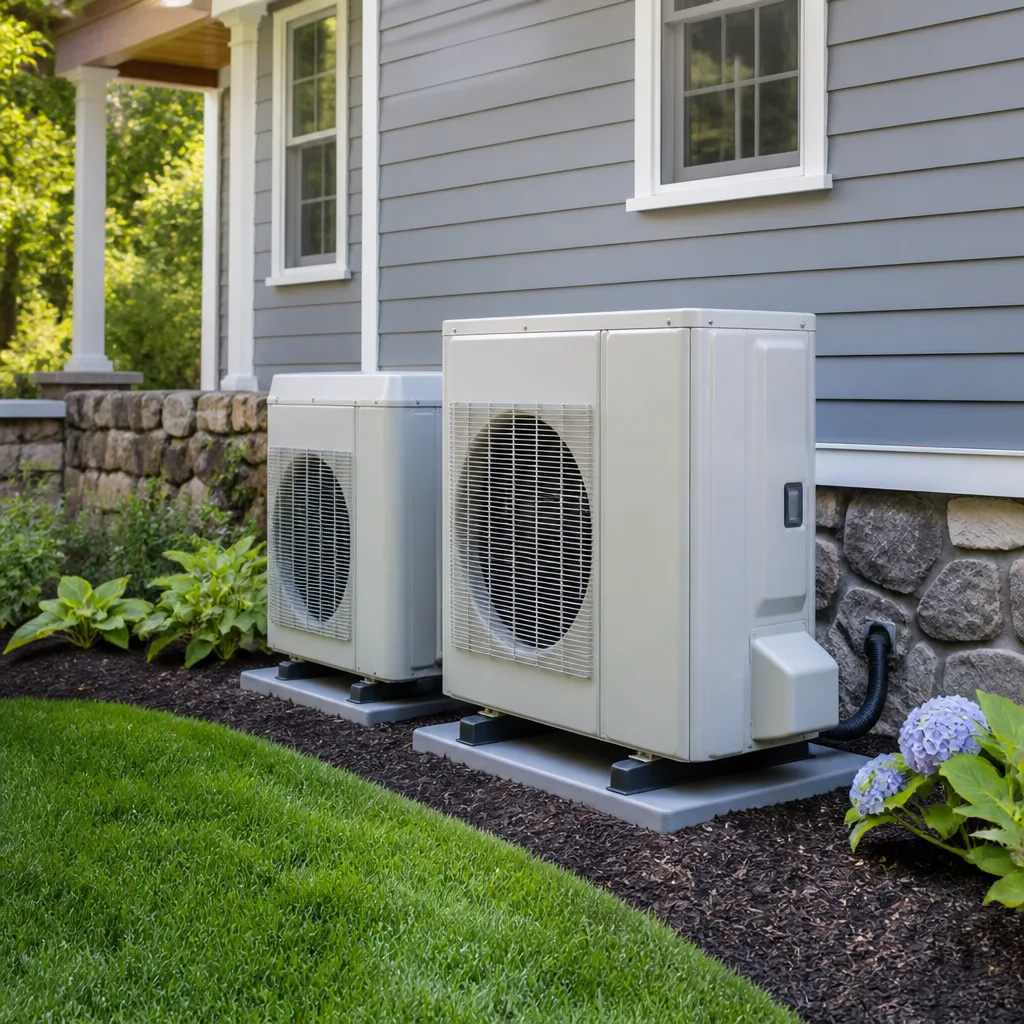 Heat pumps
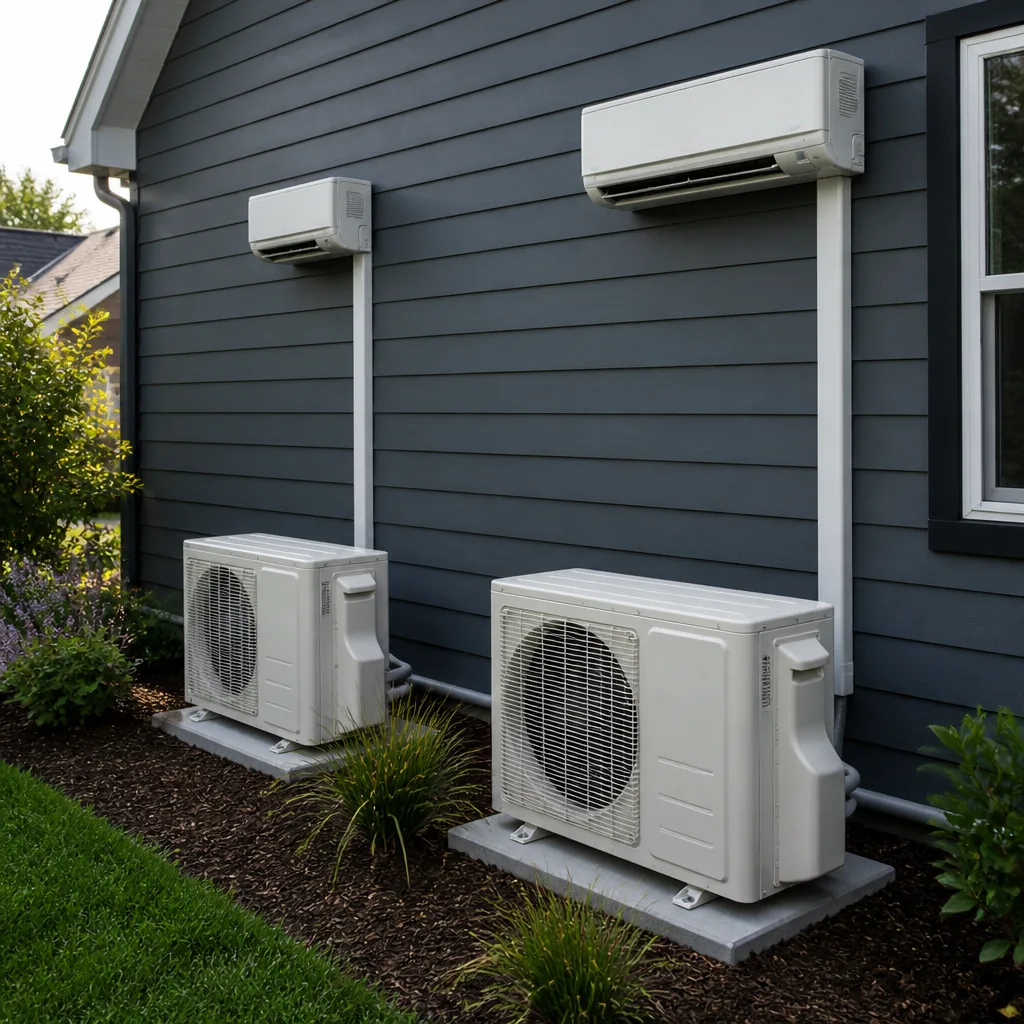 Ductless mini splits
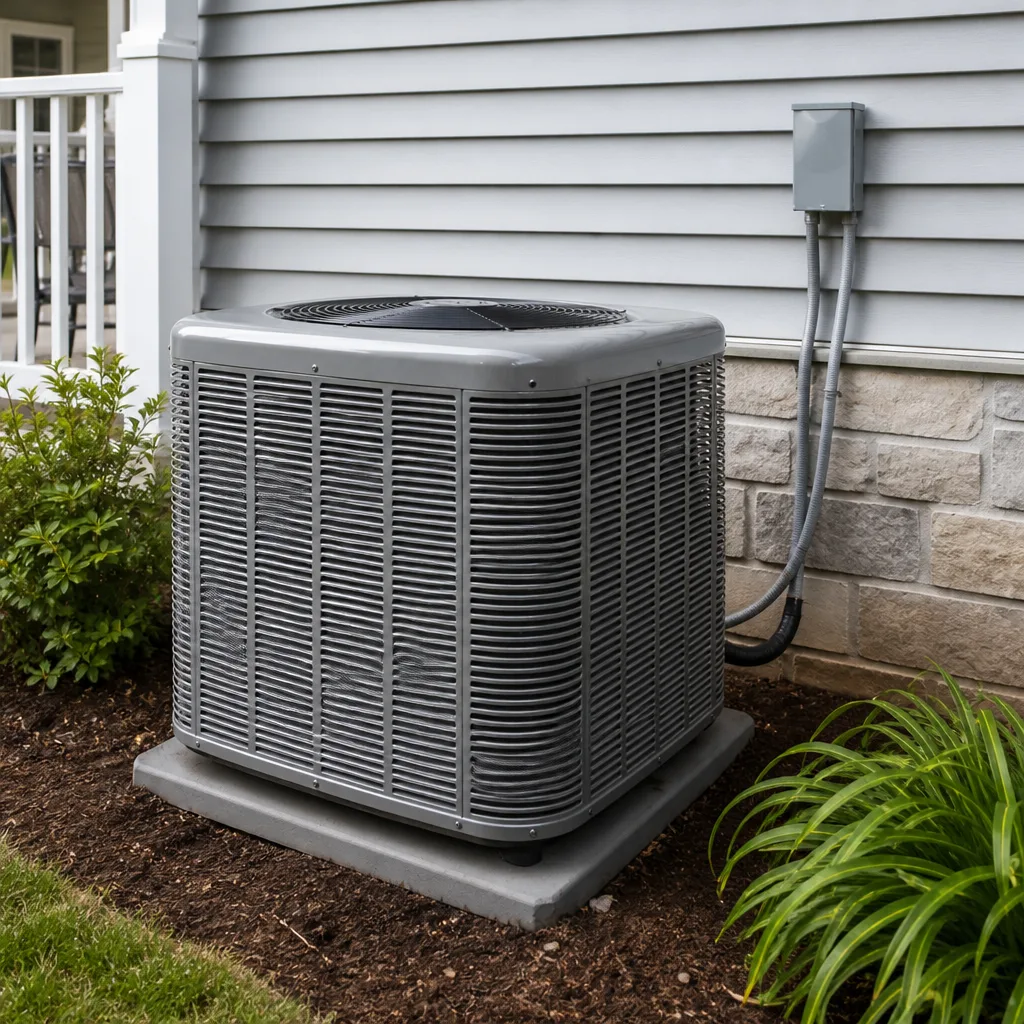 Carrier
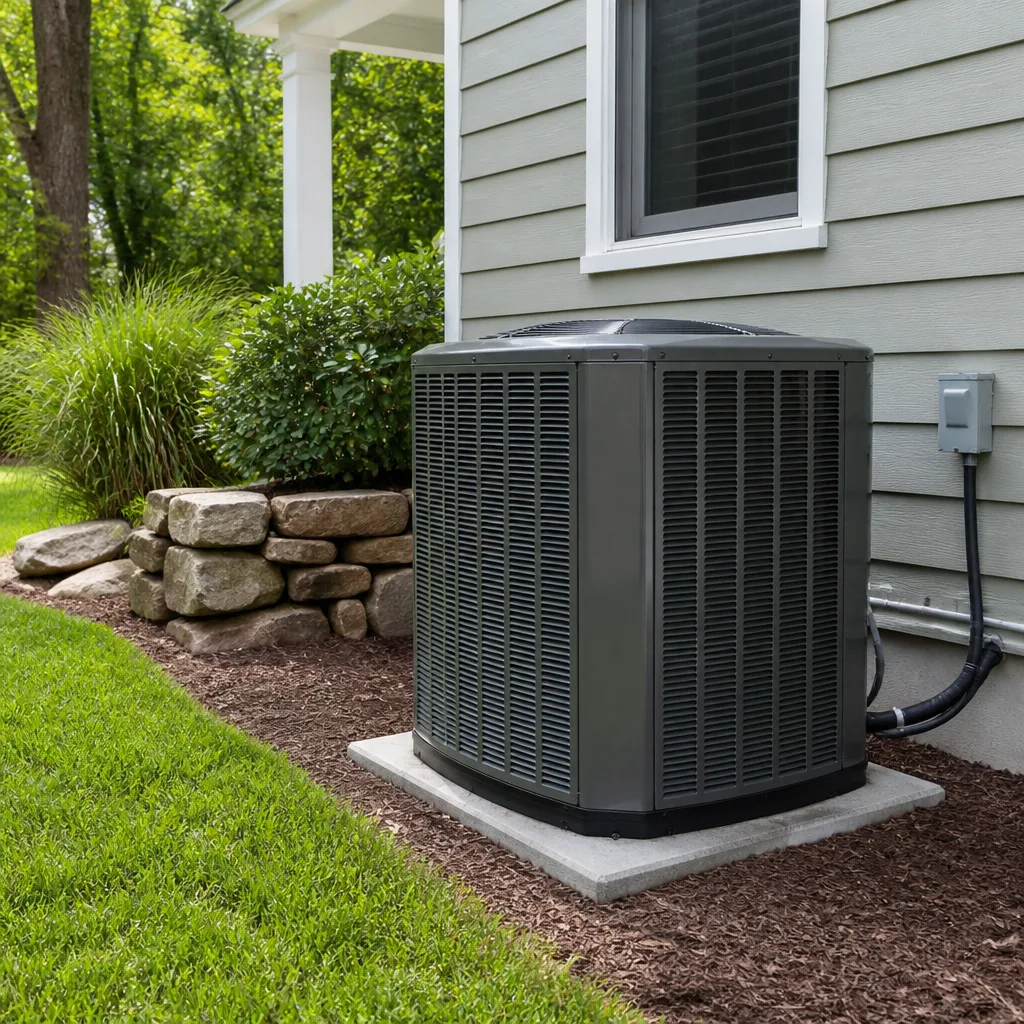 Trane
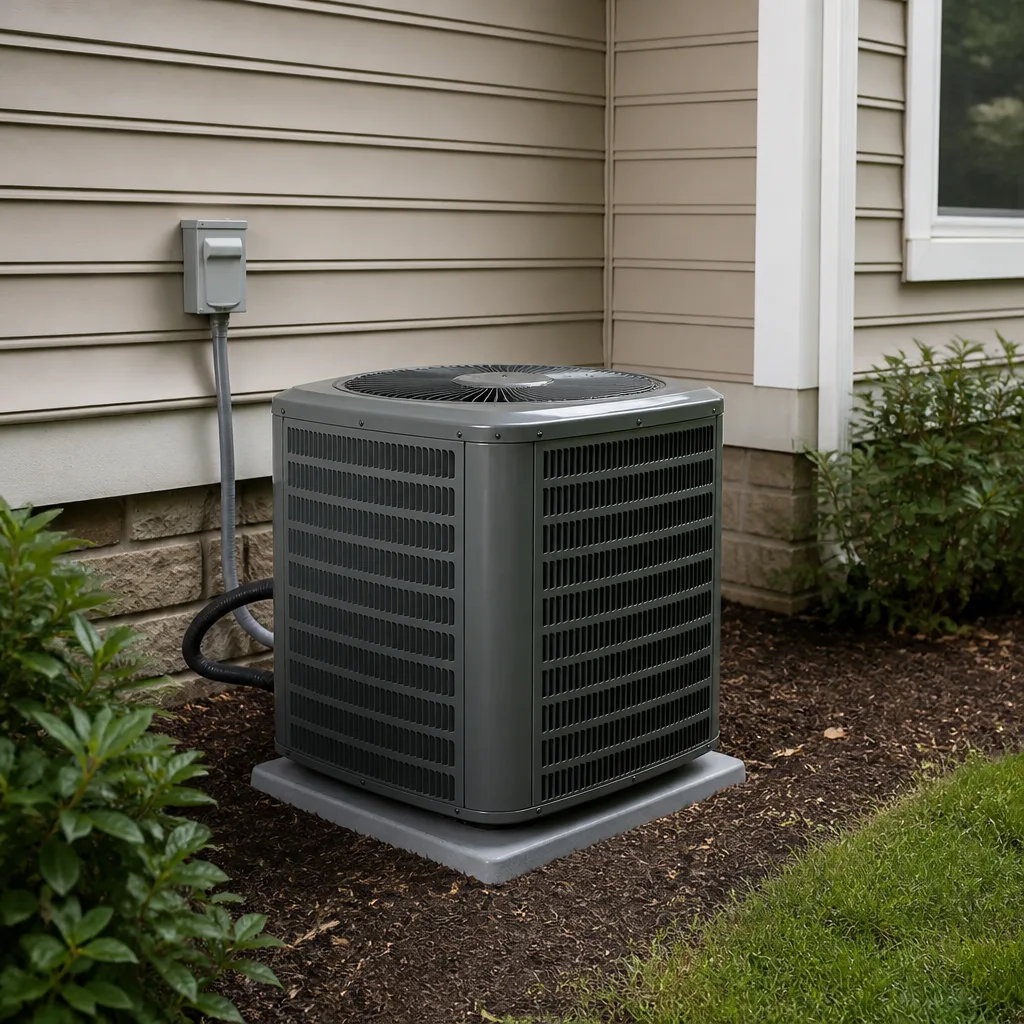 Goodman
Seasonal tune-up and full diagnostic on your Carrier, Trane, or Goodman system - readings shown to you before any repair is proposed
Diagnosis first, numbers second - you approve the repair price before a single part goes in.
Get your free estimateThe Complete Emergency & Commercial HVAC Guide for Paradise Homeowners
A commercial HVAC failure at 11 PM on a Friday in Paradise isn’t an inconvenience. It’s a potential health code violation, a lost weekend of revenue, and a liability question, all at once. Most commercial HVAC guides are written for office towers in Seattle or hospitals in Chicago, and they miss the thing that makes Paradise different: you’re running a business in a 24/7 corridor next to the busiest tourist market on earth, where a rooftop unit dies in July and every other contractor is already booked solid through the Strip. This guide covers what to do in the first 15 minutes of a commercial emergency, the exact temperature thresholds that trigger Nevada labor law, why contractor scarcity in Paradise is a real planning problem, and how to build a backup vendor list before the RTU quits. It’s written for Paradise business owners and the homeowners who rent out ADUs and small commercial spaces here, from the people who answer the phone at two in the morning.
Quick Answer
In Paradise, commercial HVAC emergencies are handled differently from residential ones because most small-business buildings run packaged rooftop units (RTUs) rather than split systems, and those RTUs require a contractor with commercial-level insurance, EPA Section 608 certification, and in many cases the landlord’s written approval before anyone touches the equipment. The first 15 minutes of any commercial HVAC failure should be spent documenting, not troubleshooting: photograph the thermostat, timestamp the failure, check the breaker, and notify your landlord and insurer in writing. Most commercial calls in Paradise are within reach of a well-equipped local shop, but larger chiller and VRF systems belong with a dedicated mechanical contractor.
Styles & brands we work with
- AC repair
- Furnace & heating
- Heat pumps
- Ductless mini splits
- Carrier
- Trane
- Goodman
Table of Contents
- How Commercial RTUs in Paradise Differ From Home Systems
- What to Document in the First 15 Minutes of a Commercial Emergency
- The Temperature Thresholds That Trigger Nevada Labor and Health Codes
- Why Contractor Scarcity in Paradise Changes Your Planning
- What Ray Will Take On, and What He’ll Send Elsewhere
- How to Build a Contingency Vendor List Before You Need It
- When It’s a Home, Not a Business: Residential Emergencies in Paradise
- Routine Maintenance That Prevents 3 AM Calls
How Commercial RTUs in Paradise Differ From Home Systems
Walk behind any strip mall on East Tropicana or along the Boulder Highway corridor in Paradise and you’ll see the same thing: a flat roof dotted with packaged rooftop units. These are self-contained systems, meaning the compressor, condenser coils, evaporator coils, and blower all live in a single metal box. They’re common in Paradise commercial stock because they install fast, replace as a unit, and don’t require interior mechanical rooms. They also behave very differently from the split system in your house.
An RTU typically runs on 208/230V three-phase power, or 460V in larger buildings. That’s not homeowner-grade electricity. Opening the panel on an RTU is not a Saturday project. The refrigerant charge is often larger than a residential system’s, which means EPA Section 608 Universal certification is required to handle it legally. And the access, height, and rooftop safety requirements mean a commercial call is a two-person job, minimum.
Three things that trip up Paradise business owners
- Your landlord probably owns the RTU. In most Paradise strip-mall and small-office leases, the tenant is responsible for filters and thermostat settings while the landlord owns and replaces the RTU. Before anyone touches it, confirm who owns it in writing. You don’t want to pay for a compressor the landlord was already obligated to replace.
- Manufacturer and model matter more than brand name. Rheem, York, Daikin, and Bryant all make packaged units, but the parts catalog and lead times vary by model year, not just brand. Read the data plate on the RTU before you call anyone so you’re not guessing at what you need.
- Filters are the whole ballgame. A clogged RTU filter in a Paradise July is the single most common cause of a compressor that trips on high head pressure. Change them monthly during cooling season. That’s the cheapest insurance you’ll ever buy.
Residential split systems, which we cover on the AC Repair & Installation in Paradise page, follow a different set of rules. That distinction matters when you’re calling for service, because the person at your door needs to know what they’re walking into before they show up.
What to Document in the First 15 Minutes of a Commercial Emergency
In our experience, the businesses that come through an HVAC failure cleanly are the ones who spent 15 minutes documenting instead of 15 minutes guessing. That documentation is what protects you with your landlord, your insurer, and the Southern Nevada Health District if food or employees were exposed. Here’s the exact sequence we recommend.
- Photograph the thermostat. Get a clear photo of the setpoint and the current reading with a timestamp visible or a phone clock in frame. This is your first piece of evidence if there’s ever a dispute about when the failure happened.
- Photograph the unit’s data plate. On an RTU, that’s the metal tag with manufacturer, model, serial, and refrigerant type. Don’t open any panel to get it. It’s on the outside of the cabinet.
- Check the breaker, then stop there. Look at the disconnect and breaker panel at the unit. If the breaker is tripped, reset it once and see if it holds. If it trips again, stop. Repeated breaker resets on a commercial compressor can turn a repair into a full replacement.
- Write a one-paragraph timeline. When did you notice it? What did the space temperature reach? Who was on shift? Send it to yourself by email so it’s time-stamped and stored.
- Notify your landlord in writing. Text or email is fine. Verbal calls disappear. A written notice starts the clock on their response obligation under your lease.
- Call your insurer if there’s any risk of spoilage or mold. Most commercial policies require prompt notice for damage claims. A 15-minute call today beats a claim denial in 60 days.
- Keep employees and customers out of the affected space. This is a health and safety decision, not a comfort decision. The next section explains why.
If it’s a home emergency rather than a business one, the mechanics are simpler but the urgency is still real. A failed system in a Paradise August is a health risk for older residents, and that’s when you should be calling us. The Heating & Furnace in Paradise page covers the winter side of the same problem.
The Temperature Thresholds That Trigger Nevada Labor and Health Codes
This is the number most Paradise business owners don’t know: Nevada OSHA and Cal/OSHA-style heat illness prevention frameworks, which Nevada has adopted in substance through its state safety plan, treat sustained workplace temperatures above roughly 85°F combined with elevated heat index as a trigger for mandatory heat illness precautions. Those precautions include access to water, shaded or cooled break areas, acclimatization periods for new hires, and in extreme cases, curtailing or relocating work. Once indoor temperatures push toward the low 90s and stay there, especially in food service and warehouse environments, you’re in territory where the health district can take an interest and where your workers’ comp exposure climbs fast.
We’re not attorneys and we’re not giving legal advice. What we can tell you plainly, from a lot of summers in Paradise, is this: an HVAC failure in July is a labor compliance question the moment the space passes 85°F, not 95°F. The most common mistake is waiting until people are visibly uncomfortable. By then you’re already exposed.
What to do when you’re approaching the threshold
- Move employees to a cooled space, even a small office with a working mini-split. It counts.
- Document the indoor temperature hourly. Written records beat memory.
- Call for emergency service the moment you cross 80°F, not 90°F. In Paradise, wait times stretch fast once the afternoon heat sets in.
- For food service, check refrigeration temps immediately. A failed RTU often drags walk-in coolers with it.
Why Contractor Scarcity in Paradise Changes Your Planning
Paradise is a small unincorporated community that sits directly against the Las Vegas Strip corridor, and the density of casinos, hotels, and resort properties here is genuinely unusual. When a peak-demand week hits, and it happens every July and August, the large mechanical contractors in the region are mostly locked into service agreements with the resort properties. Their phone lines aren’t going to allocate two technicians to a strip mall on Flamingo during the same week the Strip is running at 95% occupancy.
That’s the scarcity nobody warns you about. It’s not that there are no HVAC contractors in Paradise. There are plenty. It’s that the big ones get pulled toward the biggest contracts in the biggest buildings during exactly the weeks your small commercial RTU is most likely to fail. This is a planning problem, not a crisis problem. The solution is a contingency vendor list built in February, not in July.
It’s also why homeowner-grade contractors who moonlight in commercial can cause real problems. An unlicensed or under-insured outfit willing to take a commercial RTU job they shouldn’t touch will get you a repair that voids your manufacturer warranty and creates a liability gap if something goes wrong. Verify license numbers before anyone gets on the roof. Any reputable shop will hand theirs over without hesitation.
What Ray Will Take On, and What He’ll Send Elsewhere
Here’s the honest part of this guide that most companies won’t write. Ray’s Heating & Air is a local shop with residential and light commercial capability, and that means there is a real line between what we should take and what we shouldn’t.
What’s comfortably in our scope
- Residential split-system repair, replacement, and installation
- Packaged rooftop units up to around 25 tons serving small retail, offices, and restaurants
- Heat pump and mini-split work, which is common in Paradise offices carved out of larger buildings
- Ductwork diagnostics, filter service, and airflow corrections
- Emergency calls for small commercial spaces where the fix is a compressor, blower motor, capacitor, contactor, or control board
What belongs with a dedicated commercial mechanical contractor
- Chillers, cooling towers, and central plant equipment
- VRF/VRV multi-zone systems serving large buildings
- Anything requiring engineering drawings or load calculations beyond a packaged unit swap
- Kitchen make-up air and exhaust balancing in full commercial restaurant builds
- Anything under an existing service agreement with a resort or hotel property (you’d be calling us out of turn, and they’ll want their own contractor on it)
If your call is outside that scope, Ray will tell you on the phone before anyone gets in a truck. We’re not going to take your money for a job that needs different equipment and different crews. That’s what a name on the truck actually means. If you’re evaluating the technician side of what you’ll get, our Heat Pump & Mini Split in Paradise page covers the equipment side in more detail.
How to Build a Contingency Vendor List Before You Need It
The best time to find a contractor is the week you don’t need one. Here’s the exact list we recommend Paradise business owners build and keep in a shared document that at least two employees can access.
- Your primary HVAC shop, with a specific named contact. Not a generic dispatch line. A number that reaches a human. Ours is (855) 664-5714, and a live person answers around the clock.
- A backup shop. Call them in the off-season, ask if they take overflow calls from small commercial spaces, and get a quote in writing. If they don’t, you’ve learned something valuable in five minutes.
- Your landlord’s designated HVAC contact. It’s often written into the lease. If it isn’t, ask for it in writing before you ever need it.
- Your insurer’s claims line. Saved in your phone, not buried in a policy PDF.
- A refrigeration contractor if you’re in food service. HVAC and refrigeration are related but distinct trades, and you’ll want both numbers.
- Southern Nevada Health District’s environmental health line if you serve food. Good to have on hand for spoilage questions.
Test the list once a year. Pick a slow Tuesday in spring and call your primary vendor with a routine maintenance request. If the experience is rough in April, you don’t want to find out in July.
When It’s a Home, Not a Business: Residential Emergencies in Paradise
Not everyone reading this guide owns a strip mall. Paradise has a lot of single-family homes, older neighborhoods, and ADU rentals where the commercial-vs-residential distinction doesn’t apply. The residential version of this problem is simpler: when the AC dies in a Paradise August, you call, we come, we test the capacitor before anyone says the word compressor, and we hand you the readings before any numbers.
Residential emergencies have their own rules. A failed furnace in winter is a carbon monoxide risk, not just a comfort problem, and it’s the kind of thing that should never be handled by the homeowner. The same goes for spring and cable work on a garage door, or anything involving the electrical panel. Those are trained-professional categories, not weekend projects. On the HVAC side, the person at your door should be background-checked, uniformed, and able to tell you what they found in plain English before they quote a fix. Our Ray’s Heating & Air Paradise home page lays out what that service looks like in practice.
Routine Maintenance That Prevents 3 AM Calls
The honest truth about commercial HVAC emergencies is that most of them started as routine problems somebody ignored for two months. Here’s what we see working for Paradise businesses that stay out of trouble.
- Filter changes monthly in cooling season. Not quarterly. Monthly. Dirt is the number one cause of commercial compressor failures in Paradise, where dust and construction traffic are a permanent fact.
- Belt inspection twice a year. A failed belt is a $60 part and a $400 emergency call if you find it at midnight.
- Coil cleaning going into summer. A dirty condenser coil in a Paradise July is a compressor running at high head pressure all day. That’s how compressors die.
- Documented thermostat setpoints. Write down your business hours setpoints and stick to them. Nobody benefits from an employee dropping the setpoint to 65°F on a 112°F day.
- Annual inspection with a written report. Not a phone summary. A written report with readings, so you can compare year over year.
Every job we do carries the 90-Day Done Right Promise, in writing. If something we fixed isn’t right, one call brings Ray back.
Common Mistakes to Avoid
- Resetting a tripped breaker more than once. If a commercial compressor breaker trips twice, the system is telling you something. A third reset can turn a $650 repair into a $9,000 RTU replacement.
- Letting a contractor on the roof without checking the license. In Paradise, ask for the license number before anyone shows up. Verify it. Any legitimate shop provides it without hesitation.
- Assuming the landlord owns the RTU without reading the lease. We’ve seen Paradise tenants pay $8,000 for a replacement that was the landlord’s obligation under a clause on page 11.
- Waiting until the space hits 90°F to call. Nevada’s heat illness framework kicks in well below that. Call at 80°F.
- Not testing the contingency vendor list in the off-season. The number in your phone is worthless if it goes to a voicemail maze on the Friday night you actually need it.
- Skipping monthly filters in cooling season. A $12 filter is cheaper than the compressor it protects by a factor of about 700.
- Thermostat-shopping under load. Dropping a setpoint 10 degrees below normal doesn’t cool the space faster. It just runs the compressor to death.
See the difference
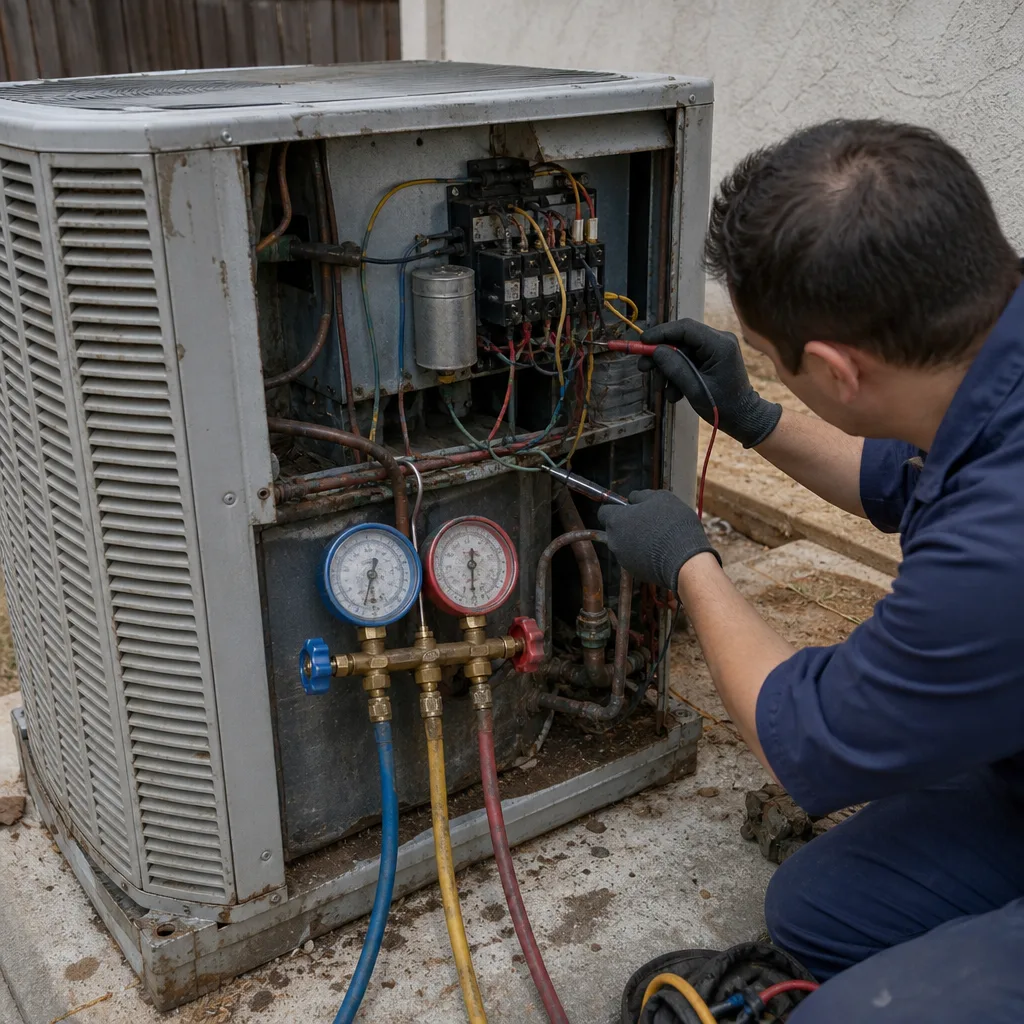 Before
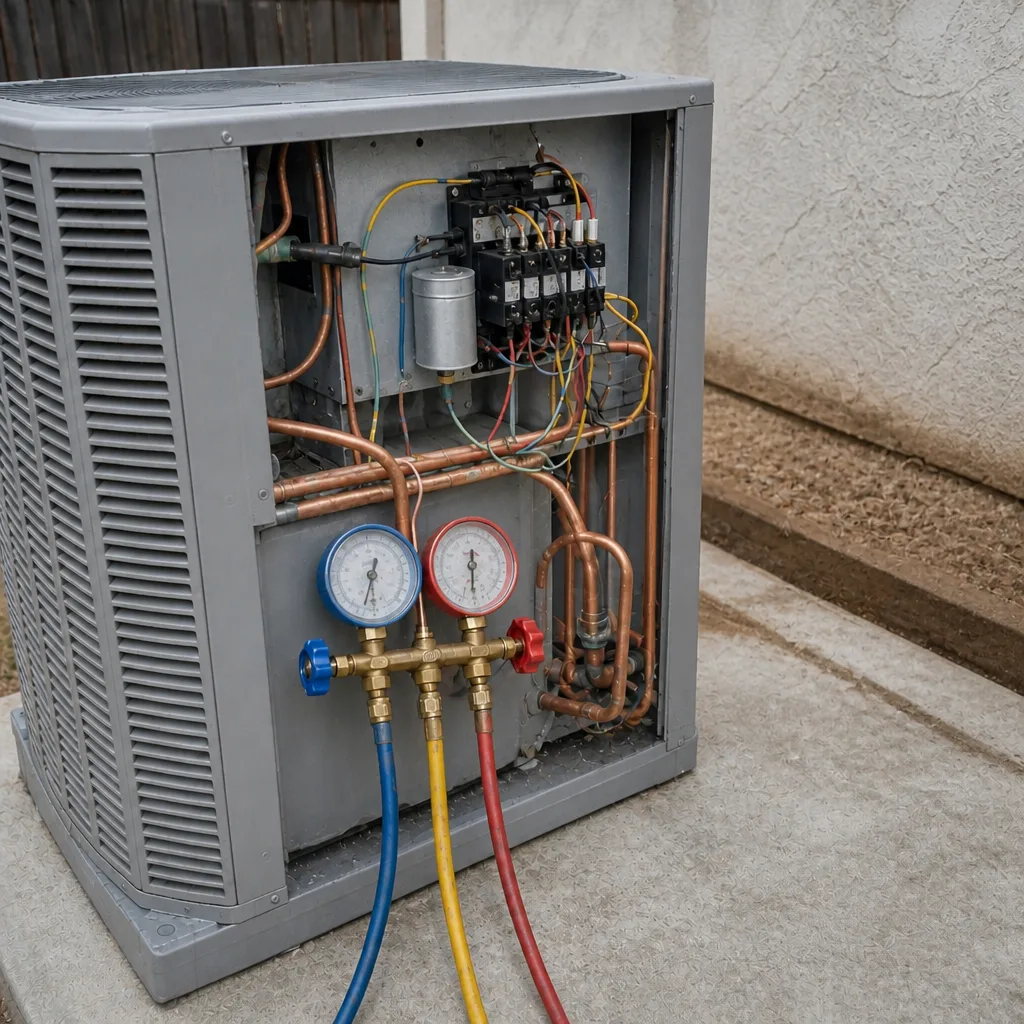 After
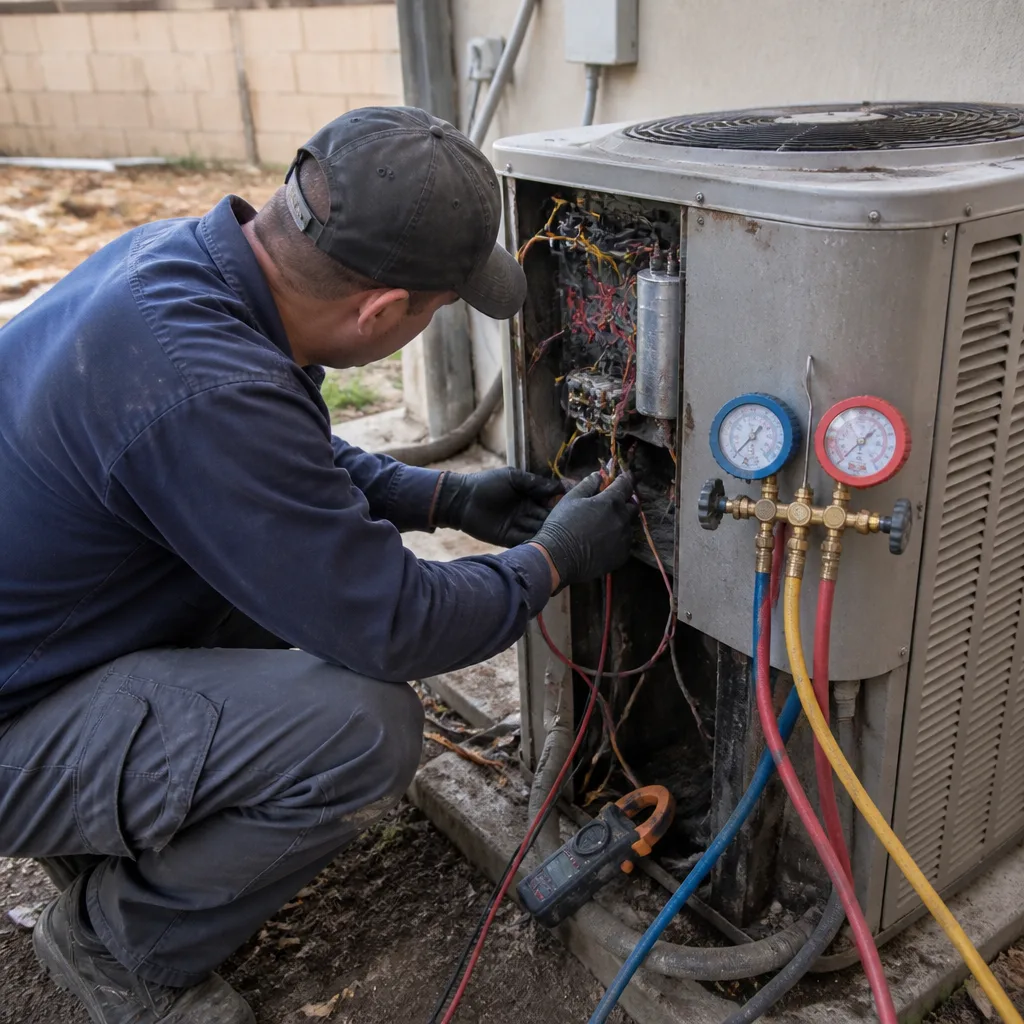 Before
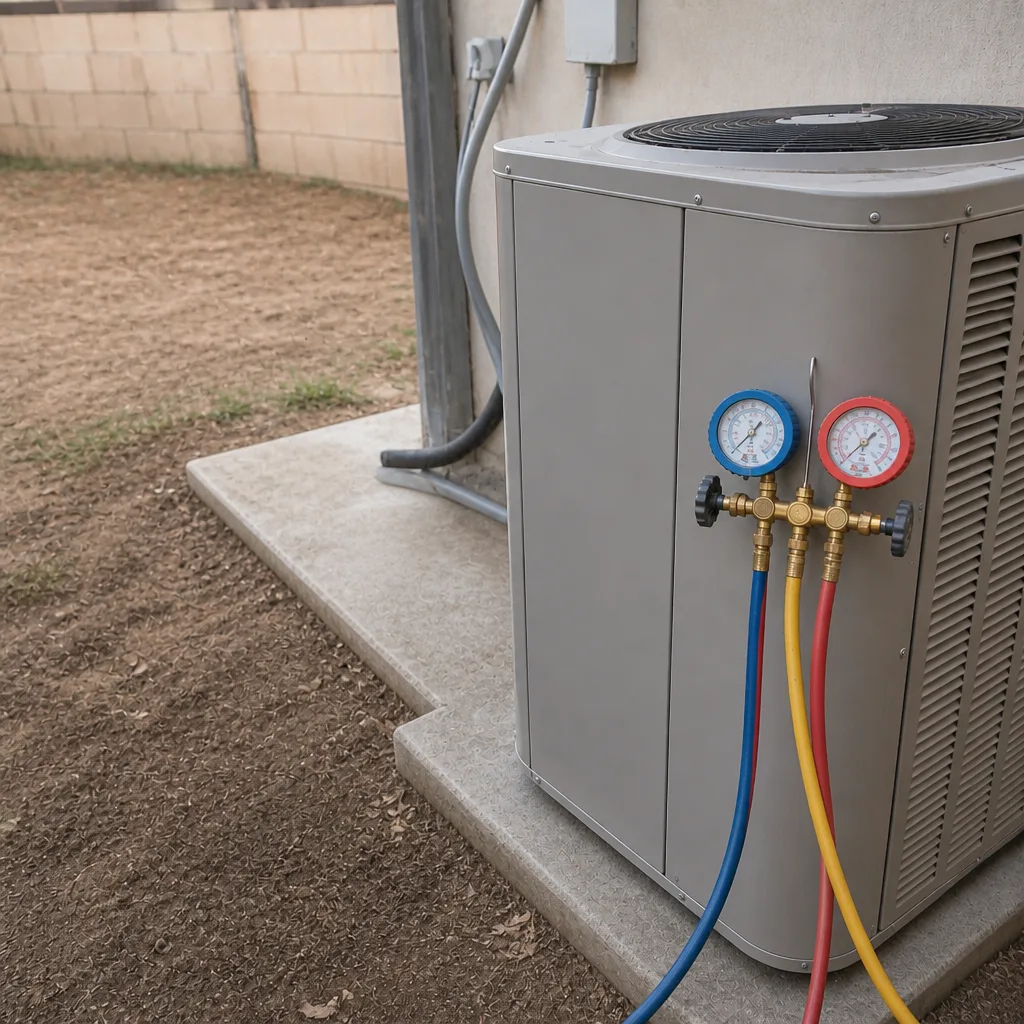 After
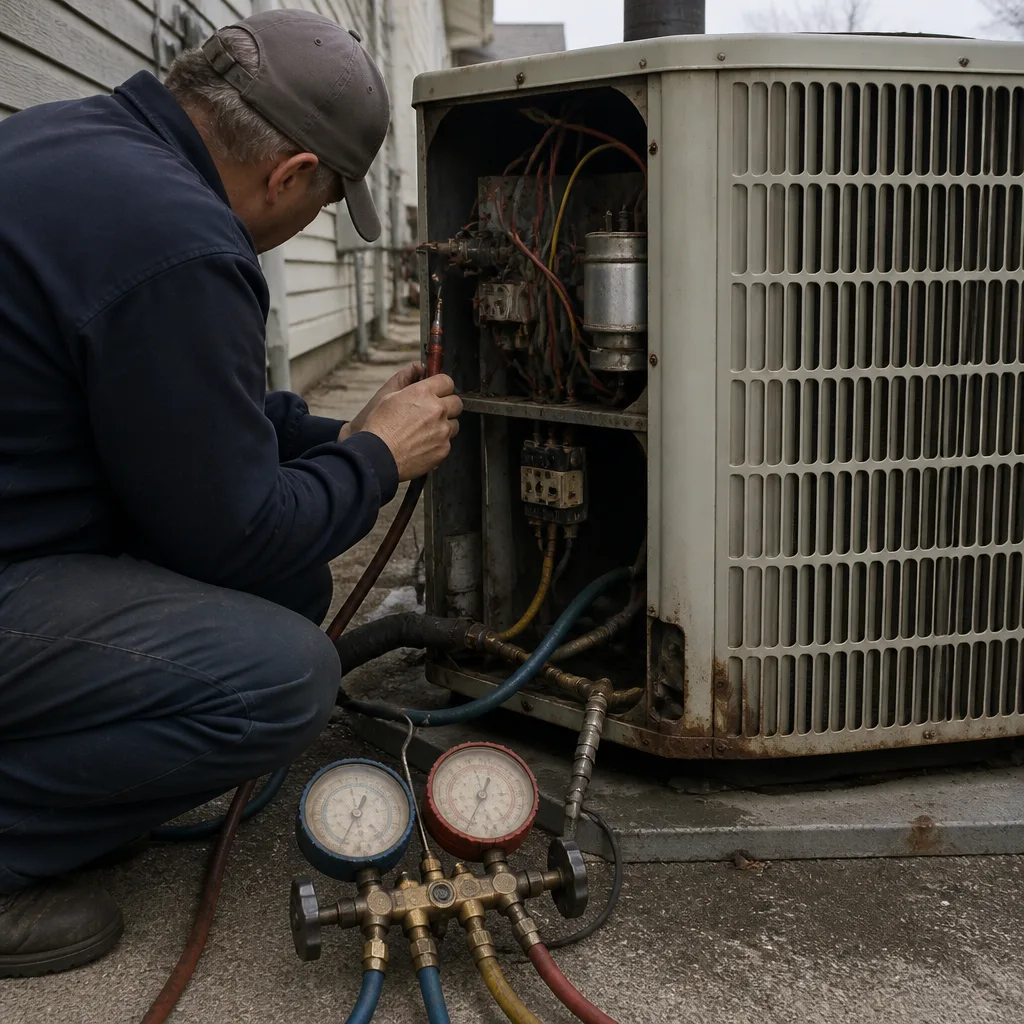 Before
 After
When to Call a Professional
Call a professional the moment you smell refrigerant, see ice on the refrigerant lines, hear a compressor short-cycling, see repeated breaker trips, or find water pooling near a rooftop unit. Call when the space temperature crosses 80°F and the forecast says it’s going to 108°F by 3 PM. Call the moment you smell gas near a rooftop gas pack, and leave the building first. Call when you’re a business owner in Paradise and your first instinct is to “wait and see” – because Paradise in summer doesn’t reward waiting. Ray’s Heating & Air Paradise offers free estimates in Paradise – call (855) 664-5714.
Frequently Asked Questions
For light commercial spaces – strip malls, small offices, restaurants – yes, in most cases we can respond same day, and we answer the phone around the clock. For larger chiller or VRF systems we’ll tell you on the call that you need a dedicated mechanical contractor, and we’ll say so before anyone shows up. Call (855) 664-5714 for the fastest answer.
Photograph the thermostat with a visible timestamp, photograph the RTU data plate without opening any panels, check the breaker once, and notify your landlord and insurer in writing. Then call for service. Don’t reset a tripped breaker more than once – that’s how minor failures become compressor replacements. Call (855) 664-5714 and a live person will pick up.
There’s no single magic number in statute, but Nevada’s heat illness prevention framework treats sustained workplace temperatures above roughly 85°F as a trigger for mandatory precautions: water, cooled break areas, and acclimatization. Once you’re pushing toward the low 90s indoors, you’re in territory where curtailing work or relocating employees isn’t just smart, it’s defensible. Call the moment you cross 80°F – (855) 664-5714 – because emergency wait times in Paradise climb fast in July.
Because the resort and hotel properties in and around Paradise lock the regional mechanical contractors into service agreements during exactly the weeks small businesses need help most. The big shops get pulled toward the big buildings. That’s why a contingency vendor list built in February beats a phone call in July. Ray’s Heating & Air answers the phone around the clock and doesn’t run that kind of rotation – call (855) 664-5714.
That depends entirely on what’s actually wrong, which is why we test the capacitor and read the pressures before we quote anything. A commercial capacitor or contactor replacement runs in the low hundreds. A blower motor replacement runs higher. A compressor replacement on a larger RTU runs into the thousands. You’ll see the readings and the numbers before any work begins, and free second opinions are available on any written estimate from another contractor. Call (855) 664-5714 for your free estimate.
Yes. Residential AC repair, heating, furnaces, heat pumps, and mini-splits are the core of what we do, and most Paradise homeowners we serve are on the same plan-of-attack: call us when something’s wrong, we show up, we test, we quote. Every job carries the 90-Day Done Right Promise in writing. Call (855) 664-5714 for a free estimate.
The Bottom Line
Commercial HVAC emergencies in Paradise are a different animal from residential ones because most Paradise businesses run packaged rooftop units, the landlord often owns the equipment, and the local contractor pool gets pulled toward the resort corridor during exactly the weeks you need help most. Document everything in the first 15 minutes – thermostat photo, data plate photo, one breaker reset and no more, landlord notified in writing, insurer notified for any spoilage risk. Know the 85°F threshold that changes your labor obligations. Build a contingency vendor list in February and test it in April. And if a call is outside our scope, Ray will say so on the phone before anyone gets in a truck. No surprises, no rotating crew, and a live person answers every call – including at two in the morning.
When you’re ready for an honest read on your system, call (855) 664-5714 for a free estimate. Ray’s Heating & Air Paradise answers the phone around the clock, publishes name, address, and license number, and backs every job with the 90-Day Done Right Promise in writing.
Written by the team at Ray’s Heating & Air Paradise.