
Last updated November 18, 2026
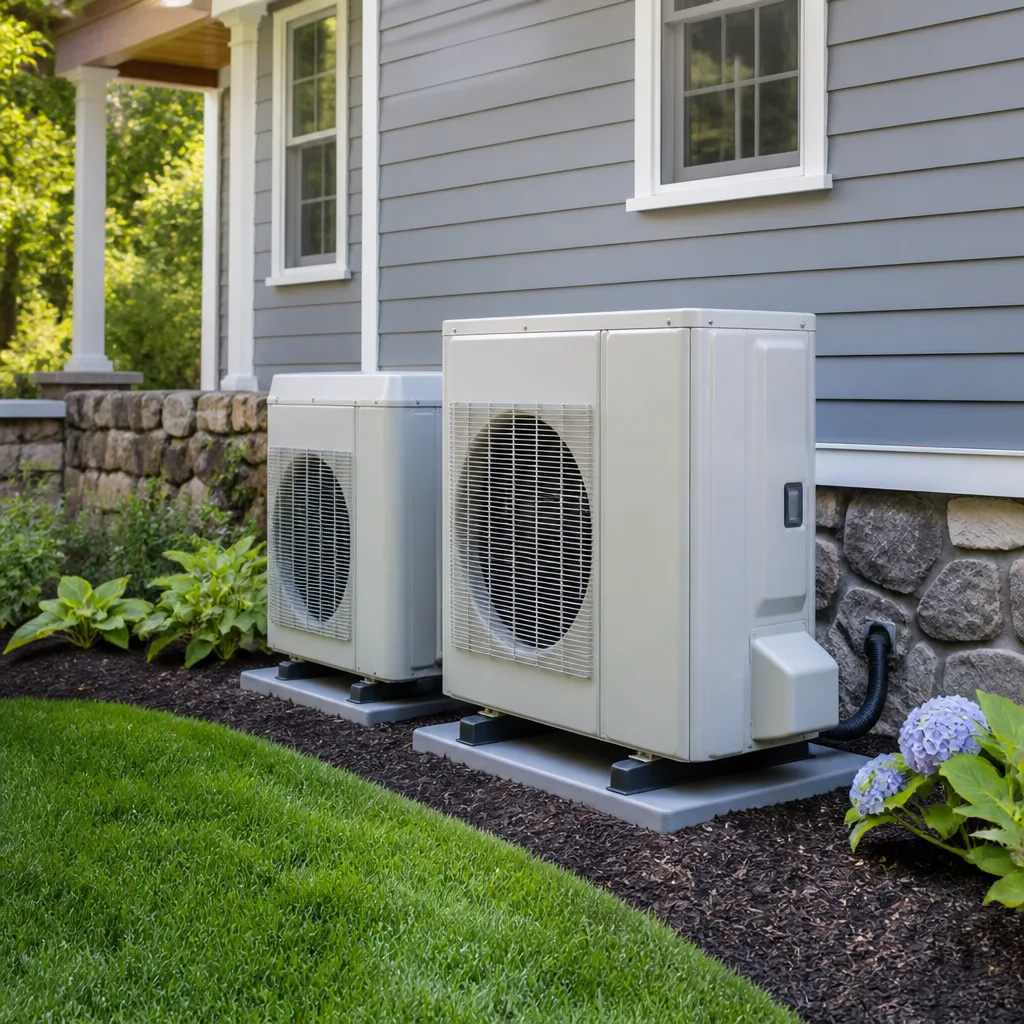 Heat pumps
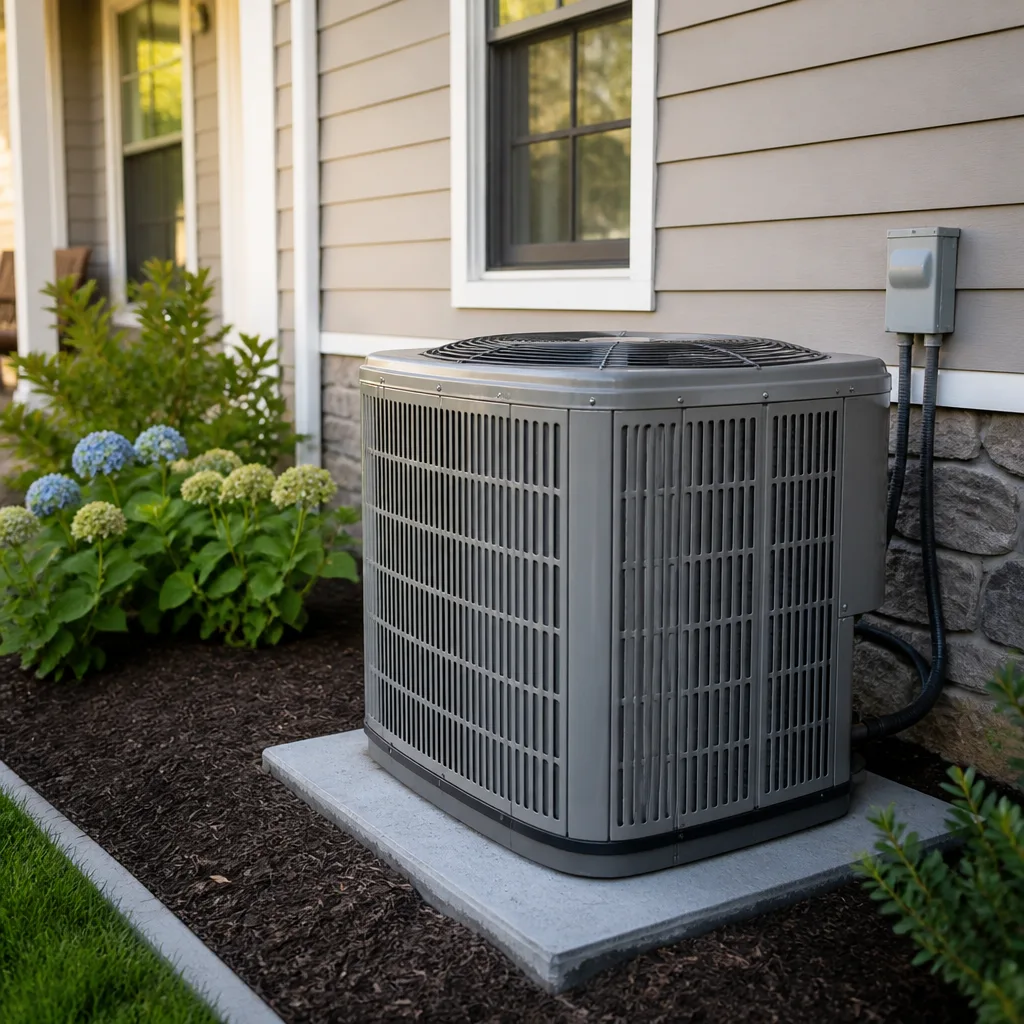 AC repair
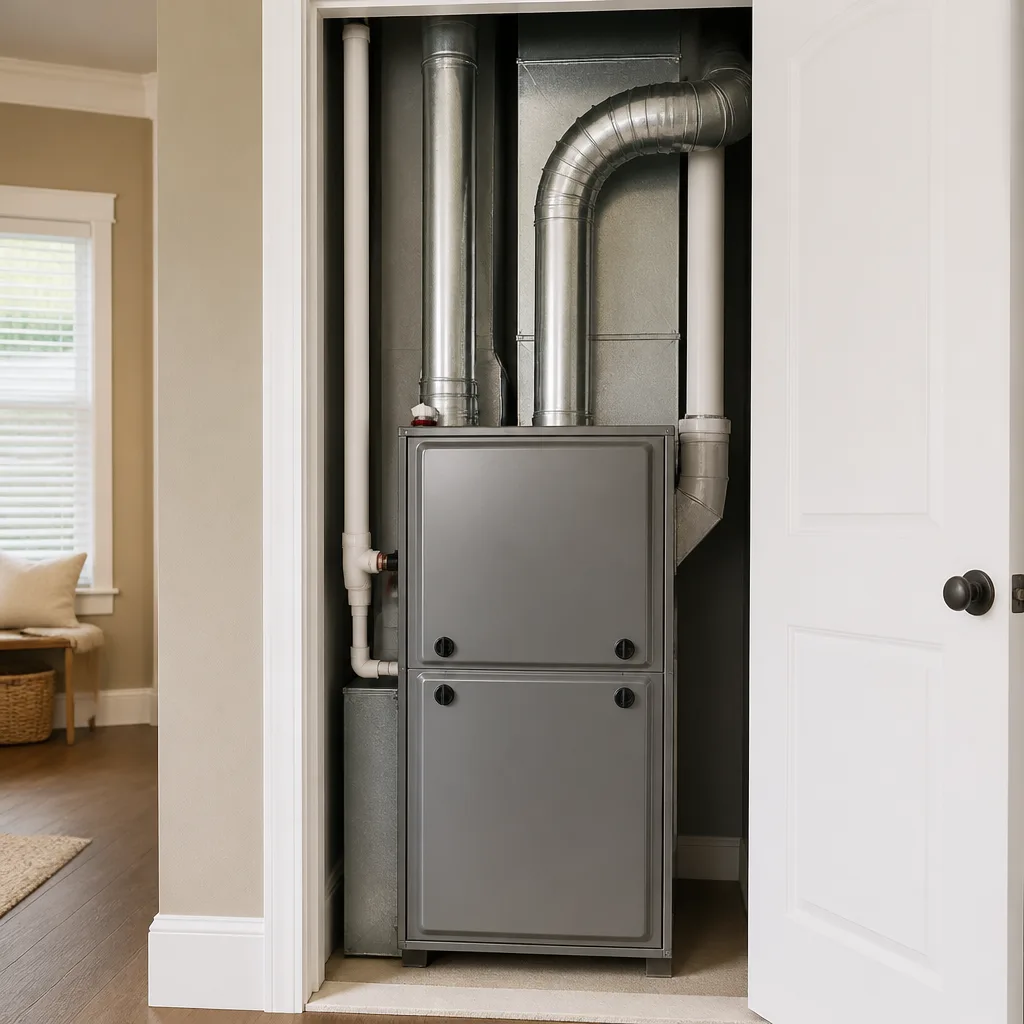 Furnace & heating
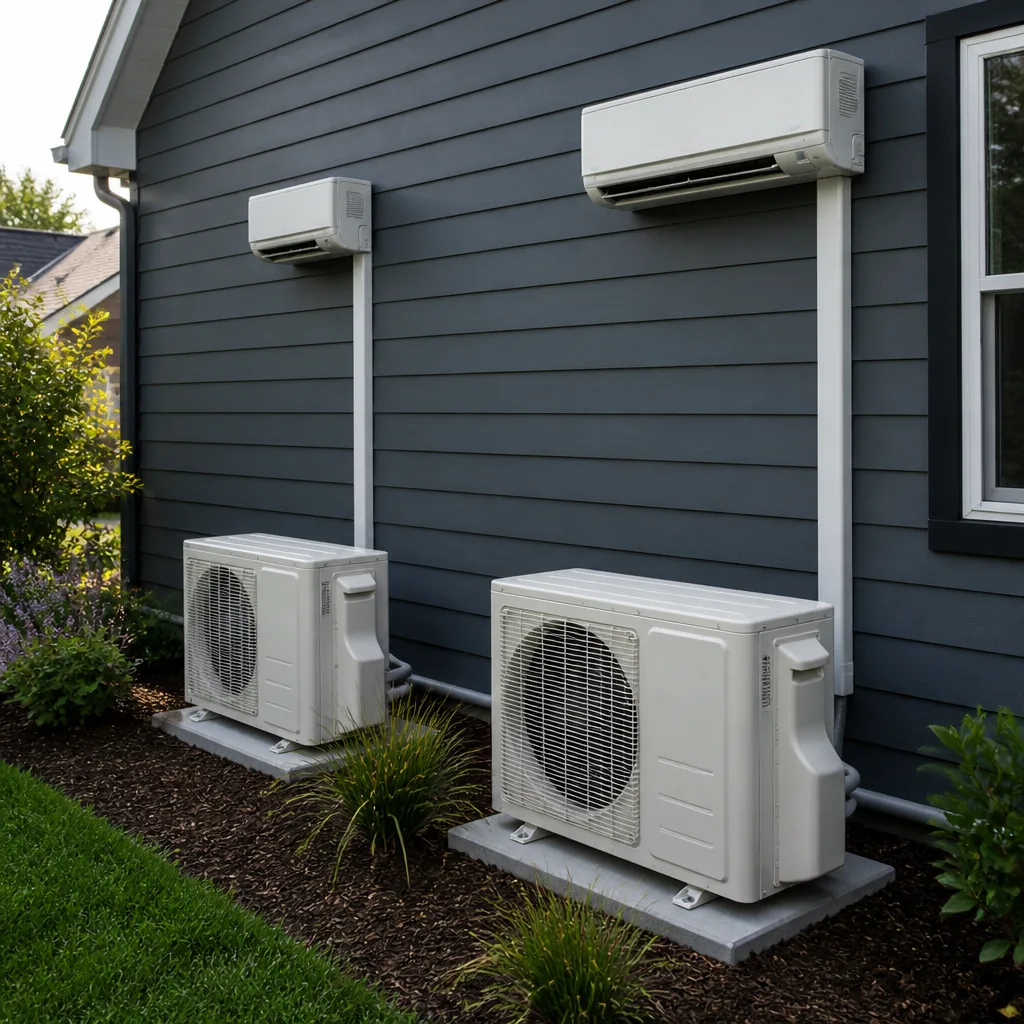 Ductless mini splits
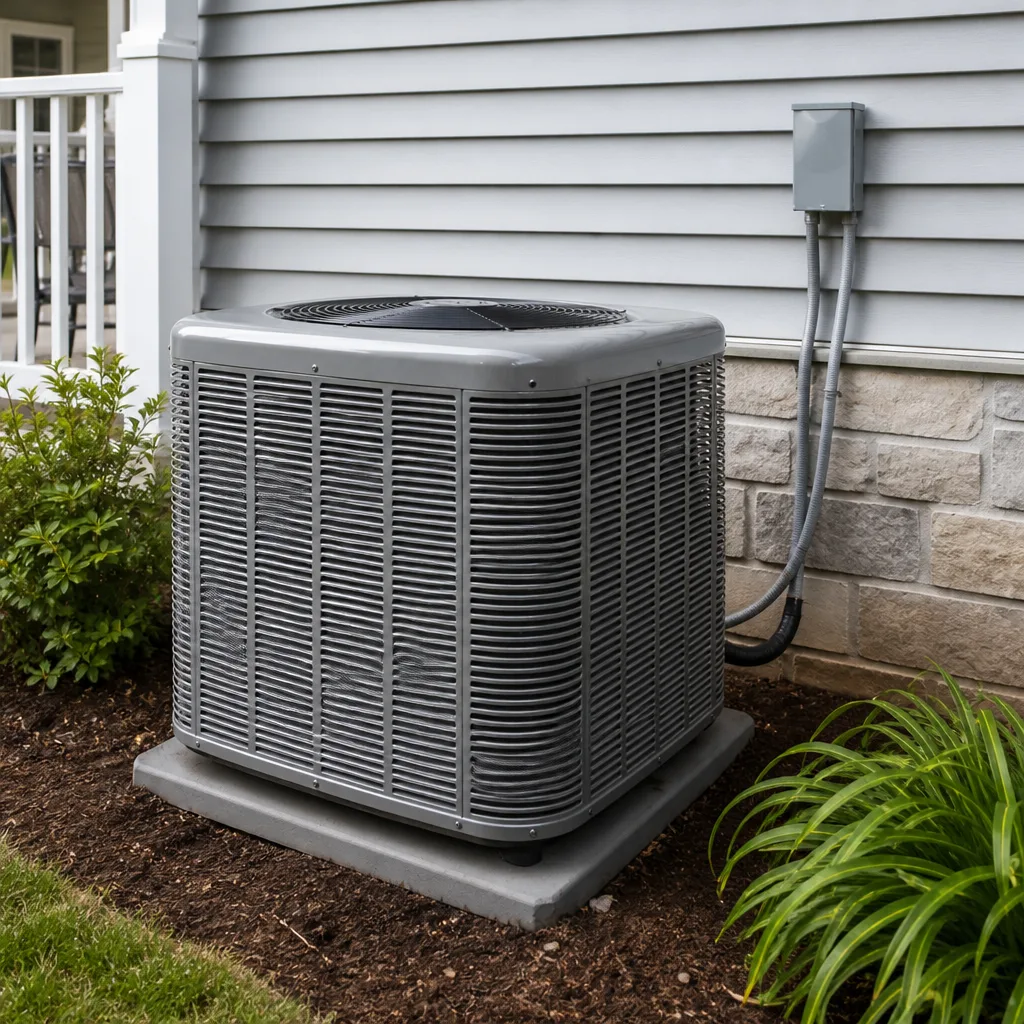 Carrier
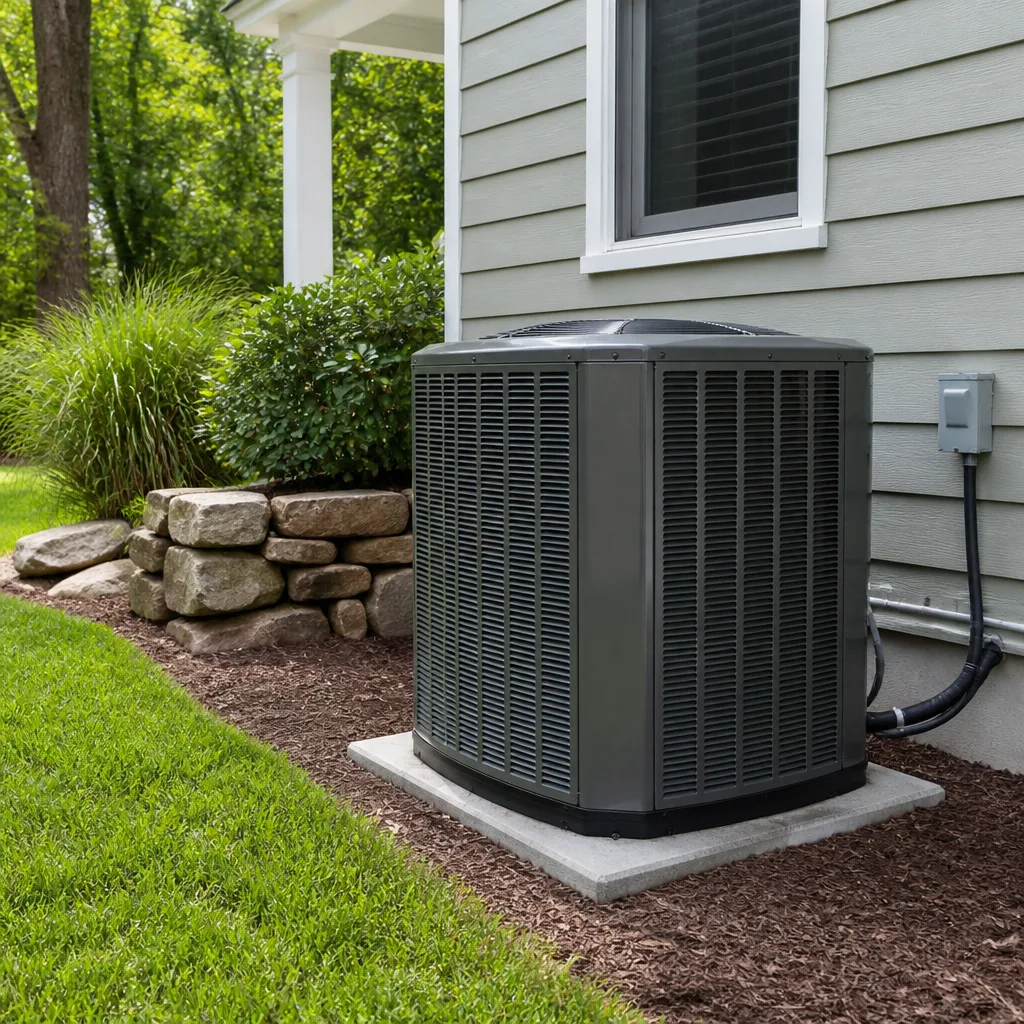 Trane
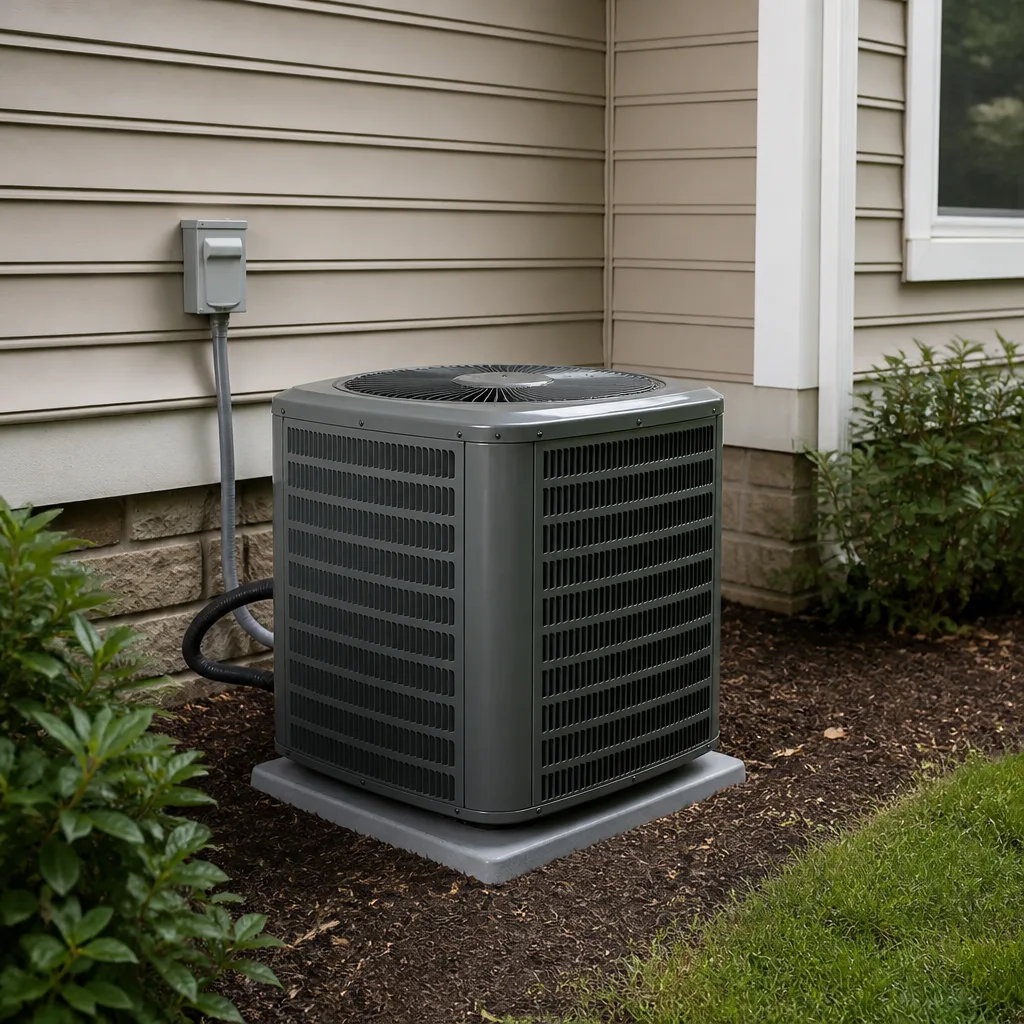 Goodman
Seasonal tune-up and full diagnostic on your Carrier, Trane, or Goodman system - readings shown to you before any repair is proposed
Diagnosis first, numbers second - you approve the repair price before a single part goes in.
Get your free estimateThe Complete Heat Pump & Mini Split Guide for Paradise Homeowners
A mini split rated for 5°F heating sounds bulletproof until you learn that number is measured at 47°F outdoor temperature. Paradise doesn’t do 47°F in January. It does 28°F, sometimes colder, and the capacity gap between the brochure and your actual wall is where comfort and money disappear. We’ve watched homeowners in Paradise spend five figures on equipment picked for the wrong climate, and we’ve seen a few cheap installs age into expensive ones. This guide covers what the ratings really mean, how Paradise’s 115-degree summers and hard winter nights stress these systems, what installs actually cost in 2024, and how to spend your money once instead of twice.
Quick Answer
Heat pumps and mini splits work well in Paradise, but only when the equipment is selected for our real temperature swing (roughly 115°F summer highs to 28°F winter nights) rather than moderate-climate catalog ratings. Expect $6,500 to $14,000 installed for a single-zone mini split, and $12,000 to $22,000 for a whole-home heat pump, depending on tonnage, zone count, electrical upgrades, and permits. The variable that decides whether you’re happy in year five is the installer’s climate math, not the brand on the box.
Styles & brands we work with
- AC repair
- Furnace & heating
- Heat pumps
- Ductless mini splits
- Carrier
- Trane
- Goodman
Table of Contents
- Why SEER and HSPF ratings don’t match Paradise weather
- The numbers to ask for before you sign anything
- Single-zone vs. multi-zone: a framework for Paradise home layouts
- Desert dust, filters, and coil life
- What a Paradise install really costs in 2024
- What we’ve seen go wrong with out-of-town installs
- Keeping a heat pump alive in Paradise
Why SEER and HSPF Ratings Don’t Match Paradise Weather
SEER2 (cooling efficiency) is tested at 95°F outdoor temperature. HSPF2 (heating efficiency) is tested at 47°F. Neither number was built for a place that spends July above 110°F and drops to 28°F on winter nights. That’s not a knock on the standards; it’s a warning about reading them as a single verdict.
Here’s what happens in practice. Cooling capacity falls as outdoor temperature climbs. A unit that delivers its rated tonnage at 95°F can lose a measurable slice of capacity at 110°F and lose more at 115°F. Heating capacity also drops with temperature, and the drop gets steep below 40°F. That’s why the manufacturer’s own spec sheet lists a “capacity at 17°F” column alongside the 47°F number, and why that column matters more in Paradise than the headline rating.
Two more concepts every Paradise homeowner should know:
- Balance point: the outdoor temperature where the heat pump can no longer keep up with your home’s heat loss, so the backup heat kicks in. In Paradise, with 28°F nights, a poorly sized system has a high balance point and leans on strip heat more often than the sales sheet implied.
- Turndown ratio (inverter systems): how low the compressor can ramp. A wide turndown lets the system run long and gentle in mild weather, which is where most of your Paradise runtime actually lives.
Ask for the cold-temperature capacity table, not the brochure. If a dealer in Paradise can’t produce one, that’s your answer.
The Numbers to Ask for Before You Sign Anything
Ratings are a starting point. These are the actual specs to request in writing for a Paradise install, in rough order of importance:
- Capacity at 17°F and at 5°F (heating), in Btu/h, from the manufacturer’s expanded rating table.
- Capacity at 105°F and 115°F (cooling), same table.
- Balance point for your specific home, calculated from a load calculation, not guessed from square footage.
- Manual J load calculation results (total Btu/h heating and cooling) tied to your actual construction, insulation, window area, and orientation.
- Minimum operating temperature the equipment is rated down to, which differs from the capacity-at-temperature figure and is often quoted loosely.
- Line-set length and vertical rise limits for the specific model, since long runs eat capacity and short ones waste it.
- Refrigerant type (R-410A vs. R-454B) and whether the model is affected by the refrigerant transition, which matters for future service parts.
Rheem and York both publish expanded rating tables that cover cold-climate points; Daikin’s cold-climate models carry rated capacity well below freezing. The skill is matching the right model line to the right house, and that requires the load calculation first. Readings first, numbers second. Anyone quoting tonnage off a napkin is guessing at your expense.
Single-Zone vs. Multi-Zone: A Framework for Paradise Home Layouts
Paradise homes are a mixed bag. Older single-story builds with hallway bedrooms, newer open-plan construction with vaulted ceilings, converted garages, detached casitas, and shops out back. The zone decision should follow the floor plan, not the promo sheet.
Single-zone makes sense when:
- You’re conditioning one open area, like a converted garage, a casita, or a great room that already has a clear airflow path.
- The problem room is genuinely isolated (a bonus room over the garage, a west-facing add-on).
- You want to cut one hot spot without touching the rest of the house.
Multi-zone starts earning its price when:
- You have two or more rooms that need independent temperature control (a master suite plus a guest room plus a shop).
- The house is two stories with a thermal dividing line, like a stairwell with a door.
- You’re replacing a failing central system in a house where running new ductwork would be disruptive or impossible.
One honest caution: multi-zone systems run all their indoor heads off one outdoor unit. If one zone is heavily used and the others rarely are, you’re paying for capacity you don’t run. In Paradise’s climate, that mismatch is common in homes with a big shop out back and a rarely used guest room. A pair of single-zone systems sometimes beats one multi-zone for both comfort and repair cost. Worth pricing both.
Desert Dust, Filters, and Coil Life
Manufacturer filter-change intervals assume a moderate climate with typical household dust. Paradise gives you something else entirely: fine desert dust, wind events, and construction dust from ongoing rebuild and remodel activity. Coils clog faster here, and a clogged coil raises head pressure, shortens compressor life, and quietly destroys efficiency.
What we tell Paradise homeowners:
- Check filters monthly during windy spells and peak summer. The “every 90 days” line on the box isn’t written for this valley.
- Rinse the outdoor coil two to three times a year, more if you’re near an open lot or a dirt road.
- Watch for dust on the indoor blower wheel, which is a common Paradise failure point that nobody notices until the airflow drops.
- Schedule a spring coil clean before the first heat wave, not after the system stops keeping up.
Filter choice matters too. Too restrictive a filter starves airflow, and too open a filter lets the dust through. A mid-grade pleated filter changed on a schedule beats a high-MERV filter left in until it looks like felt.
What a Paradise Install Really Costs in 2024
Here’s the honest range, in 2024 dollars, for a Paradise install. These are real numbers, not teaser-ad numbers. Advertised prices usually exclude electrical, permit, line-set runs, and pad or wall-mount hardware.
- Single-zone mini split, 9,000 – 12,000 Btu/h, installed: $4,500 – $7,500
- Single-zone mini split, 18,000 – 24,000 Btu/h, installed: $6,500 – $10,000
- Multi-zone mini split, 2 – 3 zones, installed: $10,000 – $18,000
- Whole-home heat pump, 2 – 3 ton, installed: $12,000 – $18,000
- Whole-home heat pump, 4 – 5 ton, installed: $16,000 – $24,000
- Duct modifications or new ductwork (per system): $1,500 – $6,000
- Electrical panel upgrade or dedicated circuit, when needed: $800 – $2,500
- Permits: $250 – $700, depending on scope and jurisdiction
Break the install price into materials, labor, and permits when you get a written estimate. A good estimate shows all three. If your contractor can’t explain why the number is what it is, you’re paying for arithmetic you can’t check.
What We’ve Seen Go Wrong with Out-of-Town Installs
Out-of-town crews blow into Paradise after a heat wave, install fast, and disappear. We’ve been called in behind them more than a few times. Here’s the pattern:
- Utility rebate paperwork not filed. Rebate programs require specific equipment listings, documentation, and installer sign-off. Crews who aren’t local don’t file, and the homeowner eats a check they should have collected.
- Permits pulled late or not at all. Paradise-area inspections have quirks, and an unpermitted install becomes a headache at resale or a future insurance claim.
- Line sets sized wrong or run too long. Capacity drops, the compressor overworks, and the failure shows up two summers later when the truck is three hours away.
- Duct transitions left leaking. We’ve pulled apart more than one fast install that lost 20 to 30 percent of its airflow in the attic before it ever reached a register.
- No local service contact. When the system breaks in August, “call the 800 number” turns into a ticket in somebody else’s queue.
Local accountability matters in a small town. When something goes wrong, you want somebody who’s within driving distance and answers their own phone. Ray’s Heating & Air has been owner-operated in Paradise since 2002, and every heating and cooling job carries the 90-Day Done Right Promise in writing. If it’s not right, one call brings Ray back.
Keeping a Heat Pump Alive in Paradise
The installation is the easy part. Keeping it running well through fifteen summers and winters is the real work. This is the maintenance rhythm we recommend for Paradise systems:
- Early spring: coil cleaning, refrigerant charge check, drain line flush, and filter replacement before the first 100-degree day.
- Mid-summer: filter check, outdoor unit clearance check, and a listen for unusual cycling or noise.
- Early fall: heating-mode check, defrost cycle verification, and backup heat test before the first 35-degree night.
- Every two to three years: blower wheel inspection, capacitor test, and contactor inspection, especially on aging equipment.
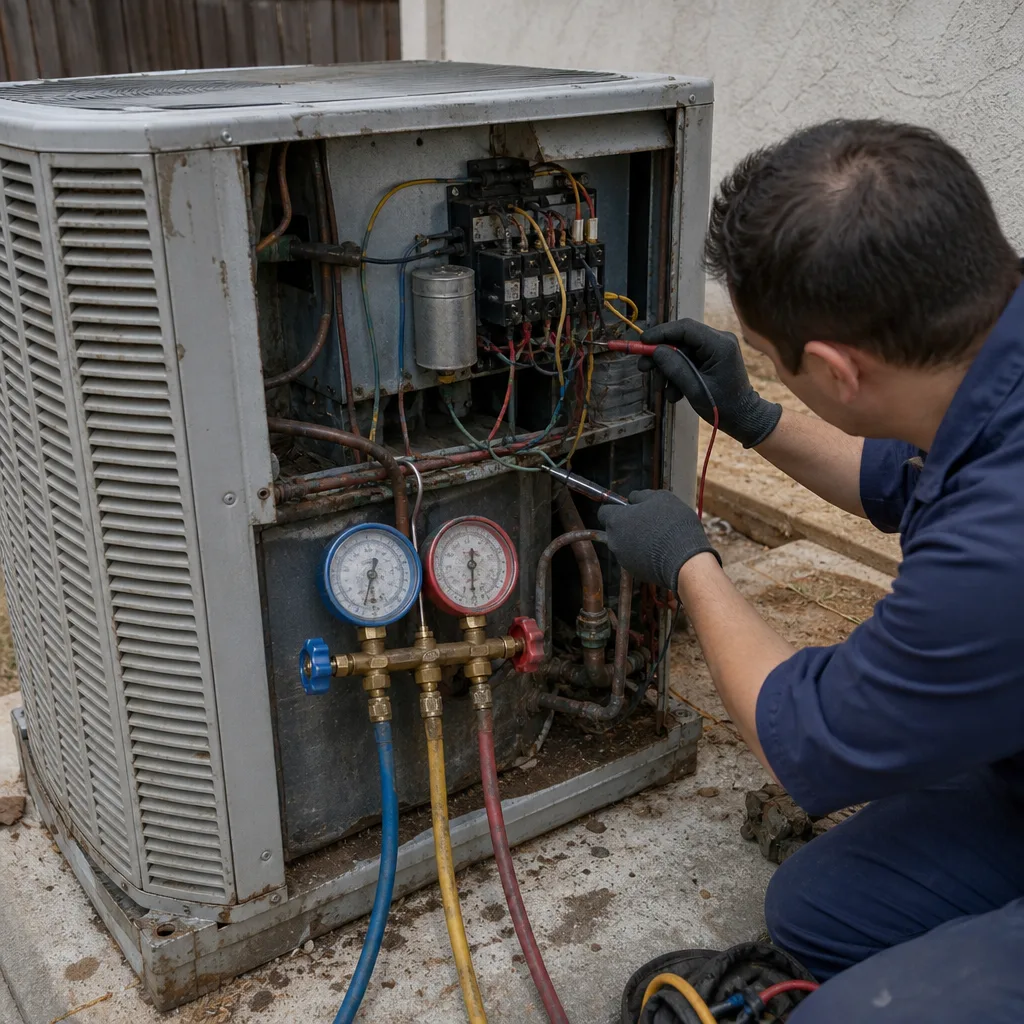
On repairs, the diagnostic matters as much as the fix. We test the capacitor before anyone says the word “compressor.” Readings first, numbers second. You see both before any work begins, and you can get a free second opinion on any written estimate from another contractor. No trip charge inside the county.
Common Mistakes to Avoid
- Buying off the HSPF rating alone. A high HSPF2 unit with poor capacity at 28°F will shut down into backup heat more often in Paradise than a lower-rated unit with better cold-weather capacity.
- Trusting a tonnage guess instead of a Manual J. Oversized systems short-cycle, dehumidify poorly, and cost more to run than they should. It’s a five-figure decision made on arithmetic.
- Skipping the permit. Unpermitted work in Paradise can surface at resale or in an insurance claim, and it voids some manufacturer warranties.
- Using the wrong line-set length. Long runs without proper charge adjustment steal capacity and stress the compressor.
- Hiring on the teaser price. The advertised number almost never includes electrical, permits, or duct work, and it’s the number the phone quote matches while the final invoice doesn’t.
- Ignoring the dust schedule. Filters run longer than they should in Paradise, and coils clog faster than the manufacturer’s interval assumes.
- Not claiming the utility rebate. Eligible equipment plus correct paperwork equals money back, and out-of-town crews routinely leave it on the table.
See the difference
 Before
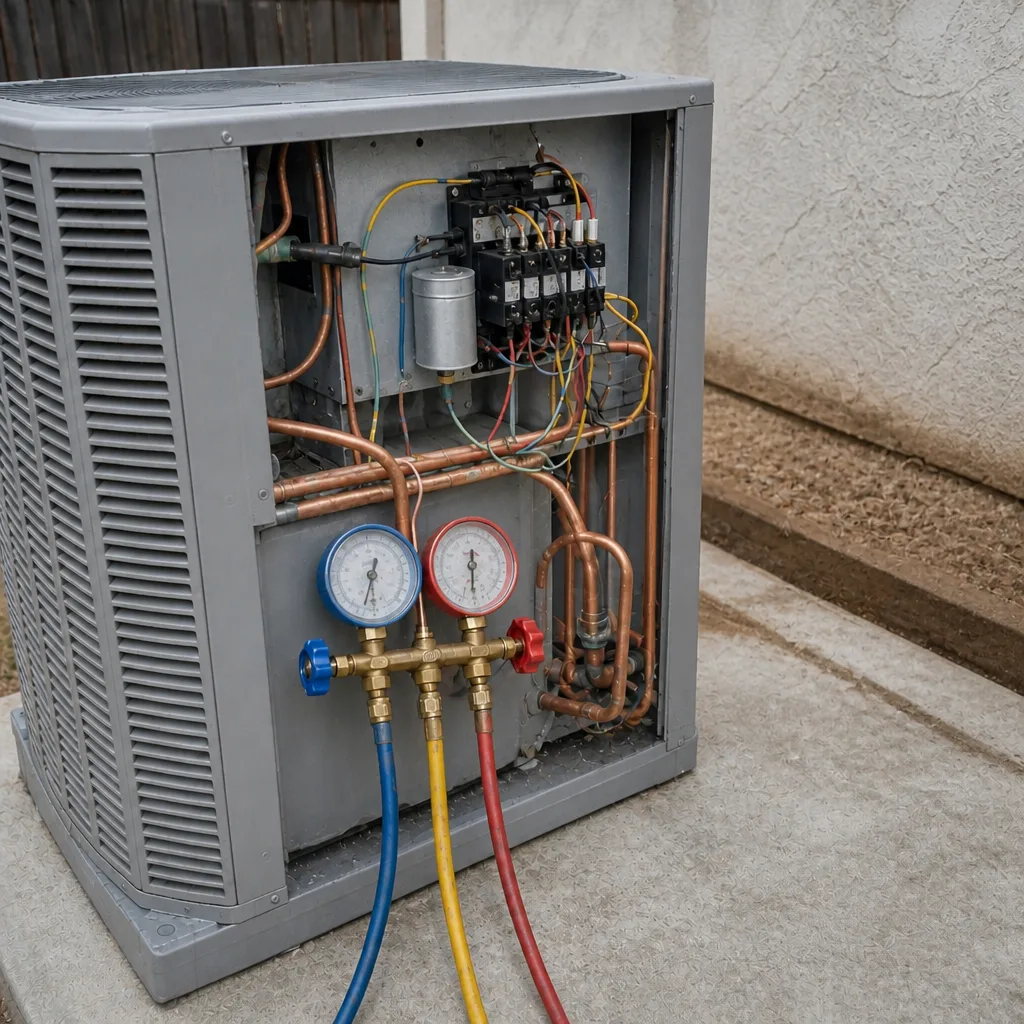 After
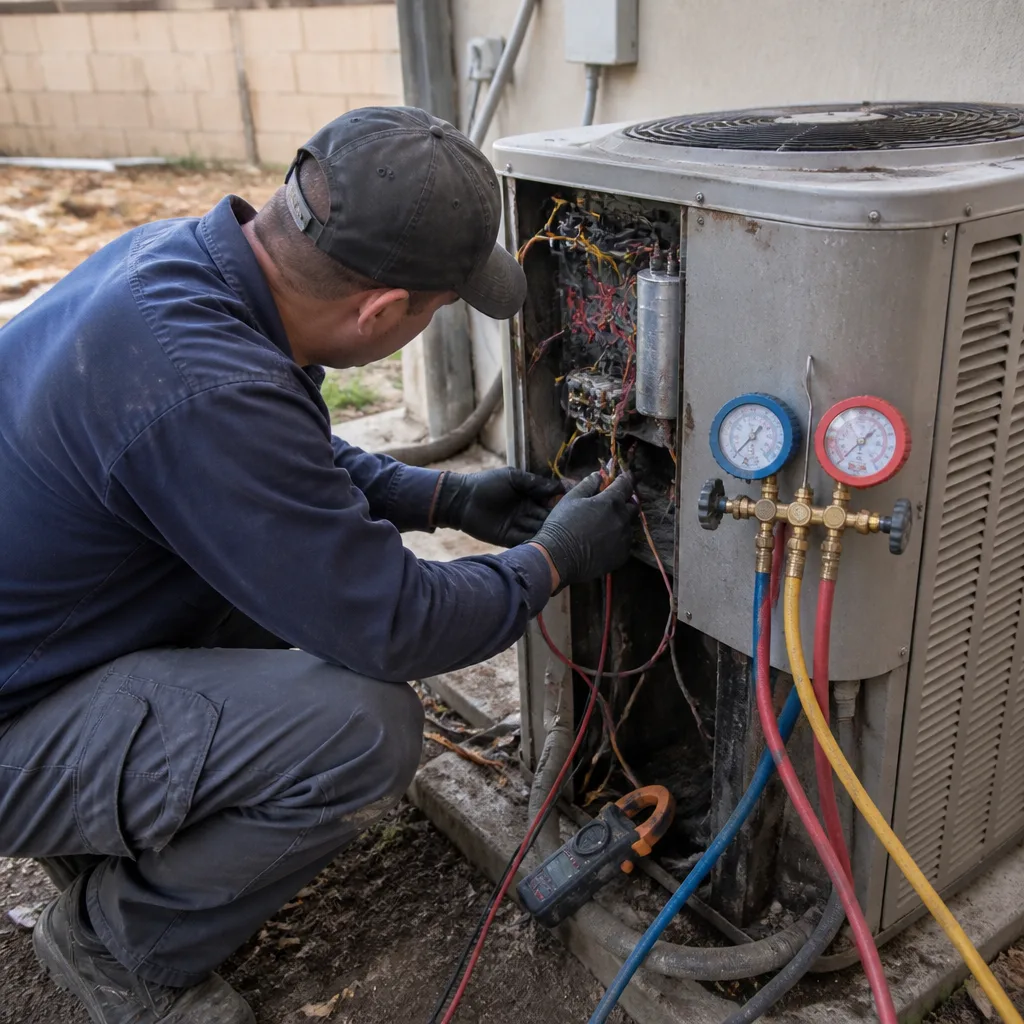 Before
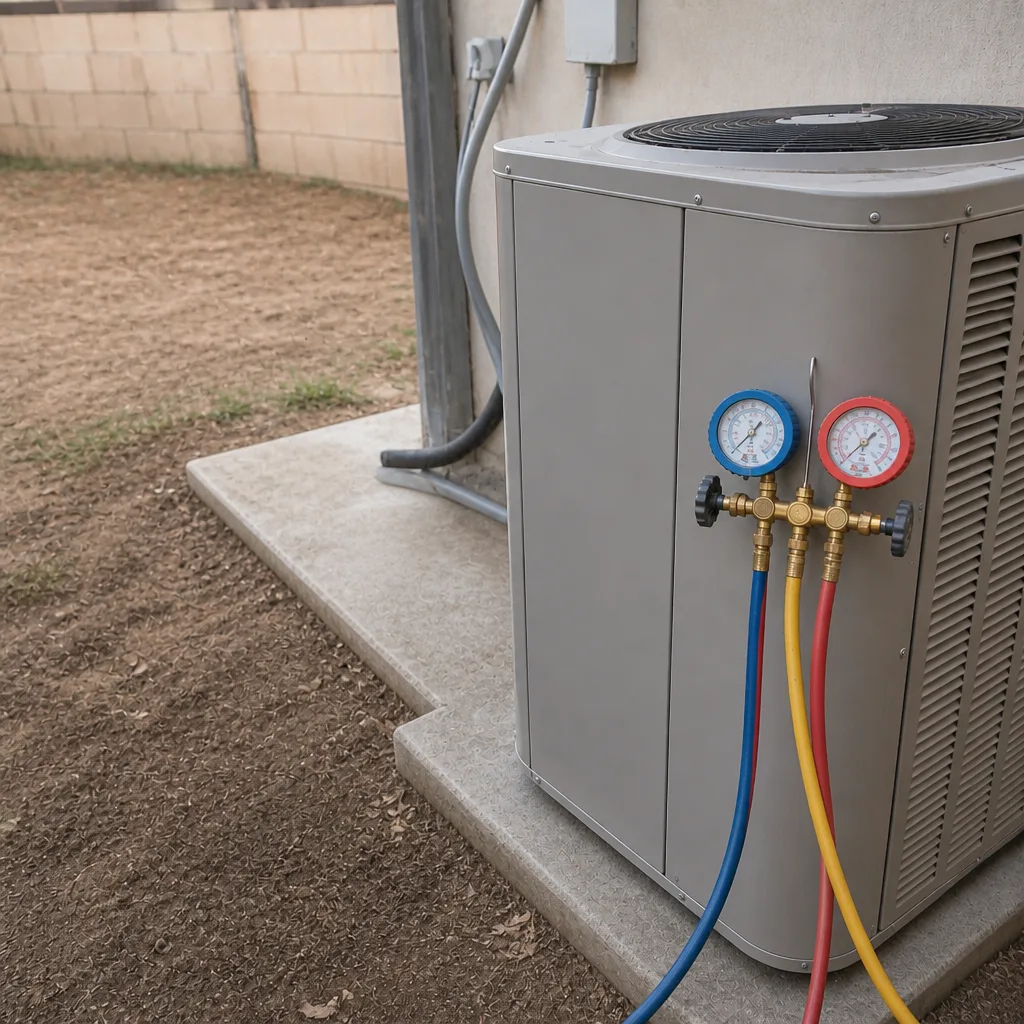 After
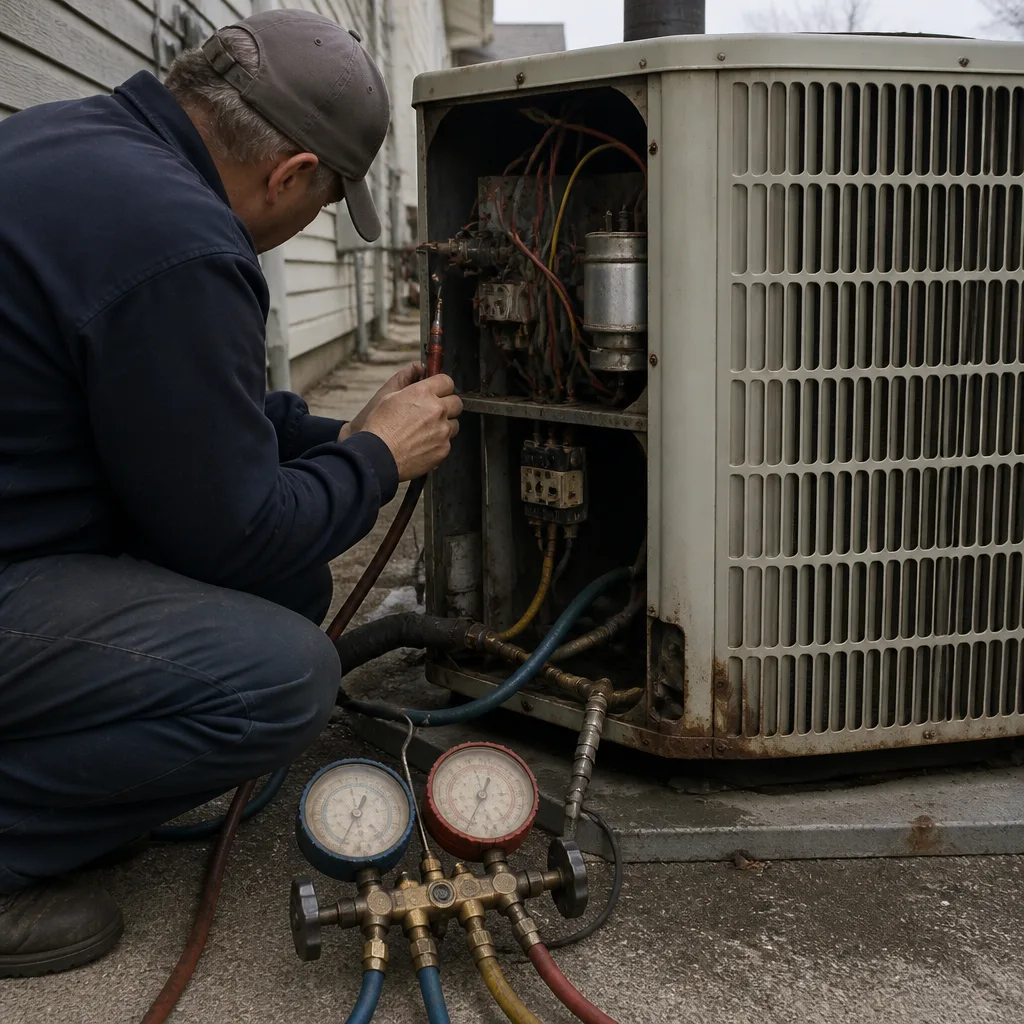 Before
 After
When to Call a Professional
Some jobs need a licensed pro on the property. Heat pump and mini split work involves line-voltage electrical and pressurized refrigerant systems, and the risks of getting it wrong are real: refrigerant burn, electrical shock, and a system that fails within weeks. Call a professional when your system isn’t heating or cooling as it should, when you hear grinding or see ice on the outdoor coil, when you’re replacing equipment, when you need permits or rebate paperwork, or when a contractor gives you a quote you can’t fully explain. We handle AC repair and installation in Paradise, heating and furnace work in Paradise, and the full range of heat pump and mini split service in Paradise, all delivered with the 90-Day Done Right Promise. Ray’s Heating & Air Paradise offers free estimates in Paradise. Call (855) 664-5714 to schedule.
Frequently Asked Questions
Yes, if it’s sized and installed for Paradise’s real temperature swing. A properly selected system handles both the 115-degree afternoons and the 28-degree winter nights with lower operating cost than electric resistance heat, but the equipment has to be chosen from capacity tables at real Paradise temperatures, not brochure ratings.
The only honest answer is the one from a Manual J load calculation performed on your actual home. Square footage alone is not enough, because Paradise homes vary widely in insulation, window area, and construction era. A load calculation in Btu/h is the number to ask for.
Modern cold-climate heat pumps can deliver usable heat at 28°F, though capacity is reduced from the 47°F rated value. The key is checking the manufacturer’s capacity at 17°F and 5°F, because that’s where the honest ceiling shows up. If your home’s heat loss exceeds the system’s output at 28°F, backup heat takes over, which costs more and signals an undersized install.
Expect $4,500 to $10,000 for a single-zone mini split installed in Paradise, and $10,000 to $18,000 for a multi-zone system with two to three indoor heads. The range reflects tonnage, line-set runs, electrical work, and permit fees. Call (855) 664-5714 for an exact quote. Estimates are free.
Check them monthly and replace them every 60 to 90 days during heavy use, more often during windy spells. Desert dust loads filters faster here than in moderate climates, and outdoor coils need a rinse two or three times a year to keep efficiency where it should be.
Rebates are available for qualifying equipment, but the paperwork is specific about model listings, documentation, and installer sign-off. Out-of-town crews often miss it. We prepare the rebate paperwork as part of the install, so the money comes back to you. Call (855) 664-5714 to review what your equipment qualifies for.
The Bottom Line
Heat pumps and mini splits are a great fit for Paradise homes when the equipment matches our climate instead of a moderate-climate catalog. Ask for capacity at real Paradise temperatures, demand a Manual J, price single-zone against multi-zone for your layout, clean those filters more often than the box says, and get the permit and rebate paperwork handled by someone local. That’s how you spend the five-figure number once. We’re here to walk through it with you. Read more about Ray’s Heating & Air Paradise home.
Contact
Ray’s Heating & Air Paradise keeps phones answered by a live person around the clock, including the owner himself. If you’re weighing a heat pump or mini split install in Paradise, or your current system needs honest diagnostics first, call (855) 664-5714 for a free estimate. Upfront pricing, no surprises, and the 90-Day Done Right Promise in writing on every heating and cooling job.
Written by the team at Ray’s Heating & Air Paradise.