
Last updated November 18, 2026
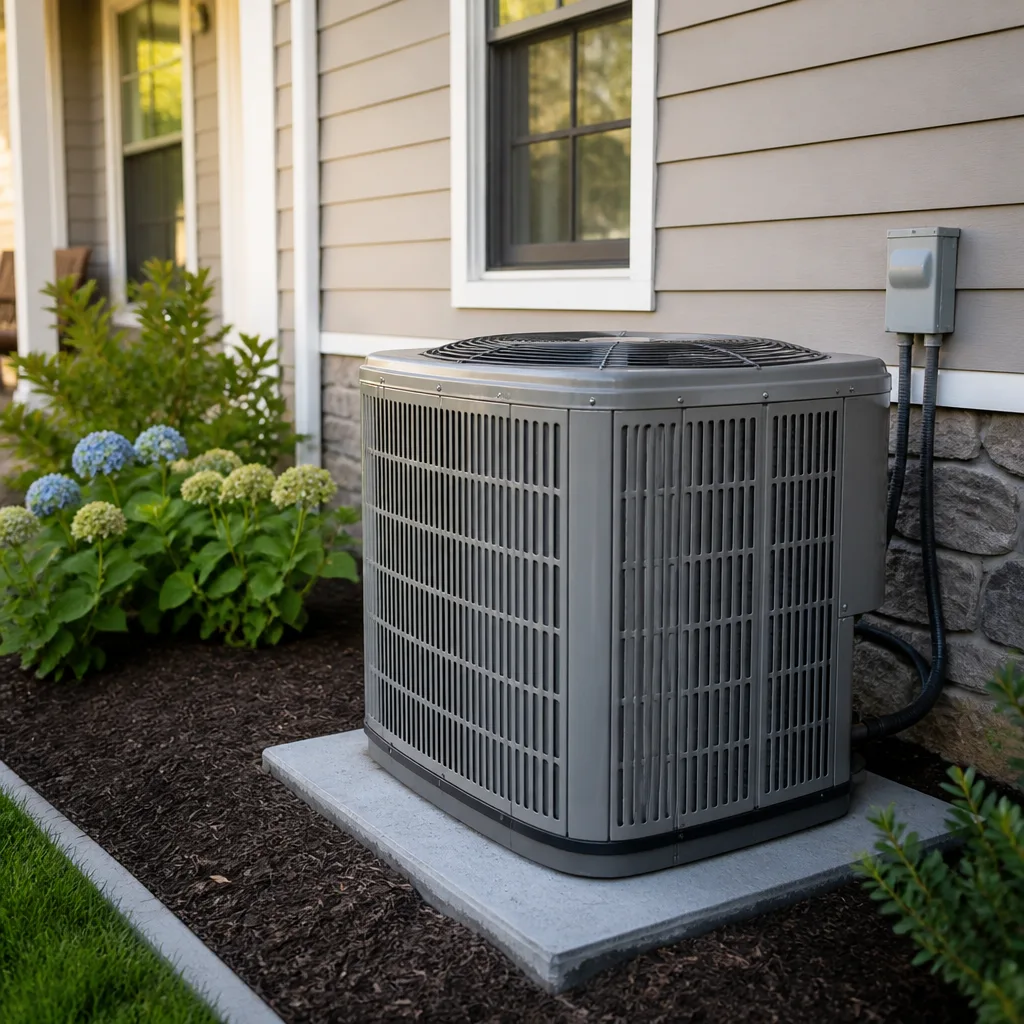 AC repair
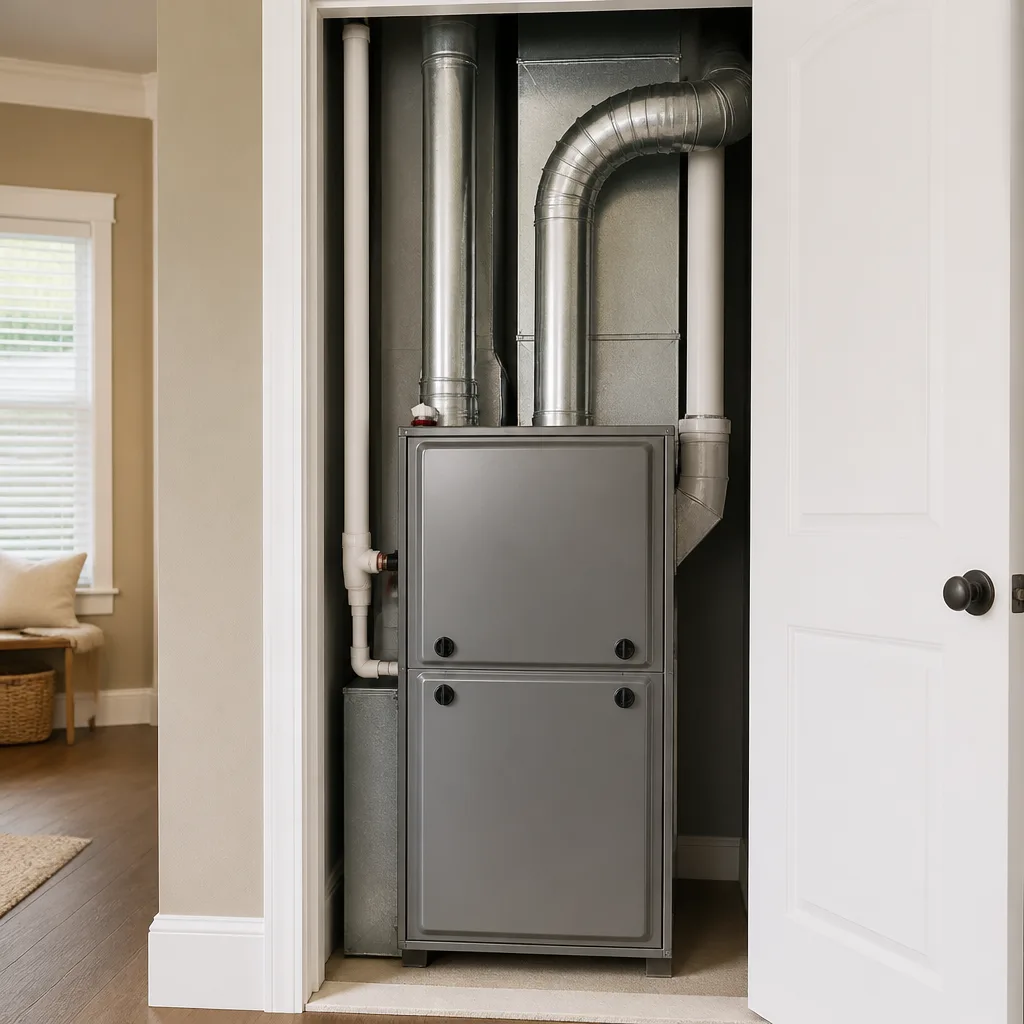 Furnace & heating
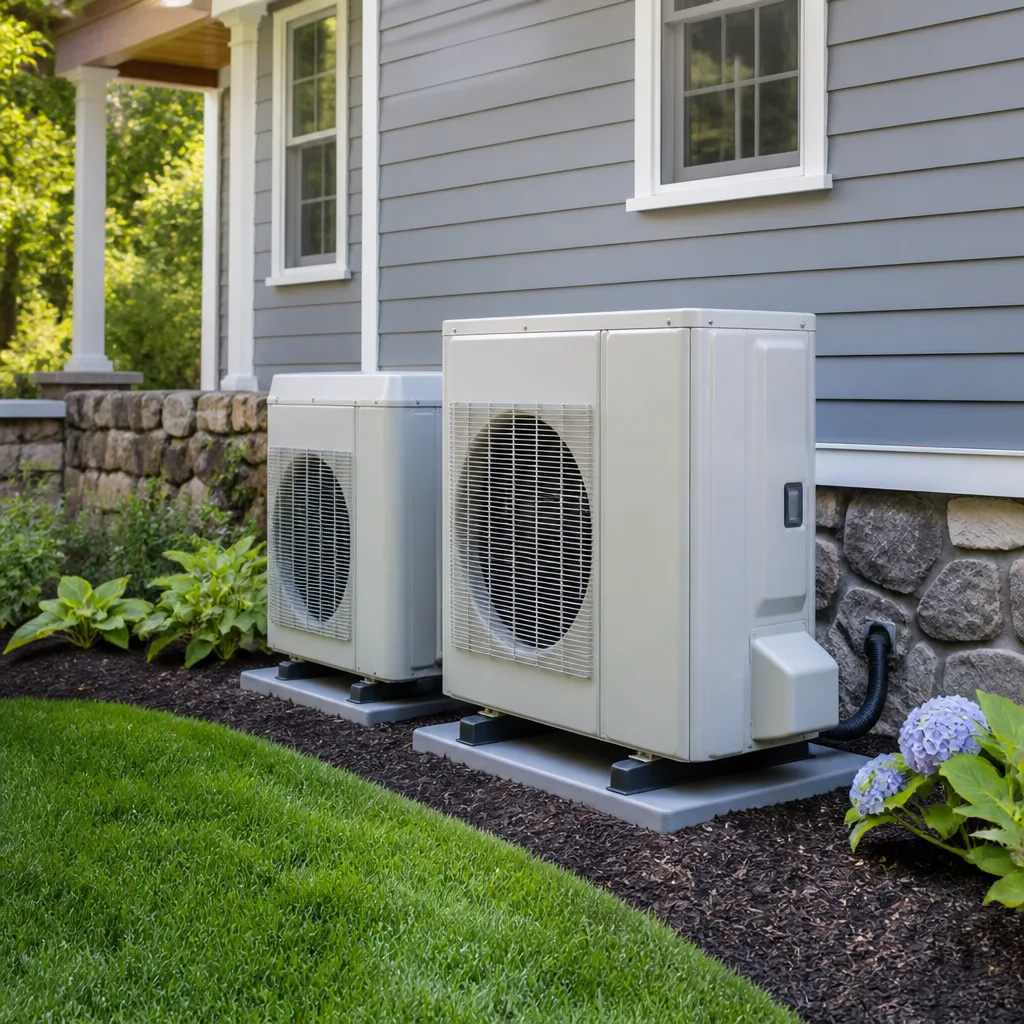 Heat pumps
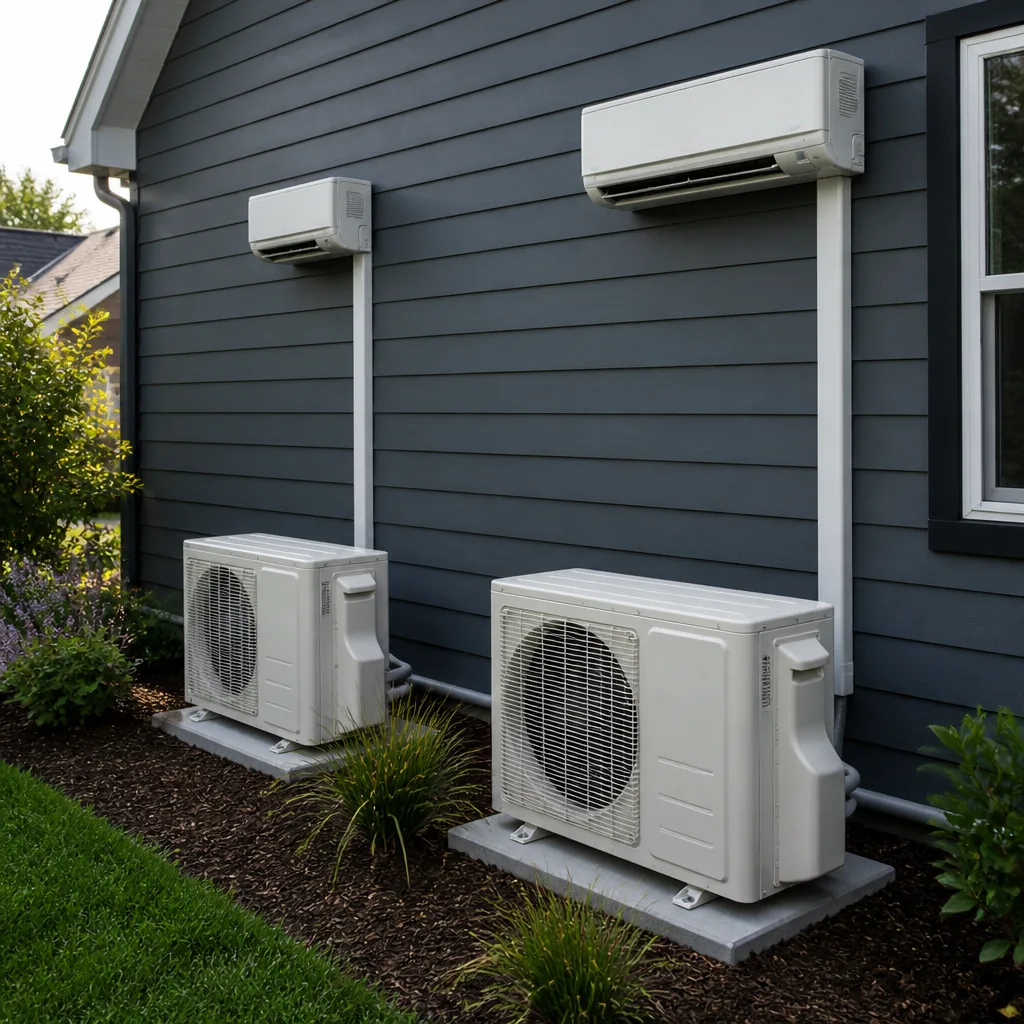 Ductless mini splits
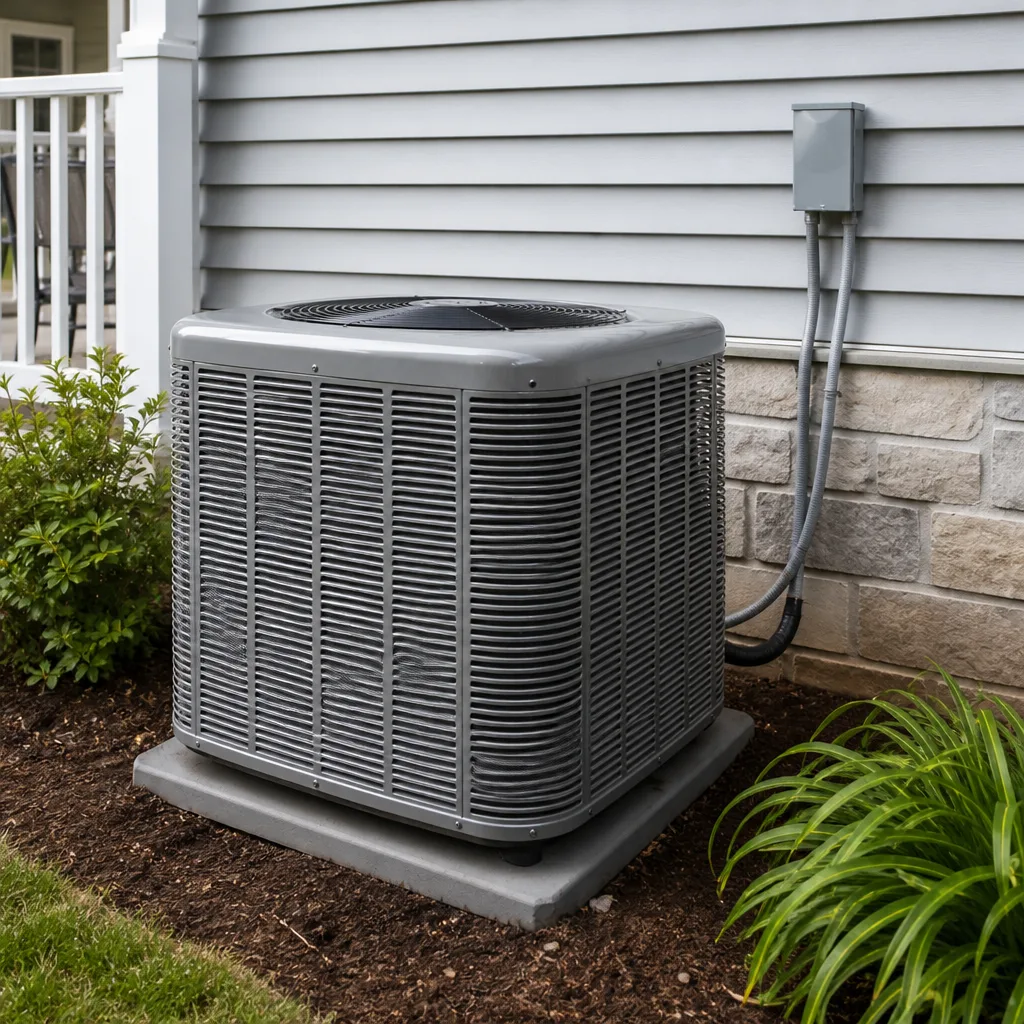 Carrier
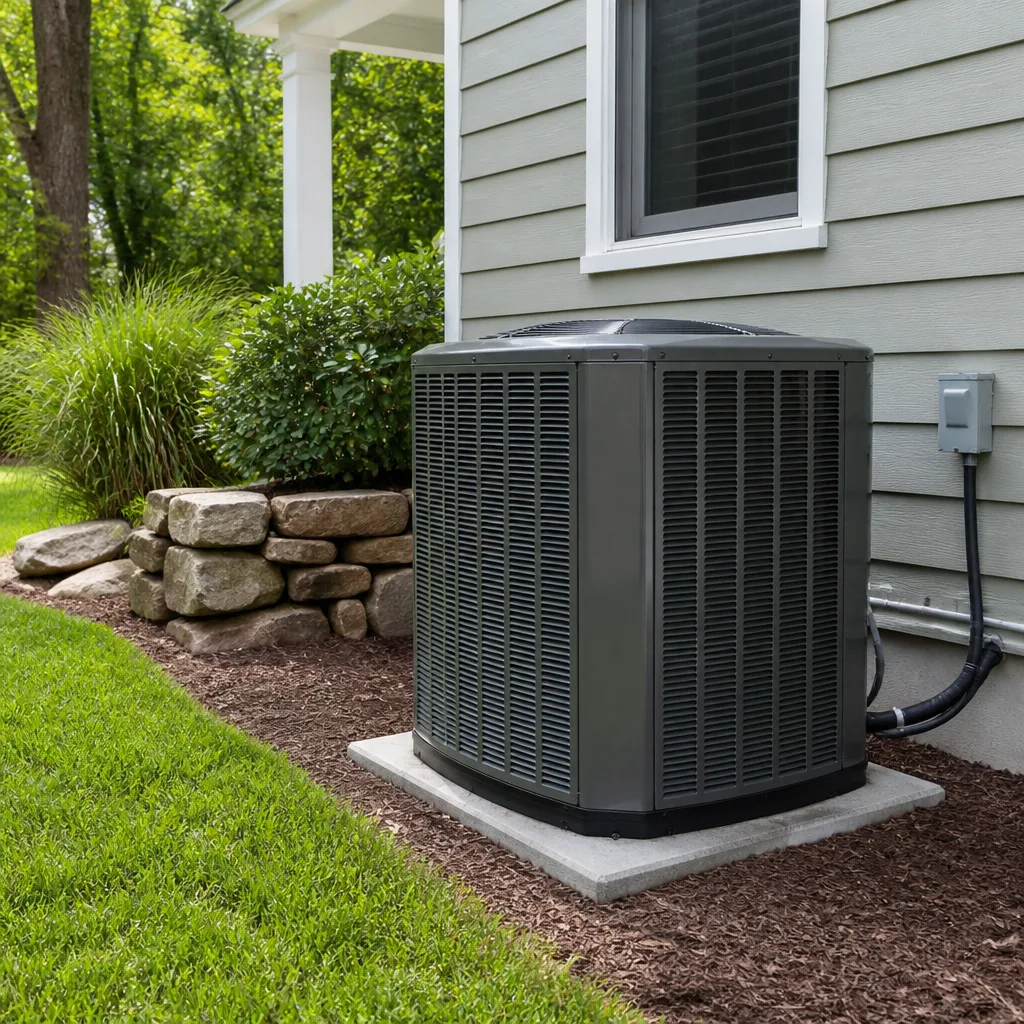 Trane
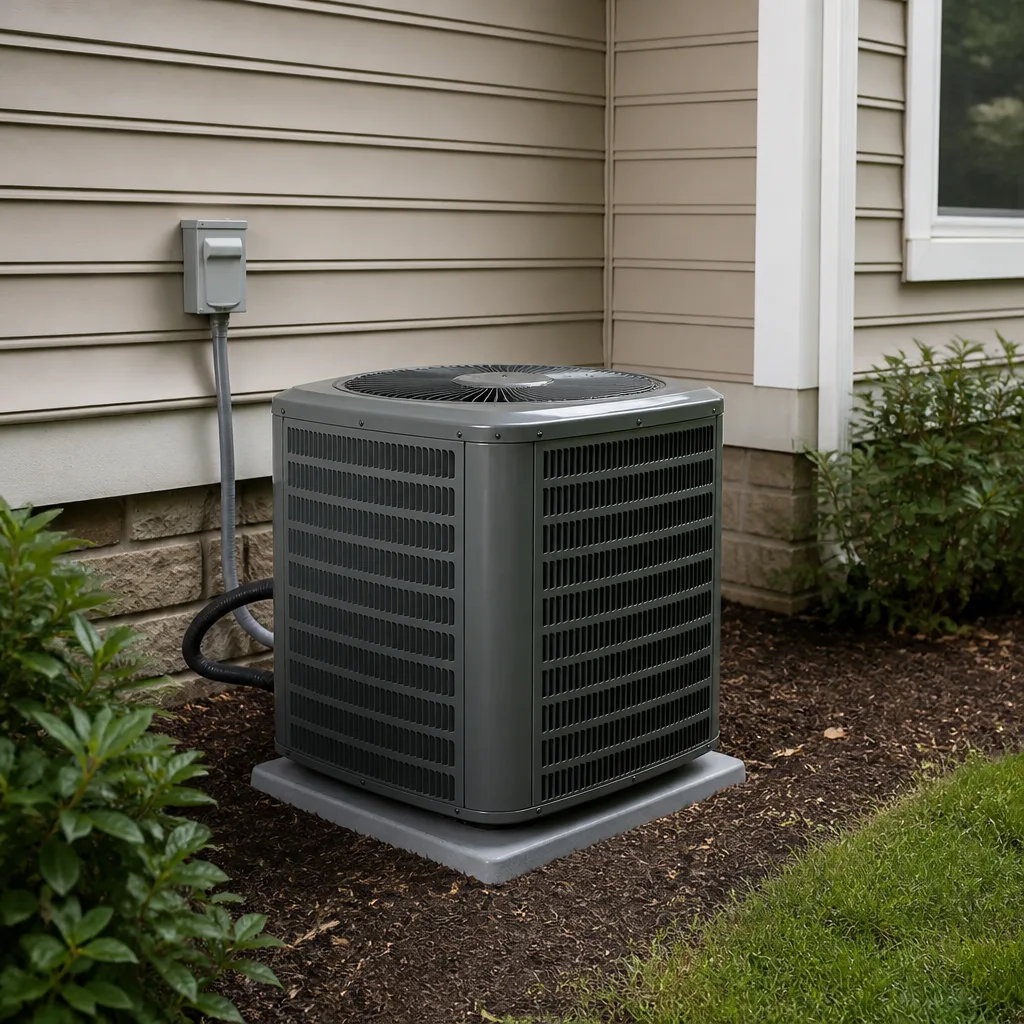 Goodman
Seasonal tune-up and full diagnostic on your Carrier, Trane, or Goodman system - readings shown to you before any repair is proposed
Diagnosis first, numbers second - you approve the repair price before a single part goes in.
Get your free estimateDIY vs Professional HVAC: The Paradise Homeowner’s Decision Guide
Replacing a capacitor on your AC is a $20 part, takes 15 minutes, and there are good tutorials online. We’ll say that plainly. Handling refrigerant without an EPA 608 certification is a federal violation, and it’s genuinely dangerous on top of that. The line between those two jobs is clearer than most DIY guides admit, and it matters more here than almost anywhere. In Paradise, an AC failure at 2 p.m. in August isn’t a comfort problem. It’s a health problem that can get serious in hours, not days. This guide draws the line honestly, including the jobs where we’ll tell you to grab a screwdriver and save your money. You’ll learn what’s safe to touch, what’s legally off-limits, how extreme heat changes the math, and how to read your own system’s age and warranty to find your line.
Quick Answer
In Paradise, homeowners can safely handle filters, thermostat swaps, capacitor replacement, and condensate line flushing. Anything involving refrigerant, sealed-system wiring, or the compressor requires an EPA 608 certified professional, and doing it yourself is both illegal and risky. A refrigerant mistake in July heat can turn a $200 repair into a health emergency within hours.
Styles & brands we work with
- AC repair
- Furnace & heating
- Heat pumps
- Ductless mini splits
- Carrier
- Trane
- Goodman
Table of Contents
- What’s Genuinely Safe to Do Yourself in Paradise
- What’s Legally Off-Limits Without Certification in Nevada
- How Extreme Heat Changes the Risk Calculation
- The DIY Troubleshooting That Always Makes Sense
- How to Find the Line on Your Specific System
- What Pro Repair Actually Costs vs. a DIY Mistake
- Tools Worth Owning and Tools to Leave Alone
What’s Genuinely Safe to Do Yourself in Paradise
Some HVAC maintenance is well within reach for a careful homeowner, and we’d rather you do these jobs than pay someone $150 to swap a filter. These four tasks are homeowner-safe on nearly every residential system, and they’re the ones that prevent the most breakdowns in Paradise’s dusty summer air.
- Filter changes. A 1-inch filter in Paradise’s dust should come out every 30 to 60 days during cooling season, not the 90 days the package suggests. A clogged filter strains the blower and freezes coils. This is the single highest-return 10 minutes you’ll spend.
- Thermostat swaps. Replacing a basic thermostat with a programmable or smart model is low-voltage work, usually just a few labeled wires. Take a photo of the wiring before you disconnect anything. Turn the breaker off first.
- Capacitor replacement. A failing capacitor is one of the most common no-cold calls we get. If your unit hums and won’t start, this is often why. The part runs $15 to $40. The catch: disconnect power at the breaker and discharge the capacitor before touching it, because it holds a charge even with the power off.
- Condensate line flushing. A clogged drain line backs water up and shuts the system down. Pouring a cup of distilled vinegar down the access port every few months keeps it clear. In Paradise’s dry heat you might not think about condensation, but a running AC produces plenty.
These four cover the bulk of routine upkeep. Everything below is where the line starts.
What’s Legally Off-Limits Without Certification in Nevada
Refrigerant handling is regulated by federal law under Section 608 of the Clean Air Act, and Nevada follows it. If you’re not EPA 608 certified, you cannot legally buy, handle, charge, recover, or vent refrigerant. That isn’t a technicality designed to protect the trade. Refrigerant released into the air damages the ozone layer and contributes to climate change, and it can cause frostbite and asphyxiation in an enclosed space.
Beyond the legal line, several tasks carry real physical danger for anyone without training:
- Refrigerant charging and recovery. Federal violation without certification, and dangerous to boot. An overcharged or undercharged system can destroy a compressor.
- Line voltage wiring and the contactor. The power feeding your outdoor unit is 240 volts. One mistake at the wrong terminal is a shock hazard or a fire.
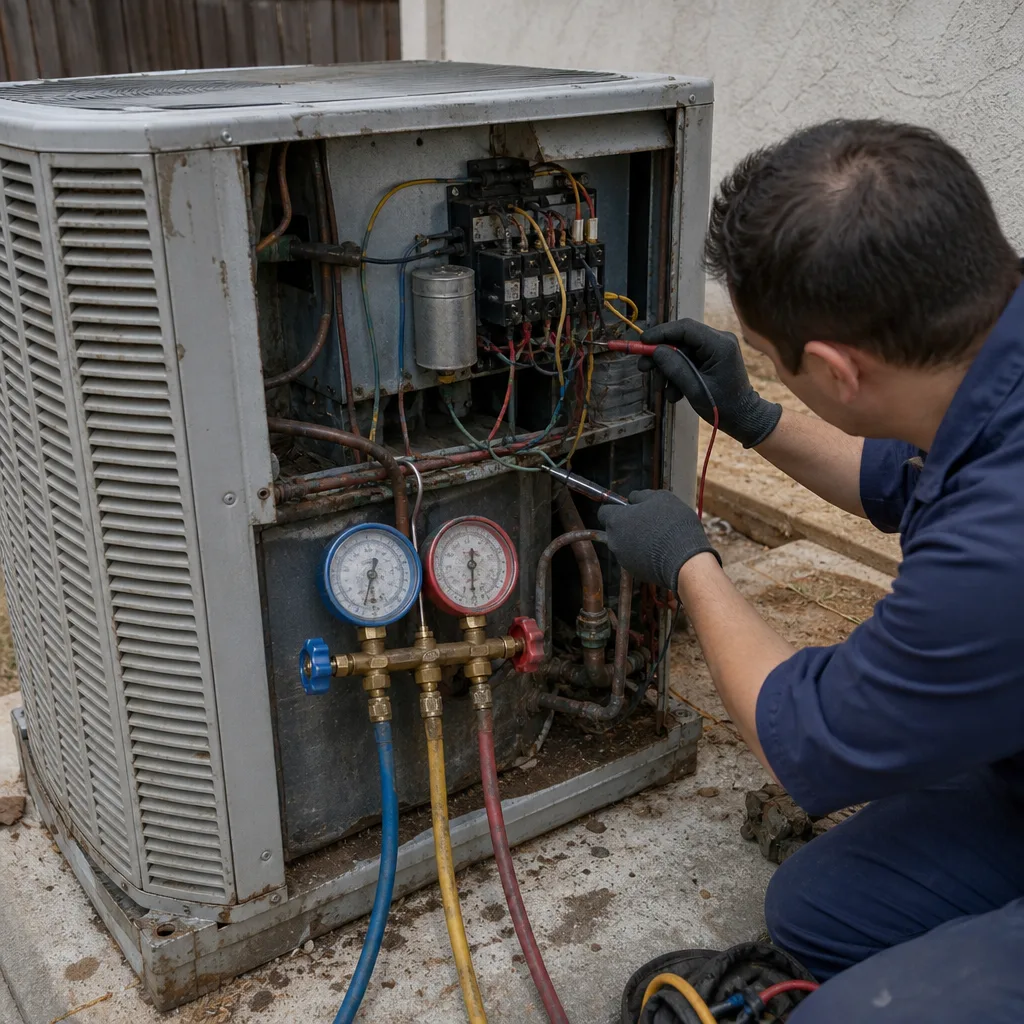
- Compressor and sealed-system work. This is where the refrigerant lives. It requires gauges, recovery equipment, and certification to open without venting.
- Gas furnace work. Any gas line, valve, or burner adjustment belongs to a licensed professional. Carbon monoxide doesn’t announce itself.
The pattern is simple: low voltage and mechanical parts are usually fair game. Sealed refrigerant systems, line voltage, and gas are not.
How Extreme Heat Changes the Risk Calculation
This is the part most DIY guides skip. The Paradise climate rewrites the stakes. In a mild climate, a botched repair might mean a sweaty weekend and a call on Monday. Here, a mistake in July or August can escalate in hours. When the daytime high sits well above 100 and the overnight low doesn’t drop much, a house without cooling becomes an oven quickly, and older residents are the most vulnerable.
Consider a wiring error that prevents the condenser fan from starting. The compressor overheats, trips its internal protector, and the system dies. Now you’re looking at a same-day emergency call in peak season when everyone else’s system is failing too. A refrigerant mistake is worse: an undercharge causes the coil to freeze and the compressor to run hot, and an overcharge can push pressures high enough to damage the compressor outright. What was a $20 capacitor job becomes a $1,800 compressor replacement, and you’ll be waiting for it in the worst heat of the year.
The heat is why we push the 90-Day Done Right Promise so hard. When a repair has to hold through August in Paradise, it has to be right the first time, because there’s no comfortable window to redo it. If it’s not done right, one call brings Ray back to make it right.
The DIY Troubleshooting That Always Makes Sense
Diagnosing is different from repairing. The steps below cost nothing, save money no matter who ends up doing the work, and give a technician exactly what they need to solve the problem on the first visit instead of the second. Do these before you call anyone, yourself included.
- Check the thermostat. Dead batteries, a wrong mode, or a setpoint bumped in the night explains a surprising share of no-cool calls.
- Check the air filter. A filter packed with Paradise dust and pollen starves the system. Replace it and see if the problem clears.
- Check the breaker. Reset the outdoor unit’s breaker if it tripped, and the indoor air handler’s too. If it trips again immediately, stop and call. That’s a symptom of a real fault.
- Check the drain pan and condensate line. Standing water means a clog, and many systems have a float switch that shuts everything down when it fills.
- Check for ice on the indoor coil or the outdoor lines. A frozen coil points to airflow or refrigerant trouble. It’s information for a technician, not a do-it-yourself job.
- Listen and note. Does the outdoor fan run while the compressor hums? Is there a rattle, a hiss, a click? Write it down. That observation shortens the diagnosis.
If you’ve done these and it’s still not cooling, you’ve ruled out half the easy answers and armed whoever comes out with real information. That saves time and money either way.
How to Find the Line on Your Specific System
The general rules hold, but your system has its own boundaries. Three things on the unit and its paperwork tell you exactly where they are: age, warranty status, and the manufacturer’s documentation.
Age. Find the serial number on the outdoor unit’s rating plate and decode it against the manufacturer’s format. If the system is past 12 to 15 years old, opening it yourself risks turning a small problem into a system replacement you were going to put off a few years. On an older York or Bryant, a DIY capacitor swap can crack a brittle connection and cascade into bigger trouble.
Warranty status. Read the warranty terms before you touch anything. Many manufacturer warranties on a Daikin or American Standard system are voided by unqualified repairs or by unauthorized parts, and the loss of coverage can cost far more than the labor you saved. If the system is still under parts warranty, let a certified pro do the repair so the coverage stands.
Manufacturer documentation. The install manual and the owner’s manual spell out what’s user-serviceable and what requires a licensed tech. Some units restrict even filter access in ways that affect airflow specs. When the manual says a task requires certification, believe it.
If you can’t find the paperwork, Ray’s Heating & Air Paradise home page explains how to get manufacturer documentation for nearly any system. That’s also about knowing your system before the peak heat, which is the whole game here.
What Pro Repair Actually Costs vs. a DIY Mistake
Cost is where the DIY pitch usually collapses. The part is cheap; the mistake is not. Here’s the honest comparison for common calls in Paradise.
- Capacitor replacement: $15 to $40 for the part if you do it yourself, or typically $120 to $220 professionally. Both are fine choices if you’re comfortable with the breaker and the discharge.
- Refrigerant charge and diagnosis: $150 to $450 professionally. Doing it yourself is illegal, full stop, and doesn’t belong on this list.
- Compressor replacement after a DIY refrigerant or wiring error: $1,200 to $2,500. This is the number to keep in your head when you’re tempted to push past the line.
- Emergency call in peak season after a failed DIY attempt: often $250 to $500 more than a scheduled repair, plus the wait.
- System replacement rushed in August: $5,000 and up, and you take whatever brand and model is available that week.
Repair or replace becomes the real question when a compressor fails and the system is already north of 12 years old. In that case, get a written second opinion before committing. The point isn’t that DIY is always wrong. It’s that a $40 capacitor that goes fine saves $150, and the same $40 capacitor gone wrong costs $1,800.
Tools Worth Owning and Tools to Leave Alone
You don’t need a gauge manifold. You do need a handful of cheap tools that make the safe jobs easy and let you confirm a problem before you spend money on a call.
Worth owning: a multimeter for basic low-voltage checks, a screwdriver set with a nut driver for filter and panel access, a good flashlight, a soft brush for cleaning fins, and a notebook or a phone to photograph wiring and record readings. That kit costs maybe $60 and covers every homeowner-safe task in this guide.
Leave alone: refrigerant gauges, a vacuum pump, a recovery machine, and anything that connects directly to the sealed system. Owning those tools signals you’re about to cross the legal line, and the risk isn’t worth it. Readings first, numbers second, is our rule for a reason: gathering readings is the safe, useful part, and the repair decision follows from what they show. If you’ve got the readings and you’re not sure what they mean, that’s the moment to have someone who knows these systems take a look. For anything on the heating side this winter, the heating and furnace service in Paradise page covers what’s serviceable and what isn’t.
Common Mistakes to Avoid
- Discharging a capacitor with a screwdriver. It can weld the screwdriver, spark, and send you to urgent care. Use a proper resistor and check the voltage with a meter first. We’ve seen homeowners get this wrong and it never ends well.
- Charging refrigerant without certification. It’s a federal violation and it can wreck the compressor. Undercharging causes a frozen coil; overcharging pushes pressures high enough to fail. On a Daikin or American Standard system, that’s a $1,500 to $2,500 mistake.
- Skipping the filter for 90 days in Paradise dust. The package says 90 days. In our climate, 30 to 60 days is the honest number. A clogged filter is behind a lot of the frozen-coil calls we get.
- Resetting a breaker that keeps tripping and calling it fixed. A breaker that trips twice is telling you there’s a fault. Powering through it is how you get a fire.
- Voiding a warranty to save $100. An unauthorized repair on a system still under manufacturer warranty can wipe out coverage you already paid for. Check the paperwork first.
- Opening the sealed system on an old unit. On a 14-year-old unit, a refit can cascade into cracks and leaks. Age the system before you decide.
- Waiting for full August heat to think about it. The techs get booked solid and parts run short. A pre-summer check in Paradise costs far less than an emergency in the heat.
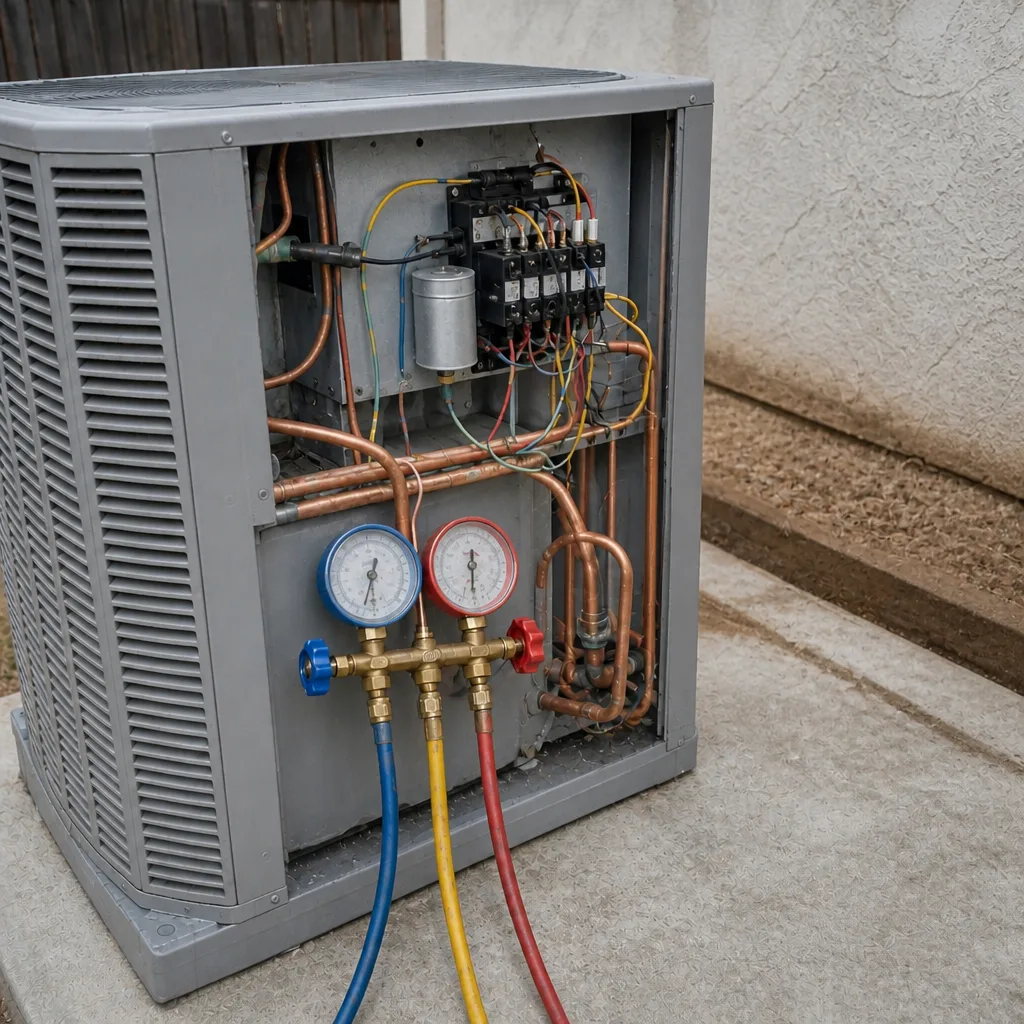
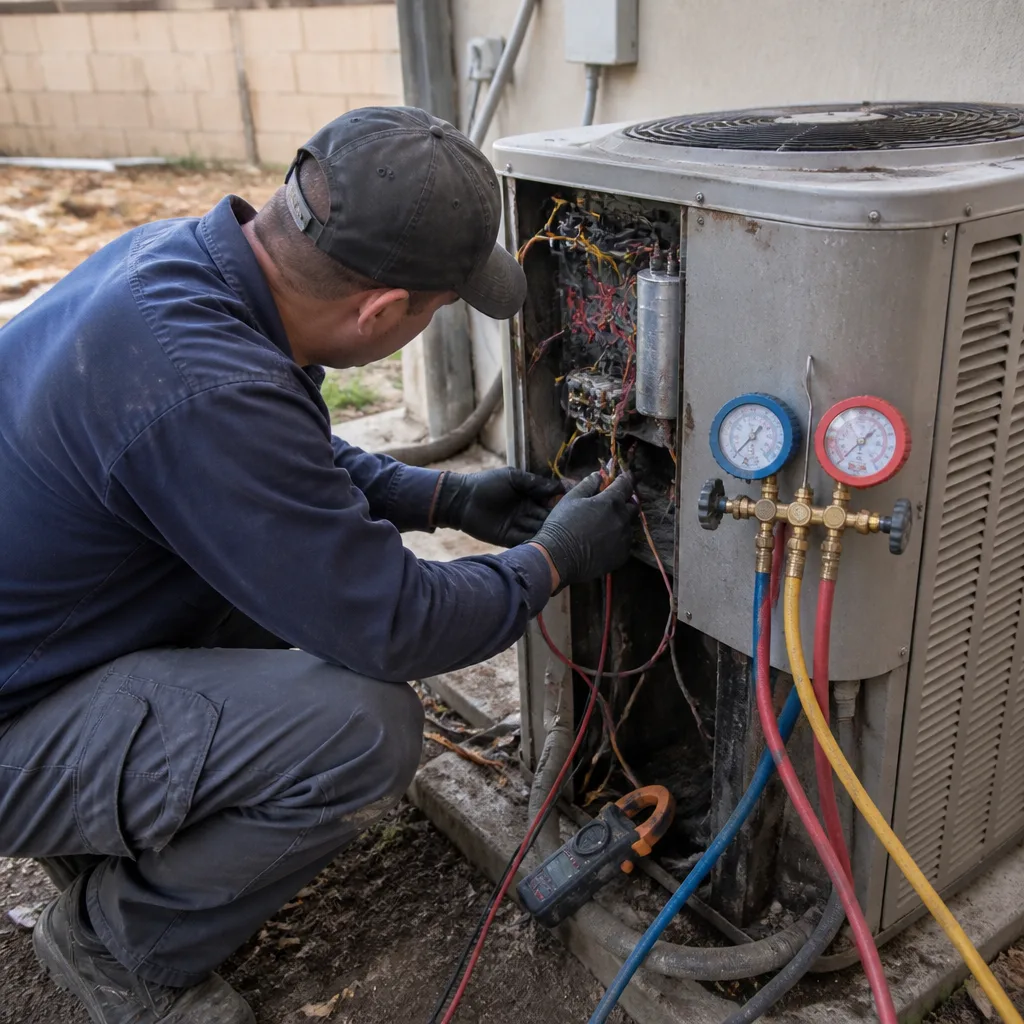
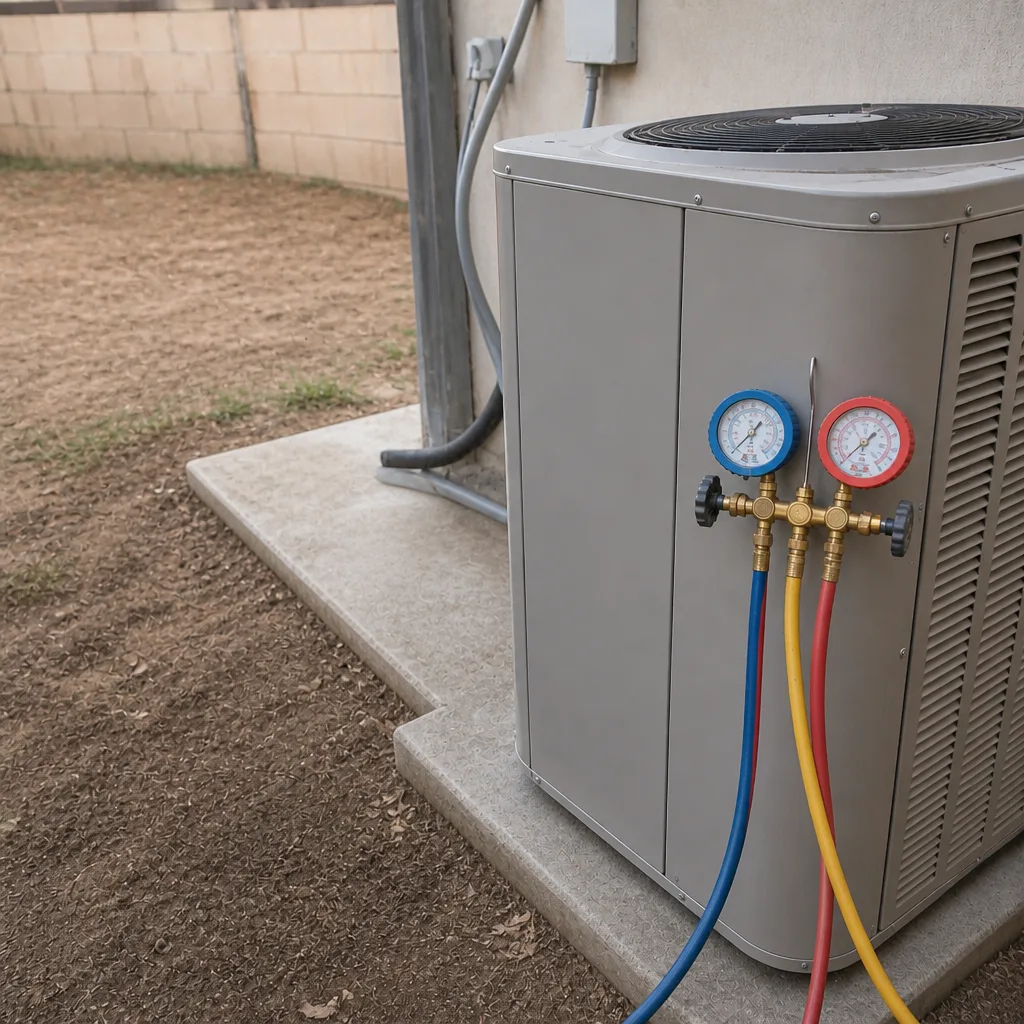
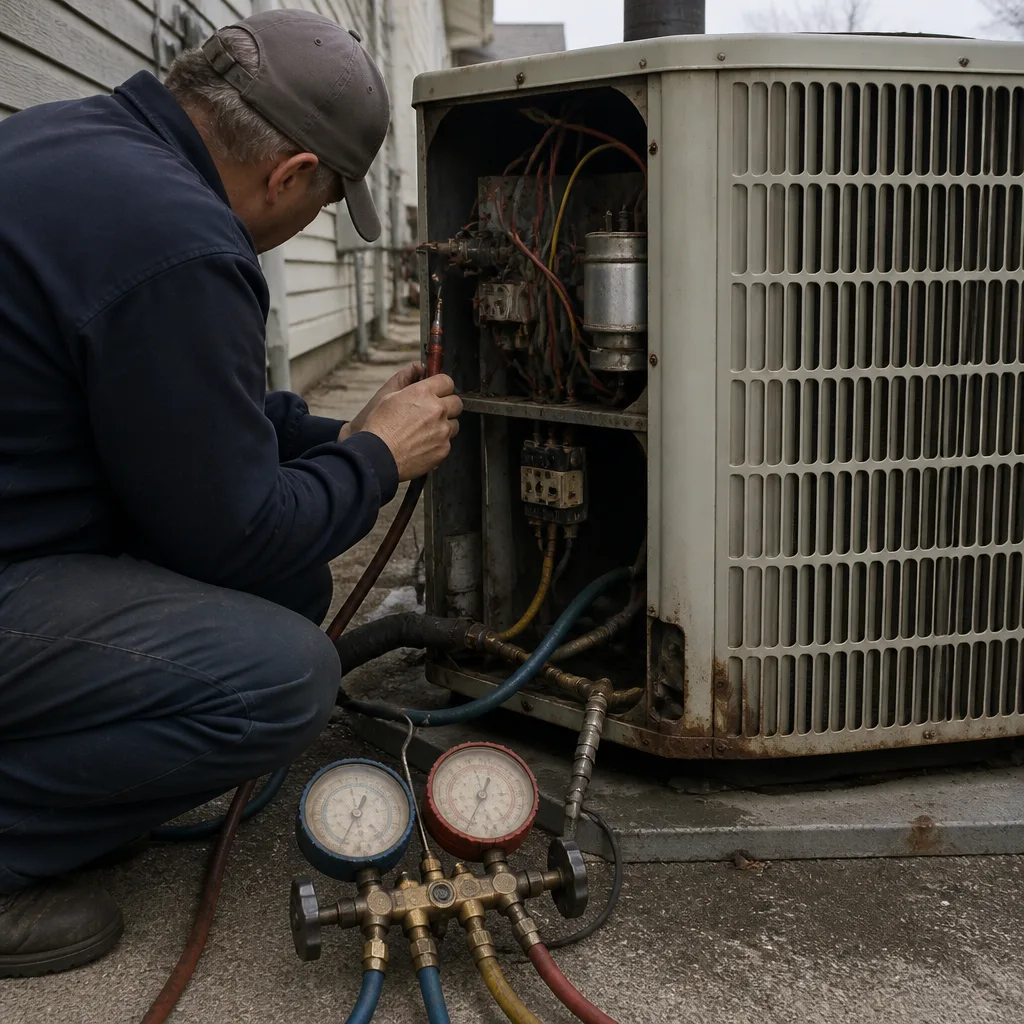
See the difference
 Before
 After
 Before
 After
 Before
 After
When to Call a Professional
Call a pro for anything involving refrigerant, sealed-system wiring, gas, the compressor, or the contactor. Call immediately if you smell gas, hear a persistent hiss, see sparks, or find carbon monoxide alarms going off. Call the same day if your system is blowing warm air in August and the house is getting hot with vulnerable people inside. And call if you’ve done the six troubleshooting steps and it’s still broke, because the problem is now past the homeowner line. If a repair is in your future, it helps to know what’s fair. Our AC repair and installation in Paradise page spells out the pricing up front. Ray’s Heating & Air Paradise offers free estimates in Paradise. Call (855) 664-5714 and you’ll get a live person, even after hours.
Frequently Asked Questions
No. Handling refrigerant requires EPA 608 certification under federal law, and Nevada enforces it. Buying, charging, or recovering refrigerant without that card is illegal and dangerous. For anything touching the sealed system, call a certified professional.
Yes, and we’ll tell you to do it if you’re careful. Disconnect power at the breaker, discharge the capacitor with a resistor and meter first, and take photos of the wiring. The part is $15 to $40. If you’re not comfortable with line voltage, call us and pay the $120 to $220 for the peace of a job done right.
Every 30 to 60 days during cooling season, more if you have pets or a lot of dust. Paradise’s air loads filters faster than the national guidance assumes. A clean filter is the cheapest protection your system has. If you’re unsure, call (855) 664-5714 and describe your setup.
It can. Many manufacturer warranties on systems like York, Daikin, Bryant, or American Standard are voided by unqualified repairs or unauthorized parts. Read the terms before you touch the unit. If it’s still under warranty, let a certified pro handle it.
At that age, get a qualified diagnosis before deciding. A $200 repair is usually worth it if the compressor is healthy. If the compressor is failing, a replacement often makes more sense. Either way, get a written estimate, and remember we offer a free second opinion on any written estimate.
We prioritize same-day emergency calls in Paradise when the heat is dangerous, and the phone is answered around the clock by a live person. Call (855) 664-5714 and we’ll tell you straight what’s available. Don’t wait out a hot house if you have older or vulnerable family at home.
The Bottom Line
Filters, thermostats, capacitors, and condensate lines are yours to handle, and doing them saves real money. Refrigerant, line voltage, gas, and anything inside the sealed system belong to a certified professional, and that’s a federal rule, not a trade guild’s preference. In Paradise, the extreme heat is what makes the difference matter: a mistake that would be an inconvenience in a mild climate can become a health emergency here within hours. Do the safe jobs, do the free troubleshooting, check your system’s age and warranty before you open the panel, and call a pro when the repair crosses the line. That’s the whole calculus.
If you’re not sure which side of the line your problem sits on, Ray’s Heating & Air covers everything from a heat pump and mini split in Paradise to a simple diagnosis, and Ray will tell you honestly when a job is one you can do yourself. Call (855) 664-5714 for a free estimate. A live person answers any hour, and the numbers you see are the numbers you pay.
Written by the team at Ray’s Heating & Air Paradise.