
Last updated November 18, 2026
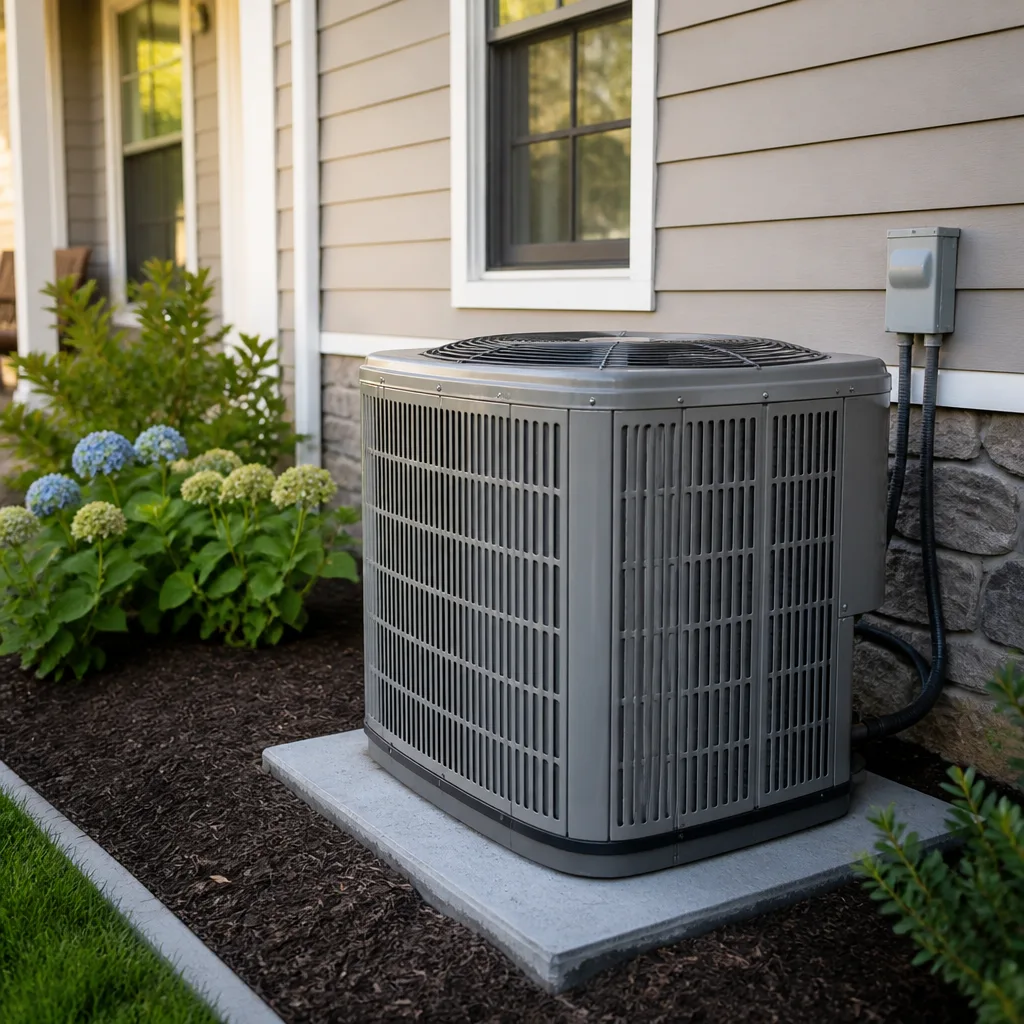 AC repair
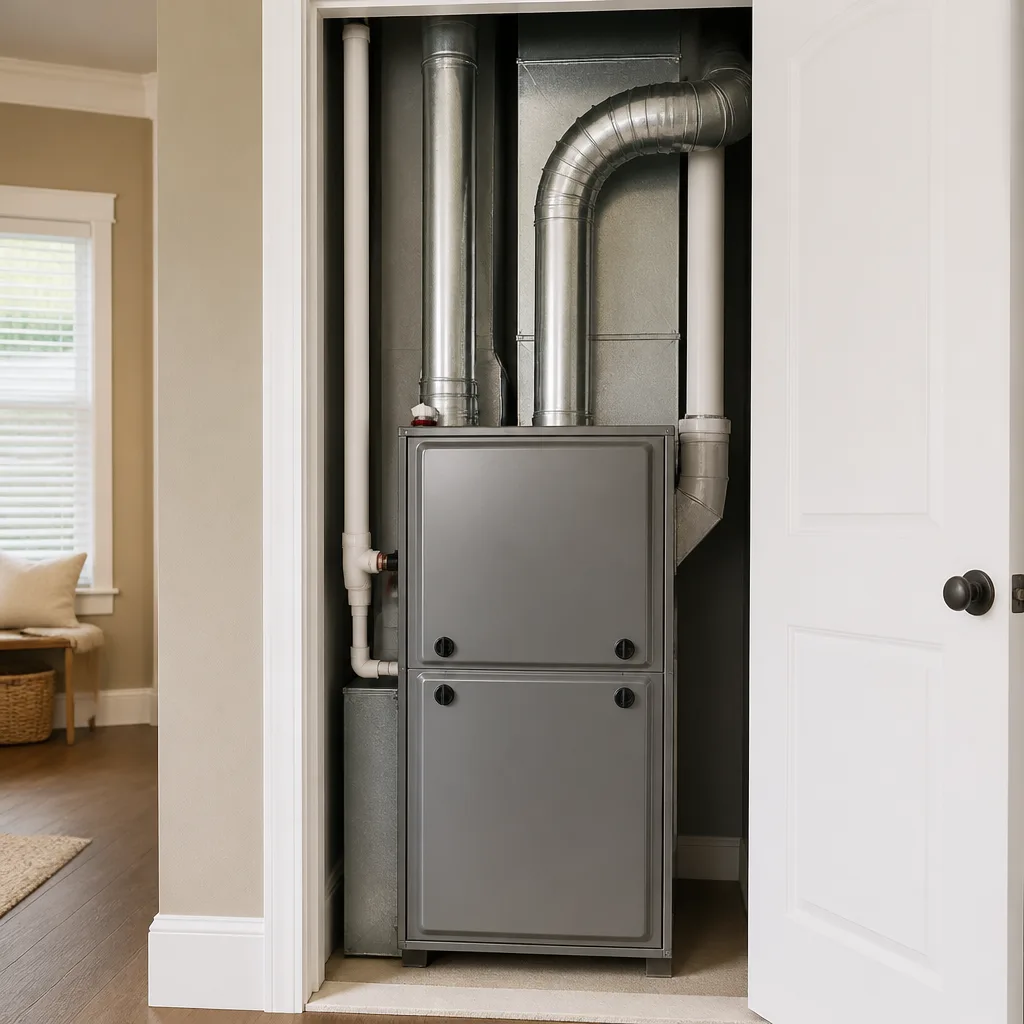 Furnace & heating
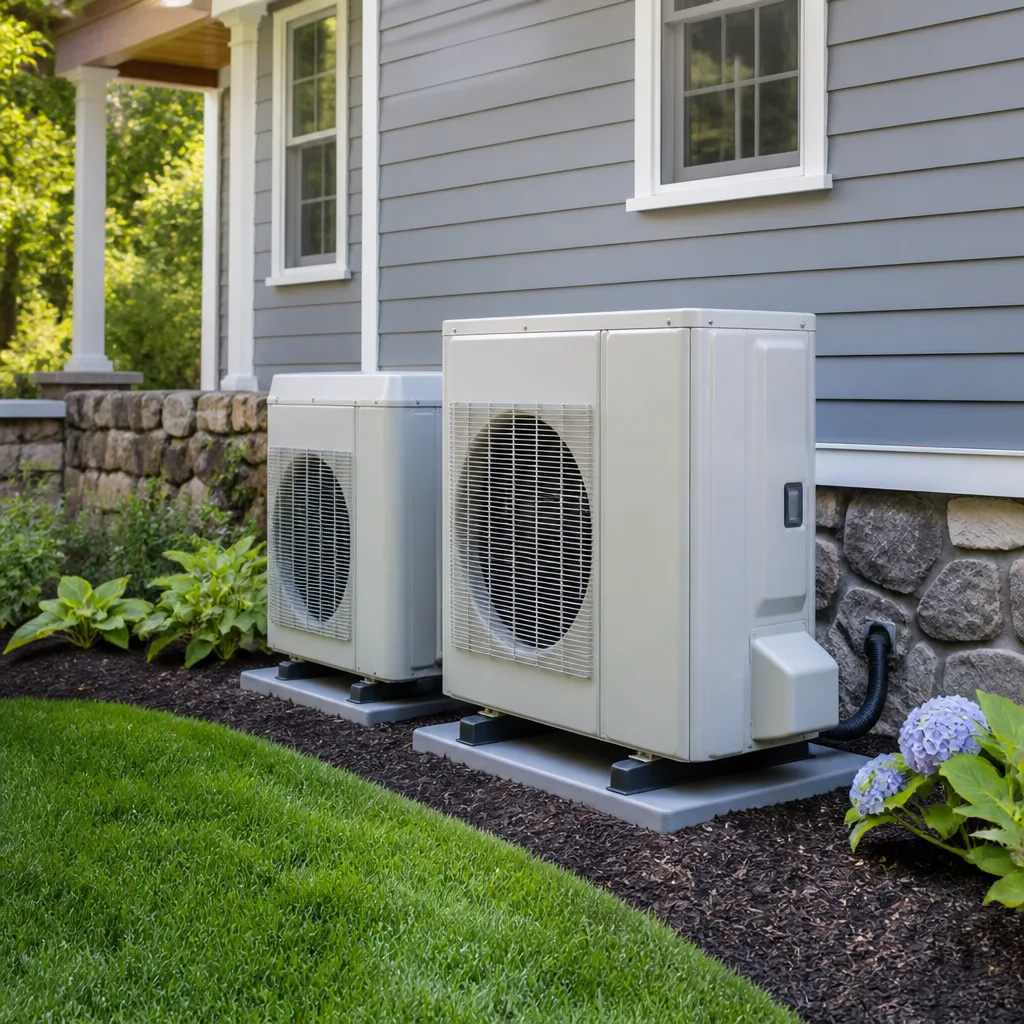 Heat pumps
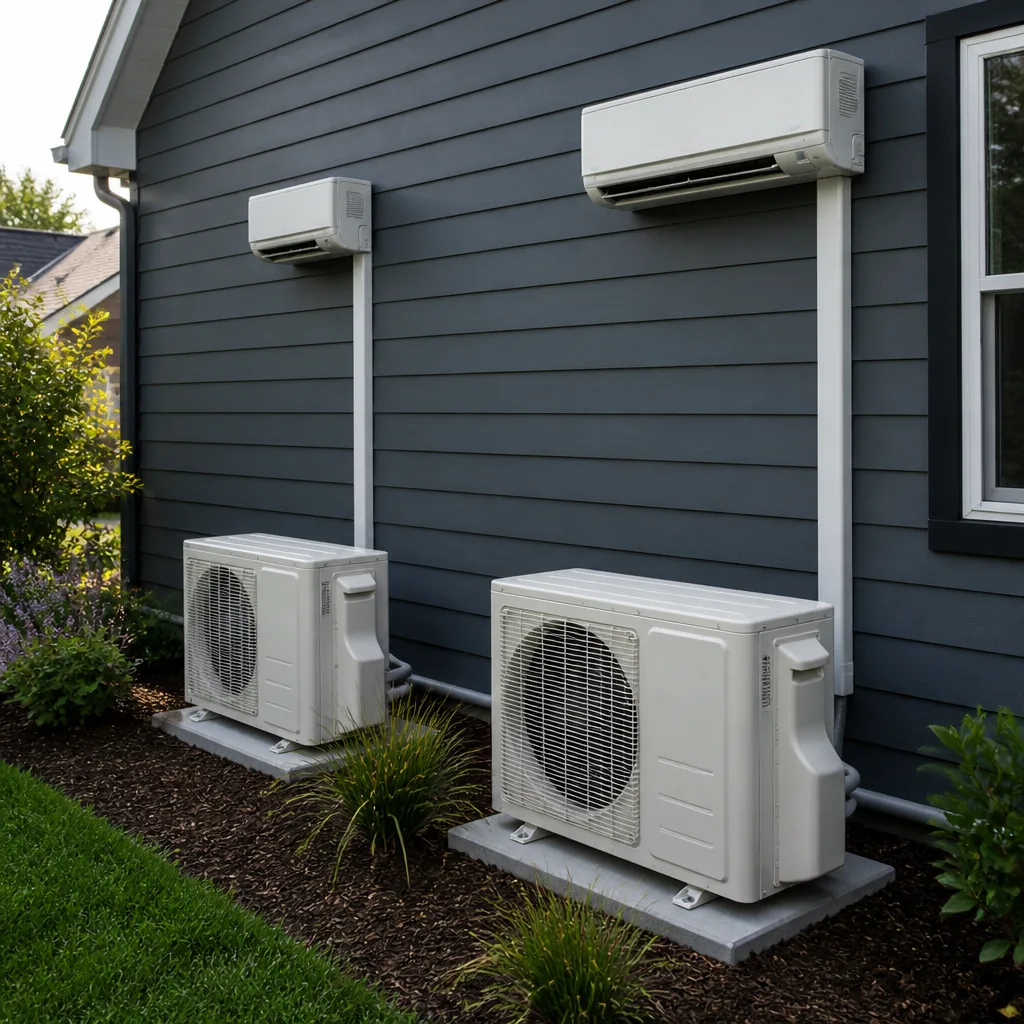 Ductless mini splits
 Carrier
 Trane
 Goodman
Seasonal tune-up and full diagnostic on your Carrier, Trane, or Goodman system - readings shown to you before any repair is proposed
Diagnosis first, numbers second - you approve the repair price before a single part goes in.
Get your free estimateEmergency & Commercial HVAC Warning Signs Every Homeowner Should Know
The most expensive commercial HVAC failure we’ve responded to in Paradise didn’t start with a bang. It started with a slightly warm Tuesday afternoon in July, a compressor that was working harder than it should have, and an office manager who figured the heat was just “one of those things.” Six weeks later, that building was on emergency service during a 108-degree week. Every catastrophic failure we’ve seen here had at least one warning sign that someone noticed and nobody acted on. This guide shows you how to catch those signs early, with a ten-minute weekly walkthrough that catches most impending failures before they cost you a building full of sweating tenants.
Quick Answer
Commercial HVAC systems give off warning signs for weeks before they fail: afternoon temperature creep, unusual rooftop sounds like grinding or squealing, utility bills that drift upward year over year, water stains near supply vents, and repeated complaints from one zone. Assign one person a ten-minute weekly walkthrough, and you’ll catch the majority of impending failures long before they shut down your building.
Styles & brands we work with
- AC repair
- Furnace & heating
- Heat pumps
- Ductless mini splits
- Carrier
- Trane
- Goodman
Table of Contents
- Why Nobody Notices Until It Fails
- The “Warm by 2 PM” Pattern: A 30-Day Countdown
- What Rooftop Unit Sounds Are Telling You
- Utility Bill Trends: The Cheapest Diagnostic You Own
- Water Stains: The Commercial Check Engine Light
- Employee Complaints Are Data, Not Noise
- The Ten-Minute Weekly Walkthrough
- Residential Warning Signs Homeowners Should Watch For
Why Nobody Notices Until It Fails
Commercial HVAC systems almost never fail out of nowhere. Compressors degrade. Bearings wear. Belts glaze. Refrigerant slowly leaks. Contactor points pit. Each of those things produces a sign, and each sign gets louder over weeks.
The problem is that no one is assigned to look. In a Paradise office building, the property manager assumes maintenance has it. Maintenance assumes the equipment is under warranty. The tenant assumes the landlord knows. And the system keeps running, quietly getting worse, until a Thursday afternoon in August when it stops and the phone calls start.
This is the difference between commercial and residential HVAC that most guides skip. A homeowner walks through their own hallway every day and notices when the air feels off. A commercial space of five thousand square feet can be half a degree warm in the lobby and nobody says anything because everybody assumes it’s just the building.
When we talk to a property manager after an emergency call, the conversation usually goes the same way. “We had no idea.” Then we walk them to the thermostat log or the ceiling tile with the water ring on it, and the hindsight arrives fast. That’s not criticism. It’s an assignment gap. Somebody has to be the person who notices.
The “Warm by 2 PM” Pattern: A 30-Day Countdown
Here is the single most reliable warning sign we see in Paradise commercial spaces. A room that held temperature fine all spring starts running warm in the afternoon. The system isn’t broken yet. It’s struggling.
Two in the afternoon matters because that’s when outdoor temps peak and the building has absorbed hours of solar gain. A healthy system can handle it. A system that’s five percent degraded can usually handle it in the morning and can’t keep up by mid-afternoon. That gap is your countdown timer. In our experience, a building that starts showing the “warm by 2 PM” pattern in June is about 30 days from a hard failure if the degradation is unchecked.
How to catch it:
- Log the lobby temperature on a wall thermometer at 9 AM and 2 PM for one week. Write both down.
- Note any gap larger than 3 degrees between the morning and afternoon reading.
- Ask the tenant whether the afternoon reading is different from last summer. If they say yes, you’ve got a story.
- Take your thermostat setpoint history. If someone has been quietly lowering the setpoint to force cool air, that’s the sign too.
The causes range from a dirty condenser coil (common in Paradise after spring pollen and dust) to low refrigerant charge to a failing compressor. Capacitors are one of the first things to check, and any honest diagnostic should test the capacitor before anyone says the word compressor. That’s how we work: readings first, numbers second. If your current service provider wants to talk about the compressor without showing you a capacitor reading, get a free second opinion before you spend anything.
What Rooftop Unit Sounds Are Telling You
Rooftop units make noise. Ice machines make noise. Nothing wrong with some noise. But there’s a difference between the steady hum of a working York or Daikin unit and the wobble, grind, or squeal of a system that’s failing.
Here’s a quick decoder based on what we hear on commercial calls in Paradise:
- Grinding usually means a failing bearing. On a rooftop condenser fan motor or blower, a bearing can go from first grind to seized in a few weeks. Catch it early and it’s a bearing service. Catch it late and it’s a motor replacement plus whatever the stress did to the shaft.
- Squealing is almost always a belt. Glazed, worn, or misaligned. Cheap fix, but a belt that snaps mid-summer can leave a packaged unit down for the day.
- Banging or clattering points to a loose access panel, a loose fan blade, or debris that found its way into the housing. In Paradise’s wind-and-dust springs, a loose panel is more common than you’d think. If the bang is loud and rhythmic, shut the unit down and call.
- Intermittent clicking that repeats every minute or so usually means the contactor is cycling. That could be a failing contactor, a low-pressure safety, or a control board. This is a diagnostic you want a trained technician on, not a guess.
Sound is one of the easiest things to catch in a walkthrough because you don’t need any equipment. You just need to be within earshot. If your rooftop mechanicals are on a roof, get someone up there weekly during cooling season and monthly the rest of the year. Ten minutes is enough.
Utility Bill Trends: The Cheapest Diagnostic You Own
Your utility bill is a diagnostic tool you’re already paying for. You just aren’t reading it that way.
Here’s the method. Pull the last two July electric bills for the same building. If you’re on a commercial rate, you’ll see both a usage number (kWh) and a demand number (kW). Compare the usage, not the total dollars, because rates move and you don’t want to confuse a rate increase with an efficiency problem. A year-over-year usage increase of more than ten percent, with no new equipment, more square footage, or extra people, is a sign worth investigating.
A few patterns we look for:
- Gradual creep over three summers. Every year the usage is a bit higher. That’s efficiency degradation from dirty coils, failing dampers, refrigerant loss, or a control sequence that’s drifted out of tune.
- A sudden jump from one summer to the next. That’s usually a specific failure: a compressor shorting, a blower running low on speed, a stuck economizer damper pulling in outside air when it shouldn’t.
- Flat winter bills and climbing summer bills. If you’re a heat pump building, that split can be normal. If you’re on a gas furnace, that spread points to a cooling-side problem you should have already caught by July.
If the trend confuses you, ask your power company for a twelve-month usage export. In our experience, most commercial utilities will give you that data on request. Bring it to us and we can usually read it in fifteen minutes and tell you whether a diagnostic visit makes sense.
Water Stains: The Commercial Check Engine Light
Water stains on ceiling tiles near supply vents are the commercial equivalent of a check engine light. The difference is that most property managers repaint the tiles or swap them out and move on instead of finding out why.
Water near a supply diffuser, or on the tile above it, means one of several things:
- Condensation on a cold duct run that isn’t insulated correctly, or whose insulation has been compromised
- A clogged condensate drain line backing up into the ceiling
- A condensate pan that’s cracked or overflowing
- Refrigerant-line ice that forms on the lineset, then melts and drips
- A blocked drain pan that’s sat enough water for it to wick through a ceiling tile
The one that matters most is the clogged drain line. It’s the cheapest to fix early and the most expensive to ignore, because when a pan overflows inside a commercial air handler, it can take out the control board and short a run. We’ve seen a $180 drain line clear turn into a multi-thousand-dollar control board replacement because someone repainted the tile instead of calling.
Walk your ceilings once a week. Look up. Look for the ring. Look for the sag. If you see water near a supply vent in a Paradise commercial space, get eyes on it before you spend time and money on cosmetic fixes.
Employee Complaints Are Data, Not Noise
When one employee says the conference room is cold, that’s a preference. When four employees in the same zone report discomfort over two weeks, that’s data. It’s a zone-specific problem and it’s worth investigating before it cascades to the whole system.
Zones fail one at a time. A stuck VAV box, a bad zone damper actuator, a thermostat placed near a heat source, a supply diffuser with a blocked throw pattern. None of those are whole-building failures on their own. But a stuck zone damper forces the whole system to overwork to keep the other zones comfortable. That stress shows up elsewhere in a few weeks.
Here’s how we tell a zone problem from a system problem:
- Ask for a written list of complaints with dates and room names. Not “the office is hot,” but “Tuesday at 3 PM, conference room B.”
- Group the complaints by zone. If they cluster, you’ve got a zone issue. If they scatter across the whole building, that’s a system issue.
- Log the thermostat setpoint for the affected zone over a week. Note whether it’s actually reaching setpoint or holding steady 2 or more degrees above.
- Have the technician check the zone damper actuator on that zone before touching anything else. That actuator is often the answer.
If you already have complaints clustering in one zone, that’s a good reason to take up the free second opinion on any written estimate you already have. We’ll read the previous tech’s diagnosis and tell you whether it matches what we’d look for. Sometimes it does. Sometimes the diagnosis points at the system and the actual failure is one actuator in one zone.
The Ten-Minute Weekly Walkthrough
Here is the walkthrough. This is the actual recommendation. Give it to one person. Write it on an index card and tape it inside a utility closet. Ten minutes, every Monday, every week during cooling season. During heating season you can push it to every two weeks.
- Check the lobby thermometer at 9 AM and again at 2 PM. Write both numbers down. Watch the gap.
- Listen at each rooftop or mechanical closet for thirty seconds. Anything new, anything grinding, squealing, banging, or clicking gets written down.
- Walk the ceiling line near every supply diffuser. Look for water rings, sags, dust plumes, or streaks.
- Scan the utility bill trend. Compare last month to the same month last year, once a month. Flag anything over ten percent without an obvious reason.
- Collect complaints in writing. One line per complaint: date, time, room. Sort by zone at the end of the month.
- Check the filter change log. If nobody owns filters, that’s half of your efficiency problem right there.
In our experience, this walkthrough catches roughly 80 percent of impending failures before they become emergencies. Not because the person doing it is a technician, but because they notice what a technician would catch if a technician was standing there every week. We’re not there every week. Your walkthrough person is.
If your building is in Paradise and you want us to walk the walkthrough with your person once, we can do that during a scheduled maintenance visit on any heating and furnace service or cooling tune-up call. We’ll point out the specific things to look at on your specific equipment, whether it’s Bryant, American Standard, or anything else in the mechanical room.
Residential Warning Signs Homeowners Should Watch For
Not every system in Paradise is commercial. Plenty of our calls are homes, and the warning signs translate. Same pattern, different scale.
A homeowner’s version of the “warm by 2 PM” pattern is noticing that the second floor is a few degrees warmer than it used to be, or that the thermostat isn’t hitting its setpoint by late afternoon. Same 30-day clock. Same incentive to call before the failure. A residential system that’s starting to lose ground in the afternoon is a system that will fail during the next heat wave, and the heat waves in Paradise don’t always arrive on schedule.
The residential sound decoder is the same. Grinding fan motor. Squealing belt on an older furnace. Clicking contactor. Banging from a loose panel or a compressor about to seize. Any of those is a call, not a wait.
The one thing homeowners should add to the walkthrough: check for ice or frost on the refrigerant lines. If you see ice on a line coming out of your outside unit, shut the system off and call. Running a system with low refrigerant can damage the compressor, and that’s a much bigger bill than a recharge. Anyone with a residential AC system should know that one rule. And if your house is due for a system replacement or a heat pump upgrade, that work is scheduled and price-fixed, not same-day, so plan it for the shoulder season when it isn’t an emergency.
Common Mistakes to Avoid
- Assuming “the property manager has it.” In a commercial building, everyone assumes someone else is watching. That’s how six-week warning signs get missed. Assign a name and write it down.
- Repainting over water stains. Swapping ceiling tiles is fine after the issue is fixed. Swapping them instead of fixing the issue is how a $180 drain clear becomes a multi-thousand-dollar control board replacement.
- Chalking up zone complaints to “that one employee.” If the same room gets complaints from more than one person in a two-week span, that’s not a preference. That’s a zone damper or a thermostat placement issue worth forty-five minutes of a technician’s time.
- Ignoring a 10 percent utility creep. Every business owner in Paradise has seen their bill rise. But a ten percent year-over-year climb on the same building, same equipment, no changes in occupancy is not a rate hike. That’s efficiency loss.
- Running the system to “see if it fixes itself.” A failing compressor under load can take out a contactor, a control board, and sometimes a adjacent compressor on a multi-circuit rooftop. Shutting down one unit for a day is far cheaper than letting it run to failure.
- Replacing a compressor without testing the capacitor first. We’ve walked into more than a few Paradise buildings where a previous outfit quoted a compressor on a system that only needed a $200 capacitor and a diagnostic. Ask for the readings before you sign.
- Skipping a weekly visual because “nothing’s changed.” The whole point of a weekly walkthrough is that the change creeps. If you only look when you already suspect something, you’ve already missed the six weeks of warning.
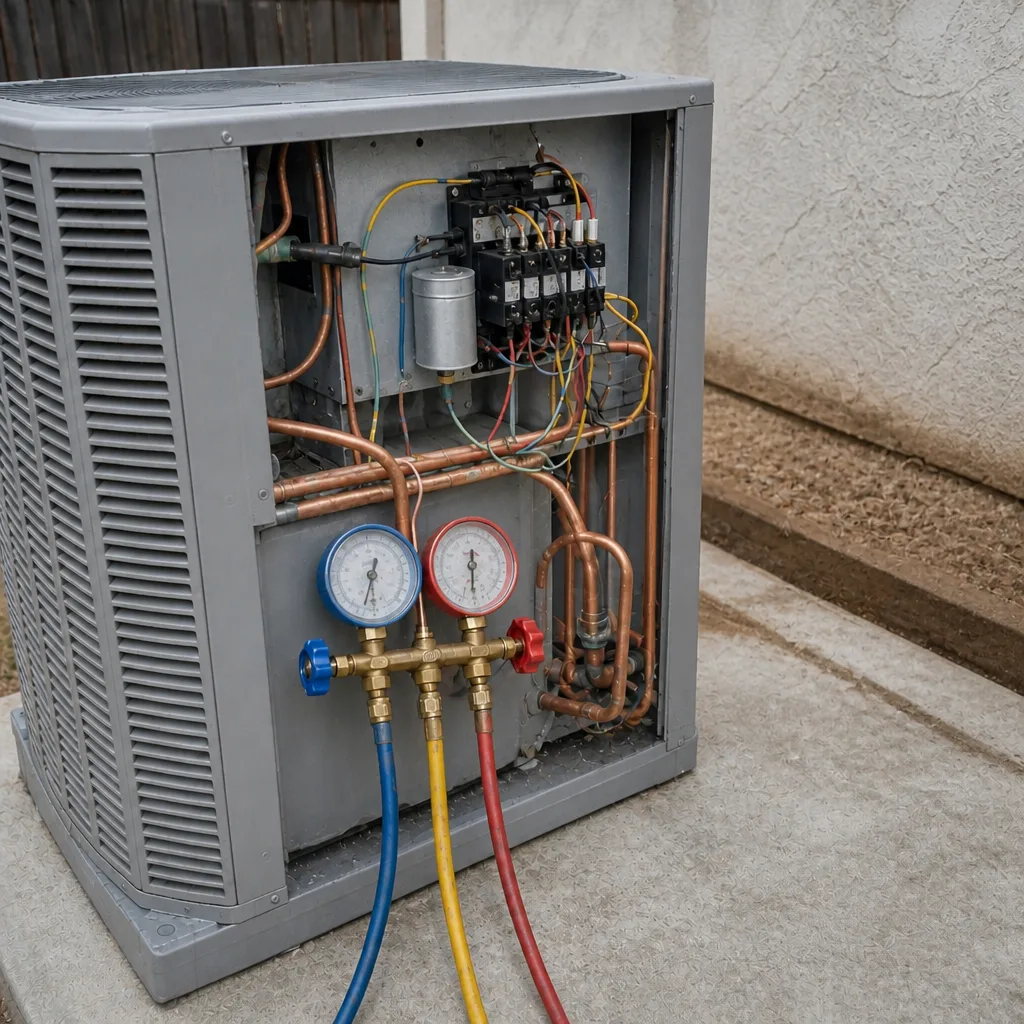
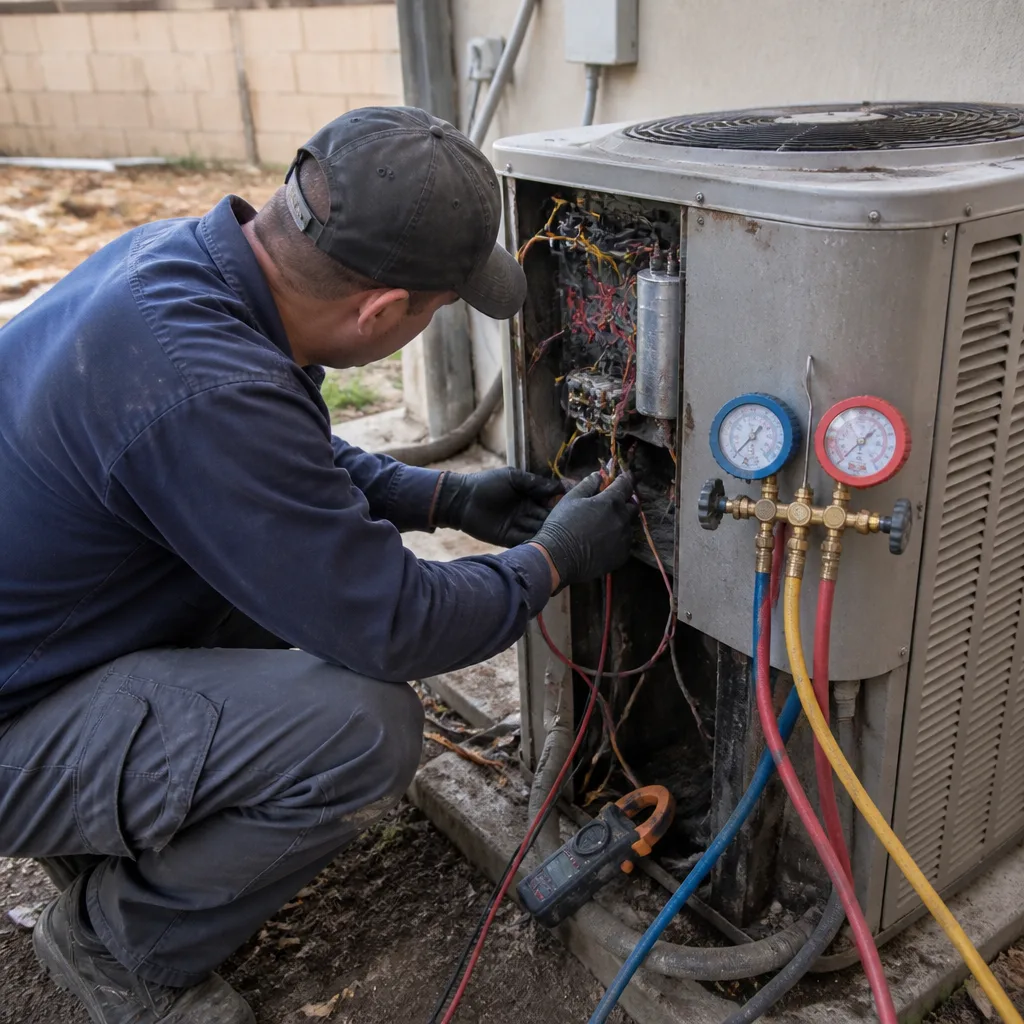
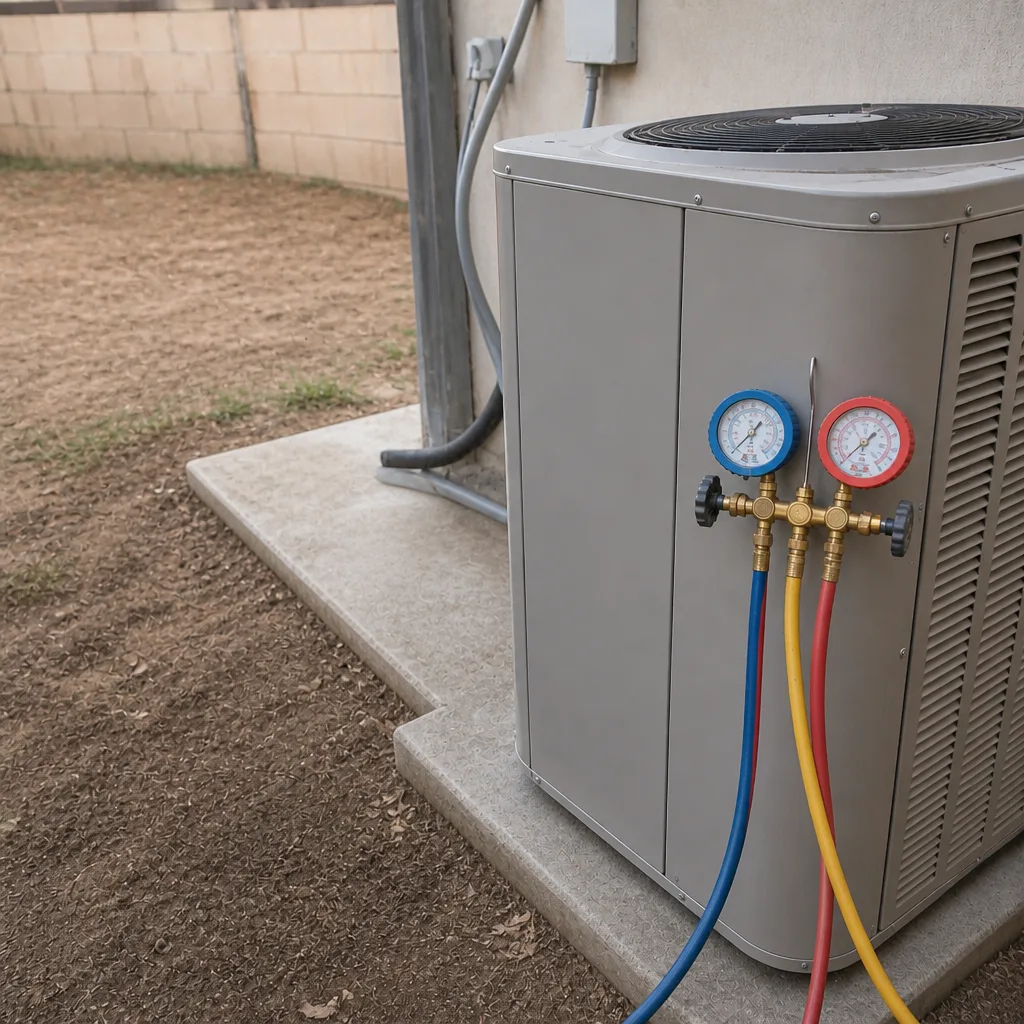
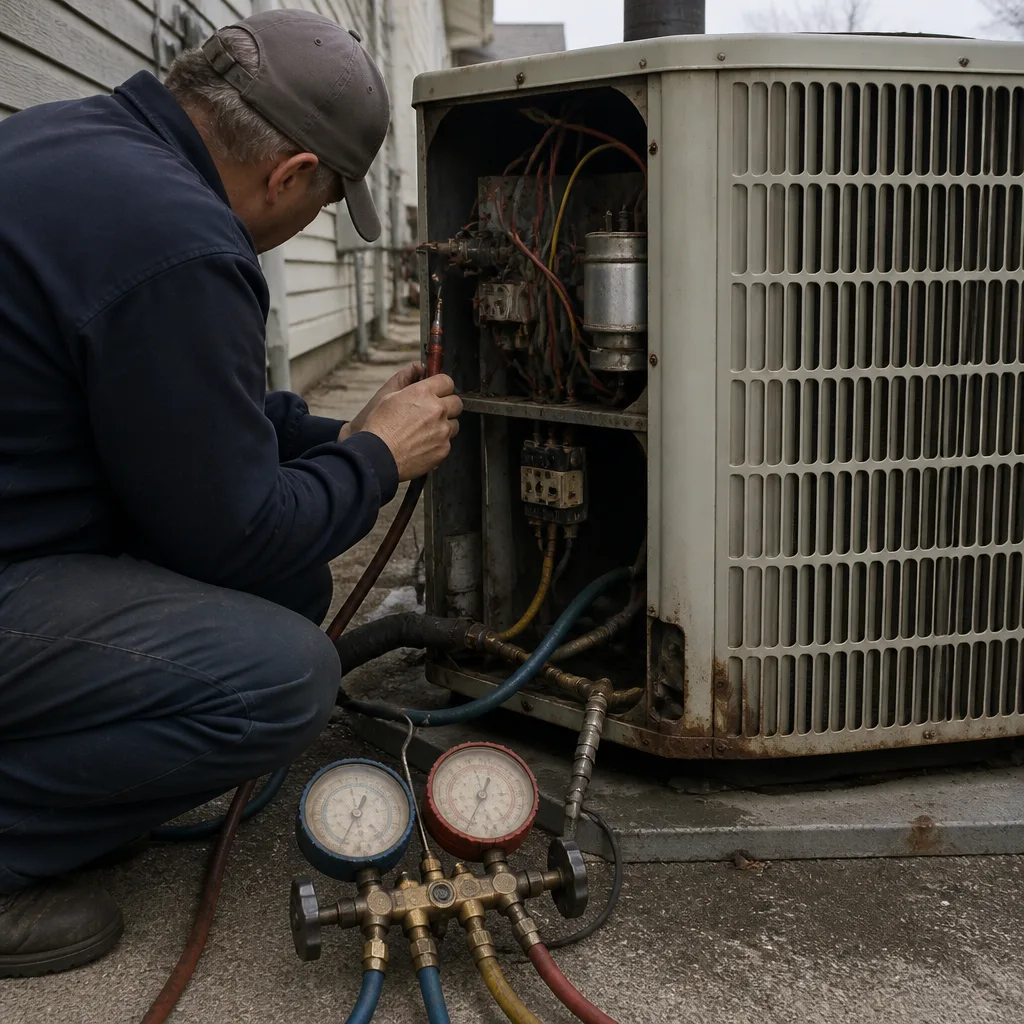
See the difference
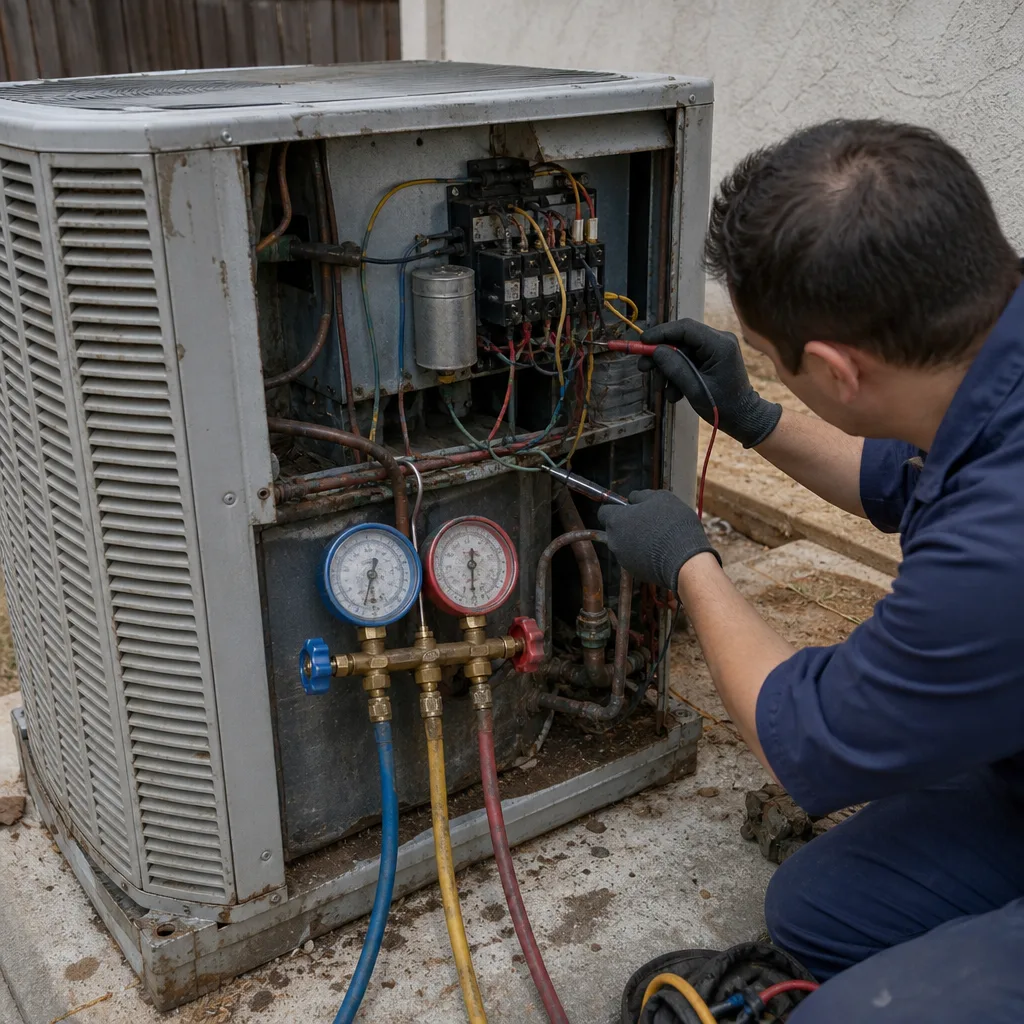 Before
 After
 Before
 After
 Before
 After
When to Call a Professional
Call a professional when you see any of these in a Paradise building: a compressor that won’t start, ice on refrigerant lines, water actively dripping from a ceiling near a supply vent, a rooftop unit that grinds or bangs when the fan spins up, a thermostat reading that’s drifted 5 or more degrees from setpoint for a full afternoon, or any smell of hot electrical or burnt wiring near an air handler. Those are not “watch” items. Those are same-day calls.
If you’re already in an emergency, or a system has failed during a heat wave, call (855) 664-5714 and a live person will answer. Ray’s Heating & Air Paradise offers free estimates in Paradise, and every call during normal hours gets the readings-first pricing approach. For commercial buildings in Paradise that want a second read on a written estimate before they commit to a compressor or a full system replacement, the standing Free Second Opinion offer is exactly for that. Call (855) 664-5714 and tell us what you’re seeing. We’ll tell you whether it’s an emergency, a this-week item, or a this-month item.
Frequently Asked Questions
The first warning sign is usually afternoon temperature creep: a building that held comfort all morning starts running warm by 2 PM. That pattern almost always means the system is working harder than it should, and in our experience it’s typically 30 days ahead of a hard failure if it isn’t checked. Log your lobby temperature at 9 AM and 2 PM for one week and watch the gap.
Diagnostic pricing depends on the equipment and the number of rooftop units, which is why we don’t quote commercial diagnostics over the phone without knowing the setup. What we do commit to is the readings-first approach: a technician shows the meter readings before anyone quotes a repair, and you see the numbers before you approve any work. Call (855) 664-5714 for a free estimate on a specific building in Paradise.
No. Warning signs that come from mechanical wear or refrigerant loss don’t resolve themselves with time. A zone that’s running warm in July will run warmer in August. A grinding bearing gets louder until it seizes. Water stains near a supply vent grow with the next condensate overflow. The only sign that can be transient is a thermostat misreading, and even that is worth thirty minutes of someone’s attention.
Twice a year for a full tune-up, once in spring before the cooling season and once in fall before heating season. In between, the weekly ten-minute walkthrough does more for your building than any quarterly visit. The tune-up catches what a walkthrough can’t; the walkthrough catches what a twice-a-year visit can’t.
Usually yes, and the math is not small. An emergency call after hours costs more on the labor side, but the bigger cost is the secondary damage: a compressor that runs to failure can take out the contactor, the control board, or a second compressor on a multi-circuit unit. Add business interruption, and the total cost of an emergency repair is typically several times a scheduled repair of the same underlying issue.
A steady fan hum, the compressor’s steady run tone, and a low mechanical whir are all normal. Anything intermittent, rhythmic, or new is not. Grinding, squealing, banging, or clicking that repeats every minute or so is the short list of sounds that get a rooftop unit on our schedule within a week. Call (855) 664-5714 if you’re hearing one.
The Bottom Line
Commercial HVAC systems fail on a schedule you can read if you’re looking for the signs. Afternoon temperature creep, rooftop noise, a utility bill drift, water stains near a supply diffuser, and repeated complaints from one zone are the five most reliable warnings, and all five are visible to someone walking the building for ten minutes a week. Assign that person. Write the numbers down. Prioritize the readings-first diagnostic over the fastest quote. And when a sign shows up, call before it becomes an emergency. In Paradise, avoiding the August breakdown is mostly about catching the July warning, and it just takes the right person noticing. If your building is ready for a walkthrough with someone who knows what to look for, call Ray’s Heating & Air Paradise at (855) 664-5714 for a free estimate.
Written by the team at Ray’s Heating & Air Paradise.