
Last updated November 18, 2026
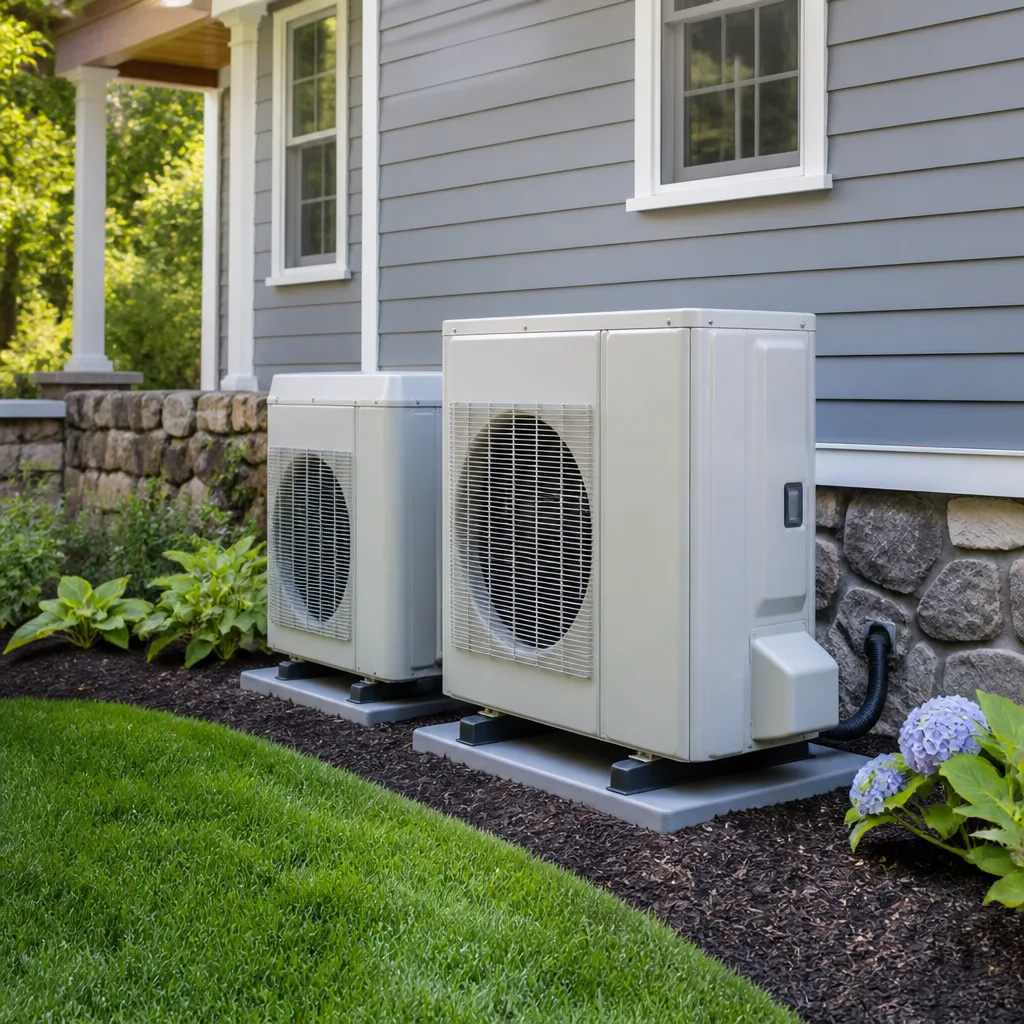 Heat pumps
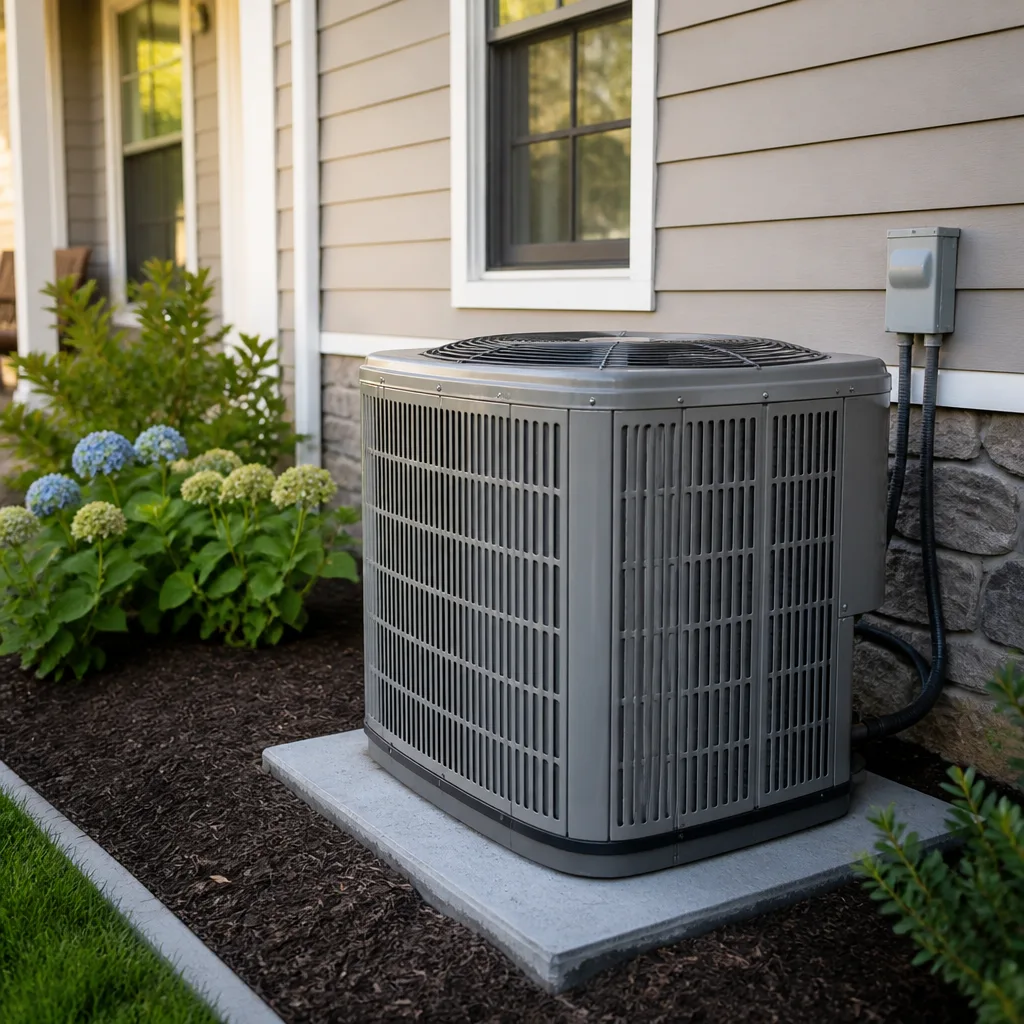 AC repair
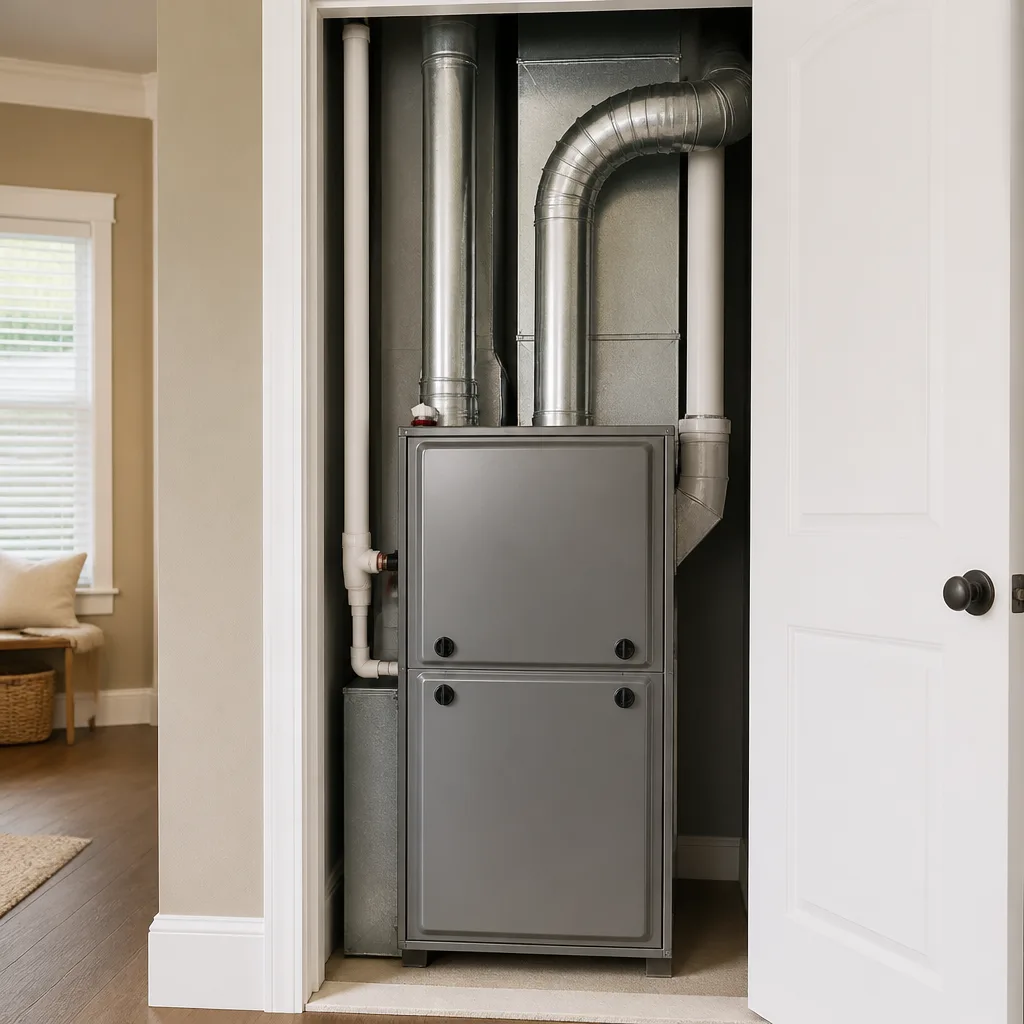 Furnace & heating
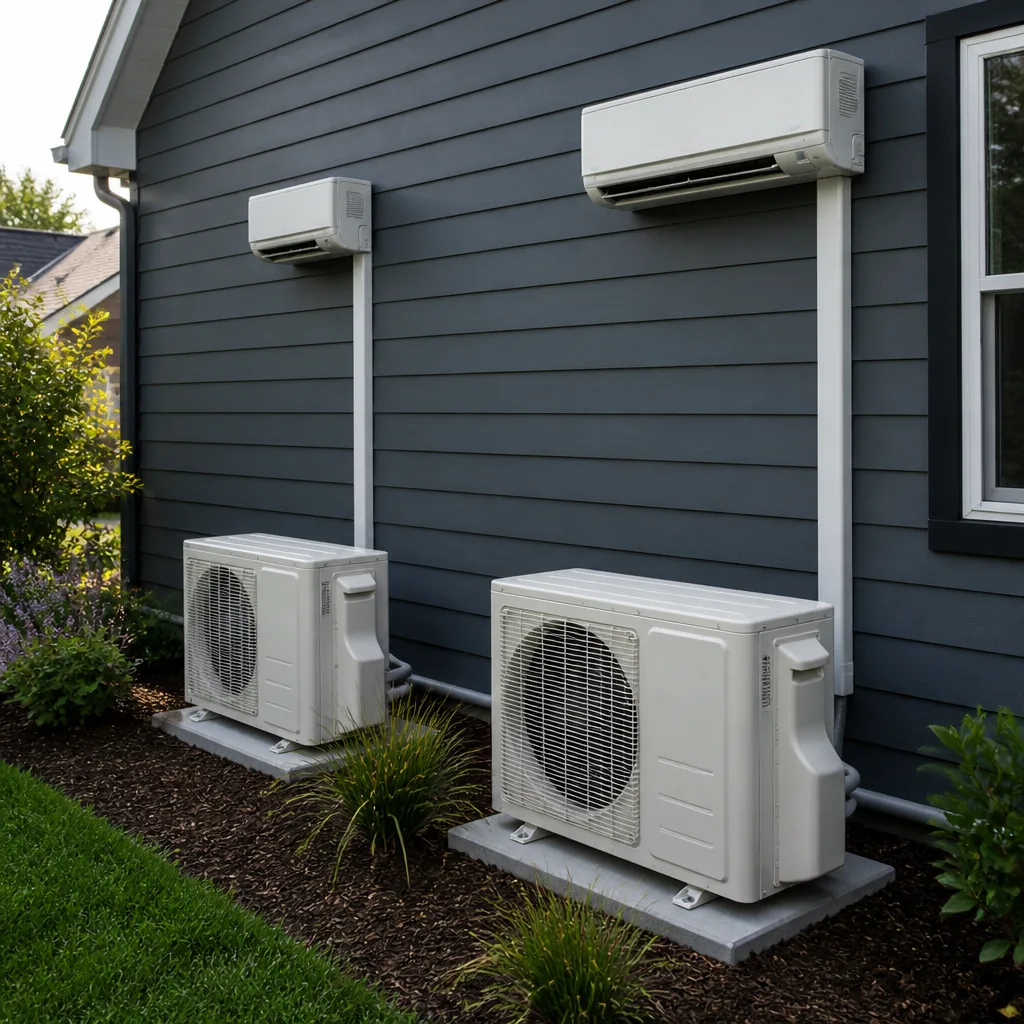 Ductless mini splits
 Carrier
 Trane
 Goodman
Seasonal tune-up and full diagnostic on your Carrier, Trane, or Goodman system - readings shown to you before any repair is proposed
Diagnosis first, numbers second - you approve the repair price before a single part goes in.
Get your free estimateHeat Pump & Mini Split Maintenance Schedule: What to Do and When
The manufacturer says clean your filters every 30 days. In Paradise in July, with dust blowing in off the desert and the unit running 18 hours a day, that filter needs attention every two weeks – and that’s just the starting point. Most maintenance calendars you’ll find online are written for an average American climate: mild summers, regular rain, moderate dust. Paradise is none of those things. The result is that systems here fail years before they should, and the owner usually can’t figure out why. This guide lays out what your heat pump or mini split actually needs month by month in Paradise, where the standard schedule goes wrong, and what a real service visit should include.
Quick Answer
In Paradise, clean or rinse your filters every two weeks during cooling season and monthly the rest of the year, flush the condensate pan and line every three months (not annually), and schedule a full professional service in early spring and again in late fall. The single biggest mistake is following the manufacturer’s annual condensate flush – our desert heat and dust make quarterly the right interval.
Styles & brands we work with
- AC repair
- Furnace & heating
- Heat pumps
- Ductless mini splits
- Carrier
- Trane
- Goodman
Table of Contents
- Why the Standard Schedule Fails in Paradise
- The Paradise Month-by-Month Maintenance Calendar
- The Quarterly Condensate Flush (The One Everyone Skips)
- What Real Coil Cleaning Looks Like vs. a Rinse-and-Call-It-Done
- Outdoor Unit Clearance for Paradise Landscaping
- What We Log on Every Visit – and Why History Predicts Failure
- Common Mistakes to Avoid
- When to Call a Professional
Why the Standard Schedule Fails in Paradise
Manufacturer maintenance intervals are calculated for a climate that doesn’t exist here. They assume a filter loads up gradually, the condensate system drains into moderate humidity, and the outdoor coil sees rain that rinses it. Paradise breaks all three assumptions. Dust storms roll through and coat everything in a fine layer within hours. The system runs long, hard cooling cycles from May into October, which means the filter and coil are handling far more air than the manual assumed. And the condensate pan sits in a warm, dark, wet box – a perfect incubator for the algae that clogs drain lines.
In our experience, a mini split in Paradise that follows a national-average annual schedule will hit its first drain-line clog or frozen coil a full cooling season earlier than one on an adjusted schedule. That’s not a sales pitch. It’s a pattern we see on the same streets, in the same model of unit, year after year.
Three Paradise-specific factors drive every adjustment in this guide:
- Dust load. Filters and outdoor coils here load up two to three times faster than the manual’s baseline. A filter that looks “fine” after 30 days is often already restricting airflow.
- Peak cooling load. Extended 100-degree stretches mean the compressor, fan, and coil run near continuous duty. Components wear faster, and any airflow restriction compounds quickly.
- Hard water and heat. The condensate system’s warm, wet environment grows algae fast. Annual flushes are too slow here.
If you want the full picture of how your specific system fits our climate, our Heat Pump & Mini Split in Paradise page goes deeper on equipment and setup. For now, keep the idea that the schedule must bend to Paradise, not the other way around.
The Paradise Month-by-Month Maintenance Calendar
Here’s the calendar we actually recommend for Paradise homeowners. It’s built around dust season, peak cooling load, and the shoulder months when the system sits mostly idle.
- January – February: Filter check monthly. Visual inspection of the outdoor unit for debris left by winter wind. This is the quiet month; a good time to book a professional service before the spring rush.
- March – April: Full professional spring service. Coil cleaning, condensate flush, refrigerant pressure check, electrical tightening. Filters every two weeks as dust picks up. Clear any landscaping growth near the outdoor unit before cooling season.
- May – June: Filters every two weeks, without exception. Watch for the first warm-weather drain-line gurgles. Outdoor coil visual check after any dust event.
- July – August: Peak load. Filters every two weeks, condensate check every two weeks. This is when clogs and airflow restrictions show up. If the unit is short-cycling or not keeping up, that’s a signal, not bad luck.
- September – October: Filters every two weeks while cooling continues, tapering to monthly. Clean the outdoor coil after the last big dust storm of the season.
- November – December: Full professional fall service. Condensate flush, filter replacement, and a check of heating-mode operation for heat pumps. This catches issues before the first cold snap.
Notice the calendar treats spring and fall as the two professional touchpoints. Those are the shoulder months when a service appointment won’t leave you without cooling on a 108-degree afternoon. For heating-side maintenance, see our Heating & Furnace in Paradise guide.
The Quarterly Condensate Flush (The One Everyone Skips)
The condensate pan and drain line need flushing every three months in Paradise – not once a year. That’s the single biggest climate-driven change to the standard schedule, and it’s the one most homeowners and even some service companies get wrong. Here’s why: the pan collects water that drips off the indoor coil during cooling. In a warm closet or attic, with dust and organic matter settling in, algae grows fast. Once the drain line clogs, water backs up into the pan, overflows, and you’ve got water damage in a ceiling or a shut-down system.
What a proper quarterly flush includes:
- Pan inspection for standing water, slime, and scale.
- Pan cleaning with a mild treatment that kills algae, not just wipes it.
- Drain-line flush under pressure to clear partial blockages before they become full ones.
- Drain pan tablet or treatment where appropriate to slow regrowth between visits.
- Float switch test so the safety shutoff actually works if a clog does happen.
If you’ve ever had water dripping from a ceiling vent in Paradise, you know why this matters. The flush is quick and inexpensive compared to the repair that follows a clog. For most homes, quarterly is the floor – homes with high runtime or an indoor unit in a hot space may need it more often.
What Real Coil Cleaning Looks Like vs. a Rinse-and-Call-It-Done
Coil cleaning is where “maintenance” and “a quick rinse” get confused, and the difference matters in Paradise. A real cleaning removes the dust, lint, and grime bonded to the fins. A rinse-and-call-it-done knocks off the loose dust and leaves the rest. You can watch and tell which one is happening.
Real coil cleaning:
- The technician pulls the access panel and gets at the coil face, not just the outside grille.
- Fin comb or soft brush first, to loosen packed dust.
- Coil cleaner applied and allowed to dwell – it foams and lifts the grime.
- Rinse with controlled pressure, straight through the fins, not at an angle that bends them.
- Visual check that the fins are straight, clean, and fully open, then reassembly.
The rinse-and-call-it-done version: a hose or can of air aimed at the coil for 30 seconds, no panel removal, no cleaner, no fin inspection. It looks like work. It doesn’t restore airflow. In our experience, dusty Paradise coils need the full treatment, and a unit that keeps struggling after a “cleaning” usually got the quick version.
If you want a second opinion on whether your system has actually been cleaned properly, we offer a free second opinion on any written estimate. See what a real service visit covers on our AC Repair & Installation in Paradise page.
Outdoor Unit Clearance for Paradise Landscaping
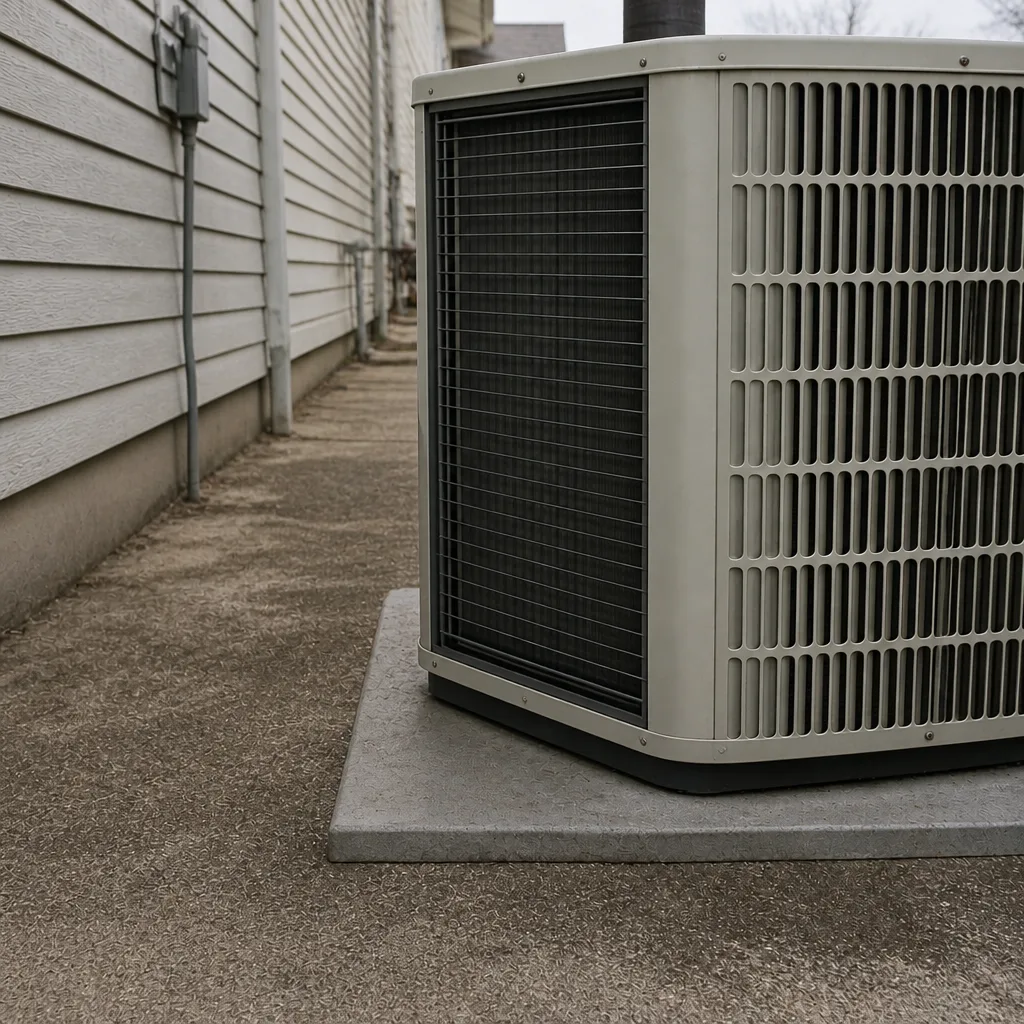
The outdoor unit needs breathing room, and Paradise yards have a way of closing in on it. Oleanders, gravel mulch, and block-wall proximity all show up differently here than in a wetter climate. The unit pulls air across the coil to reject heat. Anything that blocks that airflow raises the operating temperature, raises your power bill, and shortens compressor life.
What to check, and how often:
- Two feet of clear space on all sides, minimum. More on the discharge side.
- Oleanders and shrubs: these grow fast in our sun and creep into the clearance zone within a season. Trim them back, don’t just push them aside.
- Gravel mulch: fine gravel and dust get pulled into the coil and pack the fins. Rake it back from the base and check the coil after any wind event.
- Block wall proximity: a wall close to the discharge side traps hot air and forces the unit to recycle it. If your unit is boxed in, that needs attention.
- Debris after dust storms: tumbleweeds, palm fronds, and grit collect at the base and behind the coil. Clear it.
We do this clearance check on every service visit because it’s free to fix and expensive to ignore. A clogged outdoor coil in July in Paradise is a recipe for high head pressure and a compressor working far harder than it should.
What We Log on Every Visit – and Why History Predicts Failure
A single maintenance task is a snapshot. A log is a story. On every visit, we record the same readings so we can see the trend, not just today’s number. That history is what lets us predict a failure before it happens – a capacitor that’s drifting down, a refrigerant charge that’s slowly changing, a coil that’s cleaning up worse than last time.
What goes in the log:
- Filter condition and replacement date.
- Coil condition (clean, light dust, packed) before and after cleaning.
- Condensate pan and drain status – flushed, clear, or treated.
- Capacitor microfarad reading tested against spec. We test the capacitor before anyone says the word compressor.
- Refrigerant pressures and temperatures for trend comparison.
- Electrical connections and amp draw.
- Outdoor unit clearance and coil condition.
A capacitor that reads a little low this year and lower next year tells us to replace it before it fails on the hottest day of July. That’s the value of history – it turns maintenance from a checklist into a prediction. It’s also why having the same person back matters. If it’s been Ray every time, the trend is real. If it’s a different crew each visit, nobody’s comparing.
Common Mistakes to Avoid
- Following the annual condensate flush. In Paradise heat, algae clogs a drain line in months, not a year. Flush quarterly.
- Waiting for a 30-day filter change in summer. During peak cooling season with dust, two weeks is the right interval. A restricted filter strains the whole system.
- Accepting a coil “rinse” as a cleaning. If the panel didn’t come off and no cleaner was used, the coil is still dirty.
- Letting oleanders and gravel mulch crowd the outdoor unit. The clearance zone collapses fast in our growing season and the unit suffers quietly.
- Skipping the fall service because cooling just ended. That’s exactly when heating-mode problems on a heat pump get caught before the first cold night.
- Letting a different crew see the system each time. Without a continuous log, no one can spot the slow drift that predicts failure.
- Ignoring the first gurgle or the first short cycle. Those are early signals, and in Paradise they escalate quickly once the heat sets in.
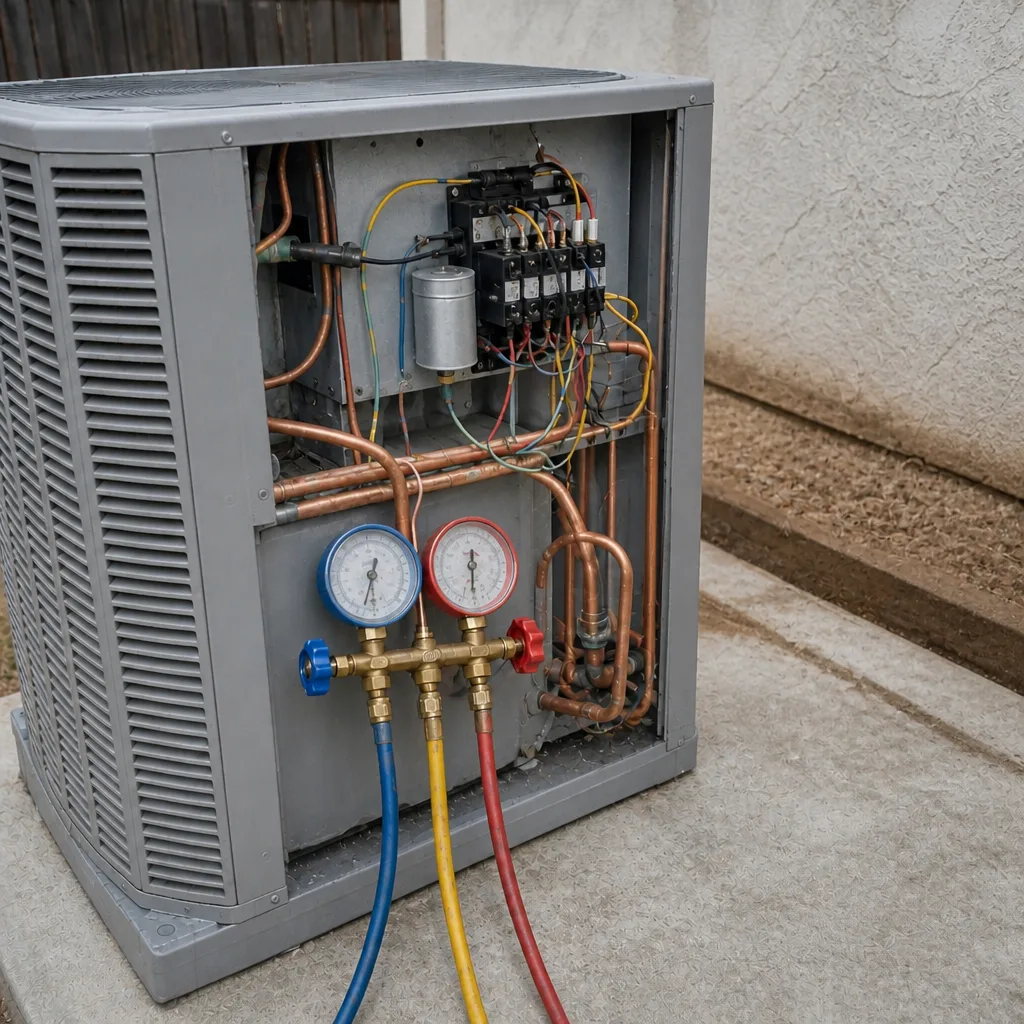
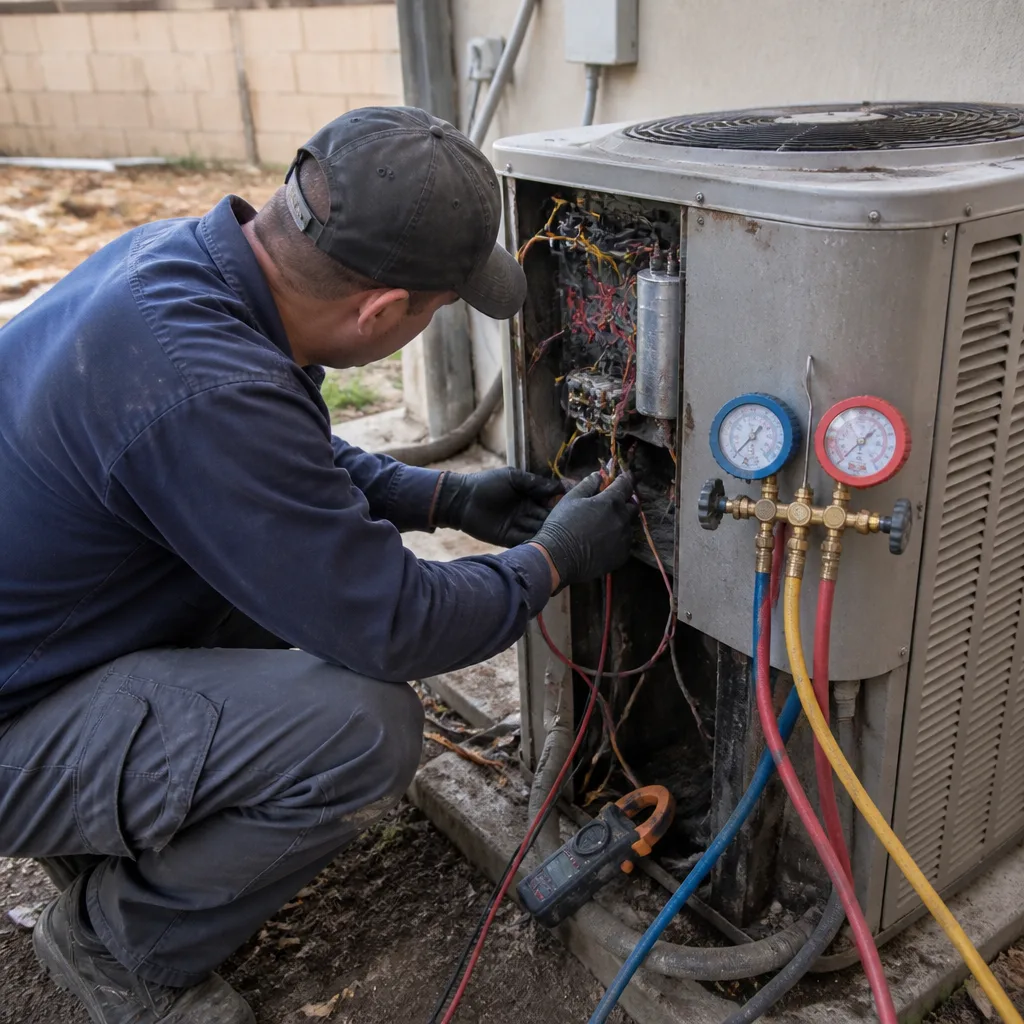
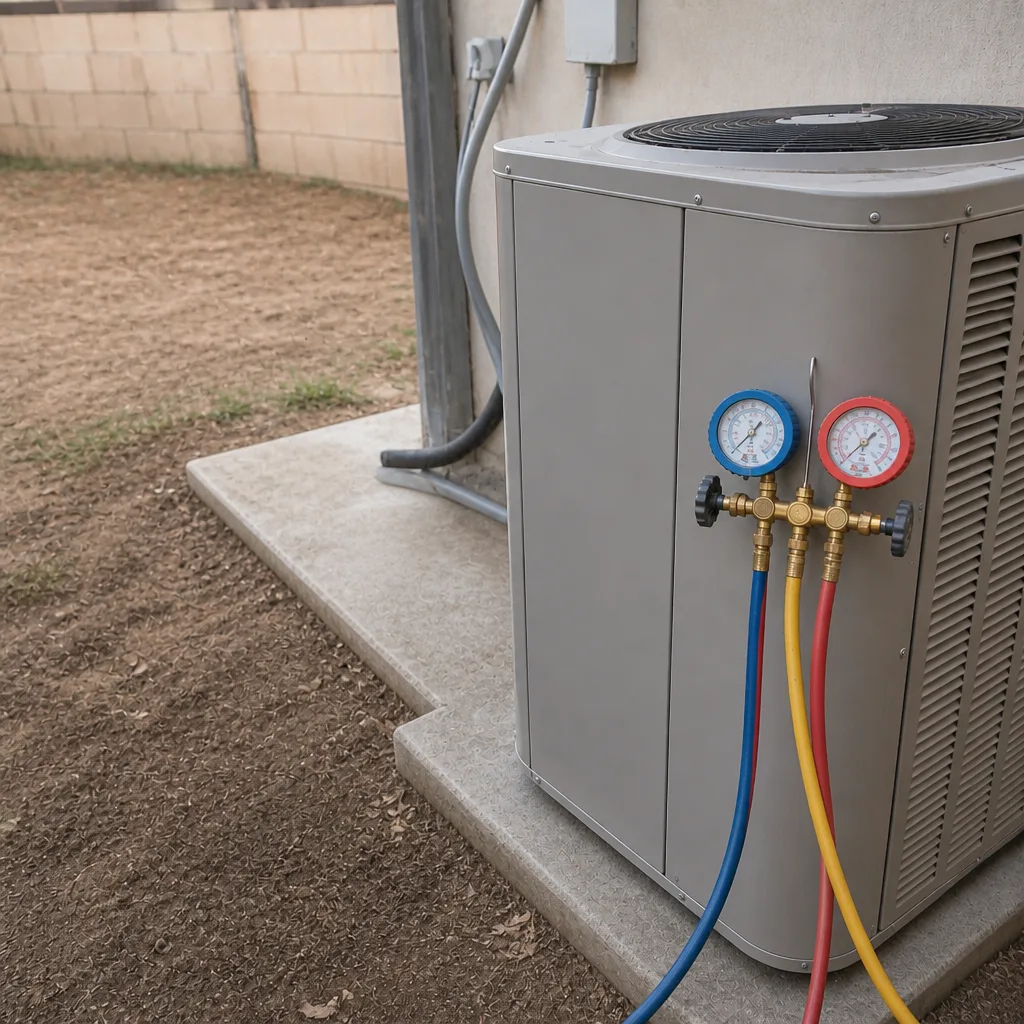
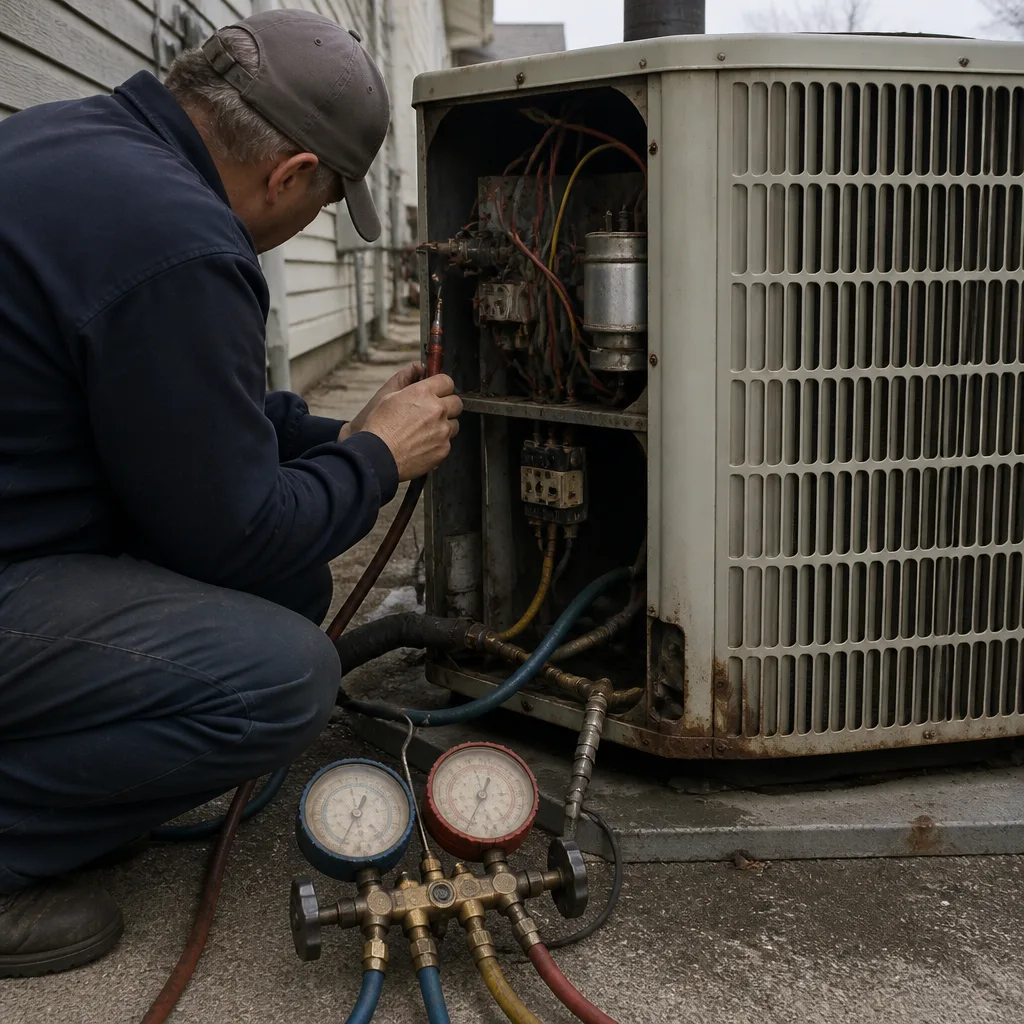
See the difference
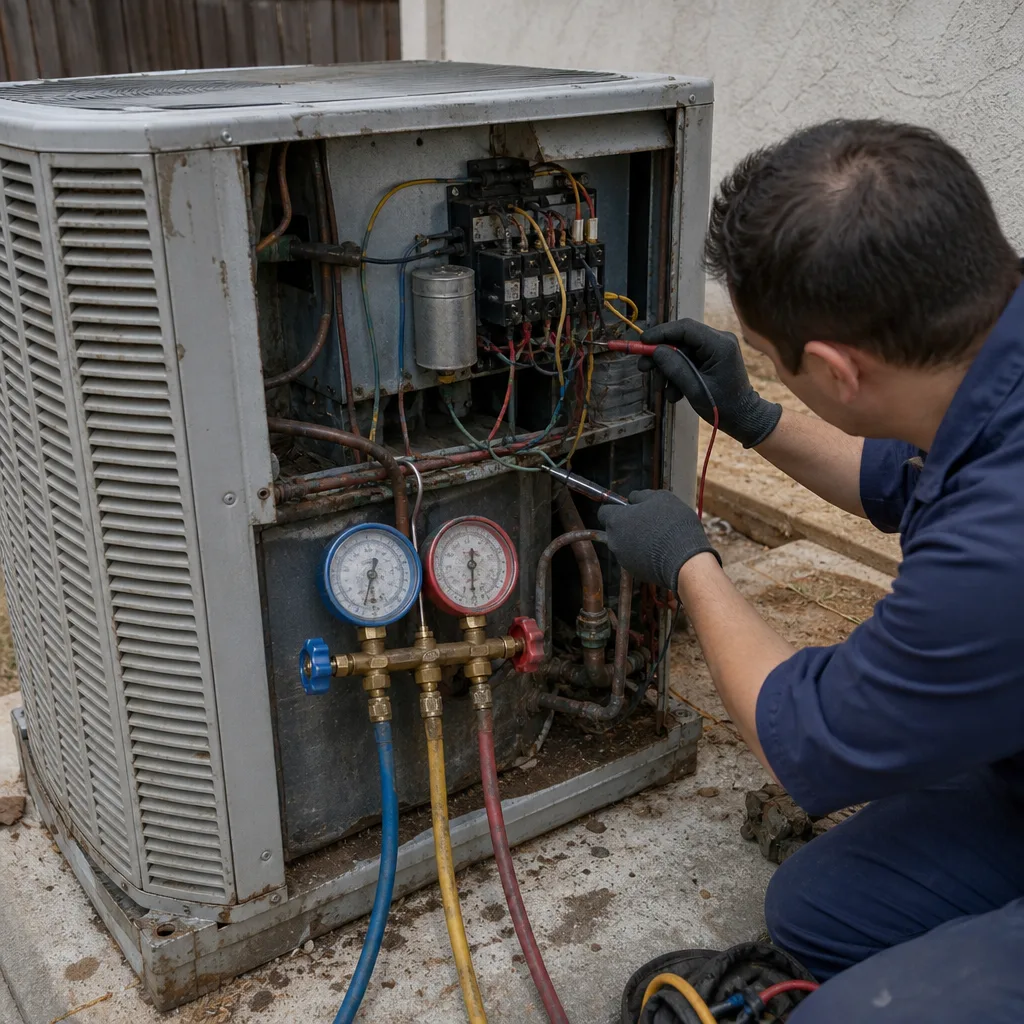 Before
 After
 Before
 After
 Before
 After
When to Call a Professional
Some tasks are homeowner-friendly: filter changes, keeping the outdoor unit clear, and noting anything unusual. Others aren’t. Call a professional when you see water backing up or dripping from a vent, when the system short-cycles or won’t keep up on a hot afternoon, when the outdoor coil looks packed with dust you can’t clear, or when you hear a new noise or smell something electrical. Refrigerant work and electrical diagnosis require training and tools you don’t have on a shelf, and a heat pump runs on high voltage. If a breaker trips or you smell burning, shut it down and call. Ray’s Heating & Air Paradise offers free estimates in Paradise – call (855) 664-5714. A live person answers, day or night, and you’ll get readings first, then numbers.
Frequently Asked Questions
Every two weeks during cooling season and monthly the rest of the year. Paradise dust and long summer runtimes load the filter faster than the manufacturer’s 30-day baseline assumes, so tighten the interval June through September when the unit runs nearly continuously.
Every three months. The warm, wet condensate pan grows algae quickly in our heat, and an annual flush is too slow – clogs cause water damage and shutdowns. Quarterly flushing with a pan treatment keeps the drain clear.
You can handle filters and outdoor clearance safely. Coil cleaning, condensate flushing inside the unit, refrigerant checks, and electrical work should go to a trained professional – a heat pump carries high voltage and refrigerant under pressure. When in doubt, call.
Early spring and late fall. Those shoulder months let a full service happen without leaving you without cooling on a 108-degree day, and the fall visit catches heating-mode issues before the first cold snap. Book early; spring fills up.
The technician should remove the access panel, brush and apply coil cleaner, rinse with controlled pressure, and inspect the fins. A hose aimed at the outside grille for 30 seconds is a rinse, not a cleaning. Ask what was done, not just whether it was “serviced.”
Yes. The team services all major brands, including Rheem, York, Daikin, and Bryant, along with the rest of the common makes. Every job carries the 90-Day Done Right Promise in writing – if it’s not done right, one call brings Ray back. Call (855) 664-5714 for a free estimate.
The Bottom Line
The manufacturer’s maintenance schedule isn’t wrong – it’s just written for somewhere else. In Paradise, dust, extended heat, and hard water in the condensate system mean you should shorten the intervals: filters every two weeks in summer, condensate flush every quarter, real coil cleaning at spring and fall service. Watch the outdoor unit’s clearance, keep a written log, and let history tell you what’s about to fail. That’s how systems here last. If you’d rather have it handled by someone who answers his own phone and will see you at the hardware store, call us – readings first, numbers second. For a fuller overview of what we do, start at our Ray’s Heating & Air Paradise home page.
Written by the team at Ray’s Heating & Air Paradise.