
Last updated November 18, 2026
 AC repair
 Furnace & heating
 Heat pumps
 Ductless mini splits
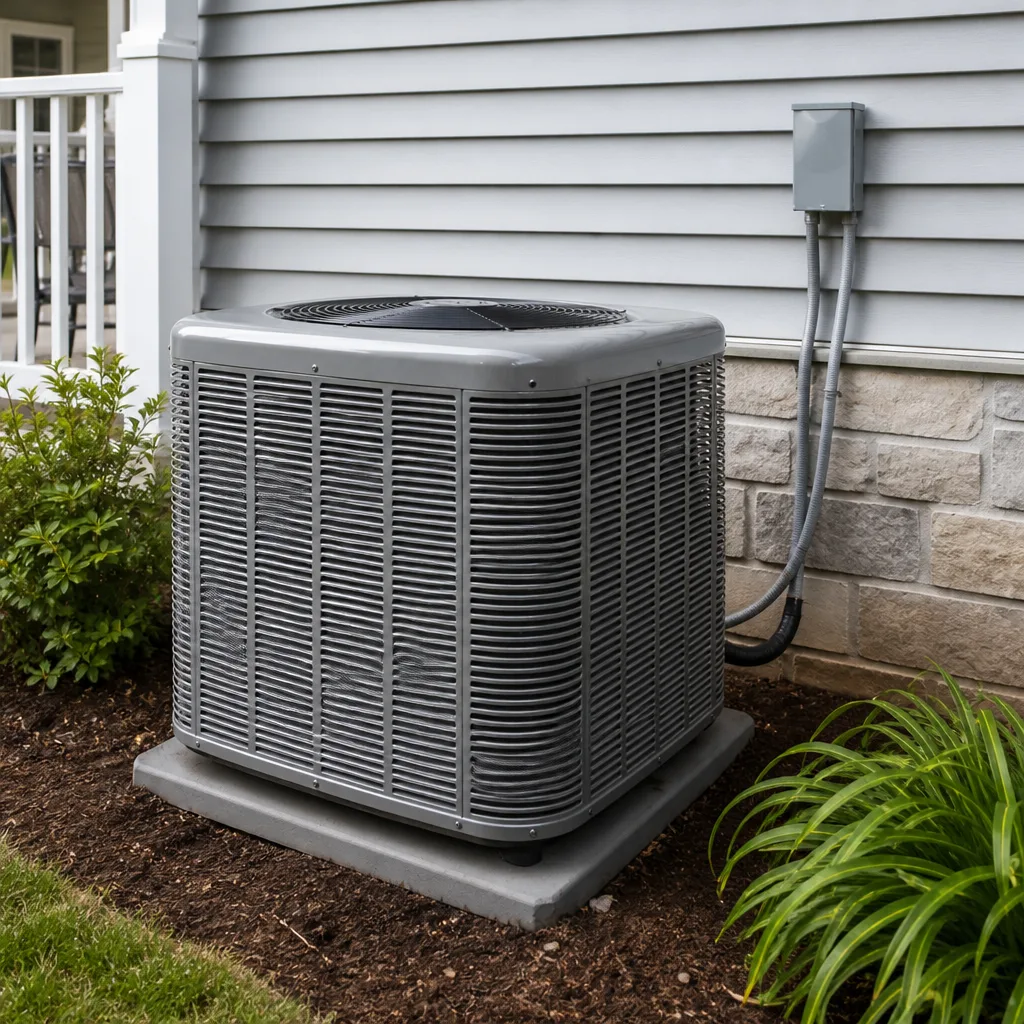 Carrier
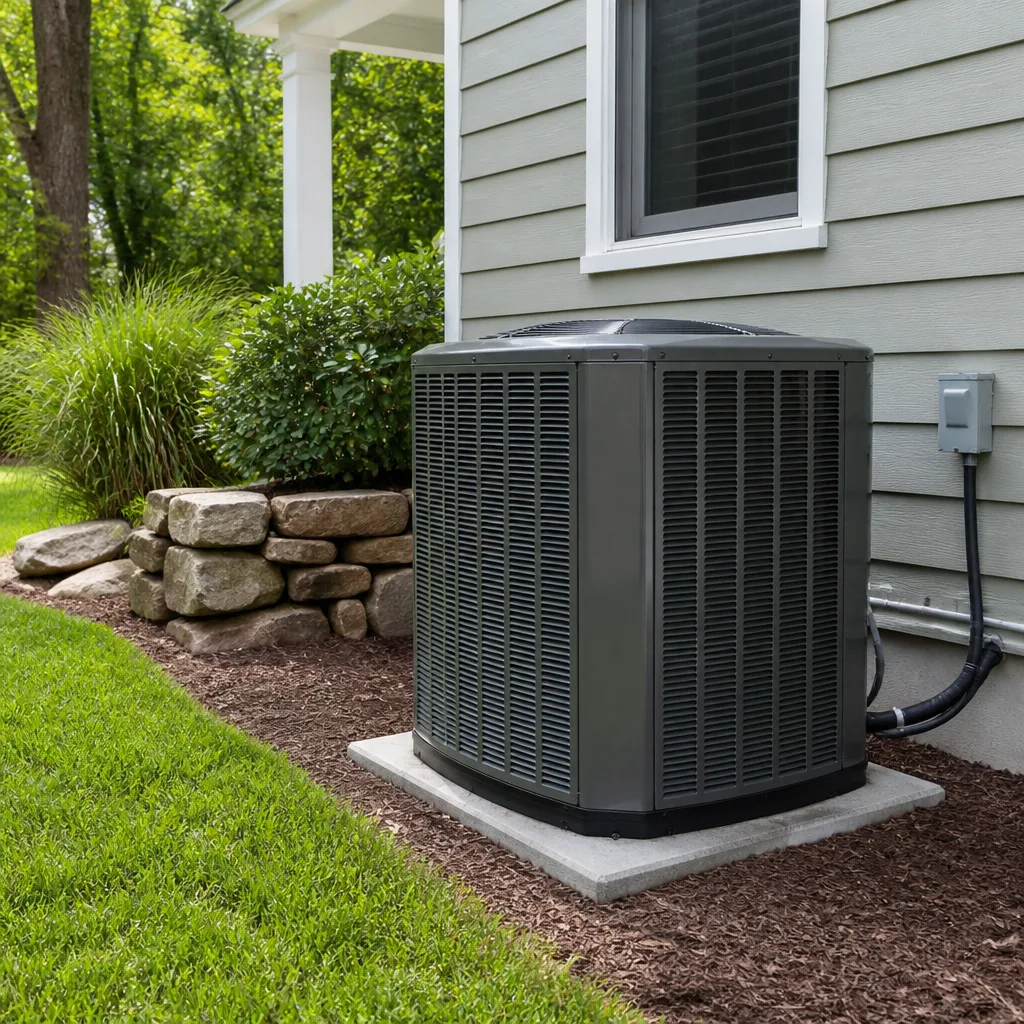 Trane
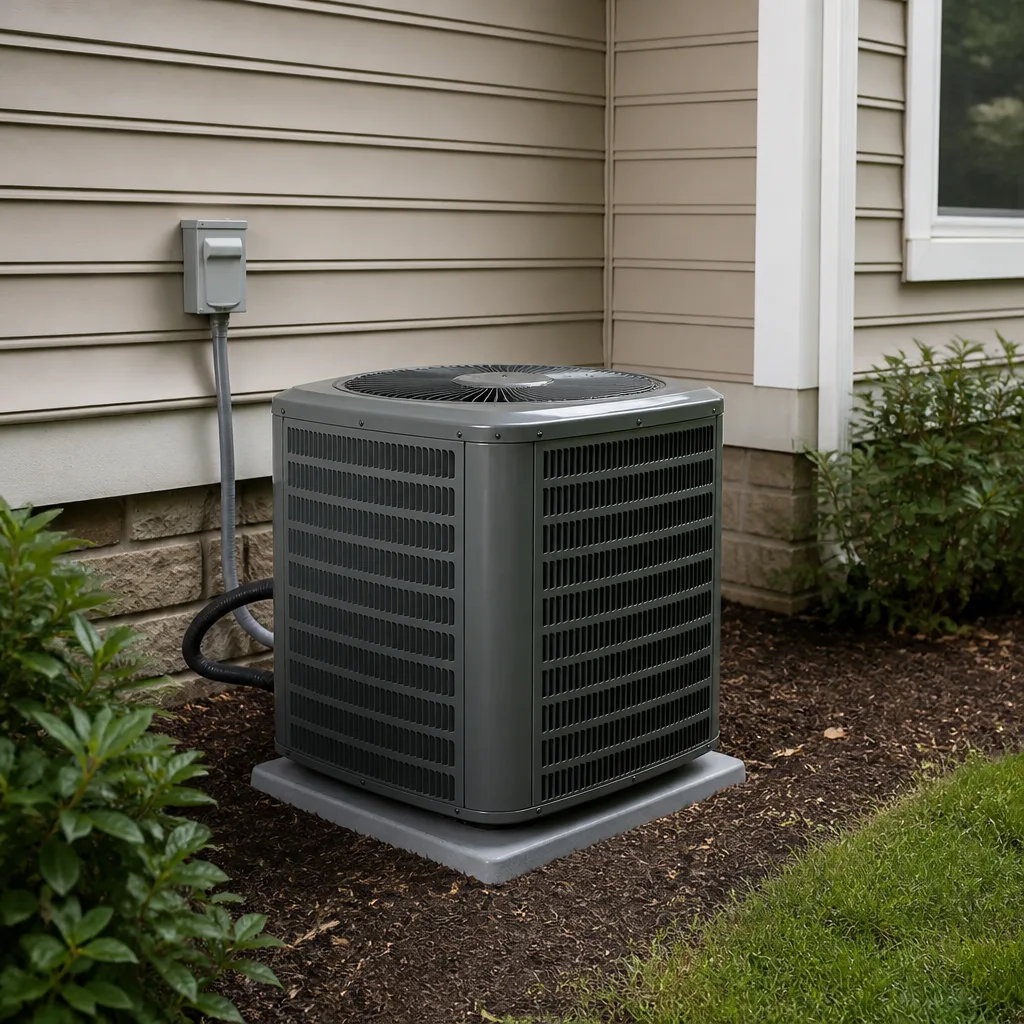 Goodman
Seasonal tune-up and full diagnostic on your Carrier, Trane, or Goodman system - readings shown to you before any repair is proposed
Diagnosis first, numbers second - you approve the repair price before a single part goes in.
Get your free estimateDIY vs Professional AC Repair & Installation: What’s Safe to Do Yourself
You can buy a set of gauges online for about the price of one service call. You can also watch a video where a guy in a garage tops off his own refrigerant and never mentions that doing it without an EPA 608 certification is a federal violation, not a suggestion. That’s the part people skip past. From a porch in Paradise, the line between DIY and “call Ray” was never about how handy you are. It’s about what the law allows, what your homeowner’s insurance will quietly deny after the fact, and what can put you in the hospital when it’s 110 degrees out and your system is already working hard. Here’s the honest map.
Quick Answer
Filter swaps, drain-line flushes, thermostat replacements, and washing the condenser coil are safe and legal to do yourself. Everything that opens the refrigerant circuit, touches 240-volt wiring, or involves climbing to a rooftop package unit is professional territory in Nevada, and doing it without proper licensing and certification can void permits, complicate an insurance claim, and leave a disclosure problem when you sell the house. In Paradise, the rooftop units and desert heat make those lines firmer than the average YouTube tutorial suggests.
Styles & brands we work with
- AC repair
- Furnace & heating
- Heat pumps
- Ductless mini splits
- Carrier
- Trane
- Goodman
Table of Contents
- The Legal Line in Nevada: What Unlicensed Work Really Costs You
- What’s Genuinely Safe and Legal to DIY (With Honest Instructions)
- Why Rooftop Package Units in Paradise Are More DIY-Hostile Than Split Systems
- The Hidden Cost Calculation: When a Pro Is Actually Cheaper
- How to Verify a Contractor’s License Before You Hand Over Money or a House Key
- The Refrigerant Rule Almost Nobody Mentions
- Installation Is a Different Animal Entirely
The Legal Line in Nevada: What Unlicensed Work Really Costs You
Nevada draws a clear line between homeowner maintenance and work that requires a licensed contractor. You’re allowed to change a filter. You’re not allowed to perform work that requires a permit, like installing or substantially replacing a refrigerant system, and you’re certainly not allowed to handle refrigerant without EPA Section 608 certification. That’s federal. People treat it like a gray area because nobody shows up at the door with a citation. The consequences arrive months or years later, and they’re expensive.
Here’s what actually happens when unpermitted work comes back around in Paradise:
- Permits and inspections: A new system or significant electrical change typically needs a permit. Skip it and the work becomes a problem the next owner inherits.
- Insurance claims: If a bad repair leads to a fire, water damage, or a system failure, an adjuster will ask who did the work. “I did it myself” without a permit is a fight you rarely win.
- Disclosure at sale: Nevada sellers must disclose known defects and unpermitted work. A buyer’s inspector flags unpermitted HVAC changes, and that becomes a negotiation or a walk-away.
- Warranty void: Most manufacturer warranties on carrier, Trane, Lennox, or American Standard equipment assume professional installation. A DIY install can void the parts warranty before it ever gets used.
In our experience across Paradise, it’s the sale disclosure that catches people off guard. A $250 saved today turns into a $4,000 credit on a closing statement.
What’s Genuinely Safe and Legal to DIY (With Honest Instructions)
Not everything needs a professional. There are real jobs you can do yourself that will actually help your system and won’t put anything at risk.
- Change the filter. Monthly during cooling season in Paradise, because desert dust clogs filters faster than you’d expect. Match the size stamped on the old filter, point the airflow arrow toward the equipment, and don’t run it without one.
- Flush the condensate drain line. Pour a cup of white vinegar down the access port every few months. If it’s already clogged, a shop vac on the exterior drain stub pulls the blockage out. Avoid harsh drain chemicals; they chew up the plastic.
- Replace the thermostat. Turn the breaker off first. Photograph the wiring before you disconnect anything. Most modern thermostats are five-wire and straightforward. If yours is a communicating system or a heat pump with auxiliary stages, that’s a call, not a swap.
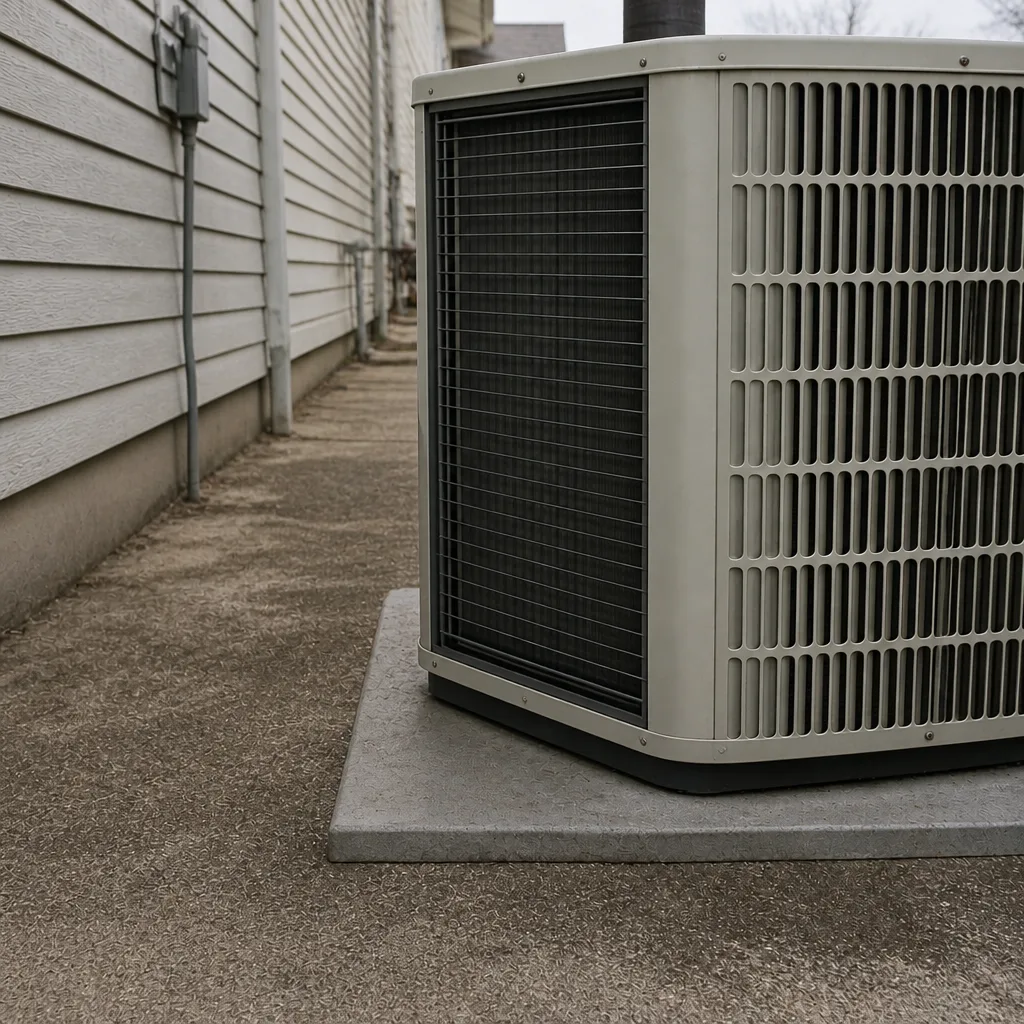
- Wash the condenser coil. With power off, rinse the outdoor coil gently from the inside out with a garden hose. No pressure washer. Fin comb for bent fins if you’re patient. In the desert, a dusty coil costs you efficiency fast.
- Clear the outdoor unit’s breathing room. Two feet of clearance, and trim anything shading the coil. Rooftop units get the same treatment, though you’ll want someone safe on a ladder if it’s not easily reached.
- Check and reset breakers. Flush-mounted breakers trip when a compressor shorts, and sometimes a tripped breaker is the whole problem. If it trips again after reset, stop and call.
Those are the tasks we’d hand a homeowner a wrench for. Everything past that starts involving refrigerant or high-voltage load work.
Why Rooftop Package Units in Paradise Are More DIY-Hostile Than Split Systems
Most DIY guides assume you have a split system in a backyard with easy access. In Paradise, that assumption doesn’t hold. A big share of the homes here run package units, often up on the roof, where the entire system lives in one cabinet and every access point involves a ladder.
That changes the math in three specific ways:
- Height: A rooftop package unit in August means a hot roof and a hot cabinet. Fall risk and heat exposure both climb. This is not a job to attempt alone on a 108-degree afternoon.
- The whole system is up there: Compressor, evaporator, blower, and controls all in one cabinet. Any interior work means opening a sealed, pressurized box, which is refrigerant work, full stop.
- Duct connections are exposed: Package units connect to roof-mounted ductwork that degrades faster in desert sun. A small duct leak is worth fixing, but tracing and sealing it isn’t a homeowner task on a sloped roof.
We’ve seen Paradise homeowners on high roofs in July because a video made it look easy. The equipment weighs hundreds of pounds and the electrical service up there is 240-volt. Let the licensed person climb.
The Hidden Cost Calculation: When a Pro Is Actually Cheaper
Homeowners do the math as “service call cost vs. my time.” The real math is “service call cost vs. what a mistake costs after the fact.” Here’s what a DIY error actually runs against a Paradise budget:
- A damaged capacitor: $400 replacement part. Cheap to buy, easy to install backwards or with the wrong microfarad rating. Guess wrong and the compressor starts hard and dies young.
- A cooked compressor: A compressor replacement runs $1,200 or more, and often pushes an older system into full replacement. Reading the wrong pressure and adding refrigerant can do this.
- Refrigerant loss: A bad DIY connection leaks slowly. You pay for the charge, then pay again to find the leak, then pay again to recharge. Three bills chasing one DIY saving.
- Electrical damage: Miswired controls can fry a control board, and a control board on a Carrier or Trane isn’t a $20 part.
- Voided warranty: A voided manufacturer warranty means the next failure is 100% your money.
The breaker reset is the honest boundary. If a capacitor reading is what tells you the difference between a $200 repair and a $2,000 replacement, that’s the diagnostic that saves the money. Ray test the capacitor before anyone says the word compressor.
How to Verify a Contractor’s License Before You Hand Over Money or a House Key
This is the step that protects everything else, and it’s free. In Nevada, HVAC contractors must be licensed by the Nevada State Contractors Board. Before you let anyone into your attic, on your roof, or near your wallet in Paradise, do this:
- Go to the Nevada State Contractors Board website and open the license lookup.
- Search by the company’s license number or business name.
- Confirm the license class covers HVAC work, the status is active, and the business name matches the truck and the estimate.
- Check the license expiration date and whether there are disciplinary actions on file.
- Ask for the certificate of insurance and confirm it’s current, because a license doesn’t guarantee coverage for damage to your home.
If someone hesitates to give you a license number, that’s your answer. Ask anyone on your street. A real licensed contractor will hand over the number before you ask twice.
The Refrigerant Rule Almost Nobody Mentions
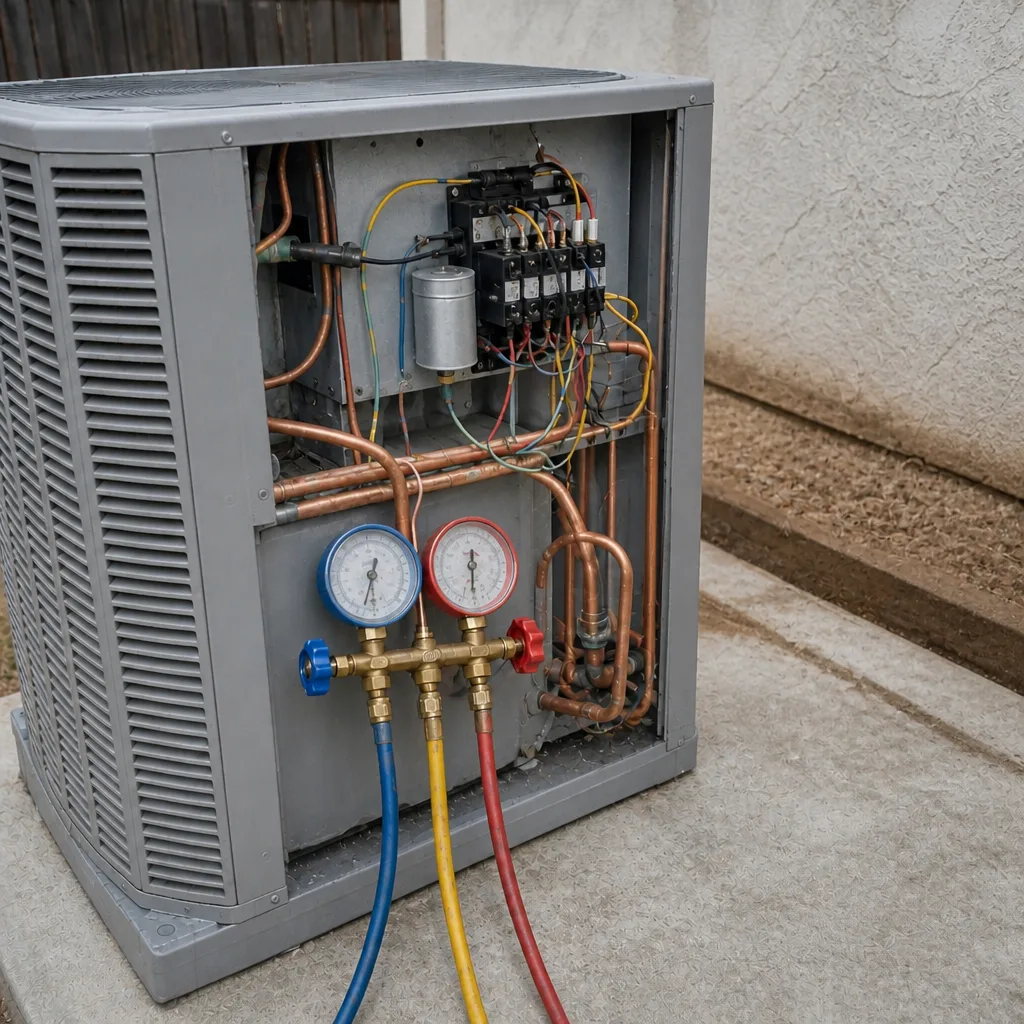
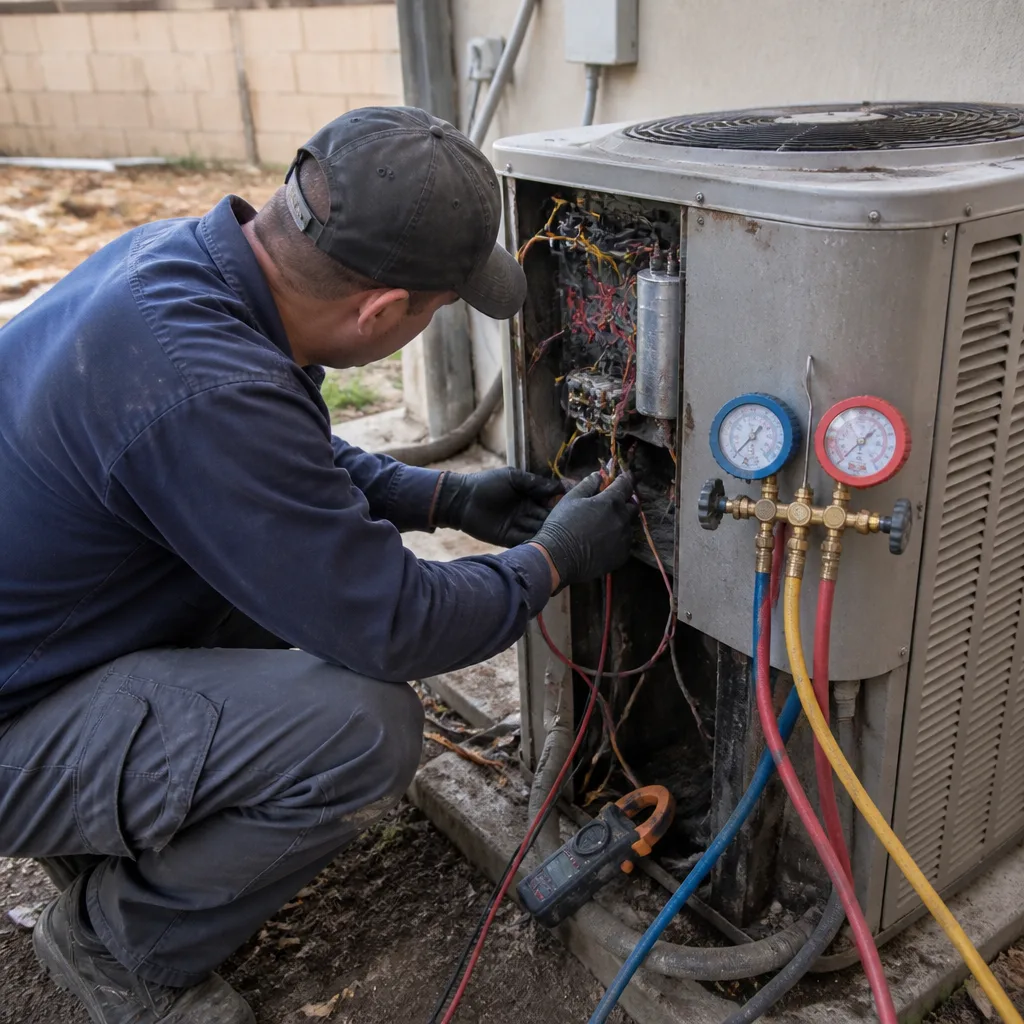
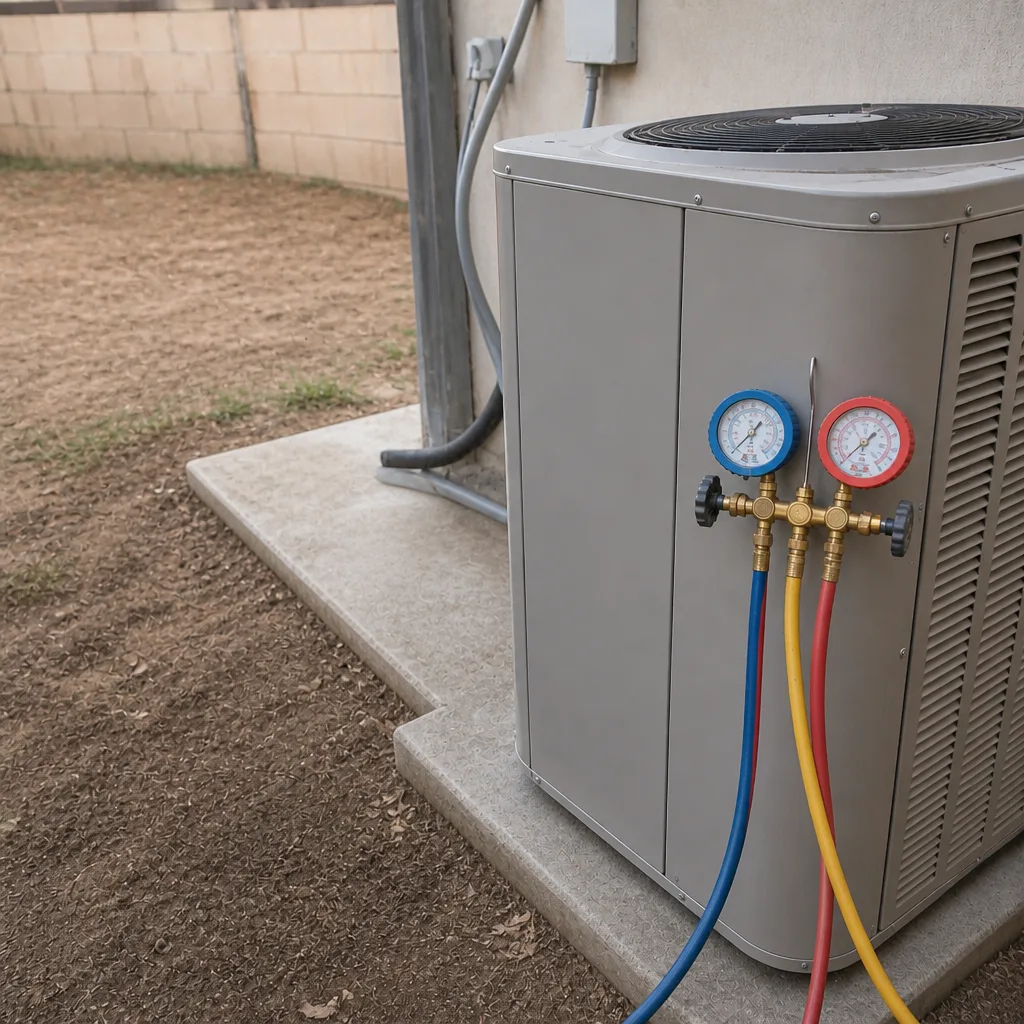
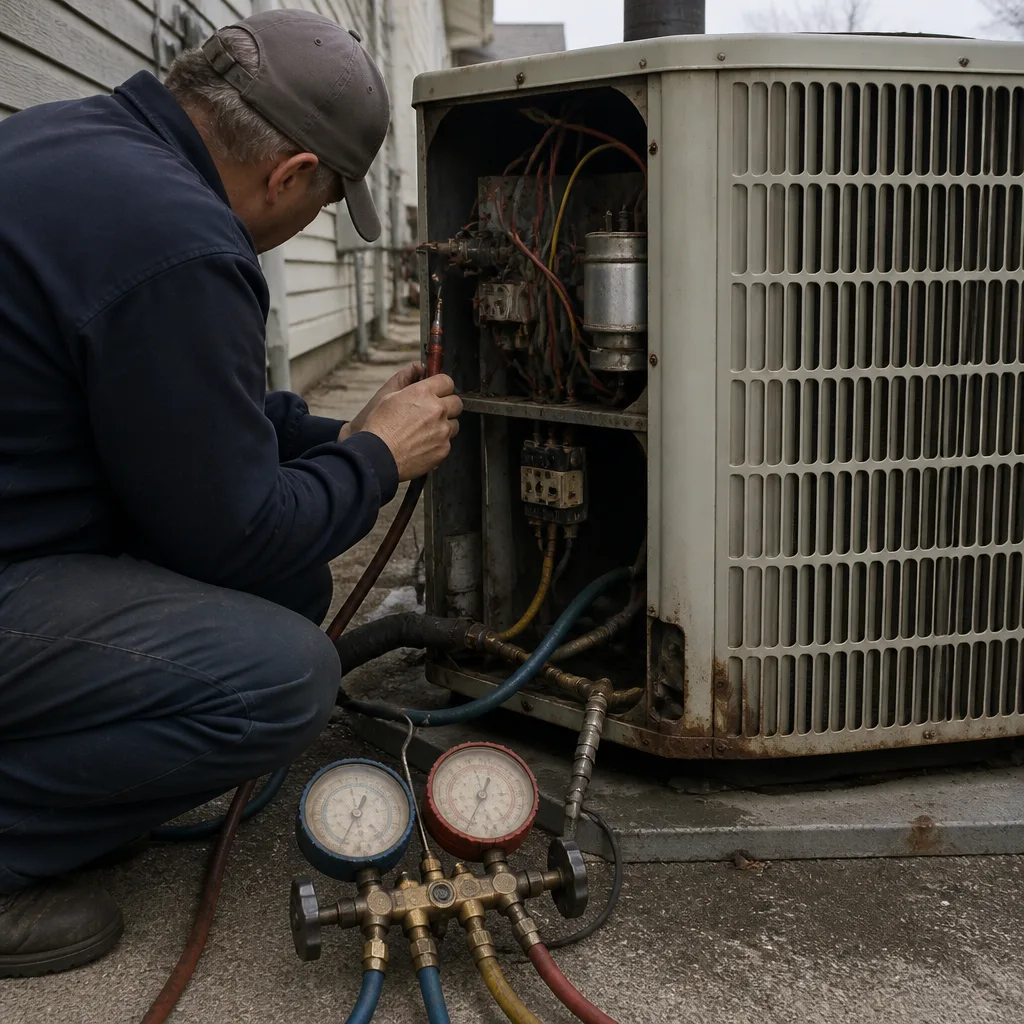
Refrigerant handling requires EPA Section 608 certification under the Clean Air Act. Opening a system to add or recover refrigerant without it is a federal violation, whether you’re a homeowner doing it for free or a handyman doing it for cash. YouTube tutorials routinely skip this. The video shows a manifold gauge set and a can of refrigerant, and it conveniently forgets to mention that handing that can to an unlicensed person is illegal.
There’s a second, more practical problem: refrigerant doesn’t fix anything. If your system is low, it has a leak. Topping it off means you’re back where you started in a month or a year. In Paradise’s extended cooling season, the stress on that system is high enough that a slow leak turns into a dead compressor faster than in milder climates. Repair the leak, recover and recharge to a measured weight, and know the number you paid for.
Installation Is a Different Animal Entirely
Repair and installation are not the same task at different sizes. Installation is a load calculation, a permit, an electrical assessment, a duct inspection, and a commissioned system where refrigerant charge, airflow, and static pressure all get measured and set. Nobody with a clipboard can call a system “installed” without those readings, and it’s why installation never happens same-day. Proper selection, ordering, and scheduling take time in Paradise and every nearby town.
We install and service Carrier, Trane, Lennox, and American Standard, and every install here carries the 90-Day Done Right Promise in writing. Your upfront price should come after actual diagnostics: readings first, numbers second, and you see both. If any part of an installation quote is missing the load calculation or the permit, ask why before you sign. The federal tax credits for high-efficiency equipment and any utility rebates are worth asking about, and a licensed installer can walk you through the paperwork instead of leaving it to you.
Common Mistakes to Avoid
- Touching refrigerant without EPA 608 certification. This is a federal violation, not a rule-of-thumb. It also voids warranties instantly.
- Climbing to a rooftop package unit alone in the heat. Desert roofs and heat exposure are a real hazard. That’s a ladder-and-a-partner job for a licensed pro, not a one-person weekend project.
- Using a pressure washer on the condenser coil. It bends the fins and drops efficiency. Garden hose, low pressure, inside out.
- Replacing a capacitor with the wrong microfarad rating. The system will run, then the compressor will die early. Match the exact rating on the old part.
- Skipping the permit to save money. In Paradise, unpermitted work shows up on the inspection report and the seller disclosure. It costs more later than it saved.
- Letting a contractor start without verifying the license. Two minutes on the Nevada State Contractors Board site versus months of cleanup.
See the difference
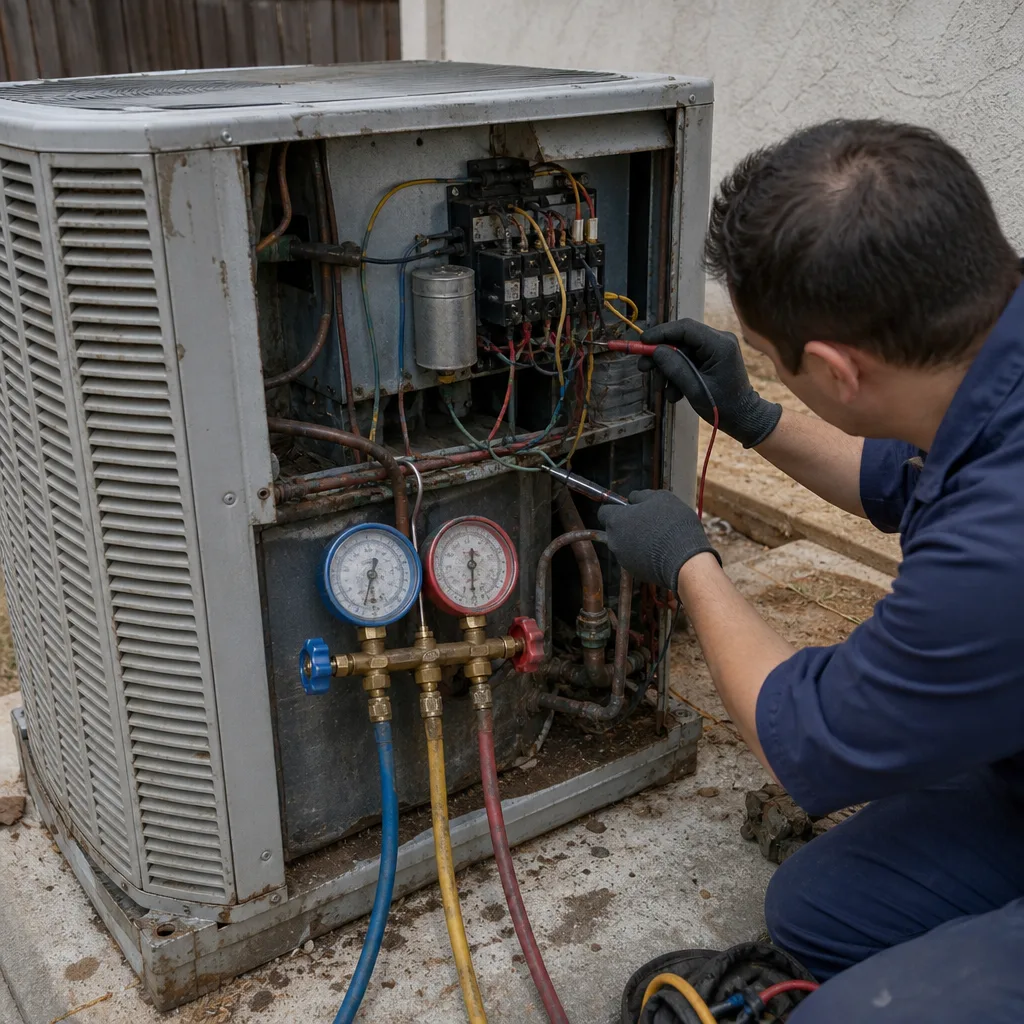 Before
 After
 Before
 After
 Before
 After
When to Call a Professional
Call a professional for anything involving refrigerant, 240-volt electrical service, opening the sealed system, diagnosing a system that won’t start or won’t cool, or working at height on a rooftop package unit. Call when the breaker trips twice, when the outdoor unit hums but doesn’t start, and when you smell something hot. Also call before an installation; that’s a load calculation and permit job, not a swap. Ray’s Heating & Air Paradise offers free estimates in Paradise, so the first call costs you nothing but time. Reach us at (855) 664-5714 for a free estimate.
Frequently Asked Questions
No. Handling refrigerant requires EPA Section 608 certification under the Clean Air Act, and doing it without certification is a federal violation even on your own equipment. It also won’t fix the underlying problem; a low system has a leak that needs a proper repair, recovery, and recharge.
It can, especially if the repair causes a fire, water damage, or a system failure that leads to a claim. Adjusters look at who did the work and whether it was permitted. Unpermitted or unlicensed work often becomes a coverage dispute rather than a covered loss. Call (855) 664-5714 for a free estimate if you’d rather not risk it.
Filter changes, condensate drain flushes, thermostat replacements, and gently washing the outdoor coil. Those are the ones we’d suggest for a homeowner, and they genuinely help in the desert dust. Beyond that, the tasks start involving refrigerant, high-voltage electrical, or height, and that’s licensed work.
Package units put the whole system in one cabinet, often on the roof, which is typical for this housing stock in Paradise. That means exposed height, 240-volt service, and a sealed cabinet where any interior work is refrigerant work. It’s a hazard and legal issue, not a skill issue. Call (855) 664-5714 for a free estimate if yours needs attention.
Look up the license on the Nevada State Contractors Board website by license number or business name, and confirm it’s active, the class covers HVAC, and the name matches the estimate. Ask for proof of insurance too. If the person at your door hesitates, that’s a red flag. Estimates are free; you can also call (855) 664-5714 to schedule one.
Hiring a licensed pro is usually cheaper once you account for what a mistake costs. A botched capacitor swap or refrigerant overcharge can damage a compressor, and compressor replacement runs $1,200 or more. Proper diagnostics catch the cheap fix. Call (855) 664-5714 for a free estimate before you decide.
The Bottom Line
Your skill level isn’t the deciding factor here. The law, the insurance paperwork, and the physical hazards of 110-degree heat on a Paradise roof decide it for you. Filter changes, drain flushes, thermostat swaps, and careful coil cleaning are yours to do. Refrigerant, 240-volt service, rooftop package units, and installation belong to a licensed professional. Verify the license on the Nevada State Contractors Board site before you hand over money or a house key. The rest of the map is common sense. For everything past a filter, Ray’s Heating & Air Paradise delivers upfront pricing, readings before numbers, a live person on every call, and the 90-Day Done Right Promise in writing. Reach us at (855) 664-5714 for a free estimate.
Written by the team at Ray’s Heating & Air Paradise.