
Last updated November 18, 2026
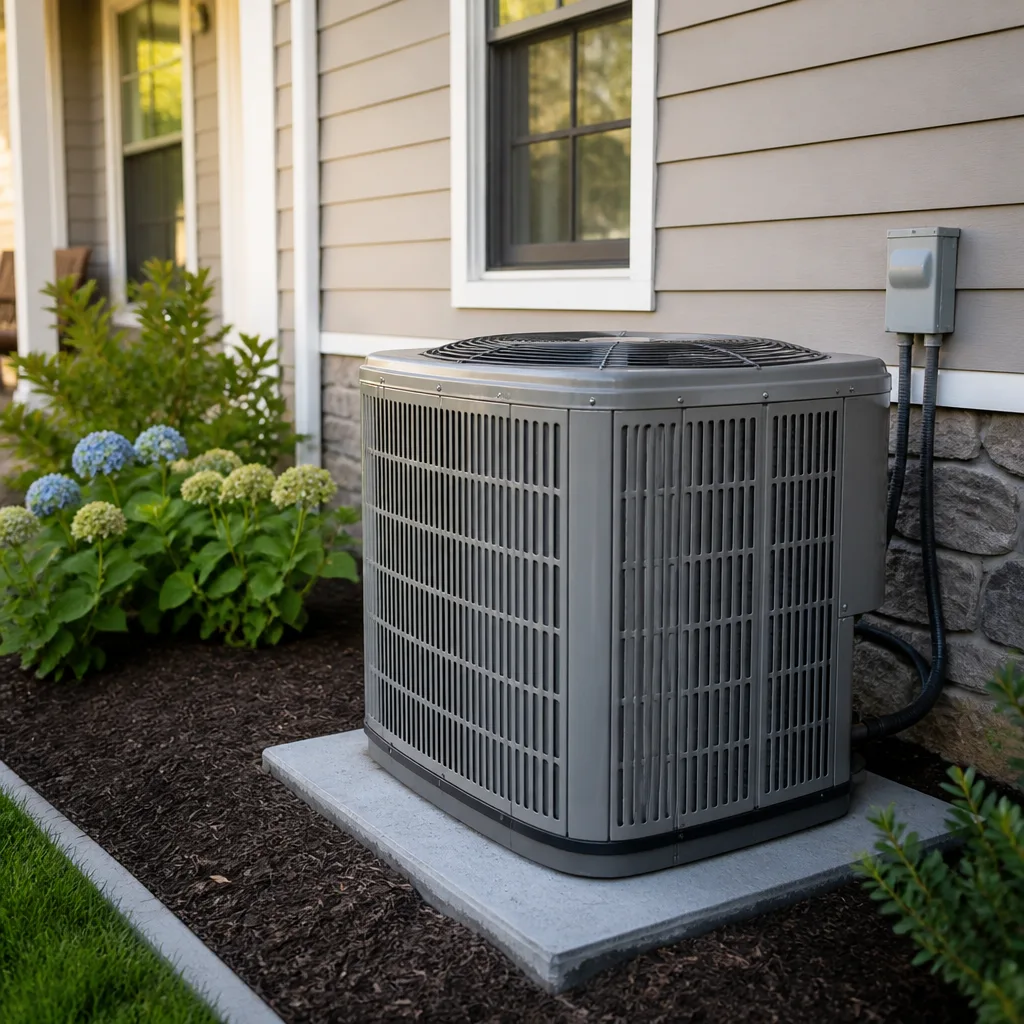 AC repair
 Furnace & heating
 Heat pumps
 Ductless mini splits
 Carrier
 Trane
 Goodman
Seasonal tune-up and full diagnostic on your Carrier, Trane, or Goodman system - readings shown to you before any repair is proposed
Diagnosis first, numbers second - you approve the repair price before a single part goes in.
Get your free estimateAC Repair & Installation Warning Signs Every Homeowner Should Know
A unit that starts taking 25 minutes to cool the house down instead of 15 is telling you something. Most homeowners in Paradise assume it’s just the heat and ignore it, right up until the compressor locks up on a July afternoon and the house hits 95 degrees by dinner. The costly failures rarely announce themselves with a bang or a dramatic puddle on the floor. They show up weeks earlier as small shifts: a slightly longer cooldown, a spring power bill that’s a little higher than last year, a faint smell that comes and goes. This guide walks through the warning signs worth tracking, the benchmarks to check against, and the age-plus-symptom combinations that tell you whether to repair or start planning a replacement.
Quick Answer
The biggest AC warning signs are a cooldown time that creeps up by five or more minutes, a supply-to-return temperature split that drops below 15 degrees, a system that cycles on and off more often than it used to, and power bills that climb in spring when the weather hasn’t changed. Any one of these alone is worth a look. Two or three together on an aging unit usually means it’s time to price replacement, not another repair. Catching these in April instead of July is what separates a $400 fix from an emergency replacement.
Styles & brands we work with
- AC repair
- Furnace & heating
- Heat pumps
- Ductless mini splits
- Carrier
- Trane
- Goodman
Table of Contents
- The Three Benchmarks Worth Tracking
- What Spring Power Bills Actually Tell You
- The Smells That Are Urgent vs. the Smells That Aren’t
- The 60-Second Outdoor Unit Inspection Most Homeowners Miss
- The Age-and-Symptom Combination That Says Replace, Not Repair
- Warning Signs Before You Say Yes to an Installation Quote
- Why Timing Matters More in Paradise Than Almost Anywhere
The Three Benchmarks Worth Tracking
Your system measures its own health when you know what to write down. Three numbers tell you nearly everything about whether it’s working right or starting to slip.
1. Cooldown Time
Time how long it takes to drop your house from its afternoon high to the setpoint. Do it on a normal day, same time of day, once in spring and once mid-summer. If a unit that used to hit setpoint in 15 minutes now takes 20 or 25, something changed. It might be a slowly failing capacitor, a refrigerant charge that’s drifted low, or a condenser coil packed with dust. But a cooldown time that stretches is the single most reliable early warning. Write the number on the calendar or in a notes app. Memory is a poor substitute for a benchmark you can compare against.
2. Temperature Differential (Split)
This is the difference between the air going into your return and the air coming out of a supply register. Put a thermometer at both spots with the system running steady for at least 15 minutes. A healthy split is roughly 15 to 22 degrees. Below 15 means the system is struggling to pull heat out of the air. Above 22 usually points to restricted airflow. Either way, a split that’s outside the range is a concrete reason to call before summer.
3. Cycle Frequency
A properly sized system should run in long, steady stretches and then rest. Short cycling (on and off every few minutes) wastes energy and wears out components faster than steady operation. Listen for it. If you’re hearing the compressor kick on and off like a nervous heartbeat, that’s a signal worth a diagnostic visit.
What Spring Power Bills Actually Tell You
When the bill in April is $60 higher than the same month last year and the weather has been near-identical, that’s not the utility company being greedy. That’s your system using more energy to do the same amount of cooling. The usual suspects: a refrigerant charge that’s drifted, a dirty condenser coil, a failing capacitor making the compressor work harder to start, or a blower motor that’s drawing more amps than it should.
What’s normal load, and what isn’t? In Paradise and the surrounding desert, summer cooling bills naturally run higher than in cooler climates, and a jump between winter and summer is expected. The signal worth watching is a year-over-year increase in the same month, at roughly the same weather, on the same house. A 10 to 20 percent unexplained rise is a reason for a diagnostic visit. A 40 percent rise, especially if you’re also noticing a longer cooldown time, is a reason to call now, before the sort of failure that lands on a Sunday night.
Save the last two years of utility bills somewhere easy to find. An honest technician will ask to see them, because the readings and the history together usually point to one cause faster than anything else. “Readings first, numbers second” isn’t a slogan, it’s the diagnostic order that keeps you from getting a quote before anyone has actually measured what’s wrong.
The Smells That Are Urgent vs. the Smells That Aren’t
Not every smell means trouble. The first time you run the AC in spring, a musty, dusty smell is common, because dust that settled on the coils and in the ducts over winter is burning off. That smell should fade in an hour or two. Here’s where the line is:
Probably Fine (First Startup Only)
- Dusty, warm, earthy smell the first time the system runs after months off
- Faint mustiness that clears within a day
Call the Same Day
- Burning or electrical smell anywhere near the indoor unit or outdoor unit. Shut it off at the thermostat and the breaker, then call.
- Rotten egg or sewage smell. Sometimes a sign of a sewer gas issue, sometimes a dead animal in the ductwork. Either way, don’t run the system until someone looks.
- Persistent chemical or sweet refrigerant smell. A refrigerant leak can’t always be smelled, but if you do smell something sweet and chemical, stop running the system and get it checked.
If a smell shows up with new symptoms (bills jumping, cooldown stretching), don’t wait it out. In our experience, a smell plus a benchmark change is far more often a real failure than a startup quirk.
The 60-Second Outdoor Unit Inspection Most Homeowners Miss
Once a month from April through September, walk outside and spend a minute looking at your outdoor unit. It’s the easiest visual check you’ll ever do, and almost nobody does it.
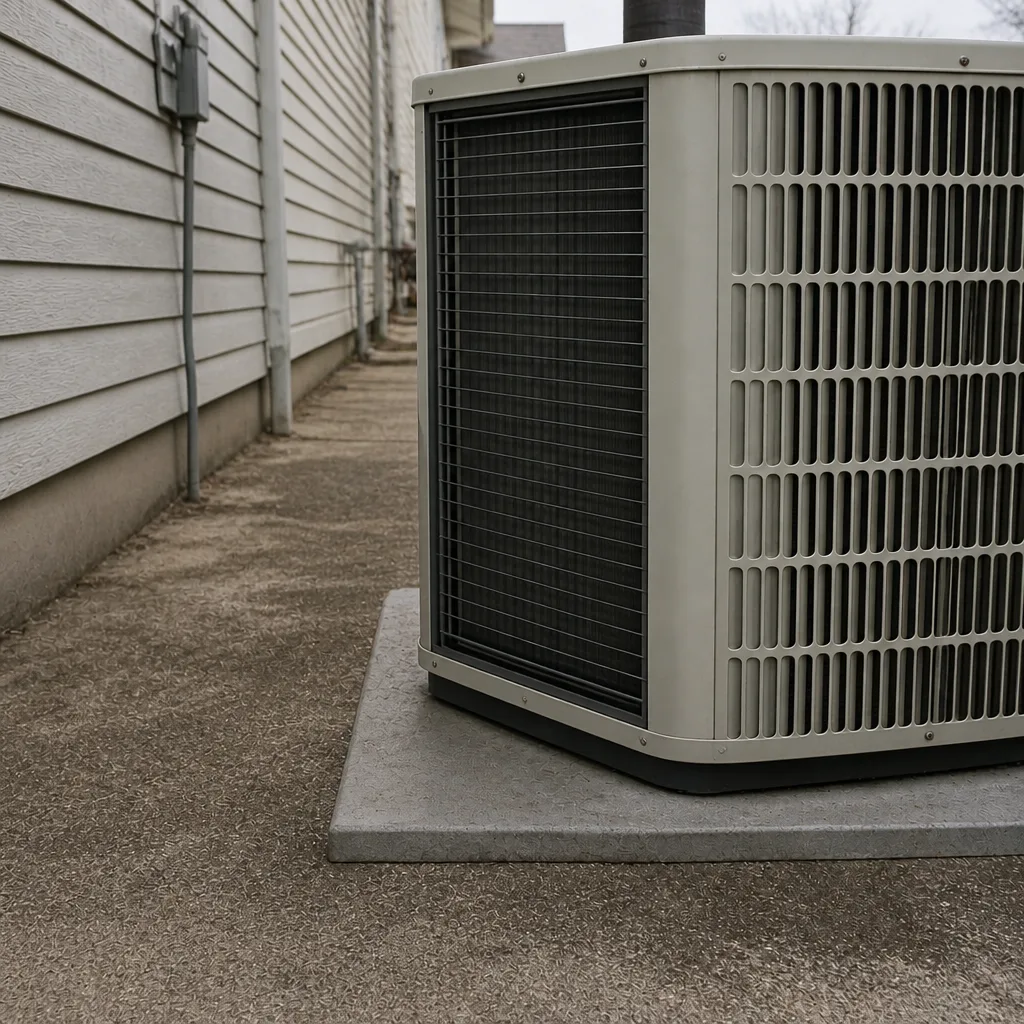
- Clear the perimeter. The unit needs about 2 feet of open space on all sides. If weeds, mulch, or a storage bin has crept against it, clear it out. The coil can’t reject heat if it’s smothered.
- Look at the fins. The thin aluminum fins on the coil should be straight and clean. If they’re bent flat or caked with cottonwood fluff and dust, airflow is down and the compressor is working harder.
- Check the electrical whip and disconnect. The flexible conduit and the disconnect box should be intact, not cracked or full of debris, and not showing any scorch marks.
- Look at the pad. The unit should sit level. If the concrete pad has sunk or the unit is leaning, the compressor is running at an angle it wasn’t built for.
- Listen for a beat. Turn the thermostat down and listen. A steady hum with the fan running is normal. Grinding, scraping, or a compressor that stutters and won’t catch is a sign to shut it off and call.
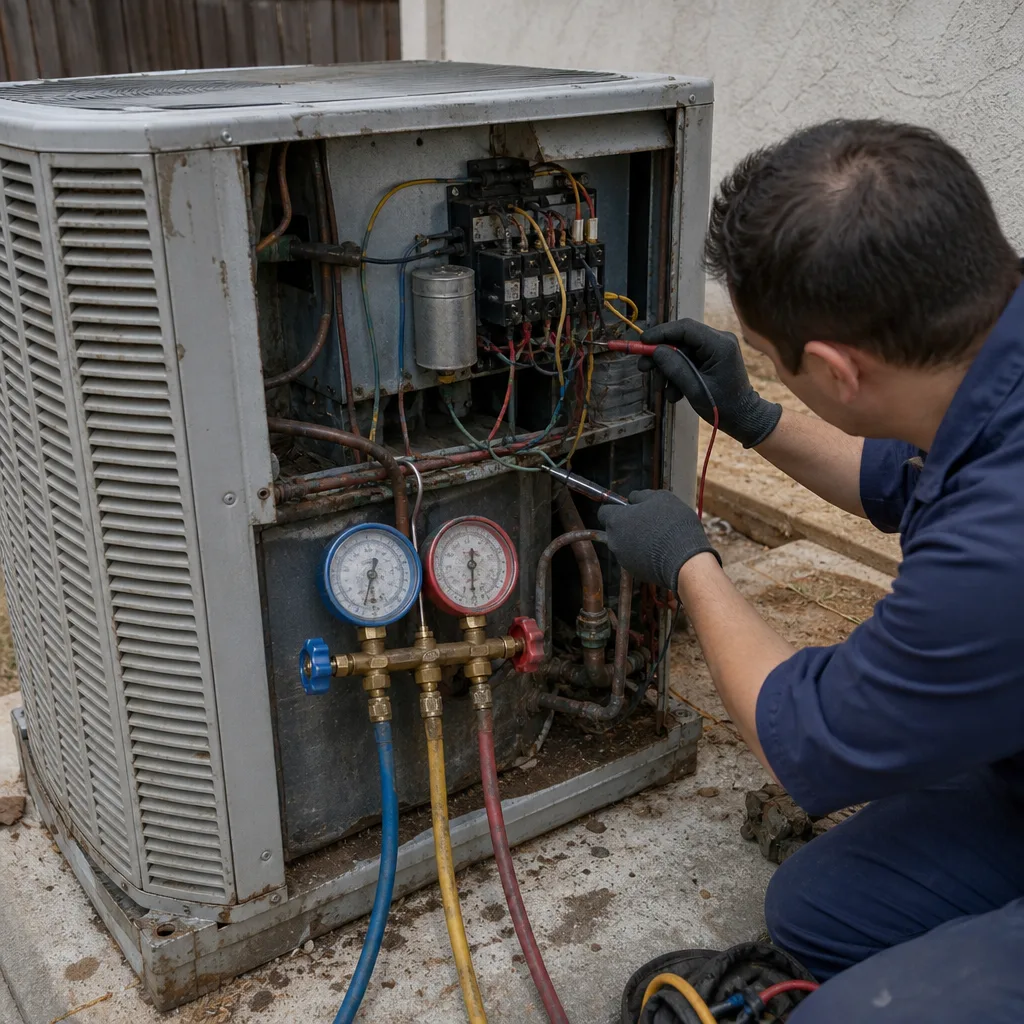
This is inspection, not repair. Refrigerant lines, the compressor, and the high-voltage electrical connections inside that cabinet are not DIY territory. A trained technician with gauges and a meter should do the actual work.
The Age-and-Symptom Combination That Says Replace, Not Repair
Age alone isn’t a reason to replace anything. A 15-year-old system that’s running clean can keep going. The combination that tips the decision is age plus a repeated symptom plus a rising repair cost, and in Paradise, spring is the time to make that call, not August.
Here’s the framework we use:
- Under 10 years old, single symptom, under $400 to fix: repair. Almost certainly worth it.
- 10 to 14 years old, one repair in the last two years, current repair under $1,000: repair is still usually the right call, but start watching the benchmark numbers.
- Over 15 years old, two or more repairs in three years, repair quote above $1,500: that money is going into a system that’s already past its useful life. Price a replacement before the next failure.
- Compressor is failing on a 15-year-old system, or a major component is being quoted: in most cases, replacement makes better financial sense than a compressor swap, especially when a new unit comes with a warranty and lower operating costs.
- R-22 refrigerant is involved, and the system needs a charge: R-22 has been phased out and costs are high. A system running on R-22 that needs refrigerant is a candidate for replacement.
Ask any technician you call to show you the readings before they quote you. A failing capacitor and a failing compressor look similar on the thermostat, but they’re not in the same price range. We test the capacitor before anyone says the word compressor, and that order of checks is why you don’t get a $4,000 quote when a $300 part would fix the problem.
If you’re weighing AC repair and installation in Paradise, an honest diagnostic visit should include the actual readings, the age of the equipment, and a clear explanation of each option in both directions.
Warning Signs Before You Say Yes to an Installation Quote
New installs go wrong for the same reasons repairs do: someone quotes a price before they measure anything. Here’s what to look for before you sign anything for a replacement system in Paradise.
- No load calculation. A system sized by square footage alone is a guess. Sizing should come from an actual load calculation on your house, not a rule of thumb. An oversized unit will short cycle and wear out early.
- No written fixed price. You should see the model numbers, the scope of work, the labor and permit line items, and a final number that doesn’t change because someone showed up and found a surprise.
- No mention of the permit. Replacement work in Paradise requires permits, and a legit installer will tell you up front how they’ll handle it. If the quote doesn’t mention one, ask.
- No make and model named. A quote that just says “3-ton system” is leaving the equipment blank on purpose. A Rheem, York, Daikin, or Bryant unit has a model number you can look up and compare, and the quote should name it.
- No one asked to see your existing equipment in person. A phone quote on a replacement without eyes on the current unit is a rough guess dressed as a firm number.
A real quote on an installation should be in writing, stamped, and backed by something you can call in if it isn’t done right. Ours comes with the 90-Day Done Right Promise in writing. If it isn’t done right, we come back. One phone call, no hassle. For a closer look at how we approach replacement work, see our page on heat pump and mini split service in Paradise.
Why Timing Matters More in Paradise Than Almost Anywhere
Paradise summers hit hard, and the gap between “the AC is struggling” and “the AC has failed” is smaller here than in most of the country. When the outdoor temp is north of 110 and your unit is running 20 minutes to hit setpoint instead of 15, that’s not a mild inconvenience, it’s a countdown. A struggling system heats up more, works harder, and is more likely to fail under the worst possible load at the worst possible time.
That means the calendar matters. April and May are when a struggling system’s benchmark numbers first tell the story, and it’s also when a repair is easiest to schedule. By mid-July, everyone with a failed unit is calling on the same day, and the person with the small April repair becomes the person calling at 8 p.m. on a Friday for an emergency. Catching the small shifts in spring is why the same house gets a $400 repair instead of a $6,000 emergency replacement.
It’s also why we keep the phone line open around the clock. If a system fails at two in the morning in the middle of a heat wave, we answer. A real person, not a voicemail tree. If it’s the kind of failure that needs heat pump or mini-split work, or a conversation about a full system replacement, our team handles that too.
For homes with older furnaces running alongside that AC, spring is also a good time to check the heating side. You can see what heating and furnace service in Paradise looks like, and pairing the check with the cooling tune-up saves a second visit.
Common Mistakes to Avoid
- Waiting until the system quits. A unit that quits in a 110-degree afternoon usually needs a more expensive repair than the one the same unit would have needed in April.
- Trusting a phone quote on a repair. You can’t diagnose a bad capacitor or a refrigerant leak over the phone. Any quote given before anyone’s tested anything is a guess, and guesses in this business tend toward the high end.
- Skipping the spring tune-up because “it’s working.” The tune-up is where a technician catches a swelling capacitor or a dirty coil before the peak load turns it into a failure.
- Clearing the outdoor unit by trimming weeds and calling it done. It’s not just weeds. Fins bent flat, a pad that’s sunk, or a disconnect box full of debris all hurt performance and none of them get fixed with a string trimmer.
- Buying the biggest system that fits the budget. An oversized unit short cycles, dehumidifies poorly, and wears out early. Sizing is not a guess.
- Paying for a second AC repair on a 15-year-old unit without pricing a replacement. In our experience, the third repair inside three years almost always costs more than the first payment on a new system.
- Taking a quote from a company that hasn’t named the model, the permit, or the labor in writing. If you can’t read the whole job on the page, you can’t compare the numbers.
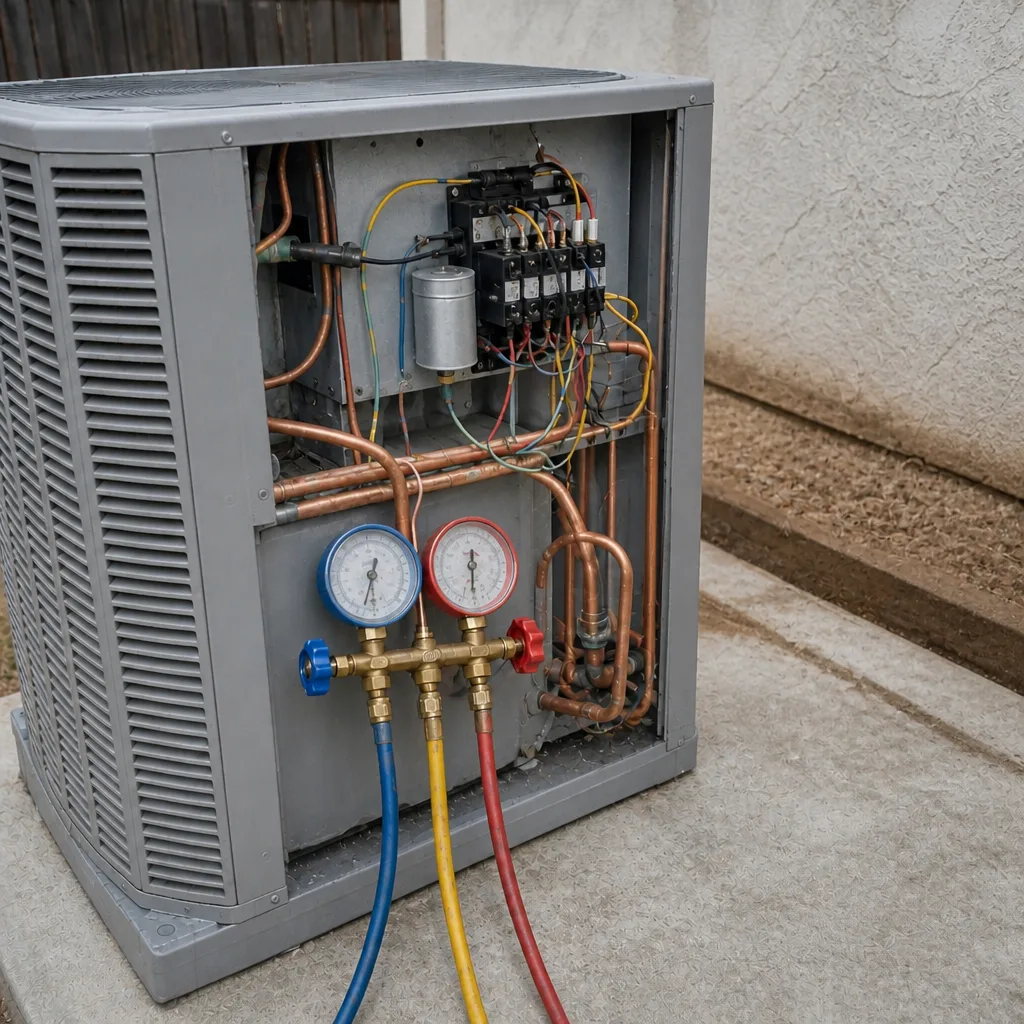
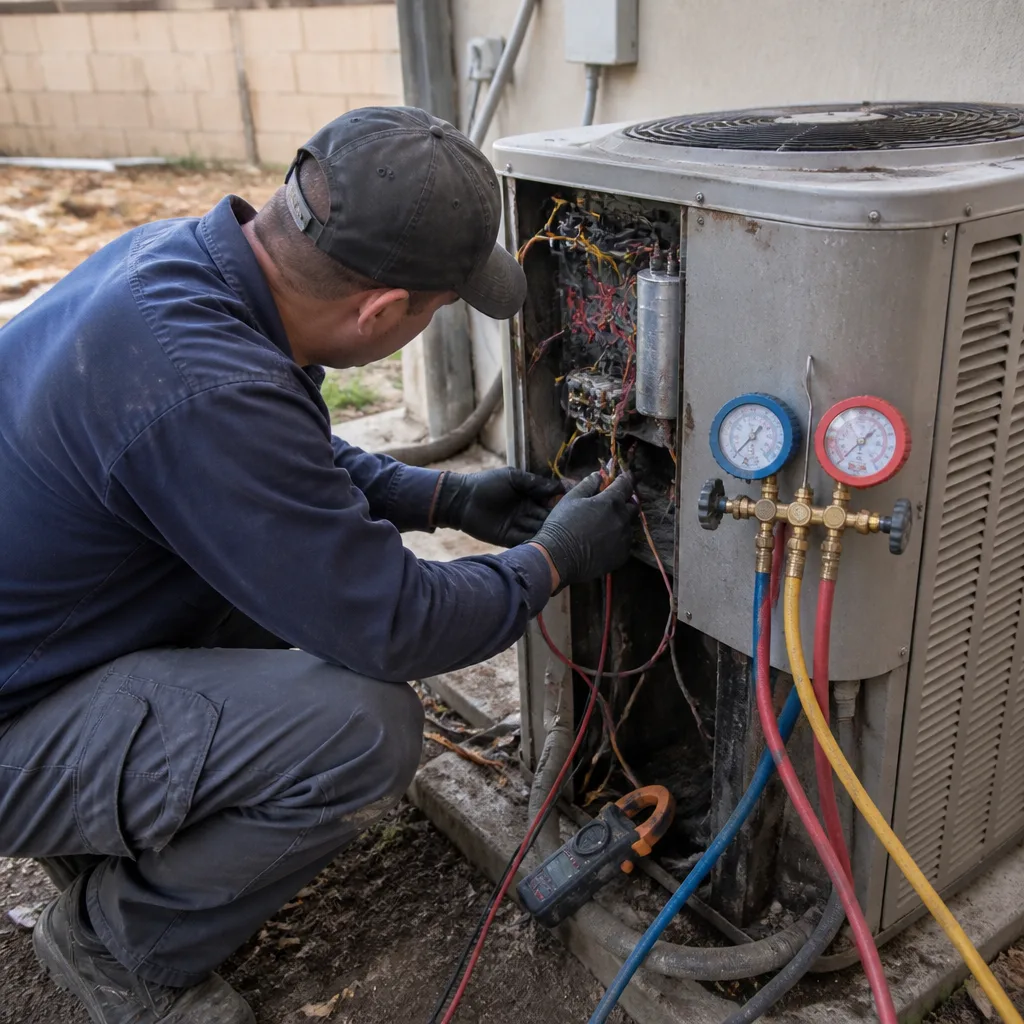
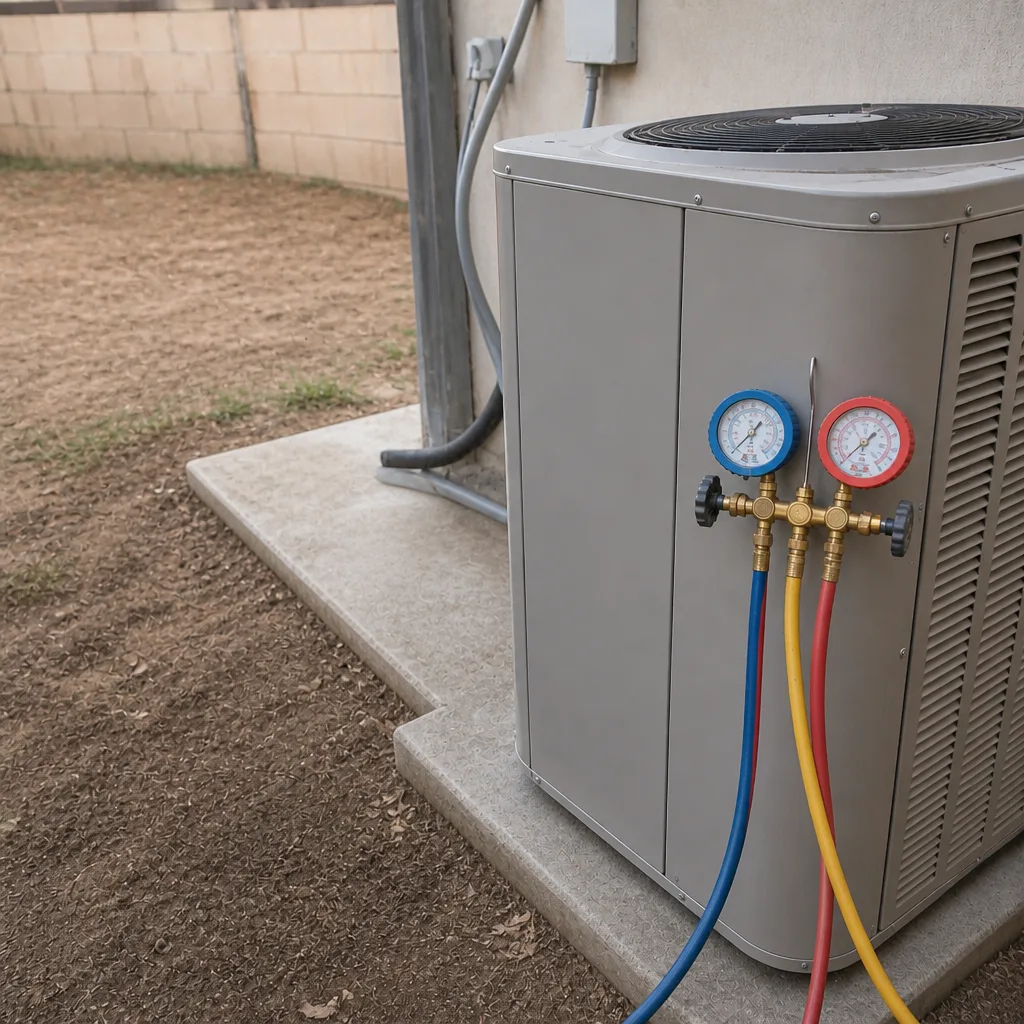
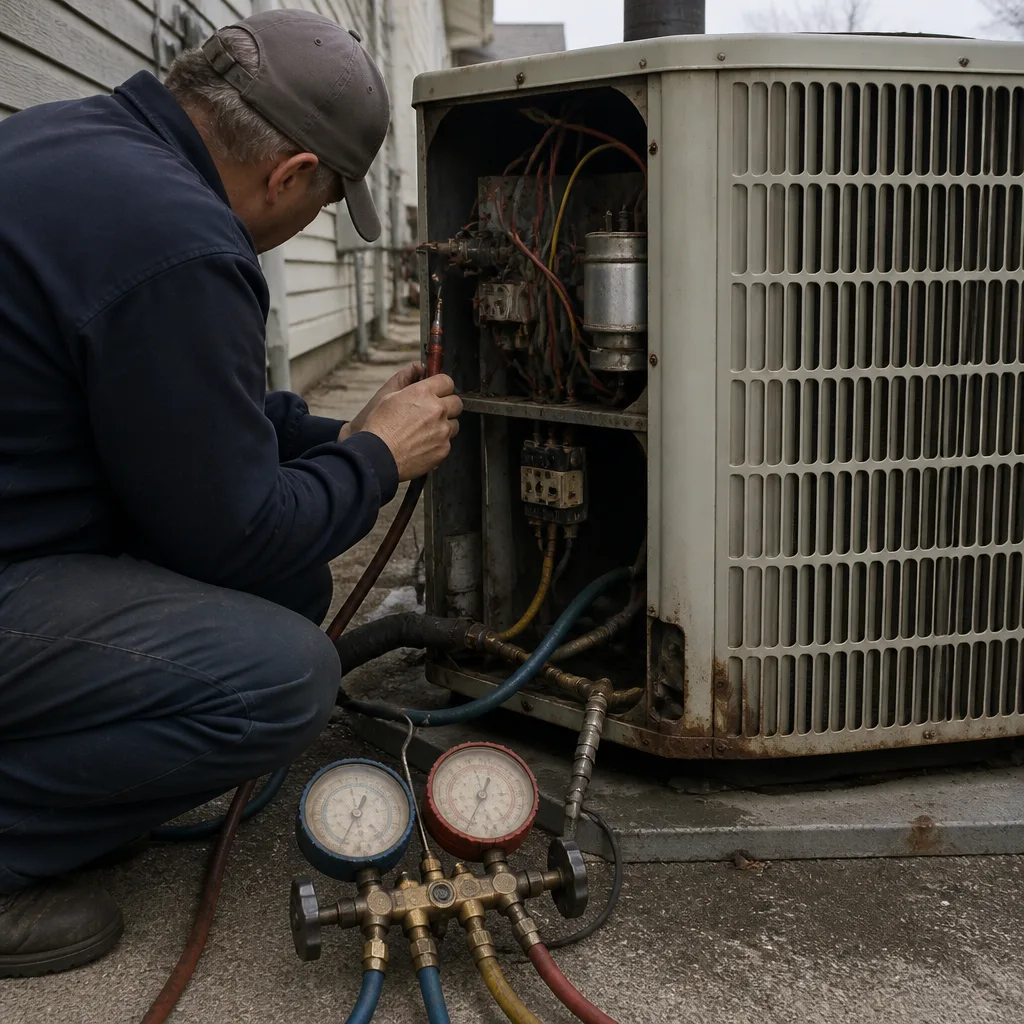
See the difference
 Before
 After
 Before
 After
 Before
 After
When to Call a Professional
Call a professional the same day if you smell burning, hear grinding or scraping from the outdoor unit, see ice on the refrigerant lines, or if the system just isn’t cooling at all on a hot afternoon. Call within a week if your cooldown time has stretched by five minutes or more, your supply-to-return split has dropped below 15 degrees, your spring power bill has jumped without the weather changing, or the unit is short cycling. If the system is over 15 years old and has needed two repairs in the last three years, call for a replacement quote, not another repair.
Ray’s Heating & Air Paradise offers free estimates in Paradise and free second opinions on any written estimate. Our technicians have up to 24 years of experience, and they’ll show you the readings before anyone quotes a number. Call (855) 664-5714.
Frequently Asked Questions
The earliest signs are almost always changes in the benchmark numbers rather than outright failures. Longer cooldown time, a supply-to-return temperature split below 15 degrees, more frequent on-and-off cycling, and a spring power bill that’s climbed without a change in weather are the reliable early warnings. If you catch any two of these on an aging unit, call before summer.
A healthy system in Paradise typically drops the house from its afternoon high to the setpoint in about 15 to 20 minutes on a normal summer afternoon, assuming the house isn’t starting from a much higher setpoint. If your system used to take 15 minutes and now takes 20 or 25, that stretch is the signal, not the raw number. The comparison to your own baseline is what matters.
A higher spring bill with similar weather means your system is using more energy to do the same work. The common causes are a dipping refrigerant charge, a dirty condenser coil, a failing capacitor, or a blower motor drawing more amps. An honest diagnostic visit should give you the readings and the actual cause before anyone recommends a repair.
Yes. A burning or electrical smell means you should shut the system off at the thermostat and the breaker and call the same day. Dust burning off at first startup smells different and fades within an hour or two, but a persistent electrical smell is a hazard, not a nuisance. Don’t wait it out.
It depends on the repair and how the system has behaved. A 15-year-old system with one recent repair and a quote under $1,000 is usually still a repair. A 15-year-old system with two or more repairs in three years and a quote over $1,500 is usually a replacement. A compressor failure on a system that old tips almost every homeowner toward replacement, because a new unit comes with a warranty and much lower operating costs.
Replacement costs in Paradise typically run from around $5,000 for a straightforward single-stage system to $12,000 or more for a high-efficiency or variable-speed system, and mini-split systems fall in between. The final number depends on the exact size, the load calculation, and whether ductwork needs work. Call (855) 664-5714 for a written fixed price after a real load calculation, whole-house measurement, and equipment model number.
Are there warning signs I’ll see from outside my house?
Yes, and most homeowners never look. A 60-second walk-around once a month from April through September will catch weeds crowding the unit, fins bent flat or packed with fluff, a pad that’s sunk, a cracked disconnect box, or a compressor that stutters and won’t catch. Visual inspection doesn’t replace a real diagnostic, but it catches the easiest-to-miss problems before they become expensive ones.
Why does the timing matter so much in Paradise?
Because the gap between “struggling” and “failed” is small in 110-degree heat. A struggling system runs hotter, works harder, and is more likely to fail at peak load, which is exactly when everyone calls on the same day. A spring repair on a struggling system is cheap and easy to schedule. An emergency replacement in August is neither.
The Bottom Line
The warning signs that matter in Paradise are the subtle shifts, not the dramatic failures. A cooldown that stretches by five minutes, a temperature split that slips below 15 degrees, a power bill that climbs in spring without the weather changing. Catch those in April and you’re looking at a few hundred dollars and one phone call. Ignore them until July and you’re looking at an emergency replacement and a week of cooling with the windows open. Keep the benchmark numbers, do the 60-second outdoor walk once a month, and call when the signs show up. We’d much rather talk to you about a small repair in April than a failed system in August.
If anything on this list sounds familiar, call (855) 664-5714 for a free estimate. We answer around the clock, including the calls that come in at two in the morning. Start from Ray’s Heating & Air Paradise home to see everything we handle.
Written by the team at Ray’s Heating & Air Paradise.