
Last updated November 18, 2026
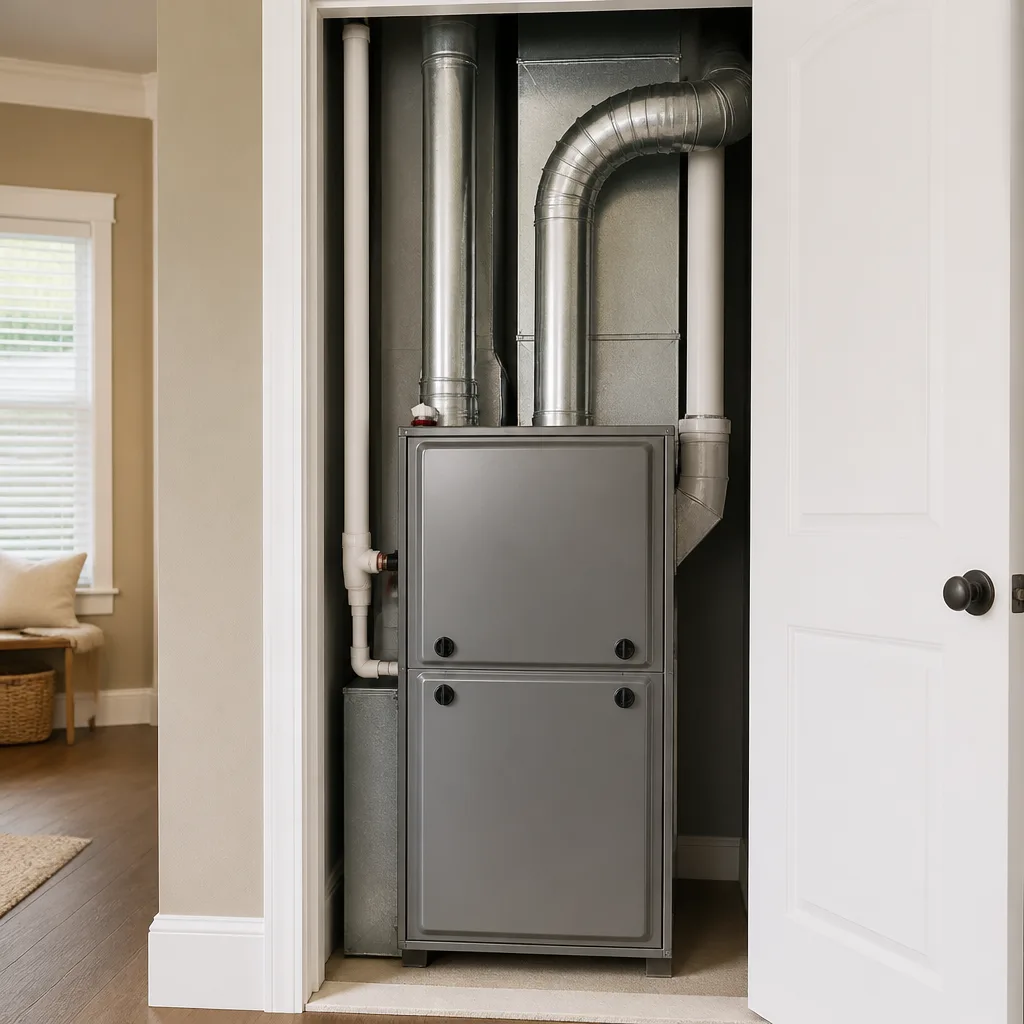 Furnace & heating
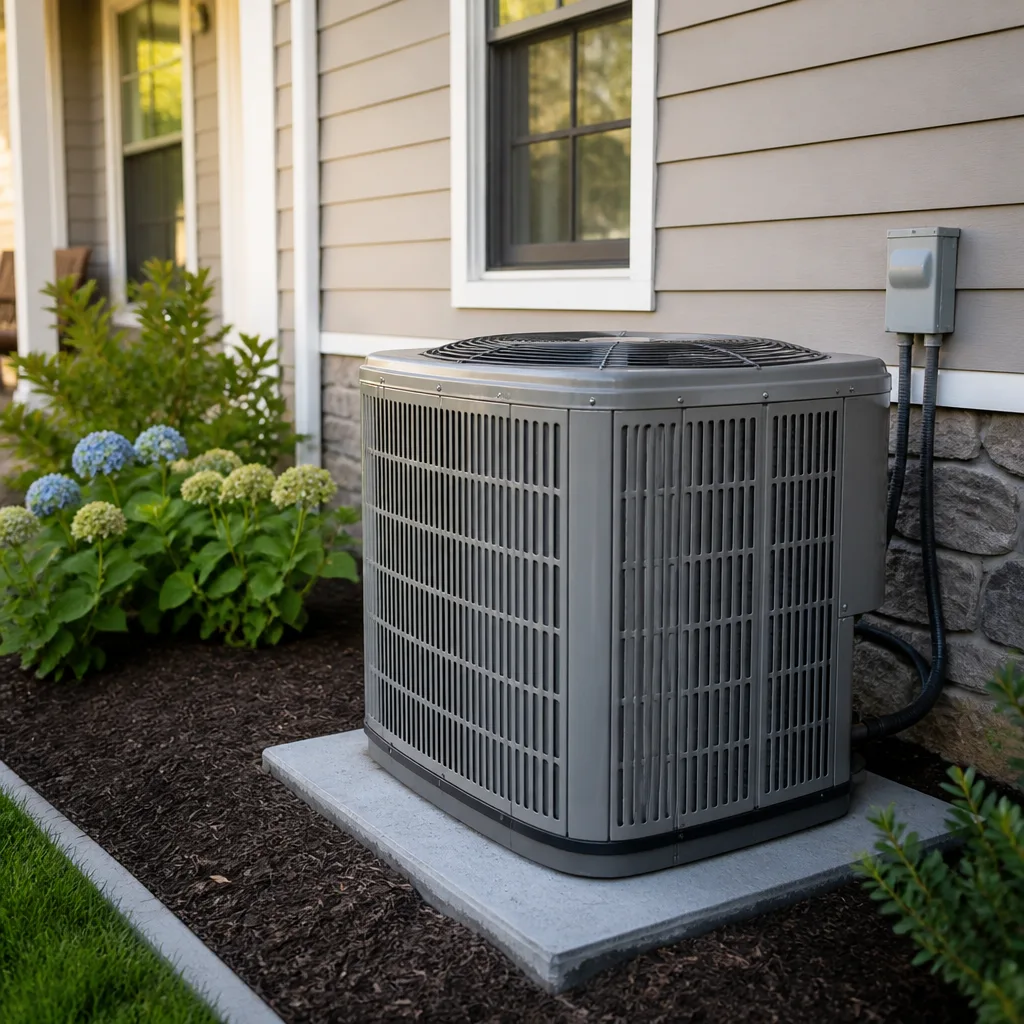 AC repair
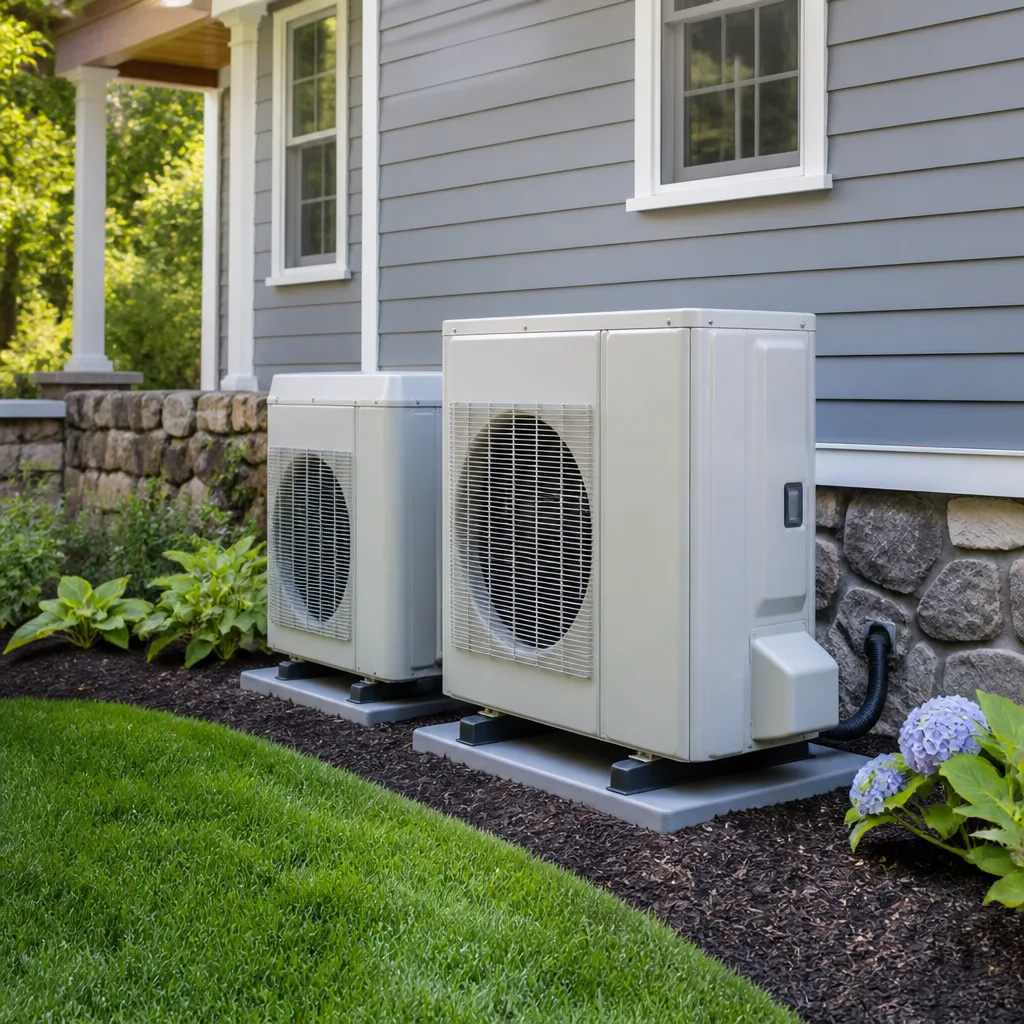 Heat pumps
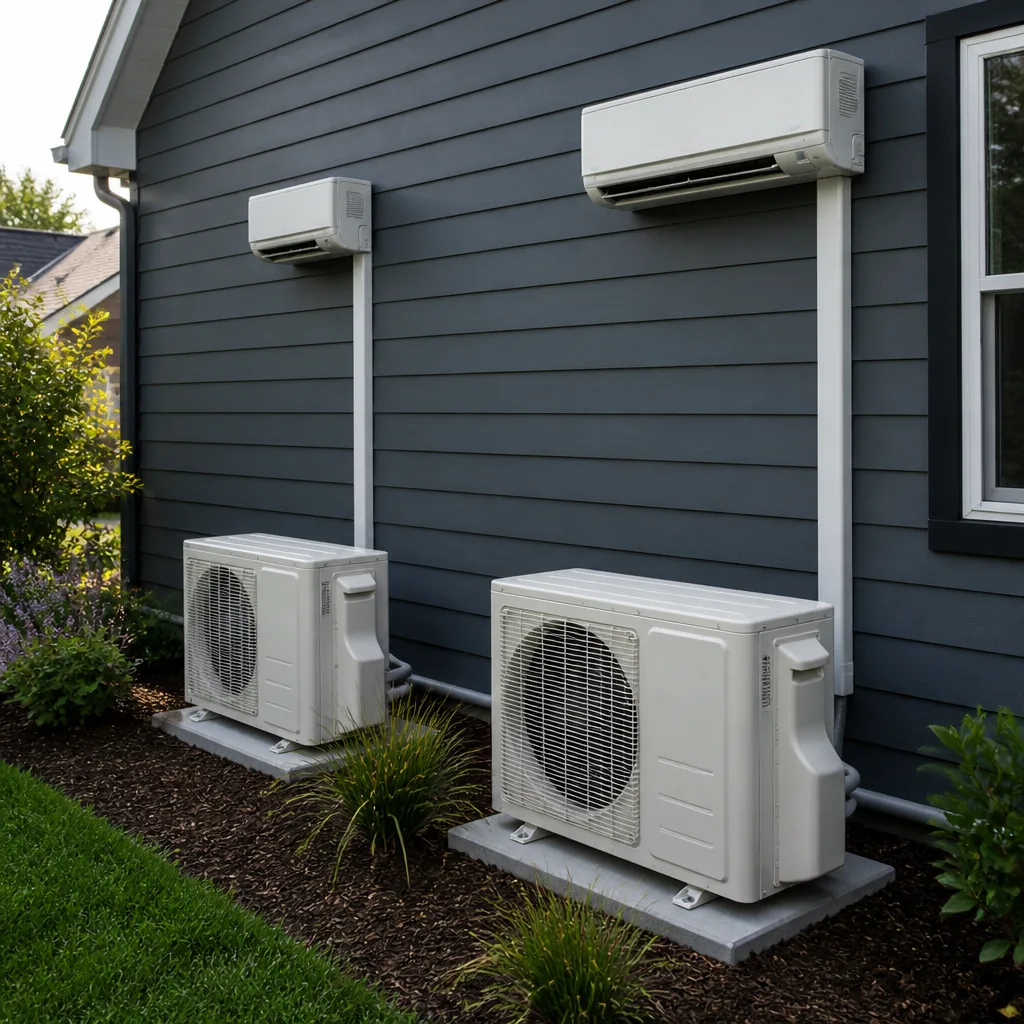 Ductless mini splits
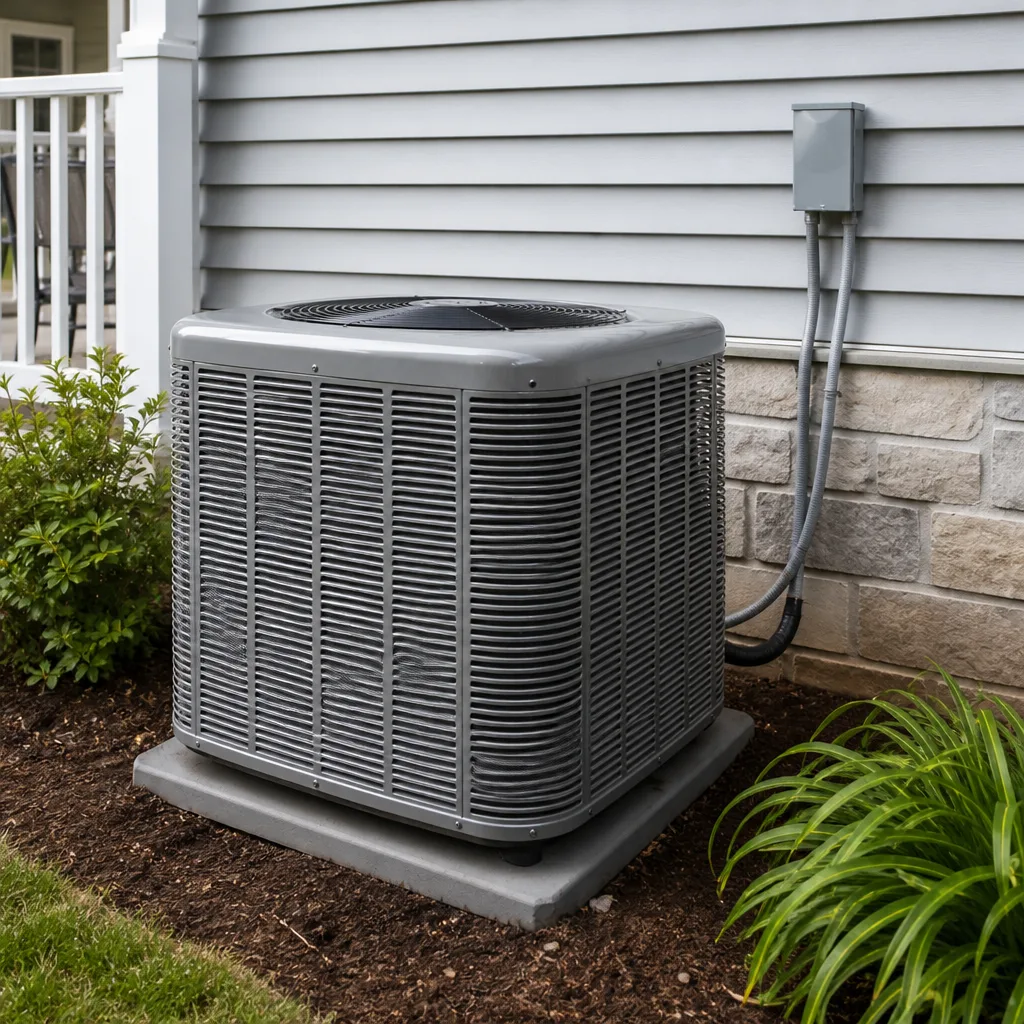 Carrier
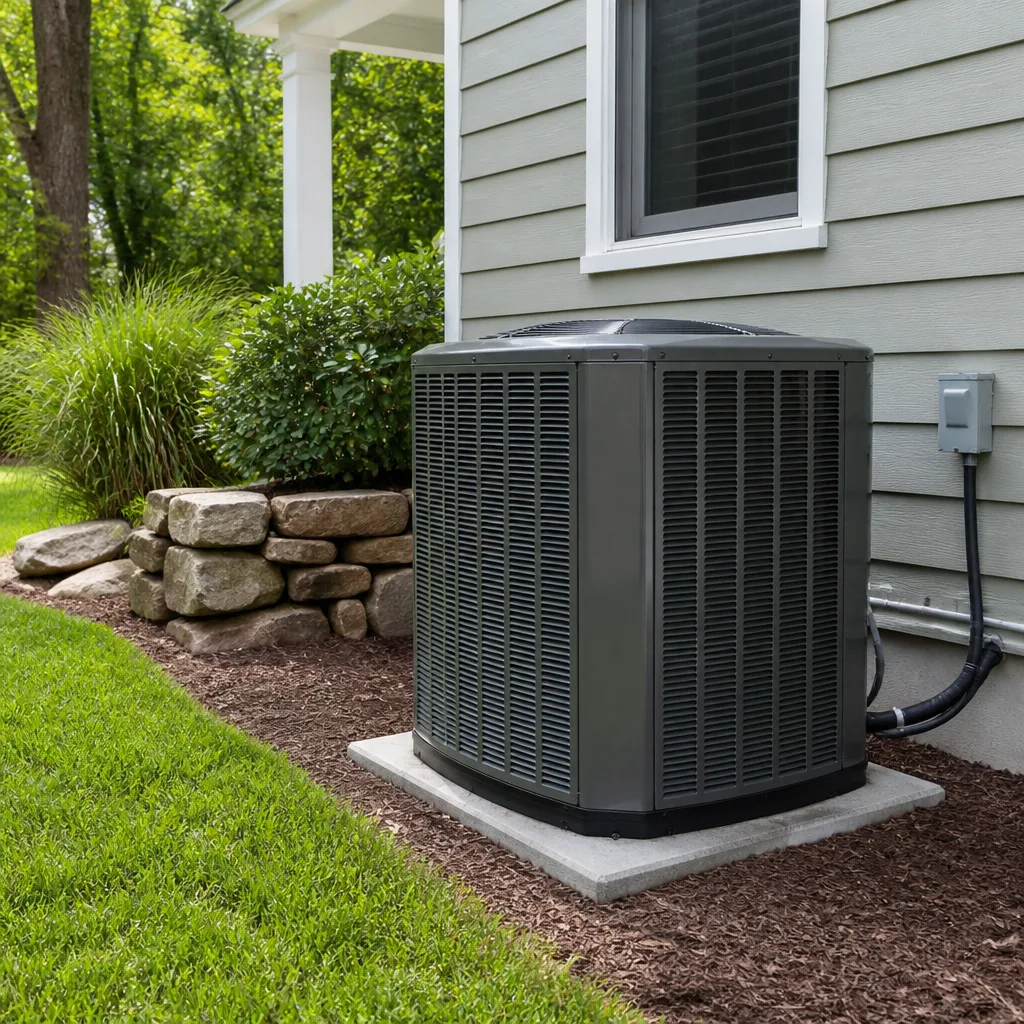 Trane
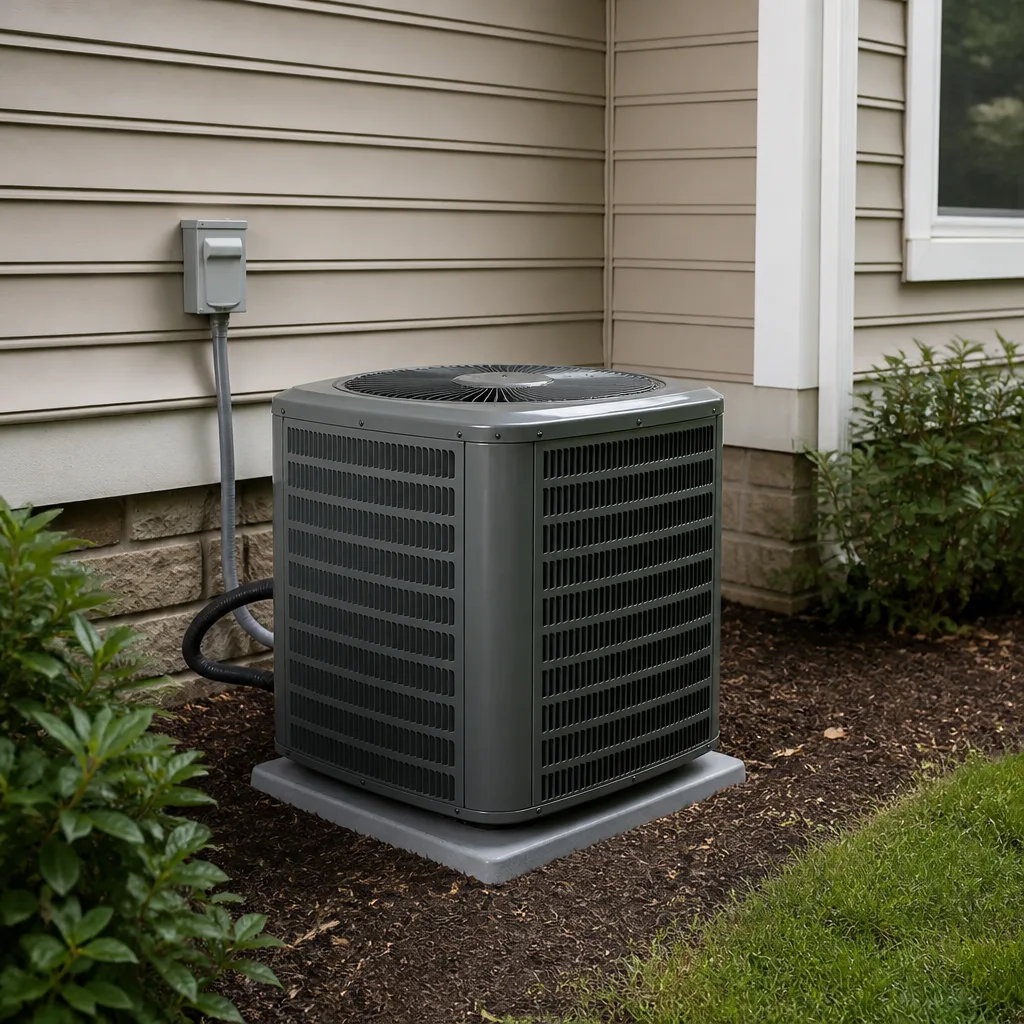 Goodman
Seasonal tune-up and full diagnostic on your Carrier, Trane, or Goodman system - readings shown to you before any repair is proposed
Diagnosis first, numbers second - you approve the repair price before a single part goes in.
Get your free estimateThe Complete Heating & Furnace Guide for Paradise Homeowners
Paradise recorded 19 days below freezing last winter. Not dramatic by most standards, but enough to expose every ignored furnace, cracked heat exchanger, and clogged flue in the valley. Here’s the problem: Paradise winters feel mild enough that most homeowners skip the furnace check entirely, then the first hard cold snap arrives and the phones light up all at once. This guide covers the furnace types common in Paradise homes, how to read your unit’s age and efficiency rating, the honest heat pump math for our climate, what Clark County requires for a replacement, and the mistakes that cost Paradise homeowners the most money.
Quick Answer
Most Paradise homeowners should have their furnace inspected every two years, not every year, because our winters are short but do include hard freezing nights that stress an ignored system. Gas furnaces in Paradise homes built before 1995 are the most likely to have cracked heat exchangers or failing draft systems and should be checked before every heating season. Replacing a furnace in Clark County requires a permit and inspection, and a reputable contractor will pull it for you.
Styles & brands we work with
- AC repair
- Furnace & heating
- Heat pumps
- Ductless mini splits
- Carrier
- Trane
- Goodman
Table of Contents
- Why Paradise’s Heating Needs Are Different
- Furnace Types in Paradise Homes by Construction Era
- How to Read Your Furnace’s Age and Efficiency Rating
- Repair vs. Replace: Making the Call
- Heat Pump vs. Gas Furnace in Paradise’s Climate
- Permits and Inspections in Clark County
- A Simple Furnace Maintenance Schedule for Paradise Homes
- Common Mistakes to Avoid
Why Paradise’s Heating Needs Are Different From the Rest of the Country
Most furnace advice you’ll find online was written for Minnesota or Ohio, where heating systems run six months a year and everyone knows what a cracked heat exchanger sounds like. Paradise doesn’t work that way. Our heating season runs roughly November through February, with the worst nights dropping into the high 20s, and then the system sits idle for eight months.
That idle time is the problem. A furnace that runs every day stays self-tested. A furnace that sits for eight months can develop a cracked heat exchanger, a nest in the flue, a corroded igniter, or a failed pressure switch without anyone noticing. When it finally kicks on during a cold snap, it fails on the first or second cycle. We’ve seen this pattern play out across the valley, from the older homes off Sandhill to the newer builds near Paradise Park.
Here’s the second piece. When the cold snap hits, everyone calls at once. HVAC companies in Clark County go from manageable to slammed within 48 hours, and the person who waited until the system failed is now waiting behind 40 other people. That’s the real cost of treating a Paradise winter as nothing to worry about. It isn’t dramatic. But it’s enough to break a furnace that hasn’t been checked in four years.
Add in the dry desert air and the seasonal dust. Furnace filters clog faster here than in humid climates because the dust load is higher and the system runs less often, which means less airflow to clear it. A filter that would last three months in a wetter climate can be half-blocked in Paradise in six weeks during January. When airflow drops, the blower motor works harder and the heat exchanger runs hotter, which is exactly the condition that leads to cracked metal over time.
For more on how our heating service works specifically in this market, see Heating & Furnace in Paradise.
Furnace Types in Paradise Homes by Construction Era
Walk into a Paradise home and you can usually guess the furnace type from the decade it was built. Here’s the breakdown we’ve seen most often, and which ones have the worst track records.
Pre-1980 homes: natural draft, standing pilot
These furnaces have a metal flue pipe venting to the roof and a pilot light that burns year-round. The worst track record by far. The heat exchangers in these units were not built to last 45 years, and the flue connection at the top of the unit is where cracks and corrosion tend to show up first. If you have one of these in a Paradise home and it has never been inspected, that inspection should be a priority.
1980s – 1990s: mid-efficiency induced draft
These units have a small draft inducer fan and a pressure switch. More reliable than the old standing-pilot designs, but the pressure switches and igniters fail with age and the heat exchangers in early 1990s units are reaching the end of their service life. If the unit is original to a 1990s Paradise build, it is due.
2000s – present: high-efficiency condensing
PVC flue pipe, 90%+ AFUE, two-stage or modulating burners. Good units, but they need the condensate drain line cleared every season or the trap freezes or clogs and the unit shuts down on a pressure fault. We see this in newer Paradise builds more than anything else: a perfectly good furnace that won’t run because the drain trap is full of dust and algae.
For related equipment types in Paradise homes, the same era logic applies to cooling systems – see AC Repair & Installation in Paradise. Brand-wise, we work on Goodman, Rheem, and York units often in this market, along with everything else the major manufacturers make.
How to Read Your Gas Furnace’s Age and Efficiency Rating
Before you call anyone, you can read two things on your own furnace: its age and its efficiency rating. Both are printed on the data plate inside the burner compartment or on the side of the cabinet.
Step 1: Find the serial number
The serial number is usually a 10- to 16-character code, often with letters and numbers mixed. Each manufacturer encodes the manufacture date differently.
Step 2: Decode the manufacture date
- Goodman and Amana: the first two digits of the serial are the year, the next two are the month. A serial starting “1410” means October 2014.
- Rheem and Ruud: look at the four digits after the first letter. The first two are the week, the next two are the year.
- York and Coleman: the third through sixth characters are the year and week, in that order.
- Carrier, Bryant, and Payne: same week-year format, starting with the first four digits after the initial letters.
- Trane and American Standard: letters first, then the year and week in the second block.
If the serial is unclear, the manufacturer’s customer service line can date it from the model and serial together. Don’t guess – a 15-year-old expensive-looking furnace can look young until you check the plate.
Step 3: Read the AFUE rating
AFUE stands for Annual Fuel Utilization Efficiency, and it’s usually printed right on the data plate or the yellow EnergyGuide sticker. An 80% furnace wastes 20 cents of every gas dollar up the flue. A 96% furnace wastes four. The difference matters less in a mild climate than a cold one, but it still adds up over 15 years.
A simple rule we use: if the furnace is over 20 years old and the repair estimate is over half the cost of a mid-range replacement, replacement wins. Under 15 years old with a clean heat exchanger, repair almost always wins.
Repair vs. Replace: Making the Call
Repair wins when the furnace is under 15 years old, the heat exchanger passes a visual and combustion-gas inspection, and the repair is a component swap like an igniter, inducer motor, or control board. Replace wins when the heat exchanger is cracked, the unit is over 20 years old, the repair estimate exceeds half the cost of a replacement, or you’ve had three repairs in two heating seasons.
The honest 2026 math for Paradise: a mid-efficiency 80% furnace replacement runs roughly $4,200 to $6,500 depending on size, venting changes, and whether the existing ductwork and gas line need work. A high-efficiency 96% condensing unit runs roughly $6,000 to $9,500 because of the PVC venting and condensate management that has to be added. Compare that to a typical component repair of $350 to $850 and an igniter that costs you $250 to $400. For a 12-year-old furnace in decent shape, that repair math is easy.
For a 25-year-old unit in a Paradise home with a triple-digit summer gas bill and no maintenance history, the replacement math is easy too. The gray zone is 15 to 20 years with a clean inspection – that’s when the repair is genuinely worth it, and we’ll say so.
The repair-or-replace question connects directly to the heat pump question below. If you’re replacing anyway and you’re not sure which direction to go, read on or call us for a second opinion on any written estimate – that’s free and always has been.
Heat Pump vs. Gas Furnace in Paradise’s Climate: The Honest Math
Paradise is one of the rare American climates where a heat pump makes real sense: mild winters with only a handful of hard freezing nights, and hot summers that make the cooling side of the equation valuable. A gas furnace still wins for some homes. Here’s how to think about it without a sales pitch.
When a heat pump wins in Paradise
- You have no existing gas line to the house, or the gas connection cost is high. A heat pump runs on electricity you already have.
- You want one system that handles both winter heating and summer cooling efficiently. The heat pump is that system.
- Your utility offers a heat pump rebate, which NV Energy has offered on and off for years. Ask before you sign anything.
- You’re replacing both a furnace and an aging AC at the same time. The combined math often favors a heat pump.
When a gas furnace wins in Paradise
- You already have a gas line and a working gas meter. The connection cost is already sunk.
- You’ve got a large, older Paradise home with ductwork sized for a gas system. Retrofitting for a heat pump can require duct modification.
- Gas is significantly cheaper per BTU than electricity in your rate tier. That has been true in Paradise at times and has flipped at other times, so check your actual bill.
- You want the strongest heat recovery on the coldest nights. A gas furnace puts out 100%+ heat even at 20 degrees; a heat pump loses capacity as it gets colder and relies on auxiliary heat strips.
The honest answer for most Paradise homeowners is that a modern cold-climate heat pump handles our winters fine, and the decision comes down to your existing gas infrastructure and your utility rate tier. Not sure? Get two quotes and compare the math. If you’ve already got one, we’ll second-opinion it for free. For more on this, see Heat Pump & Mini Split in Paradise.
Permits and Inspections Required for Furnace Replacement in Clark County
Replacing a furnace in Clark County requires a mechanical permit from Clark County Building and Fire Prevention, and the work has to be inspected before it’s considered complete. This is county code, not optional, and a contractor who says the permit “isn’t needed for a swap-out” is telling you something about how they operate.
Here’s how to verify the permit happened, in the order you should check it:
- Ask for the permit number before work starts. If they can’t or won’t give you one, don’t sign.
- Confirm the permit is for the correct address and the correct scope (furnace replacement, not just gas line or ductwork).
- Ask who is doing the inspection. The county inspector will call or leave a notice, and you have a right to be present.
- After the inspection passes, ask for a copy of the signed inspection card or the county’s pass confirmation. Keep it with the unit’s paperwork.
- If you’re selling the house later, that inspection record is the difference between a smooth sale and a buyer’s inspector flagging work with no permit trail.
The permit also triggers a safety inspection on the gas connections, venting, and combustion air. That inspection has caught real problems in Paradise homes – cracked flue pipes, blocked combustion air intakes, gas leaks at the union. Those are the exact things that go wrong when a homeowner lets an unlicensed handyman “just swap the unit.”
For more on how we handle the paperwork side, see the Ray’s Heating & Air Paradise home page. And if you’re comparing a repair to a replacement, ask for the written estimate and get a free second opinion – we’ll tell you whether the permit is set up right before you sign.
A Simple Furnace Maintenance Schedule for Paradise Homes
You don’t need a 14-point checklist twice a year. You need a schedule that matches how hard the system actually works in Paradise, which is not much, and how idle it sits, which is a lot. Here’s the schedule we recommend.
Every month during the heating season
- Check the filter. Replace it when it’s visibly gray or you can’t see daylight through it. In Paradise, that’s often every 6 weeks during January and February because of the dust load.
Every fall, before the first cold night
- Turn the furnace on for a full cycle when you’re home. Listen for rattles, bangs, or a burner that lights and shuts off short.
- Clear the flue termination and combustion air intake on the roof or sidewall. A nest or leaf block is a classic Paradise failure.
- Clear the condensate trap and drain on high-efficiency units. This is the single most common no-heat call we get on newer units in Paradise.
Every two heating seasons
- Have a technician do a combustion analysis and heat exchanger inspection. This is where a cracked exchanger or a failing inducer motor gets caught before it’s a cold-night emergency.
- Have the burners cleaned and the igniter checked.
Every five years
- Have the ductwork inspected for leaks and the gas line checked for pressure. Older Paradise homes often have duct runs that have never been sealed.
Common Mistakes to Avoid
- Waiting for the first cold snap to call. By the time the system fails, contractors in Clark County are booked out for a week and parts run short. Call in October, not January.
- Skipping the heat exchanger inspection to save $150. A cracked heat exchanger can leak carbon monoxide into your home. The inspection isn’t optional in any home with a furnace over 15 years old, and it’s the cheapest insurance you’ll ever buy.
- Letting a handyman swap a furnace with no permit. Clark County requires the permit and inspection. If you skip it, you inherit the risk and the buyer’s inspector will find it later.
- Treating a “mild winter” as no winter at all. Paradise hit 19 freezing nights last winter. That’s more than enough to break an ignored furnace, and it’s the reason our call volume spikes every January.
- Buying the biggest furnace on the quote. Oversized furnaces short-cycle, run inefficiently, and wear out faster. Ask for the load calculation, not just the number on the box.
- Ignoring the condensate trap on high-efficiency units. The most common no-heat call on modern Paradise installs is a $130 fix that could have been a 10-minute drain clear in October.
- Not asking for the permit number and inspection record. A contractor who won’t pull a permit is not doing the job right, and the paper trail matters when you sell the house.
See the difference
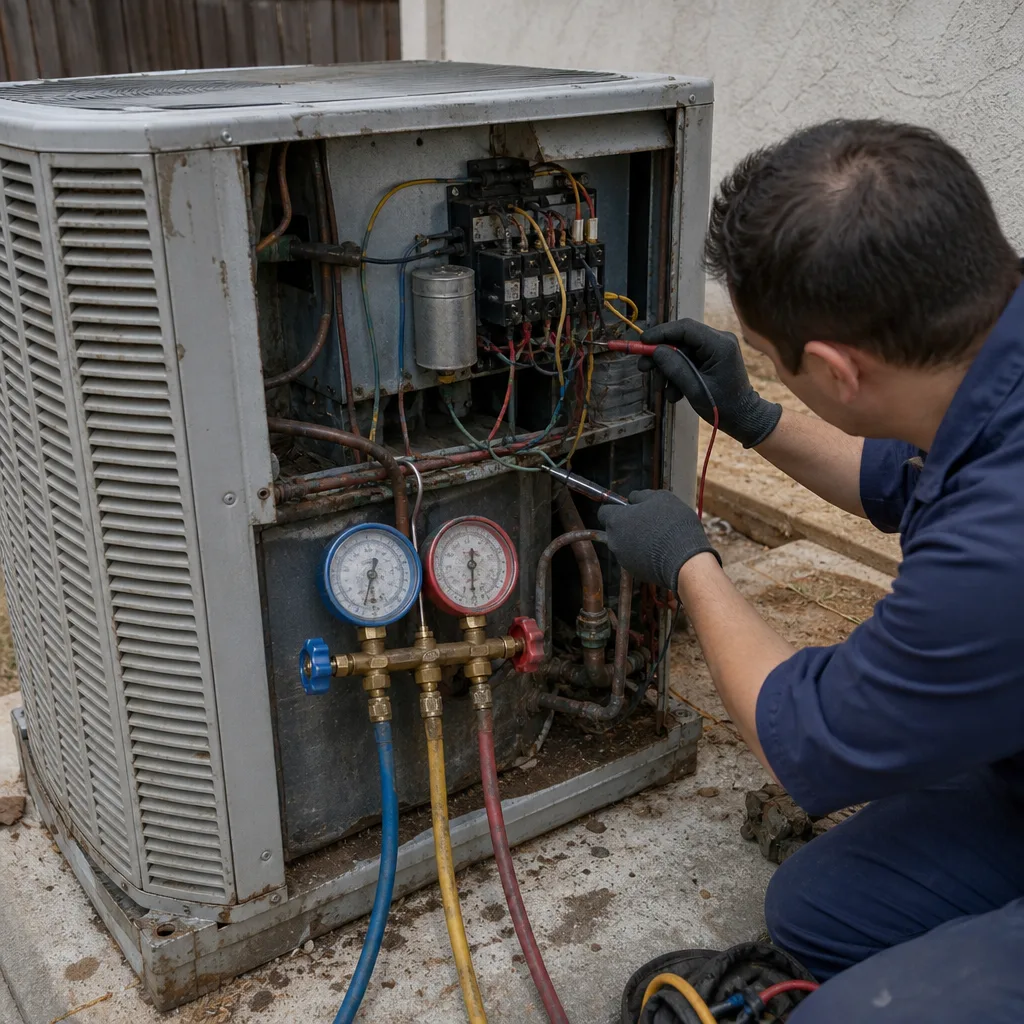 Before
 After
 Before
 After
 Before
 After
When to Call a Professional
Call a licensed HVAC contractor when you smell gas, when you hear a loud boom or rumble from the furnace, when the burner flame looks yellow or orange instead of blue, when you see soot around the burner compartment, when the furnace won’t stay running, or when you or a family member has headaches, dizziness, or nausea in the home that go away when you leave. Carbon monoxide poisoning can happen in a Paradise home just as easily as anywhere else, and the only reliable way to catch it is a combustion-gas check by someone trained to read the numbers. Also call if your furnace is over 15 years old and has never had a heat exchanger inspection, if you’re buying a Paradise home with an unknown furnace, or if the heat pump auxiliary heat strips have been running nonstop and your electric bill has doubled. Ray’s Heating & Air Paradise offers free estimates in Paradise – call (855) 664-5714.
Frequently Asked Questions
A mid-efficiency 80% furnace replacement in Paradise typically runs about $4,200 to $6,500, and a high-efficiency 96% condensing unit runs about $6,000 to $9,500, depending on size, venting, and any ductwork or gas line work. The permit and inspection are included in a proper quote. Call (855) 664-5714 for an exact written price – estimates are free.
Every two heating seasons is the right interval for most Paradise homes, plus an annual filter change and a fall “does it turn on” test. The mild climate means the system runs less than in cold-climate states, but it also sits idle for eight months, which is why the inspection on a two-year cycle catches issues before they become cold-night emergencies.
Yes. Clark County Building and Fire Prevention requires a mechanical permit for furnace replacement, and the work has to be inspected. A contractor who says otherwise is leaving you with the risk. Ask for the permit number before work begins and for the signed inspection card when the job is done.
For most Paradise homes with an existing gas line, a high-efficiency gas furnace is the simpler, lower-cost choice up front, and a modern cold-climate heat pump handles our winters fine if you want one system for heating and cooling. The right answer depends on your gas infrastructure, your electric rate tier, and whether you’re replacing the AC at the same time. Get two quotes and a free second opinion on the one you’re leaning toward.
You usually can’t tell from the outside. A cracked heat exchanger often shows no visible flame change, no soot, and no noise. The only reliable check is a combustion-gas analysis and a visual inspection by a trained technician. If your furnace is over 15 years old, that inspection should happen before the heating season starts.
Yes, usually by 15 to 30 percent if you’re moving from an 80% furnace to a 96% condensing unit, depending on how much heating you actually run. In Paradise’s mild climate, the savings are smaller than they would be in a cold state, so the replacement math has more to do with reliability and heat exchanger safety than with the gas bill alone. Call for a written estimate and we’ll run the numbers on your actual usage.
The Bottom Line
Paradise winters aren’t cold by national standards, but 19 freezing nights is enough to break an ignored furnace, and the pattern is always the same: the system sits idle for eight months, then fails on the coldest night of the year when every HVAC company in Clark County is already booked. The furnace types most at risk here are the pre-1995 natural-draft and early induced-draft units; the cheapest failures are on high-efficiency units with a clogged condensate trap. Read the data plate, know your unit’s age and AFUE, get the two-year inspection on older systems, and confirm the Clark County permit on any replacement. That’s the whole game. If you’re not sure where your furnace stands, call us.
Ray’s Heating & Air Paradise works on all major brands – Goodman, Rheem, York, Daikin, and the rest – and every job carries the 90-Day Done Right Promise: if it isn’t done right, we make it right. A live person answers the phone around the clock, and we’ll give you a free second opinion on any written estimate. Call (855) 664-5714 for a free estimate in Paradise today.
Written by the team at Ray’s Heating & Air Paradise.