
Last updated November 18, 2026
 Heat pumps
 AC repair
 Furnace & heating
 Ductless mini splits
 Carrier
 Trane
 Goodman
Seasonal tune-up and full diagnostic on your Carrier, Trane, or Goodman system - readings shown to you before any repair is proposed
Diagnosis first, numbers second - you approve the repair price before a single part goes in.
Get your free estimateHeat Pump & Mini Split Troubleshooting: Common Problems and How to Fix Them
Most of the mini split service calls we run in Paradise are for a unit somebody already “fixed.” That’s the part homeowners don’t expect to hear. A part was swapped, the system ran for a few weeks, and then the same symptom came back bigger. Here’s why that happens: an error code tells you where the system felt the pain, not where the problem started. A flickering code doesn’t mean the board is bad. It means something upstream of the board is starving it, tripping it, or confusing it. This guide works backward from the symptom to the actual cause, so you don’t pay twice for the same problem. You’ll learn to read the five codes that matter, catch the drainage failures that mimic refrigerant trouble, and know exactly what to say when you call.
Quick Answer
If your mini split isn’t working, the fastest useful check is this: look at the condensate drain, confirm the mode and setpoint on the remote, then read the error code off the indoor unit’s display. In Paradise, roughly seven out of ten “not cooling” calls trace back to a blocked drain line, a remote setting, or a dirty filter and coil, not a refrigerant leak. A pressure reading on a hot afternoon in Paradise can look low when the system is actually fine, which is why we take readings first and quote numbers second.
Styles & brands we work with
- AC repair
- Furnace & heating
- Heat pumps
- Ductless mini splits
- Carrier
- Trane
- Goodman
Table of Contents
- What the Five Most Common Error Codes Actually Mean
- The Drainage Check Every Paradise Homeowner Should Do First
- Why a Mini Split Blows Air but Won’t Cool in a Paradise Summer
- Remote and Mode Mistakes That Account for “Broken” Units
- Ice on the Lines: What It Tells You
- Power, Breakers, and the Reset That Isn’t a Fix
- What to Tell the Technician When You Call
- Noises and Smells You Shouldn’t Ignore
What the Five Most Common Error Codes Actually Mean
You don’t need the manual to get useful information out of a mini split code. You need to understand that codes are reaction reports. The indoor board saw something it didn’t like and threw a flag. The cause could be three feet away or three components upstream. Here are the five you’ll see most often on Trane, Lennox, Goodman, and Rheem mini splits, read the way we read them.
E1 (or EC on some brands) is usually a communication fault between the indoor and outdoor unit. The signal wire pair isn’t talking, or it’s talking badly. Loose terminal screws, water intrusion in the connector, or a damaged control wire cause most of these. The board gets blamed constantly, and it’s rarely the board.
E4 points to a temperature sensor, usually the indoor coil or room thermistor. But before anyone swaps a sensor, understand this: a thermistor reads wrong when it’s coated in dust and lint, which happens fast in rural Paradise homes with a lot of open-window days. Clean it before you replace it.
P6 flags a high-pressure or overcurrent event on the outdoor unit. This is the code that most often gets “fixed” by adding refrigerant when the real cause is a dirty outdoor coil starved of airflow, a failing condenser fan, or a unit boxed into a tight spot with no clearance. Overcharge a system that’s already failing under heat and you’ll have a return visit by August.
E5 is often a low-pressure or refrigerant-side flag. In our experience in Paradise, that flag shows up most on 100°F-plus afternoons when a slightly underperforming system gets pushed past its limit. The system may vent fine at 80°F and trip at 105°F. That’s a load problem, not proof of a leak.
F1 or similar on some brands signals a fan or outdoor module fault. Note the fan behavior before you call: does it spin slowly, stop, or run backward? That detail saves an hour of diagnosis.
Write down the exact code and the conditions when it appears: outside temperature, how long the unit ran before it tripped, and whether the fan or compressor stopped first. That single note is worth more to whoever shows up than any guess.
The Drainage Check Every Paradise Homeowner Should Do First
A blocked condensate line causes symptoms that look exactly like refrigerant or electrical failure. The indoor unit runs, the room stays warm, water backs up into the pan, a float safety trips, and the whole system shuts off or misbehaves. It’s the cheapest problem to rule out and one of the most common we find.
- Find the indoor unit and its drain pan. Look for standing water in the pan or a water line at the bottom of the indoor unit. Any pooling is your first clue.
- Trace the drain line. Follow the white PVC or flexible tube from the indoor unit to where it exits the house. Look for a kink, a pinch at a bend, or a low spot where water would sit.
- Check the exit point outside. On dry Paradise days, a functioning drain drips steadily while the unit cools. If the outside pipe is bone dry after the unit has run an hour, the line is probably plugged.
- Look for the float switch. Many units have a safety float that shuts the unit down when the pan fills. A tripped float looks like a dead unit. That’s a dry line, not a dead board.
- Watch for algae and dust. In rural Paradise, dust, cottonwood, and lint move in with the dry air and clog drains faster than most homeowners expect. Algae forms in the standing moisture that gets trapped.
If you find a full pan or a blocked line, that’s the answer. It’s also the thing to mention on the phone, because a technician who hears “the pan is full” walks in looking at the right end of the system. Our drain line guide lives on the heat pump & mini split service page for Paradise, and it’s worth a look before you climb a ladder.
Ask yourself before you call
Water in the pan? Dry drain line outside? Unit shuts off after 20 minutes of cooling and comes back on an hour later? That’s a drainage answer, not a refrigerant answer. Mention all three and you’ll save diagnostic time.
Why a Mini Split Blows Air but Won’t Cool in a Paradise Summer
This is the one we get asked about most, and it’s the one where the wrong fix is most expensive. A mini split that runs, blows air, but doesn’t cool in a Paradise summer is almost never low on refrigerant. In our experience, closer to seven in ten of those calls are airflow problems, not charge problems.
The air filter tells the story first. A dirty filter starves the indoor coil. Air moves through, but it’s slow and warm, so the coil never fully cools. The unit runs longer. The outdoor unit works harder. You feel lukewarm air and assume the freon is gone.
Behind the filter, a dirty indoor coil builds an insulating blanket on the fins. Same symptom. On the outdoor side, a coil crusted with dust from a dry Paradise yard, dead weeds packed behind it, or a unit crammed into a corner with no clearance all produce the same result: the system can’t reject heat, and it looks “low on charge.”
Refrigerant charge is real, and leaks happen. But in a mild, dry climate like Paradise, the compressor and charge usually hold up well. When a system does need charge, it’s usually because something else caused the system to run hot and long enough to stress a joint. Fix the cause, then address the charge. Reversing that order is how homeowners end up paying for a freon top-off every spring.
One Paradise-specific detail: our afternoon temperature swings are real. A system that holds 75°F at 10 a.m. and drifts to 82°F by 4 p.m. might not be failing at all. It might be falling behind a load it was never sized to beat. Knowing the setpoint, the room size, and the time of day the room warms up tells us whether we’re repairing a broken unit or discussing a replacement with the actual numbers on the table.
Remote and Mode Mistakes That Account for “Broken” Units
A surprising number of service calls end with a hand on the remote. We’ve seen units declared dead that were set to Fan Only, and units that weren’t cooling because someone had pressed the button that changes the display from Fahrenheit to Celsius.
- Mode is set to Fan, not Cool. Fan Only moves air and runs no compressor. The unit feels like it’s running and the room stays warm. Check the mode first.
- The battery is weak. The display may light up and the beep may sound, but a tired remote struggles to send a clean command, especially from across a big room.
- The remote lost its link after a power outage. This is the setting that resets: many mini splits revert to a default mode or a schedule after the power blinks. Ray sees this constantly in Paradise after an afternoon thunderstorm or a brief grid event. Check the schedule and mode after any outage.
- Two rooms, two remotes. In a Paradise house with two head units, one remote can end up controlling the wrong indoor unit, especially when they’re the same brand. Try the other remote before you call.
- Timer and sleep overrides. A timer set months ago and forgotten will turn the unit off at the most inconvenient hour. Clear it.
- Setpoint and lock. Some remotes have a child lock or a setpoint ceiling that quietly caps how cool the system will go. If the unit won’t go below a certain temperature, that setting may be the reason.
Take a photo of the remote before you change anything. If the fix doesn’t hold, that photo gives us a starting point. And any brand, whether it’s Trane, Goodman, or Lennox, has a remote quirk worth knowing; the manual for your model is the fastest lookup for a reset sequence.
Ice on the Lines: What It Tells You
Ice on the refrigerant lines, or a frost pattern on the indoor coil, is one of the few symptoms where the cause is almost always the same family of problems, and it’s rarely the one homeowners expect. Ice means the system is starved of airflow or charge, and the low side drops below freezing. Nine times out of ten, it’s airflow.
Airflow problems come from a dirty filter, a dirty indoor coil, a failing indoor blower, or a return path that’s blocked. In Paradise, a filter that looked fine in March can be packed by June. If you find ice, don’t chip at it. Turn the system off, let it thaw completely, replace the filter, and check the coil.
The other cause is a restricted refrigerant circuit or an actual leak, which is where an actual pressure reading matters. Our rule is simple: readings first, numbers second. We test the capacitor before anyone says the word compressor, and we read pressures before anyone says the word leak, because a frost pattern without a pressure reading is a guess dressed up as a diagnosis.
One more Paradise note: our cool mornings and warm afternoons mean a mini split can spend a lot of time at low load, which makes it easier to run with a partially blocked filter and only show symptoms in the heat of the day. If your system only frosts up on hot afternoons, say so. The timing narrows things fast.
Power, Breakers, and the Reset That Isn’t a Fix
When a mini split goes dead entirely, the first item to rule out is power. Mini splits run on their own dedicated breaker, and they’re often on a circuit a homeowner has never looked at. Here’s the order that saves time.
- Confirm the unit has power. Does the indoor unit’s display light up at all? Is the breaker on? Is the disconnect switch, if you have one, on?
- Check the breaker once. If it tripped, reset it once and watch. If it trips again, stop. A breaker that trips twice is telling you something is wrong, and resetting it until it holds is how small problems become ruin.
- Know what the reset actually does. The reset button on many mini splits is a symptom management tool, not a repair. It clears the fault and lets the system try again. If your unit needs a reset every week, that’s a pattern, not a fluke.
- Watch for tripping on the outdoor unit. A breaker that trips only on hot afternoons points at the outdoor unit, the compressor, or the condenser fan, not the indoor board.
If the breaker holds but the unit still won’t start, you’ve ruled out power and you’re likely looking at a control or communication issue. That’s a technician’s job, and the details above are exactly what makes the diagnosis faster.
What to Tell the Technician When You Call
The best protection against getting upsold on a diagnosis you already ruled out is a good call. When you call, here’s the five-item report that helps the person on the phone route the right person and helps the tech in your driveway save an hour.
- The exact code and when it appears: during startup, after 20 minutes, only on hot afternoons.
- The drain check answer: water in the pan, or dry line outside, or water present in both.
- The filter and remote check answer: filter was cleaned, mode confirmed, remote battery confirmed, schedule cleared.
- What the air feels like: warm, room temperature, or cold at one vent but not another.
- The outdoor unit behavior: fan running or not, compressor running or not, ice or frost present or not.
When you give those five, the tech doesn’t have to guess. And a good tech tells you what you’ve already ruled out before quoting anything. That’s the standard we work to at Ray’s Heating & Air Paradise, and it’s why AC repair in Paradise starts with readings, not a sales pitch. If you’re already weighing repair against a new install, the heating & furnace page for Paradise has the same readings-first approach in heating season. For year-round questions, call (855) 664-5714 and you’ll reach a live person any hour, every day.
Noises and Smells You Shouldn’t Ignore
Most mini splits are quiet. When you hear something new, the noise itself is a clue worth describing exactly. A clicking relay sound at the outdoor unit is usually a contactor or control issue. A pulsing “whoosh” from the indoor unit is often a fan blade or a bearing. A sharp rattle is often a loose panel, a bracket, or a small object in the outdoor cabinet.
- Rattling: loose cover, bracket, or debris in the outdoor fan shroud. Worth a look before it wears the blade.
- Grinding or squealing: a fan bearing or blower motor. Don’t run it long; find it early and it’s a smaller job.
- A musty smell on startup: growth on the coil or in the drain pan. Dust plus moisture in a dry, dusty Paradise yard is the usual recipe. Cleaning helps, and a drain flush is often part of the fix.
- A refrigerant-type smell: stop and call. This is a safety issue, not a “wait and see.”
A word on safety before we go further. Mini split refrigerant circuits and high-voltage boards, capacitors, and wiring are genuinely dangerous. The capacitor stores a charge after the power is off, and the refrigerant lines carry both pressure and, on the high side, real risk. Do the checks above with the power off, the filter out, and the remote in your hand. Everything past that belongs to someone with a meter and a license. That’s not gatekeeping; that’s how people stay safe.
Common Mistakes to Avoid
- Replacing parts before diagnosing the cause. The most common pattern Ray finds in Paradise is a board or capacitor changed because a code was read out of context. Two sentences about what the system was doing when it tripped can point at a different cause entirely.
- Adding refrigerant to a hot-weather underperformer. A system slightly low on cooling at 105°F is not always low on charge. Adding freon to a dirty-coil problem makes the next visit more expensive, not less.
- Ignoring the drain line. A blocked drain in a Paradise home looks like a dead unit, a bad sensor, or a refrigerant leak. It’s often none of those.
- Resetting a breaker until it holds. A breaker that trips twice is telling you something is wrong. Find the cause before you run it again.
- Trusting a phone quote. A price given before anyone reads a capacitor or checks a drain is a guess. Get the readings before you agree to a number.
- Skipping the remote check. Plenty of “broken” units in Paradise are set to the wrong mode or lost their settings after a power blink. Check the remote first.
- Chip away at ice. Thaw a frosted coil by turning the system off, not by force. A punctured coil turns a small repair into a big one.
See the difference
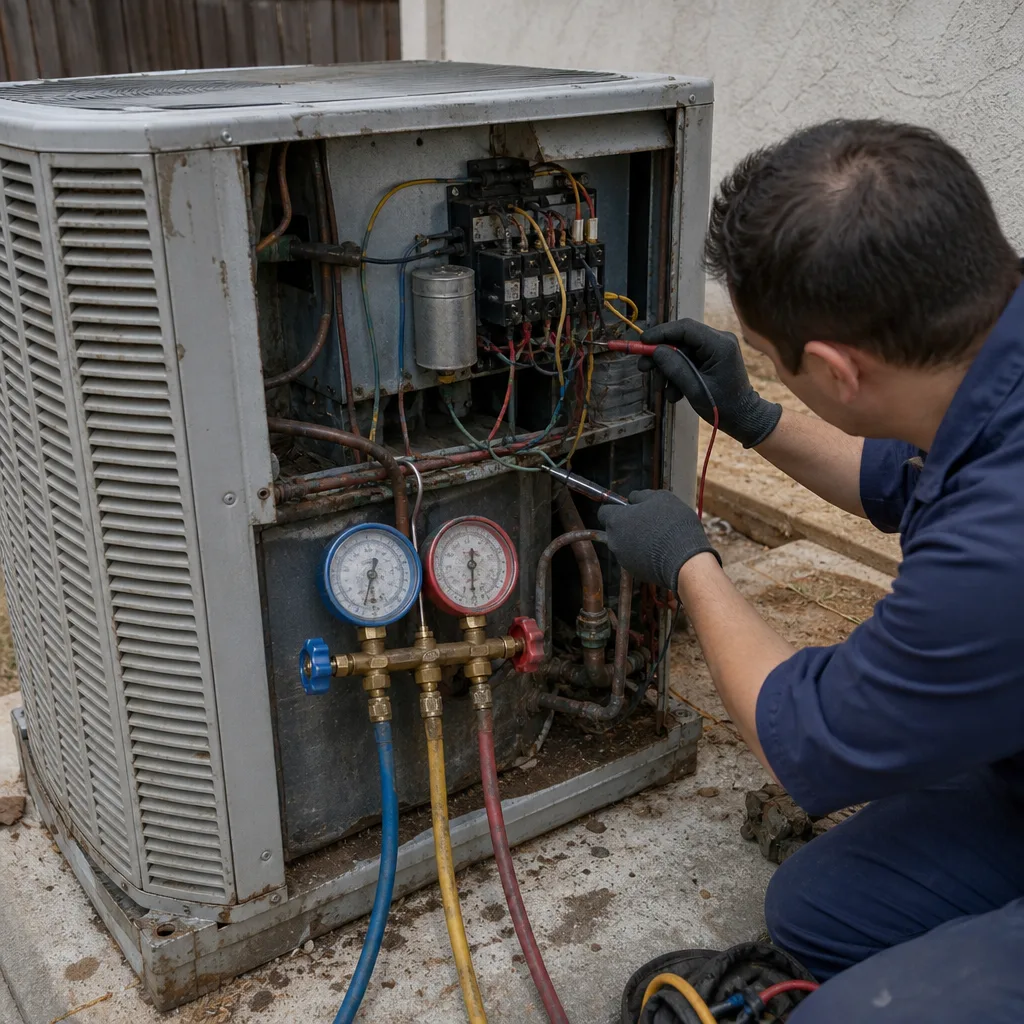 Before
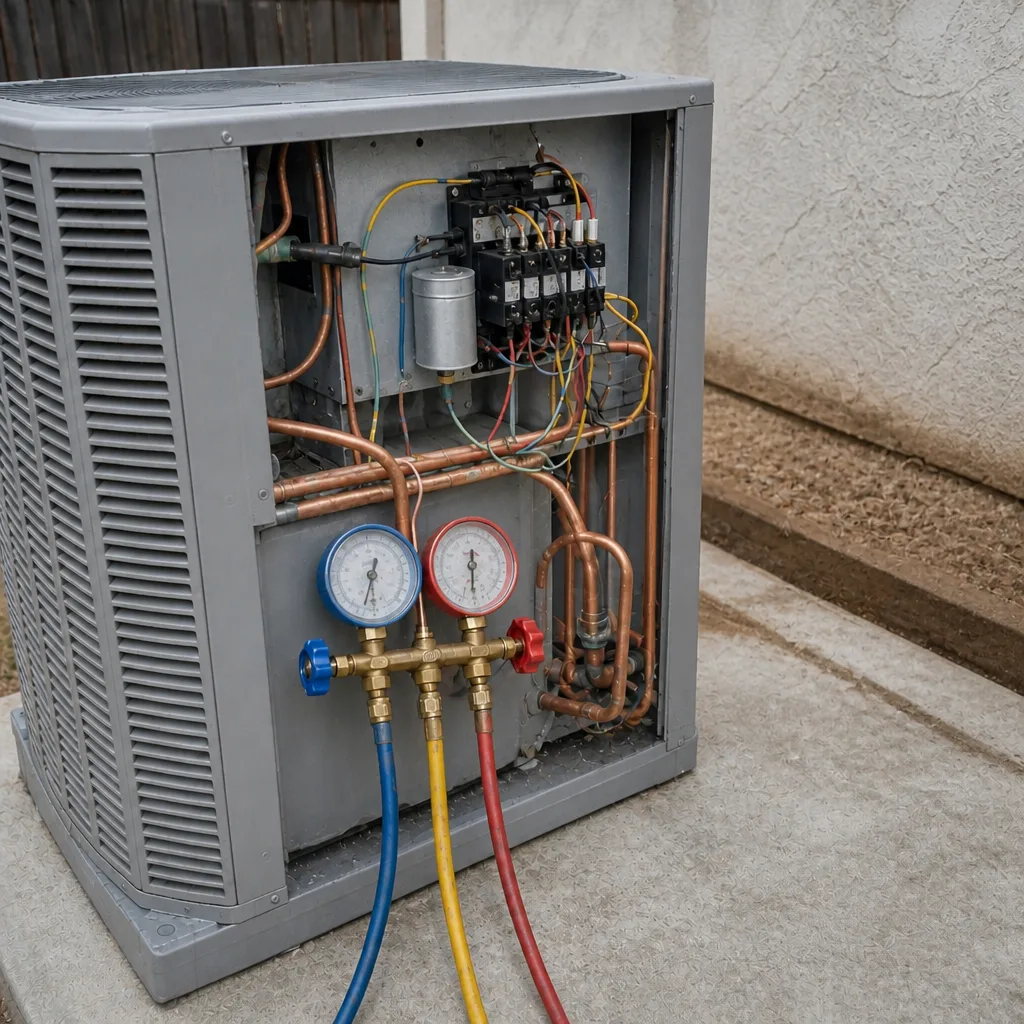 After
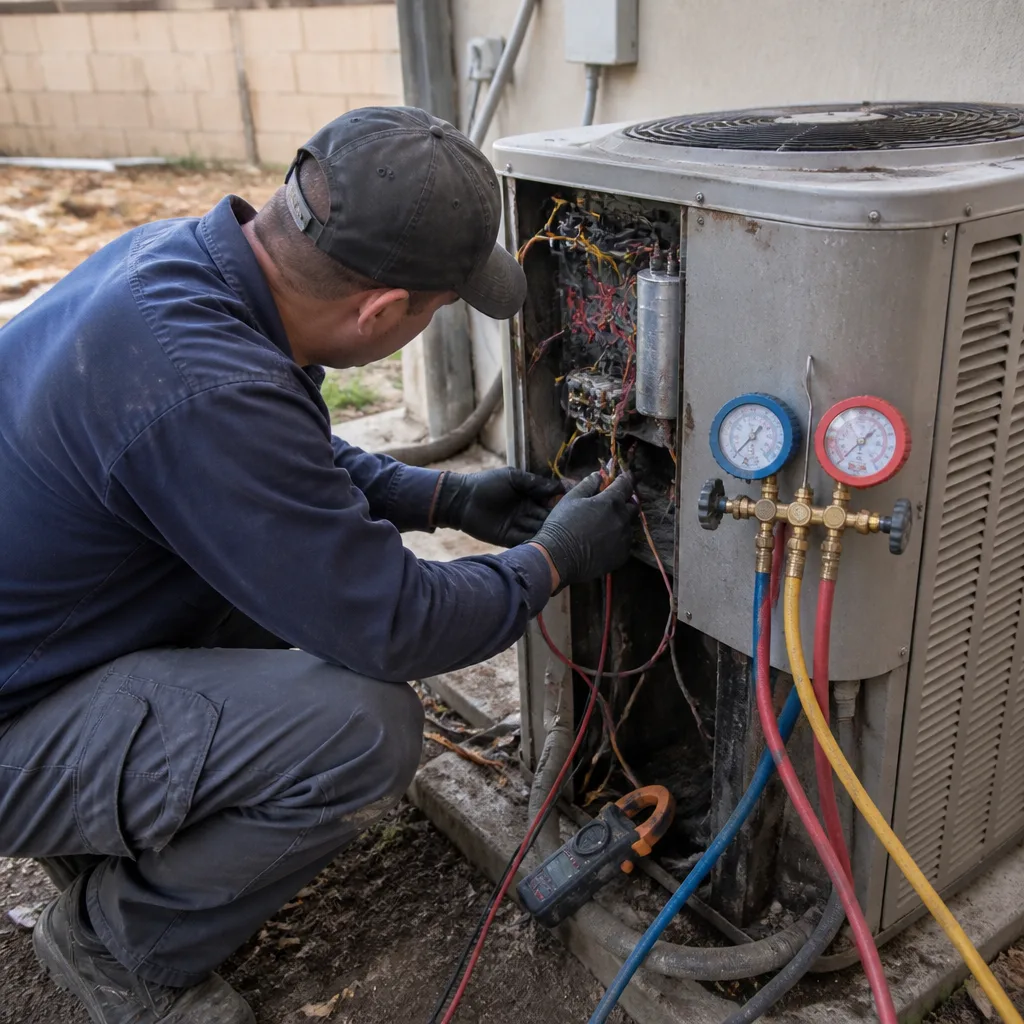 Before
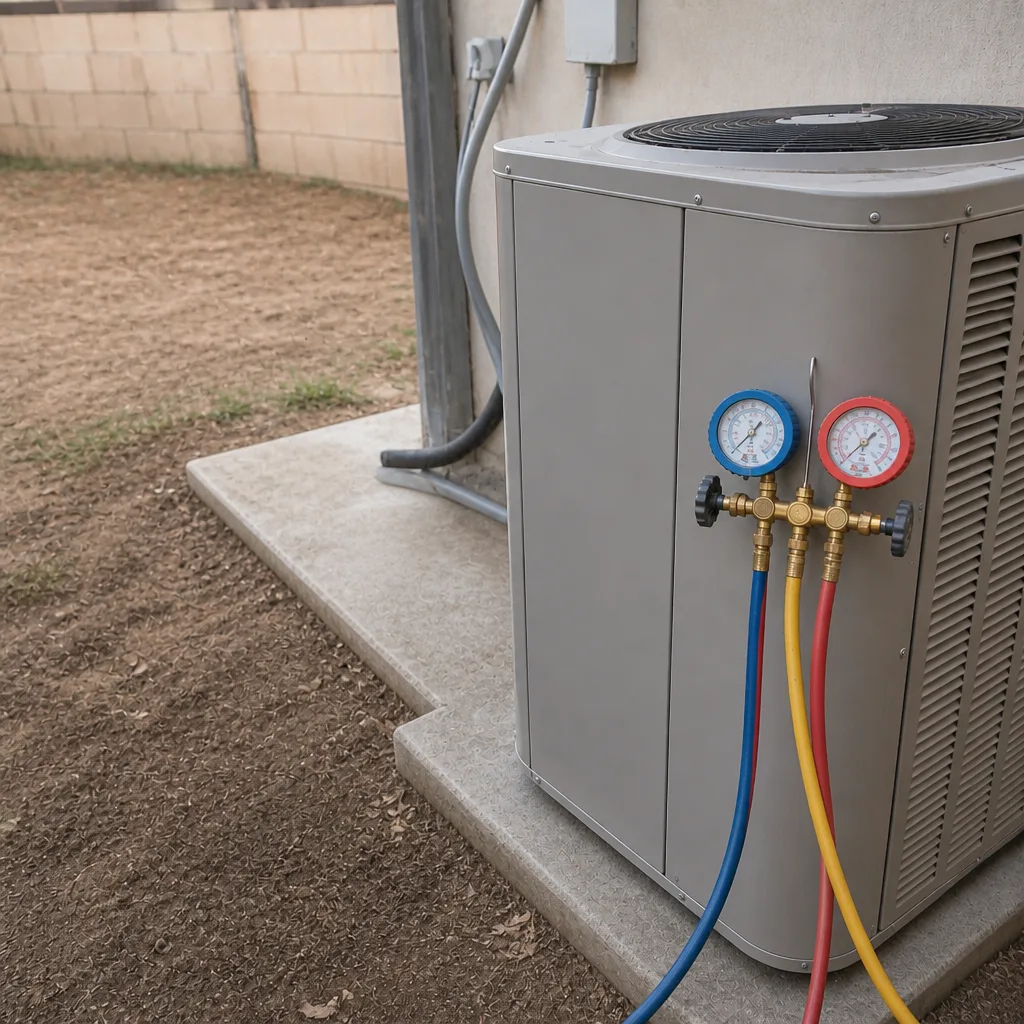 After
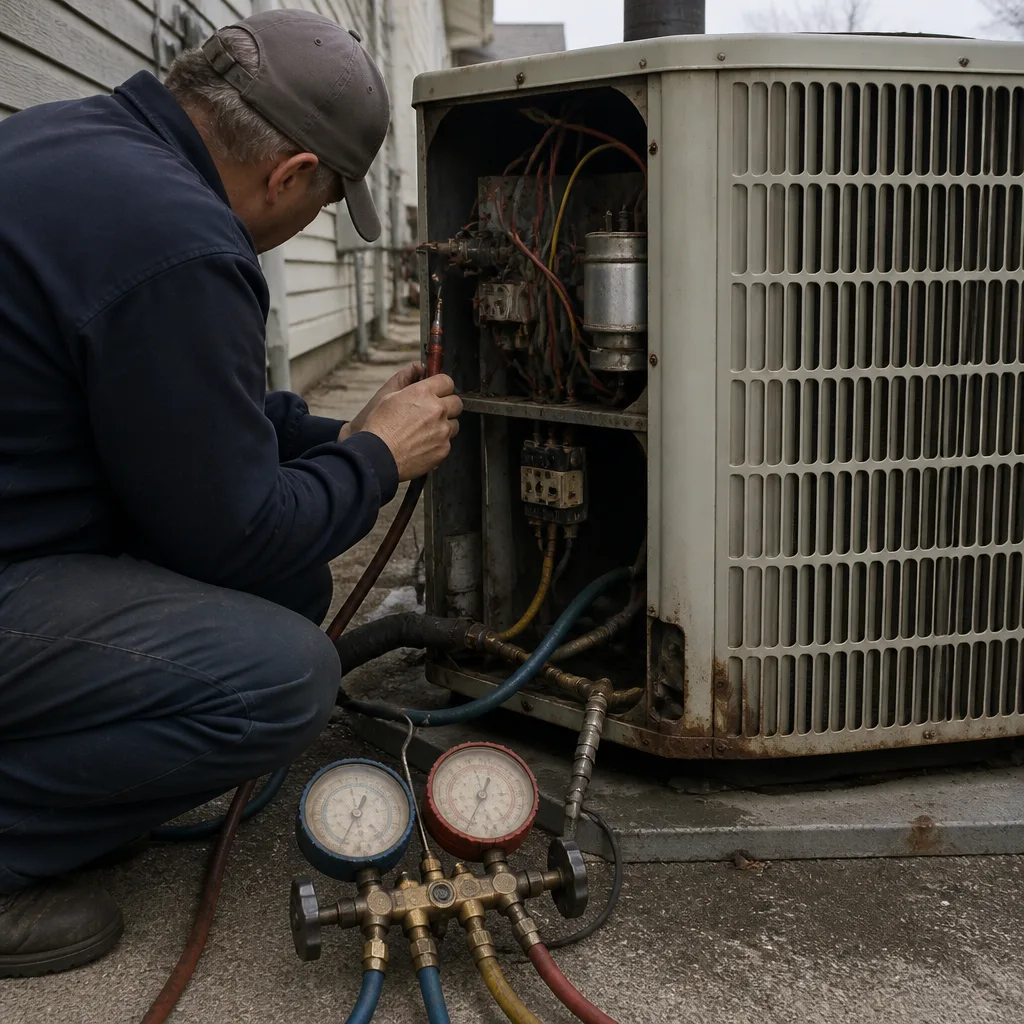 Before
 After
When to Call a Professional
Call when the breaker trips twice, when you find ice you can’t explain, when the unit needs a reset more than once a week, or when you’ve found a full drain pan and the system still misbehaves after it’s cleared. Call when you smell refrigerant, hear grinding from the outdoor fan, or when the unit runs but won’t cool and the filter and remote checks came back clean.
That’s the point where the cause is beyond a five-minute check, and it’s a good time to get a face, not a fax. Ray’s Heating & Air Paradise offers free estimates in Paradise – call (855) 664-5714. A live person answers any hour, every day, and if you have a written estimate from someone else, we’ll give you a free second opinion. No trip charge inside the county for Paradise homeowners.
Frequently Asked Questions
Probably not. E1 is almost always a communication fault between the indoor and outdoor units, and loosened signal-wire terminal screws, water in a connector, or a damaged control wire cause most of them. A tech who reads the wiring and terminals before the board saves you the cost of a part you didn’t need.
Afternoon warm air is usually a load or airflow problem, not a dead compressor. As Paradise temperatures climb, a partially blocked coil or a dirty filter gets exposed. Check the filter, check the drain, and note the time the room warms up. That timing detail tells the technician what to test first.
The most common cause is a float safety switch tripping because the drain pan is filling. Less common causes are a high-pressure trip (P6) or a failing sensor. Look for water in the pan and a dry drain line outside before you do anything else.
Yes. A mini split runs on its own dedicated breaker, usually sized to the outdoor unit’s requirements, and the breaker must match the manufacturer’s spec for that unit. If a breaker tripped, reset it once. If it trips a second time, that’s a call to a technician.
Many mini splits revert to a default mode, a schedule, or a previous timer setting after a power blink. It’s a remote and indoor-unit setting, not a failure. Check the schedule and mode first, and note that this happens most often after a Paradise thunderstorm or a brief grid event.
You can look at the pan, remove a filter, and turn the unit off at the breaker. Cleaning the pan and flushing the line is a job for someone with the right tools and the right safety habits, and if the drain is plugged, a professional flush is the reliable fix. Call (855) 664-5714 for a free estimate if you’re not sure which you’re looking at.
The Bottom Line
Error codes point at symptoms, not causes. Before you call anyone, do three checks with the power off: look for water in the drain pan and a dry line outside, confirm the mode and schedule on the remote, and clean the filter if it’s even slightly dirty. Those three checks cost nothing and rule out the most common problems in Paradise homes. If the system still misbehaves, write down the code, when it appears, and what the outdoor unit is doing, then call a tech who reads the readings before quoting a number. You’ll spend less, and you’ll fix the cause instead of the symptom.
Get It Looked At Right the First Time
If the checks above didn’t settle it, we’re a phone call away. Call (855) 664-5714 for a free estimate, and you’ll get a live person, not a voicemail maze. Ask for Ray’s Heating & Air Paradise, and we’ll look at your unit with a meter in hand and the readings in front of you before anyone names a price.
Written by the team at Ray’s Heating & Air Paradise.