
Last updated November 18, 2026
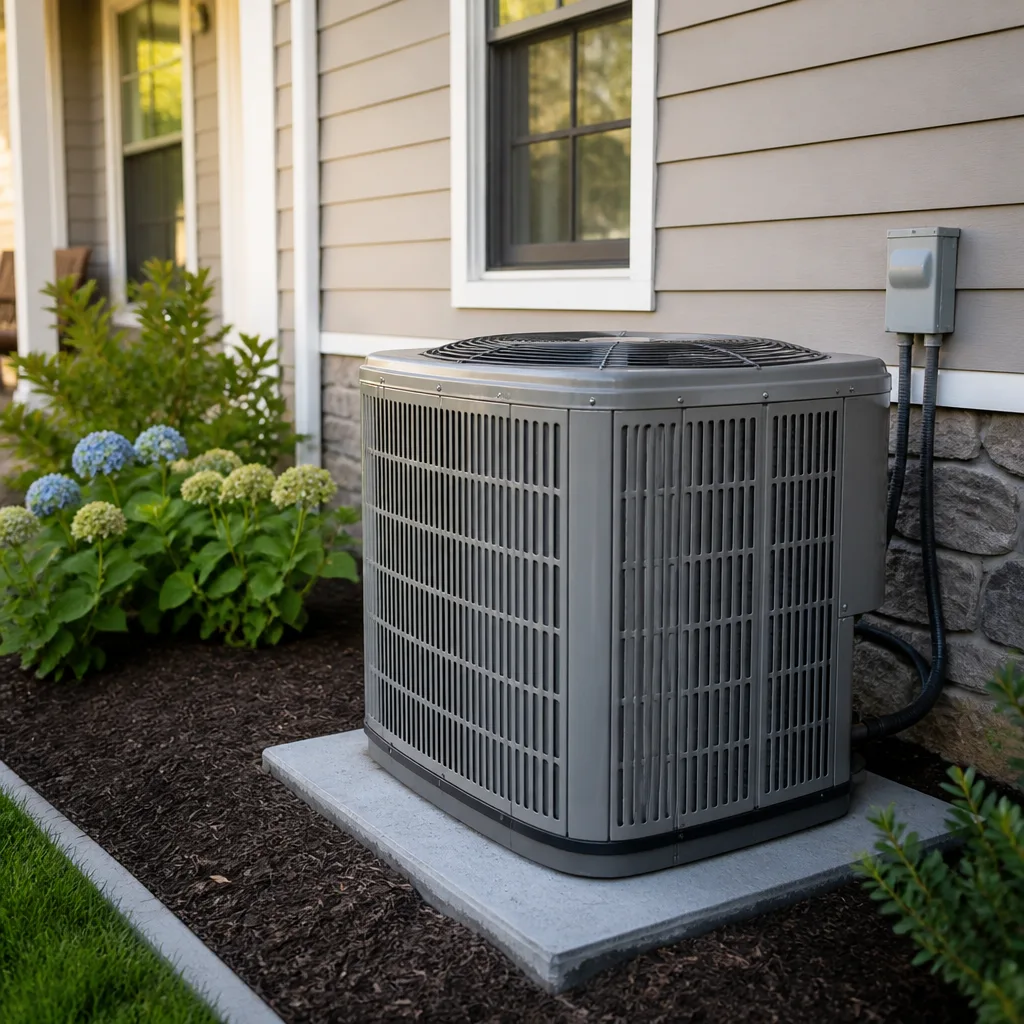 AC repair
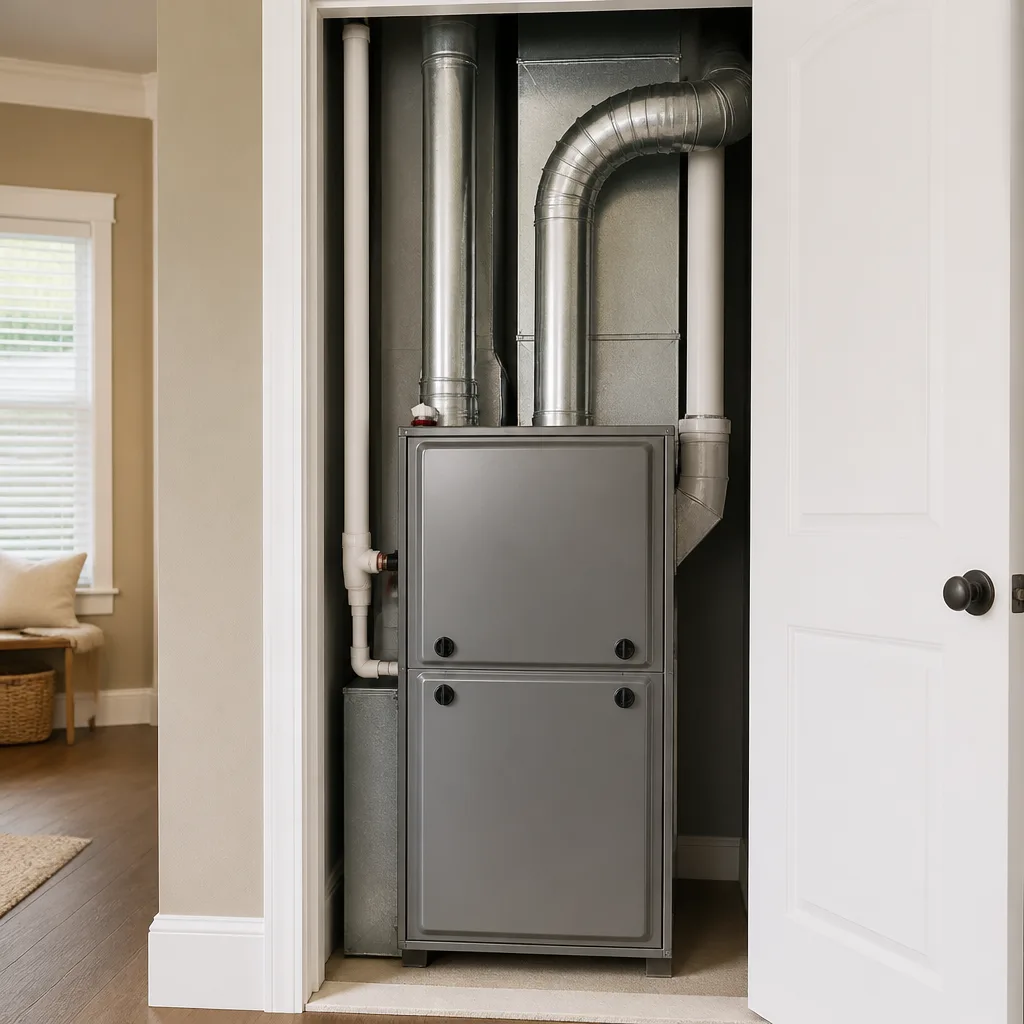 Furnace & heating
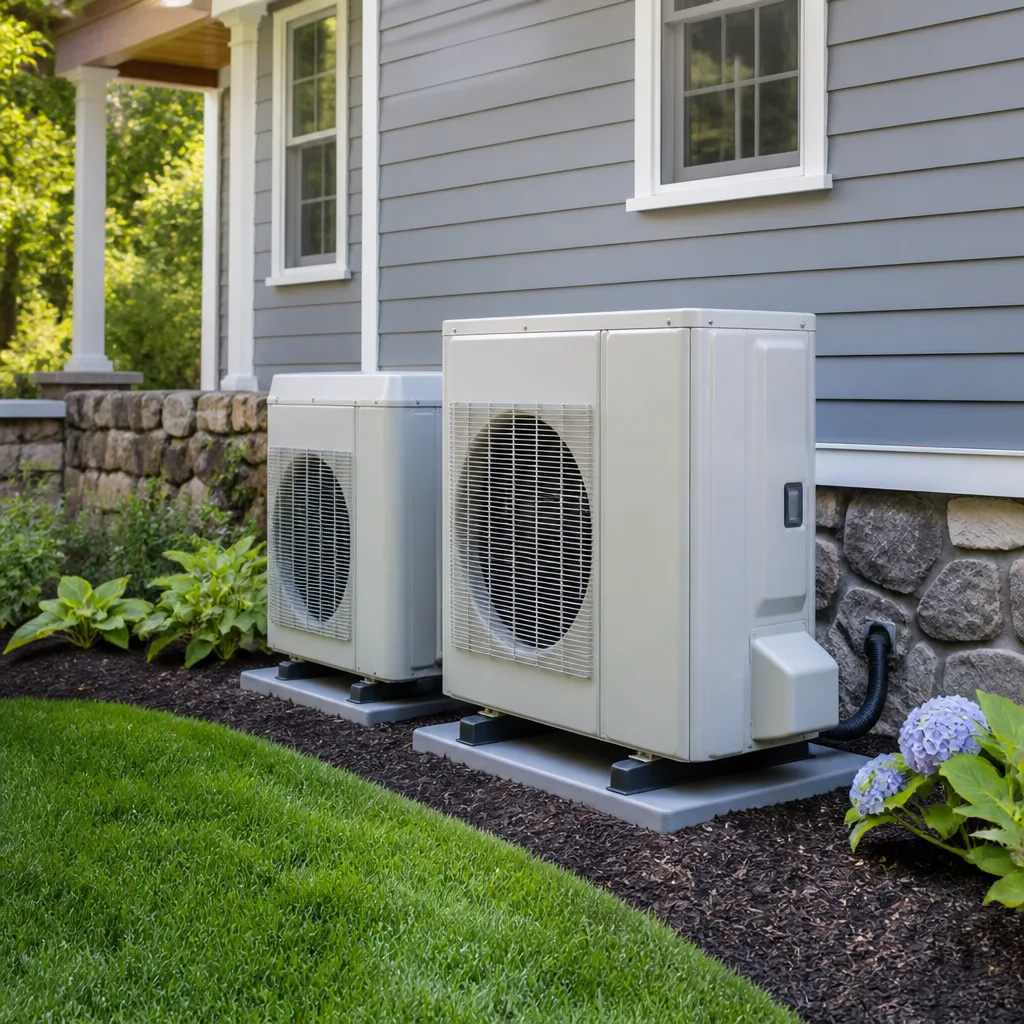 Heat pumps
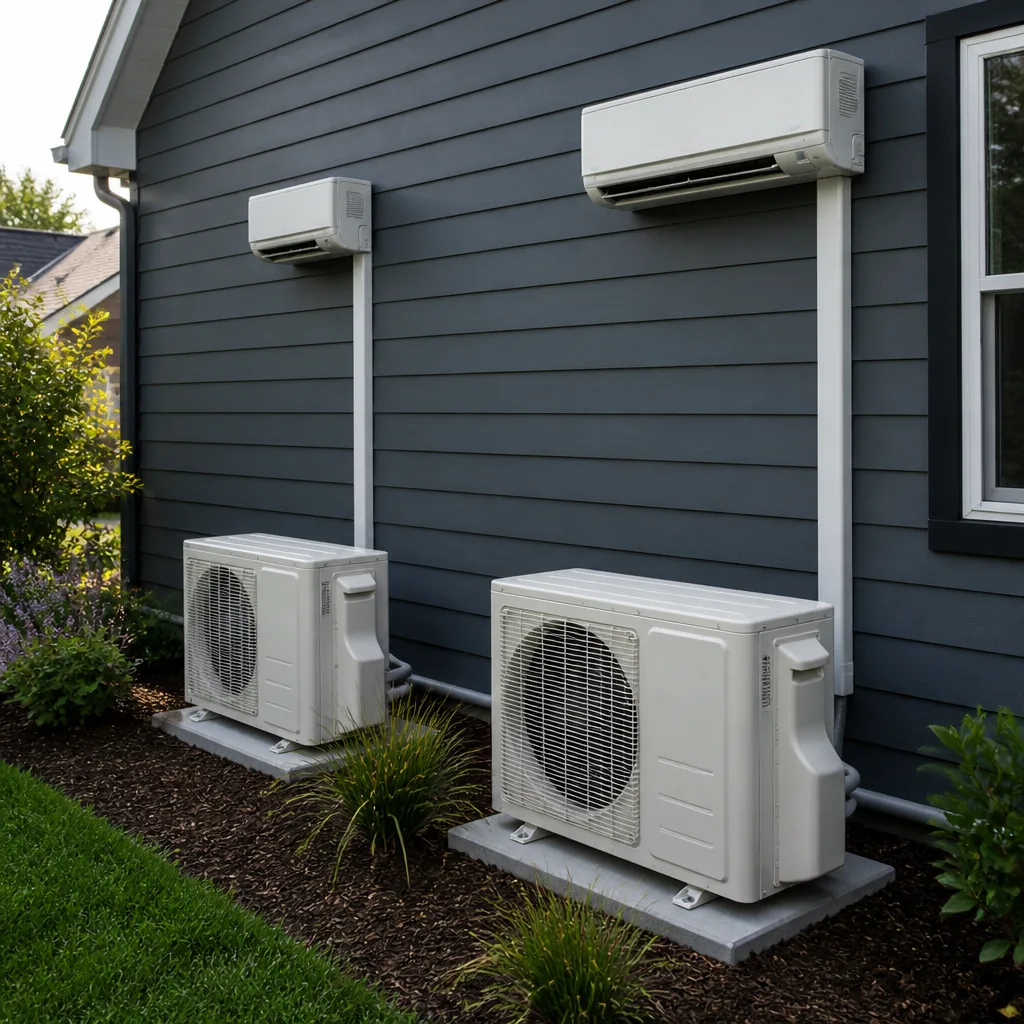 Ductless mini splits
 Carrier
 Trane
 Goodman
Seasonal tune-up and full diagnostic on your Carrier, Trane, or Goodman system - readings shown to you before any repair is proposed
Diagnosis first, numbers second - you approve the repair price before a single part goes in.
Get your free estimateAir Quality & Ventilation Maintenance Schedule: What to Do and When
The filter-change interval printed on your filter bag was written by a marketing team, not a desert HVAC tech. Three months is a number that works in Seattle, where the air is damp and the cooling season lasts a few months. In Paradise, your system runs nine months a year through dust that settles on everything, and that printed schedule can get you in trouble by month two. We’ve pulled filters out of Paradise homes that looked like felt after five weeks. This guide lays out a maintenance calendar built for how Nevada dust, 115°F heat, and dry air actually treat your ventilation system, month by month, so you know what to do and when.
Quick Answer
In Paradise, NV, change your air filter every 30 days during cooling season (April through October) and every 60 to 90 days in winter, not the 90-day interval on the package. Schedule coil and drain-pan cleaning in April before the heat hits, have ducts inspected after monsoon dust in August, and clean your ERV or HRV core once a year. Most of the rest of your air quality maintenance follows the same calendar every year.
Styles & brands we work with
- AC repair
- Furnace & heating
- Heat pumps
- Ductless mini splits
- Carrier
- Trane
- Goodman
Table of Contents
- Why the 90-Day Filter Rule Fails in Paradise
- The Paradise Maintenance Calendar
- Pre-Summer Prep: April
- Peak Heat: July
- Monsoon Dust Season: August
- The Short Winter Prep Window
- Checking Ducts and Return Grilles Yourself
- The ERV/HRV Task Everyone Skips
- How We Log Maintenance Visits
Why the 90-Day Filter Rule Fails in Paradise
That 90-day number assumes a house with mild air, a system that runs part of the year, and dust levels nothing like what blows through the Mojave. Paradise sits in a valley that catches wind-borne dust from all directions, and your AC pulls that dust through the return every time it cycles. When the system runs nine months straight, it’s moving thousands of hours of dusty air past that filter. We’ve seen a standard 1-inch filter in a Paradise home clog solid in five to six weeks during July.
A clogged filter does more than dirty your air. It starves the blower, raises static pressure, and makes the compressor work harder for less cooling. It also lets dust bypass around a saturated filter and coat the evaporator coil, which is where the real money goes. A dirty coil cuts efficiency and, in our experience, is one of the most common reasons a Paradise system underperforms in a bad summer.
What interval actually works here
- Cooling season (April through October): check the filter every month. Change it every 30 days during July and August. If you have pets or live near open desert, shorten that to three weeks.
- Winter (November through March): check monthly, change every 60 to 90 days. Heating season moves less air, so the filter lasts a little longer.
- Filter type matters: a higher-MERV filter catches more dust but loads faster. A MERV 8 to MERV 11 is usually the sweet spot for a Paradise home. Anything above MERV 13 on a standard system can choke airflow and hurt efficiency.
Write the date on the filter edge with a marker every time you change it. It’s the simplest maintenance log you’ll ever keep, and it tells the next person at your door exactly when the last change happened.
The Paradise Maintenance Calendar
The trick to air quality in Paradise is not doing more work. It’s doing the right work at the right time of year, so you’re not fighting dust that’s already in the ducts or cleaning a coil that’s already frozen. Here’s how the year actually breaks down for us.
| When | What Happens in Paradise | What to Do |
|---|---|---|
| March | First warm days, system waking up | Change filter, walk the ducts, check return grilles |
| April | Pre-summer window before the heat locks in | Cooling tune-up, coil and drain-pan clean, duct inspection |
| May – June | System running daily | Monthly filter change, watch for coil icing |
| July | Peak heat, longest run times | Filter every 30 days, watch drain line for clogs |
| August | Monsoon season, wind-driven dust | Inspect ducts and returns after dust storms, seal loose joints |
| September – October | Heat eases, dust settles | Post-summer coil check, ERV/HRV core cleaning |
| November – February | Short winter, occasional furnace use | Furnace filter change, winter tune-up, duct check |
This is the order that keeps a Paradise home ahead of the dust instead of chasing it. Spring cleaning before the heat, dust control right after monsoon, and the ERV work in the shoulder season when you’re not leaning on the system hard.
Pre-Summer Prep: April
April is the single most important maintenance window in Paradise. The system is about to run non-stop for five months, and whatever condition it’s in when July hits is the condition it stays in. This is the month to handle the heavy work so you’re not calling at midnight in August.
- Cooling tune-up. A real tune-up checks refrigerant charge against the manufacturer’s spec, cleans the condenser coil, and tests the capacitor and contactor. Readings first, numbers second, so you know what the system is actually doing before anyone sells you anything. See our AC Repair & Installation in Paradise page for what a proper service visit covers.
- Evaporator coil and drain-pan clean. Dust that got past the filter over winter collects here. A clean coil cools better and uses less power.
- Drain-line flush. In dry, hot air the condensate drain clogs with algae and dust quickly. A clogged drain means water in your pan, then water on your ceiling. Flush it in April and again in July.
- Duct inspection. Look for disconnected flex duct, sagging runs, and crushed sections in the attic. April is when you can still get up there without roasting.
- Return-air check. Make sure every return grille is unblocked and the filter is seated. A return that’s blocked by furniture or a rug starves the whole system.
Most of this is one service visit done right. Handle it in April and the rest of the summer is just filter changes.
Peak Heat: July
July is when the system earns its keep and when small problems turn into big ones fast. Long run times, 115°F afternoons, and a filter that loads in weeks instead of months. This is the month to stay on top of the basics and watch for warning signs.
- Filter every 30 days. No exceptions in July. Check it more often if you have pets or a lot of foot traffic.
- Watch for coil icing. Ice on the indoor coil or refrigerant line means low charge, restricted airflow, or a dirty filter. Turn the system off and call. Never run a frozen system.
- Check the drain again. A clog in July floods a pan in hours. Look in the pan when you change the filter.
- Listen to the blower. A new rattle, squeal, or vibration is a bearing or a loose part, not something to wait out.
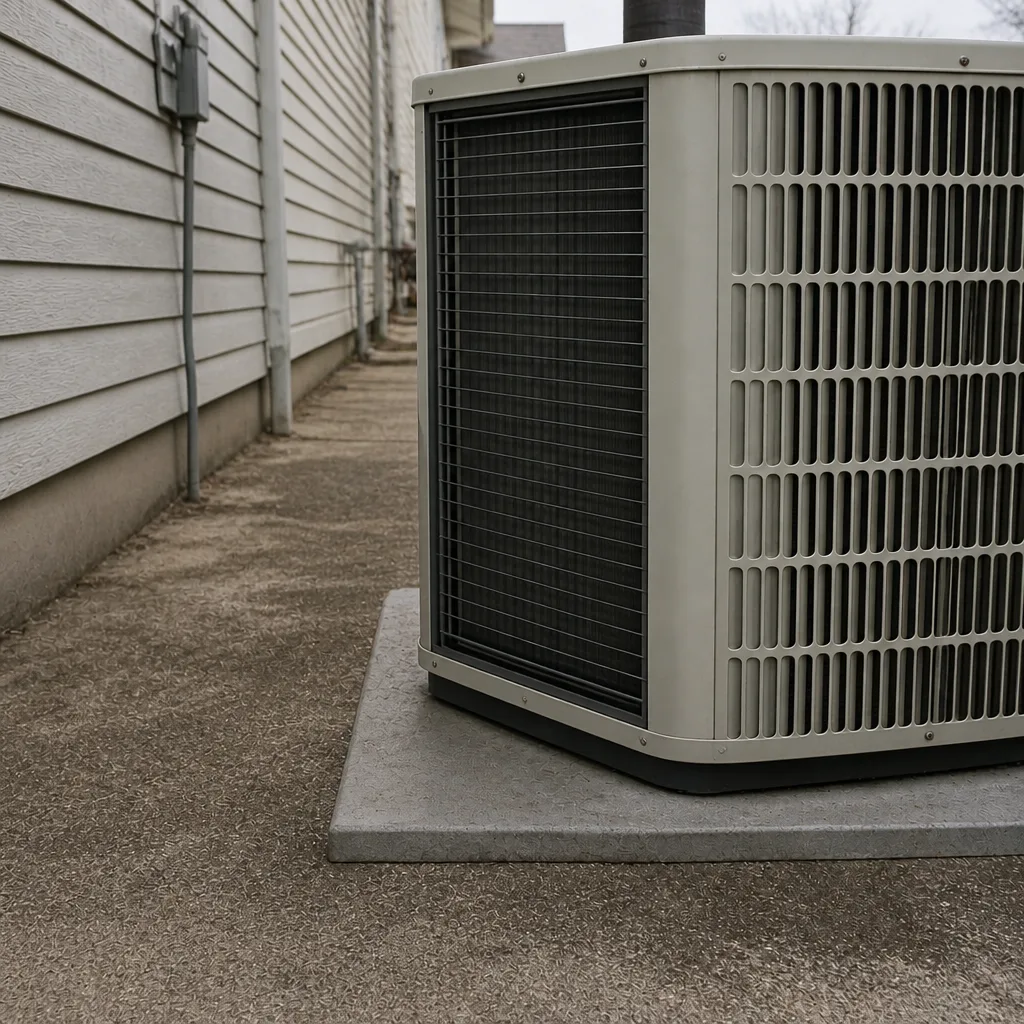
- Keep the outdoor unit clear. Two feet of clearance around the condenser, no weeds against the coil, and rinse the coil gently a few times over the summer. The condenser works harder in extreme heat, and a dirty coil makes it worse.
If your system struggles to keep up in July, that’s not a filter problem you can solve by changing it more. That’s a diagnostic. Readings first, then we’ll tell you what’s actually wrong.
Monsoon Dust Season: August
Late summer monsoon winds push fine dust through the valley, and that dust finds every gap in your envelope and every loose duct joint in your attic. We see a spike in duct and return issues every August, along with a rise in filter loading. The dust that settles on your return grilles after a storm is a preview of what’s getting into your ducts.
Step-by-step after a dust storm
- Wipe and inspect the return grilles. Remove the grille, vacuum the face and the frame, and look into the return box. A heavy dust film there means the return is pulling unfiltered air.
- Change the filter proactively. Don’t wait for the month to be up if a storm just rolled through. Swap it and mark the date.
- Walk the accessible duct runs. In the attic or crawlspace, look for disconnected joints, torn flex duct insulation, and runs that sag or touch the deck. Gaps pull attic dust straight into your living space.
- Check door and window seals. Fine dust gets past worn weatherstripping. A cheap fix now saves filter changes later.
- Smell test. If the house smells musty or dusty when the system kicks on after a storm, that’s a sign duct or coil dust needs attention.
If you find a disconnected duct or a joint pulling attic air, that’s a professional fix. Sealing duct joints properly needs the right tape, mastic, and access, and a half-done seal is worse than none.
The Short Winter Prep Window
Paradise winters are short, but the furnace still matters, and the heating season has its own air quality considerations. Dry winter air and closed-up houses concentrate whatever dust and allergens are already indoors. This is also the window to knock out the maintenance you didn’t get to in fall.
- Furnace tune-up in November. A furnace that runs clean burns clean. A dirty burner or heat exchanger is an air quality problem and a safety problem. Never ignore a yellow flame or a smell of exhaust indoors.
- Change the filter at the season change. Mark the last HVAC filter change of the year so the winter interval starts clean.
- Humidity check. Desert heat runs dry, but winter air is even drier. Surface dust moves more freely in very low humidity. Running a whole-house humidifier in the right range makes the air feel better and reduces static that sends dust flying.
- Check the heat exchanger. A cracked heat exchanger can push carbon monoxide into your air. If your furnace is older, have it inspected. This is a safety item, not an optional one.
If your furnace is on its last legs, plan the replacement now instead of waiting for a cold snap. Heating work is scheduled, not done same-day. Our Heating & Furnace in Paradise page walks through what a replacement involves and how we handle the paperwork.
Checking Ducts and Return Grilles Yourself
You don’t need tools to spot most duct and return problems. You need a flashlight and a few minutes. Here’s what to look at and what to leave alone.
What to check yourself
- Return grille airflow. Hold a tissue to the grille when the fan runs. Strong, steady pull is good. Weak or uneven pull means a restriction somewhere in the run.
- Filter seating. The filter should sit flat with no gaps around the edges. A gap lets dust bypass entirely.
- Duct joints you can see. In the attic, look at the joints where flex duct connects to boots and plenums. Loose tape, gaps, or duct pulled off a boot are all visible problems.
- Duct insulation. Torn outer jacket or missing insulation causes condensation and wasted cooling. Note it and have it fixed.
- Dust patterns. Heavy dust on one grille or a dark streak on the ceiling tells you where air is leaking or bypassing.
What to leave alone
- Sealing the system yourself. Duct sealing needs the right materials on clean surfaces. DIY tape jobs peel within a season in a Nevada attic.
- Refrigerant lines and the coil. These are pressurized. Touching them is a job for a trained tech.
- Electrical connections in the air handler. Loose wiring inside a unit is a shock and fire hazard. Don’t open the panel.
You’re looking, not fixing. If something looks wrong, note it and call.
The ERV/HRV Task Everyone Skips
Many Paradise homes have an energy recovery ventilator or heat recovery ventilator, and most homeowners don’t know it exists. It’s a small box, usually in the attic or a mechanical closet, with two fans and a core that moves fresh air in and stale air out while recovering heat. It brings outdoor air into a tight house, which matters in a desert where you keep the windows shut most of the year.
The part that gets skipped is the core cleaning. The ERV or HRV core fills with dust, and a clogged core stops moving air entirely. When that happens, the unit runs, draws power, and does nothing. We’ve opened units in Paradise homes that hadn’t been touched in years.
How to tell if you have one and what it needs
- Find the unit. Look for a box with duct connections and a small access panel on the core. Check your mechanical closet and attic.
- Clean the core once a year. The core usually pulls out and can be vacuumed or washed according to the manufacturer’s instructions. Do this in October, after cooling season and before winter.
- Clean or replace the filters. ERVs have their own filters separate from your HVAC filter. Check them each time you clean the core.
- Check the fans. If the unit runs but you don’t feel air moving at the vents, the fans or the core are the likely cause.
If your unit is a Daikin or a Bryant, the core cleaning schedule is similar, but the access method varies. When in doubt, ask us to check it on your next service visit. One annual cleaning keeps the unit doing its job.
How We Log Maintenance Visits
Maintenance only works if the next person who shows up knows what the last person did. We log every visit so that when we come back, the record is already there: filter change dates, coil cleaning, drain flush, readings taken, and anything we flagged for follow-up. You can see the readings, and so can the next tech.
This matters for your home’s air because it turns maintenance from a guess into a history. Instead of a rotating crew who has never seen your system, you get continuity. The person at your door knows your equipment, knows what’s been replaced, and knows what to watch. If something isn’t done right, our 90-Day Done Right Promise is in writing, and one call brings us back. That’s a simple thing to promise when you’re answering your own phone.
If you’ve been putting off the maintenance because the last outfit left you guessing, we can get you on a schedule that fits how this climate actually treats your system. Whether your equipment is a Carrier, a Trane, or an American Standard, the calendar is the same.
Common Mistakes to Avoid
- Following the filter bag’s 90-day rule. That interval was written for milder climates. In Paradise, it’s too long from May through September. Change on the calendar, not the package.
- Skipping the April tune-up. Waiting until the first 110°F day means the system goes into the worst heat with a dirty coil and a full filter. April is the window.
- Ignoring the ERV core. A clogged core runs silently and does nothing. Most homeowners don’t even know the unit is there.
- Running a frozen system. Ice on the coil means low charge or restricted airflow. Running it frozen damages the compressor. Turn it off and call.
- Sealing ducts with the wrong tape. Standard duct tape fails in a Nevada attic within a season. Proper mastic and sealing material hold.
- Forgetting the drain line. A clogged condensate drain is one of the most common water-damage causes in Paradise homes. Flush it in April and July.
- Treating monsoon dust like a minor event. A dust storm loads filters and finds loose duct joints. Inspect and change the filter after a big one, not at the end of the month.
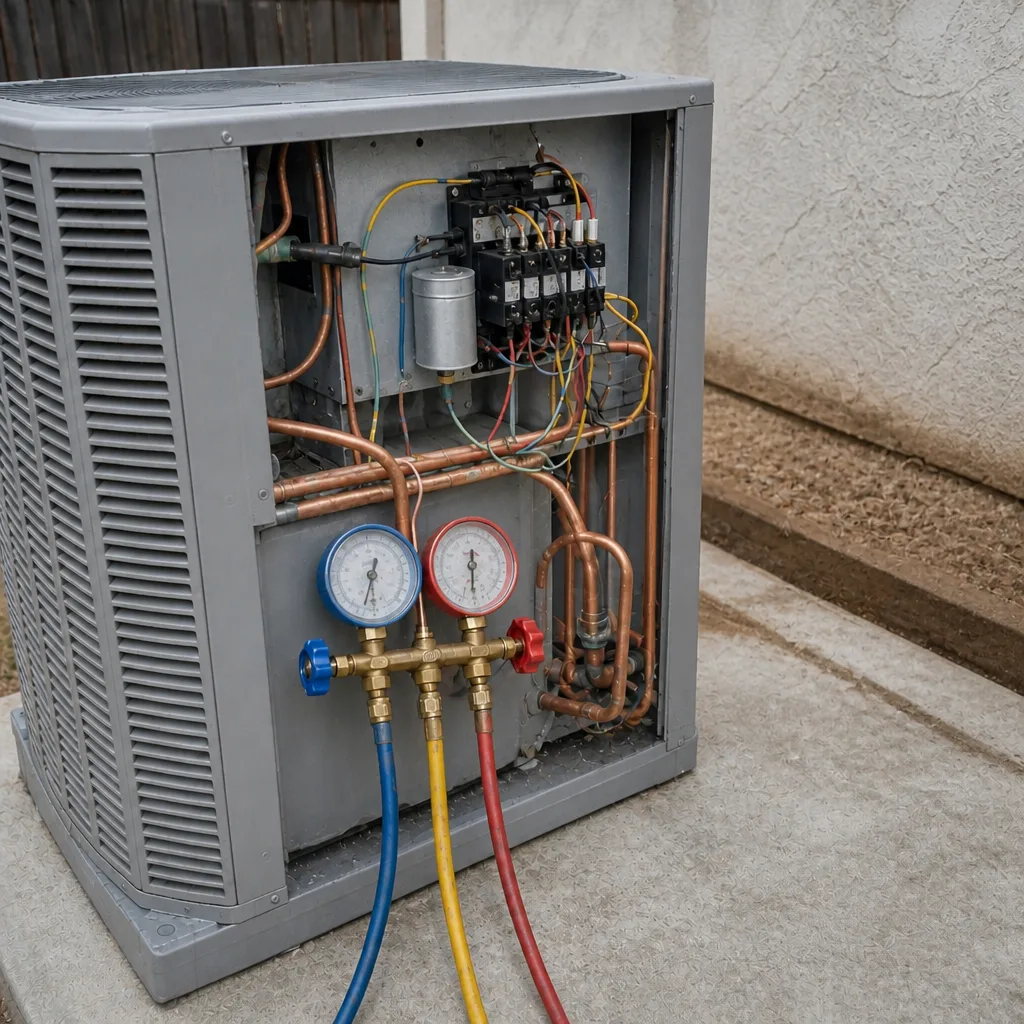
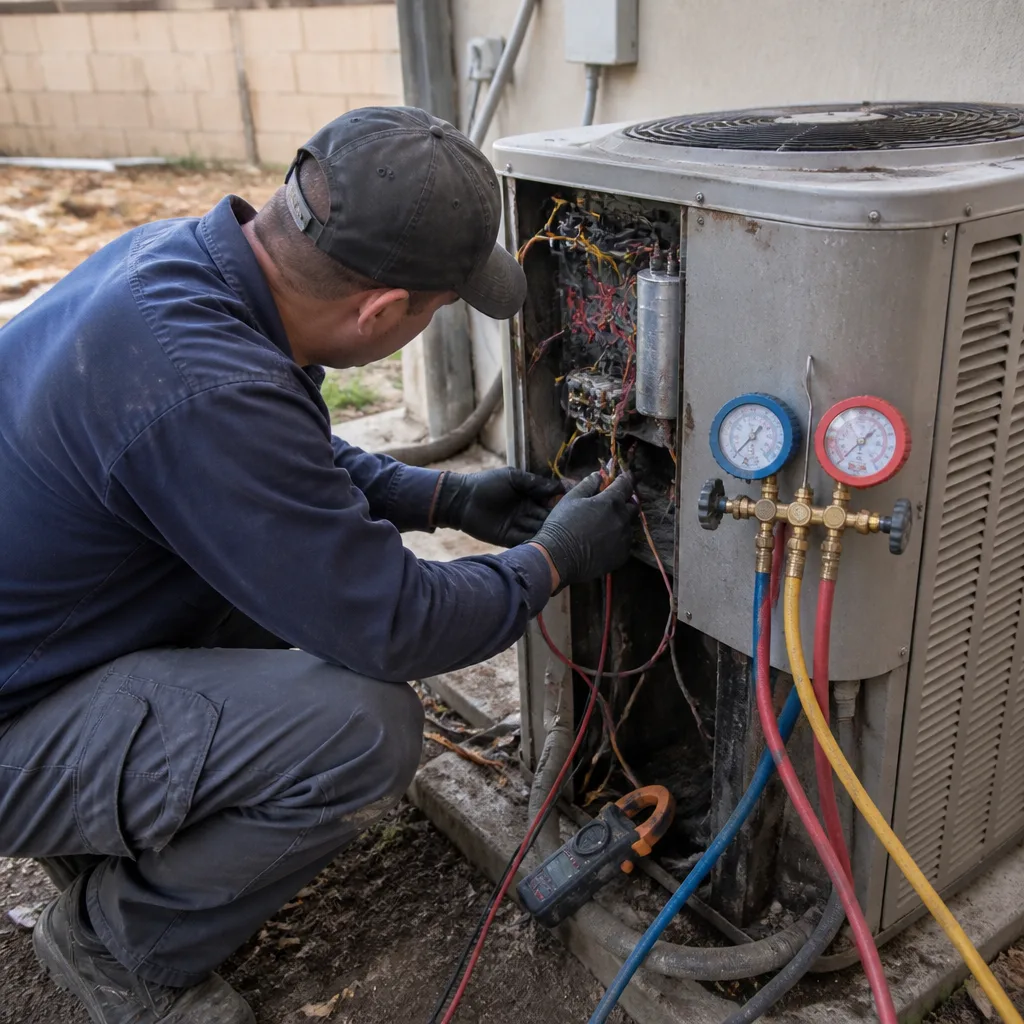
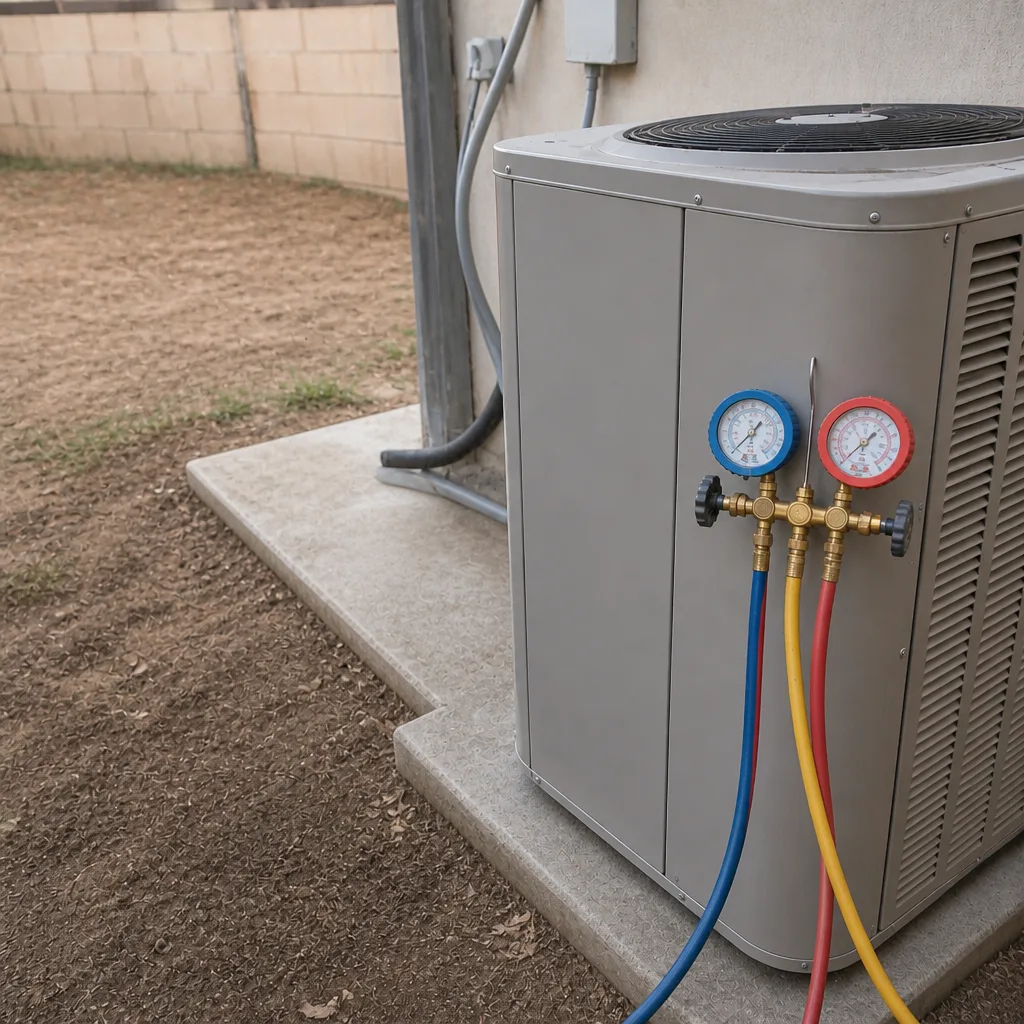
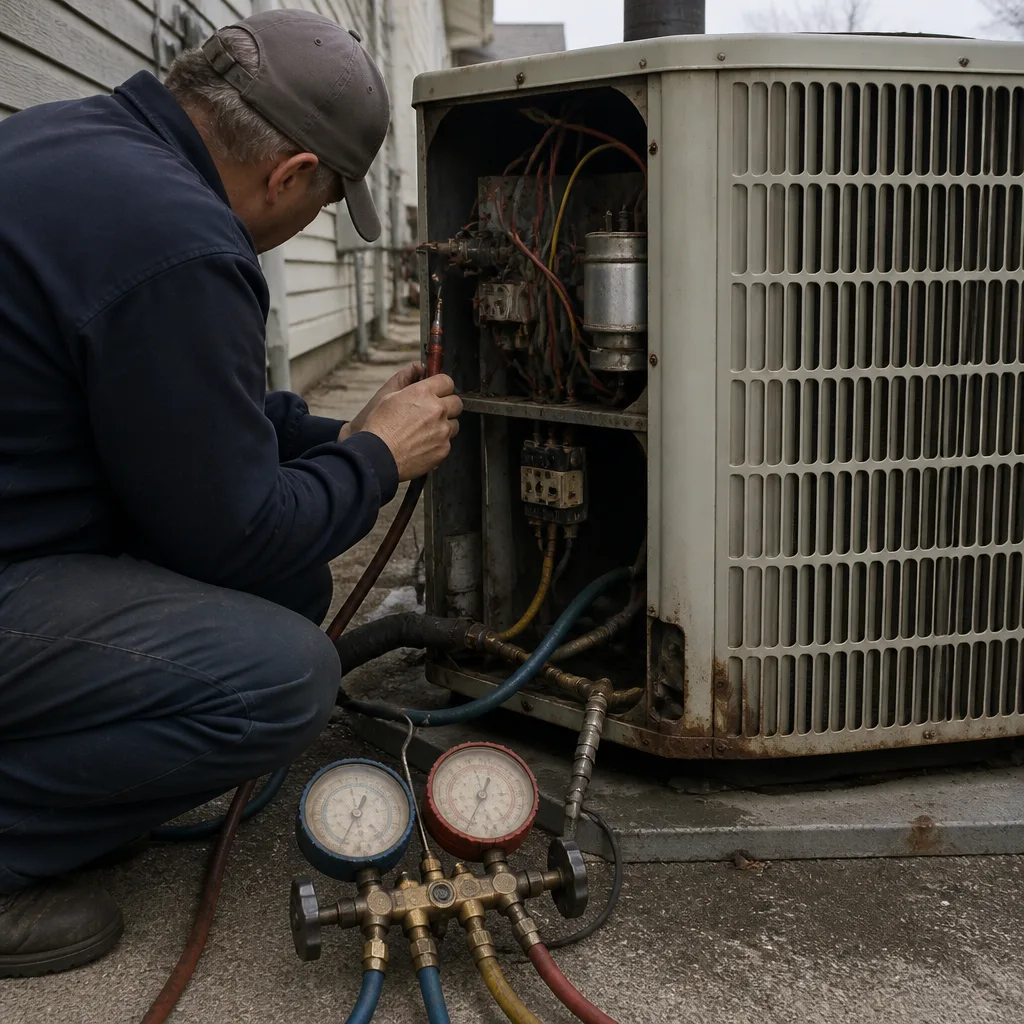
See the difference
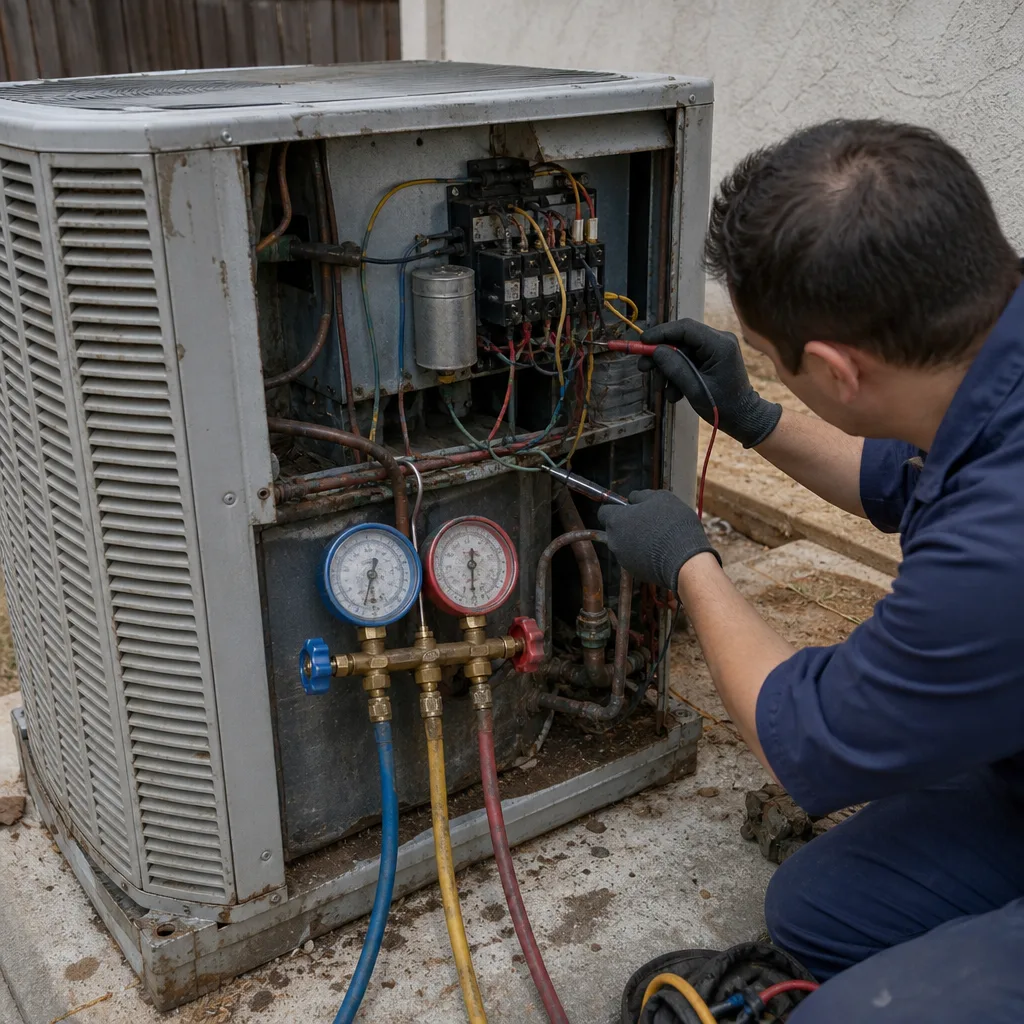 Before
 After
 Before
 After
 Before
 After
When to Call a Professional
Some tasks are yours, and some need a trained pair of hands. Call us when you find a disconnected or crushed duct, when there’s ice on the coil or refrigerant lines, when the furnace shows a yellow flame or an exhaust smell indoors, or when the system can’t keep up in the heat no matter what you do. Call when your ERV or HRV isn’t moving air, when you hear a new rattle or squeal, and when your system is older and you don’t have a maintenance history. Refrigerant work and electrical panels are not DIY territory, and a cracked heat exchanger is a safety issue that needs a real inspection. Ray’s Heating & Air Paradise offers free estimates in Paradise, and we answer the phone live, every day. Call (855) 664-5714.
Frequently Asked Questions
Change your filter every 30 days from April through October and every 60 to 90 days in winter. Desert dust and nine months of cooling run time load a filter faster than the package suggests, so the printed 90-day interval is too long here during the cooling season.
April is the most important month because it’s the pre-summer window before the heat locks in. A cooling tune-up, coil and drain-pan clean, and duct inspection in April keep the system running right through July and August.
Yes. The core fills with dust and stops moving air, so the unit runs without doing anything. Clean the core and its filters once a year, ideally in October after cooling season.
Use a flashlight and a tissue. Hold the tissue to a return grille with the fan running to check pull, then look at visible duct joints in the attic for gaps or disconnected runs. You’re looking and noting, not fixing, so call a pro for anything you find.
A dusty smell usually means dust is sitting in the ducts or on the coil and getting picked up when air starts moving. It often follows a monsoon dust storm or a long stretch without a filter change. Have the ducts and coil checked.
You can do the filter changes and the visual duct and return checks yourself. The tune-up, coil cleaning, refrigerant check, drain flush, and heat exchanger inspection are professional work. Most Paradise homeowners pair their own monthly checks with one or two service visits a year.
Ready to get on a schedule built for Paradise? Call (855) 664-5714 for a free estimate. We’ll look at what you have, log what we find, and tell you what actually needs doing. Explore our Heat Pump & Mini Split in Paradise services or start from the Ray’s Heating & Air Paradise home page.
The Bottom Line
Air quality maintenance in Paradise is a calendar problem, not a once-a-year chore. Change the filter on the seasons, not the package. Do the heavy work in April before the heat, stay on top of filters and drains through July, inspect ducts and returns after monsoon dust in August, and clean the ERV core in the fall. The maintenance you skip is the repair you pay for later, and in a desert climate, dust wins every time you fall behind. Readings first, numbers second, so you always know where your system stands.
Written by the team at Ray’s Heating & Air Paradise.