
Last updated November 18, 2026
 AC repair
 Furnace & heating
 Heat pumps
 Ductless mini splits
 Carrier
 Trane
 Goodman
Seasonal tune-up and full diagnostic on your Carrier, Trane, or Goodman system - readings shown to you before any repair is proposed
Diagnosis first, numbers second - you approve the repair price before a single part goes in.
Get your free estimateEmergency & Commercial HVAC Troubleshooting: Common Problems and How to Fix Them
Half the emergency HVAC calls we get from small commercial properties trace back to something a building manager could have caught in five minutes with a flashlight. The other half? Those got worse because somebody meant well and started flipping breakers and mashing reset buttons without knowing what tripped in the first place. We’ve seen both in Paradise. A rooftop unit locked out on high pressure, restarted cold, and a compressor gone by morning. A strip mall owner who never knew his roof had a disconnect switch. This guide walks through what you can safely check yourself, what you should never touch, and how to tell the difference between a real equipment failure and a communication glitch that just needs a clean reboot. You’ll learn a triage order that protects the expensive stuff first.
Quick Answer
Most commercial HVAC “emergencies” come down to three things: a tripped breaker or open roof disconnect, a control or building-automation communication failure that looks like a dead unit, or a genuine mechanical fault you can’t safely fix yourself. The first two are often five-minute checks. The third needs a trained technician, and restarting a locked-out unit without finding the cause can destroy a compressor. When in doubt, protect your critical zones, don’t reset blindly, and call someone who can read the system.
Styles & brands we work with
- AC repair
- Furnace & heating
- Heat pumps
- Ductless mini splits
- Carrier
- Trane
- Goodman
Table of Contents
- The Breaker and Roof Disconnect Check Sequence
- Refrigerant Failure vs. Failed Economizer: Telling Them Apart
- Why Restarting a High-Pressure Lockout Can Kill Your Compressor
- Thermostat and BAS Failures That Aren’t Equipment Failures
- How to Triage and Protect Critical Zones First
- What Paradise Heat and Dust Do to Commercial Systems
- Field-Fixable vs. Call-It-In Problems
The Breaker and Roof Disconnect Check Sequence
Before anyone climbs a ladder or opens a panel, know that the most common single oversight on a commercial rooftop unit is the disconnect switch mounted on the roof itself. We’ve walked onto dozens of Paradise roofs where the indoor breaker panel was fine, the thermostat was calling, and the unit was simply dead because the roof disconnect had been flipped or corroded open. Managers check the panel inside and stop there. The disconnect is outside, often behind the unit, and easy to miss.
Here’s the safe check sequence, in order:
- Thermostat first. Confirm the thermostat or BAS is actually calling for heat or cool. A unit that isn’t being asked to run won’t run, and that’s not a failure.
- Indoor breaker panel. Locate the breaker labeled for the rooftop unit. Look for a tripped breaker (usually sitting in the middle position, not fully on or off). Do not reset it yet if it’s tripped. Note it.
- Roof disconnect. On the roof, find the disconnect box mounted near the unit. Check that the handle or switch is in the ON position and that the box shows no burn marks, water intrusion, or rust.
- Control fuse. Many units have a small control-circuit fuse at the unit. If it’s blown, that points to a control problem, not power.
If a breaker is tripped, that’s information, not an inconvenience. Something caused it. Resetting once to see if it holds is reasonable. Resetting it repeatedly is how you turn a small fault into a burned motor. If you’re not comfortable on a roof or opening any panel, that’s a good time to call.
Refrigerant Failure vs. Failed Economizer: Telling Them Apart
On a rooftop unit, low cooling can come from a refrigerant charge problem or from a failed economizer damper stuck in the wrong position. You can often tell which one from symptoms alone, without touching a gauge or a screwdriver.
A refrigerant problem usually shows up as:
- The space struggles to hit temperature on the hottest afternoons, especially a 100-degree day in Paradise, while the unit runs constantly.
- The supply air feels cool but not cold.
- The indoor coil may ice up in some cases, which you’ll notice as reduced airflow and a frozen line.
- The problem is worse in peak heat and barely shows on mild days.
A failed economizer usually shows up differently:
- The space is uncomfortable or stuffy even when it’s mild outside, when a healthy economizer would be free-cooling.
- Airflow feels wrong, or the space swings hot and cold as the damper hunts.
- On cool mornings the unit still runs mechanical cooling when it shouldn’t need to.
- You may see the damper blade stuck open or closed just by looking at the actuator linkage.
The key insight: a refrigerant issue tracks outdoor heat, while an economizer issue shows up in mild weather too. If a Trane or Lennox unit is running hard on a 72-degree day, suspect the economizer before you suspect the charge. That one symptom saves a lot of wasted diagnostic time, and it’s a check that doesn’t require opening the refrigerant circuit at all.
Why Restarting a High-Pressure Lockout Can Kill Your Compressor
This is the mistake that turns a repair into a replacement. A commercial unit that tripped on a high-pressure safety lockout did so for a reason: a dirty condenser coil, a failed condenser fan motor, a restricted airflow path, or overcharge. The safety opened because pressure climbed past a limit that protects the compressor from destroying itself. If you clear the fault and restart without finding the cause, the compressor starts against that same condition, often worse because the unit has heat-soaked on a Paradise roof.
What happens next depends on luck. Sometimes the unit trips again quickly. Sometimes the compressor runs hot and short-lived, and you’ve shaved years off its life in a single restart on a 108-degree afternoon. Compressors are the most expensive single part in the system, and they don’t recover from abuse.
The safe response to a high-pressure lockout:
- Leave it locked out. Don’t clear the fault to “see what happens.”
- Note the conditions: was it the hottest part of the day, was the condenser coil visibly dirty, was a fan not spinning?
- Call for service and describe exactly what you saw. That detail is worth more than a dozen resets.
Air conditioning work involves refrigerant under pressure and line-voltage electrical components. This is not a DIY repair, and a trained technician with gauges and a meter should be the one who clears that lockout. If your system is a heat pump or mini-split, the same caution applies, and our heat pump and mini split service in Paradise covers the specifics of those systems.
Thermostat and BAS Failures That Aren’t Equipment Failures
Plenty of “dead” commercial units are alive and well. The building automation system lost communication with the zone controller, or the thermostat lost its link to the unit, and the equipment simply never got the call to run. A building manager sees a cold, quiet space and assumes the unit failed. Often it’s a communication fault.
Signs it’s a control problem, not an equipment problem:
- The unit’s fan or compressor is physically fine, but the thermostat or BAS shows a fault, offline status, or no reading for that zone.
- Multiple zones went down at once. Equipment rarely fails in a synchronized pattern; communication failures do.
- A recent power blip, storm, or utility outage preceded the problem.
- The unit runs fine when you force it manually at the unit, but won’t respond to the BAS.
One clean reboot sequence fixes a surprising share of these: power down the zone controller or BAS head-end at its dedicated disconnect or breaker, wait a full two minutes for capacitors and boards to drain, then power it back up and let it re-establish communication before touching anything else. Let it sit. Don’t mash buttons while it’s negotiating. A Goodman or Rheem package unit that “came back to life” after a manager did exactly this wasn’t broken. It just needed its control link rebuilt.
If the reboot doesn’t hold and the fault returns, that’s a control issue a technician needs to trace with a meter. It’s not a job for a screwdriver and hope.
How to Triage and Protect Critical Zones First
When a multi-zone commercial system partially fails, you can’t save everything at once. Decide what matters most before you decide what to do. The order is almost always the same: server and telecom rooms and refrigeration first, occupied comfort spaces second.
Here’s the triage order we recommend:
- Server rooms and telecom closets. Heat destroys electronics fast and permanently. If a dedicated unit or zone serving IT equipment fails, that’s the top priority, full stop. Move a portable unit in if you have one while you wait for service.
- Refrigeration and cold storage. A walk-in cooler or freezer losing cooling means spoiled product and health-code problems. Protect it before comfort spaces.
- Occupied customer or work areas. Uncomfortable, yes, but usually safe to ride out for a few hours while the critical zones get attention.
- Storage, back-of-house, and unoccupied spaces. Lowest priority. Close doors, let them drift, deal with them last.
When you call, tell the technician what’s down and what’s critical. In Paradise, a small strip center with a server closet and a customer lobby is a common setup, and knowing the server room is at risk changes how fast we move. Sorting zones this way is the difference between losing a compressor and losing a business’s data.
What Paradise Heat and Dust Do to Commercial Systems
Paradise summers push commercial equipment harder than most of the country, and the local conditions create predictable failure patterns. Long stretches over 100 degrees mean rooftop condensers run near their limits for months, so dirty coils that would be a minor issue elsewhere become high-pressure lockouts here. The dust and wind-blown grit common to the valley coat condenser fins faster than most maintenance schedules assume, and a coil that looks “a little dirty” from the ground is often packed solid up close.
We also see economizers that hardly earn their keep for much of the year because the outside air is too hot to free-cool, then fail quietly and go unnoticed until someone wonders why a mild spring morning felt stuffy. And the seasonal swing means the shoulder months are when the sneaky problems surface: a control board that heat-stressed all summer and finally quit in October, a fan motor that was on its way out. A Paradise AC repair call in late spring often catches a coil or a contactor that won’t survive July if it’s left alone. If you can, get eyes on your rooftop units before the heat locks in.
Field-Fixable vs. Call-It-In Problems
It helps to know the line between what a building manager can handle and what belongs to a technician. Crossing it in the wrong direction is how small problems become expensive ones.
Safe for a manager to check or handle:
- Confirming the thermostat or BAS is actually calling for the unit.
- Confirming the roof disconnect is in the ON position.
- Noting whether a breaker is tripped, without repeatedly resetting it.
- Rebooting a zone controller or BAS head-end with the proper two-minute wait.
- Replacing a filter, which is routine and often overlooked.
- Checking that the condenser coil isn’t visibly caked with dust or debris.
Call it in:
- Any refrigerant work, which involves pressure, EPA handling rules, and gauges.
- Clearing a high-pressure or other safety lockout.
- Electrical panel work, contactor replacement, or anything at line voltage.
- A control fault that returns after a clean reboot.
- Anything you’re not sure about. Curiosity on energized commercial equipment is a bad trade.
That last point matters. Electrical panels, refrigerant circuits, and rooftop equipment carry real hazards. Readings first, numbers second is how a good technician works, and it’s a good principle for you too: gather what you can safely observe, then hand it off. If the comfort systems themselves are due for attention, our heating and furnace service in Paradise and the Ray’s Heating & Air Paradise home page lay out the full range of what we handle.
Common Mistakes to Avoid
- Never checking the roof disconnect. It’s the most-forgotten switch on a commercial RTU, and half the “dead unit” calls we see in Paradise turn out to be a disconnect someone flipped or corrosion left open.
- Resetting a tripped breaker again and again. A breaker that keeps tripping is telling you something failed. Repeated resets burn up motors and cost more than the original repair would have.
- Clearing a high-pressure lockout without finding the cause. This is the fastest way to wreck a compressor on a hot Paradise day. Leave it locked out and call.
- Assuming a dead zone is dead equipment. Often it’s a BAS or thermostat communication fault that a proper two-minute reboot resolves. Don’t order a new unit before you rule out the control link.
- Ignoring dirty condenser coils until peak summer. Valley dust packs those fins fast. A coil that looks fine from the ground can be choking the unit and driving high-pressure trips.
- Trying to save critical zones by cranking down every thermostat. Setting everything to 60 doesn’t cool faster; it just makes the system run ragged and can’t beat a failed component. Protect the server room and refrigeration first instead.
- Letting the wrong person touch refrigerant or panels. Enthusiasm isn’t training. Refrigerant circuits and line-voltage wiring belong to a technician who knows what the readings mean.
See the difference
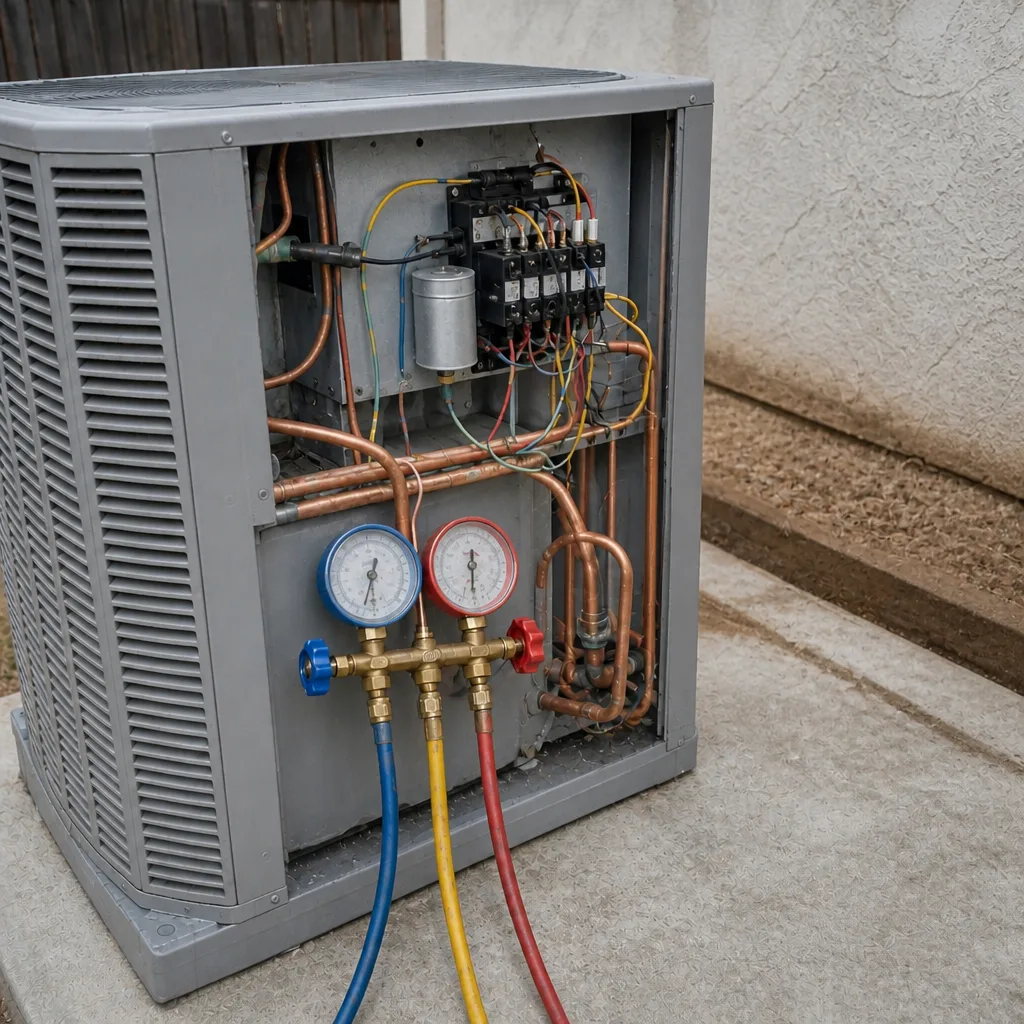
 Before
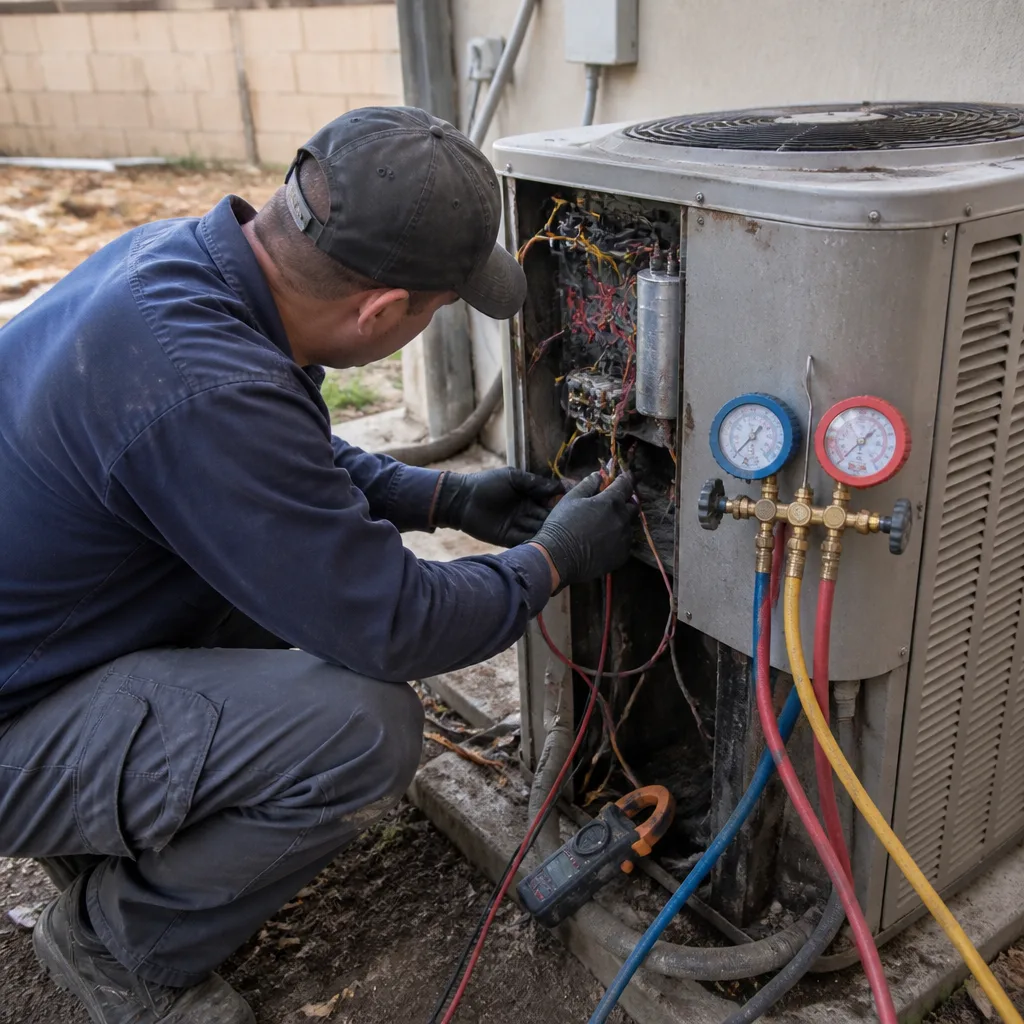
 After
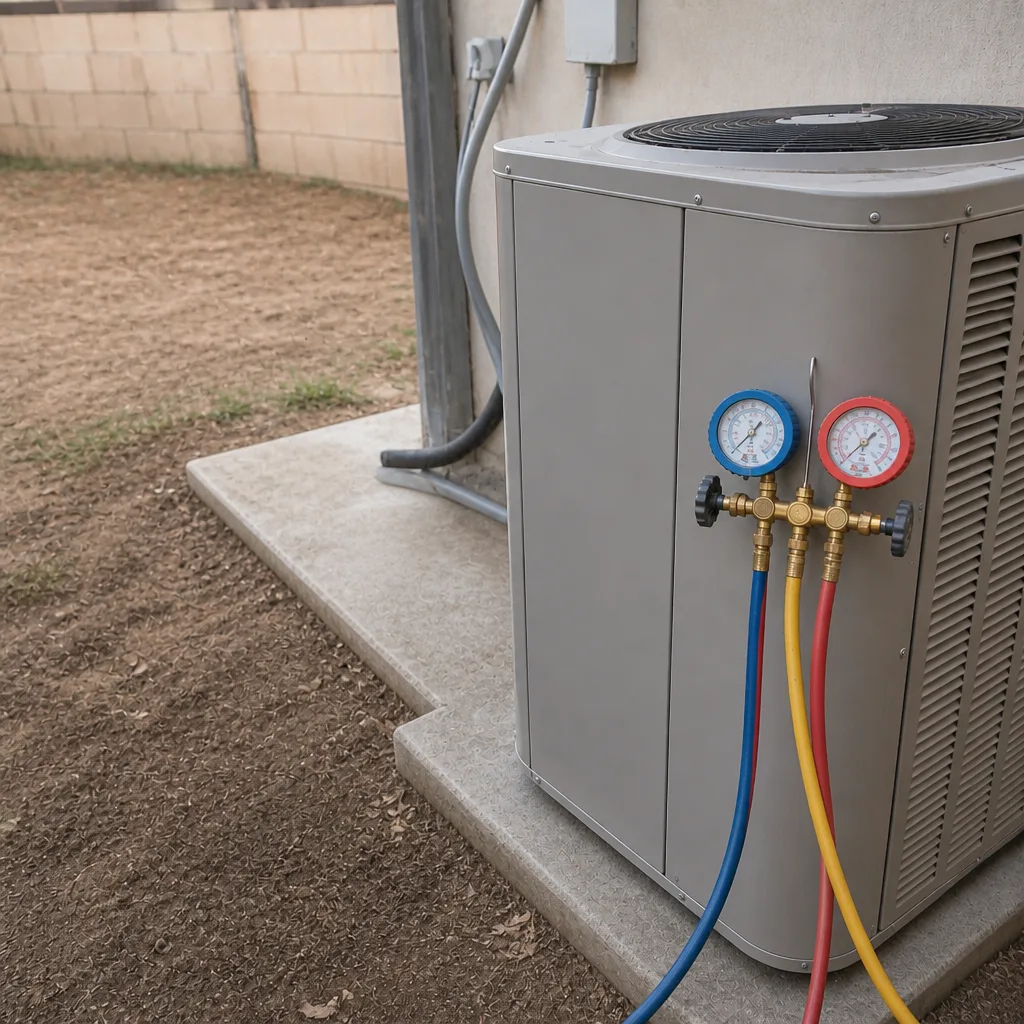
 Before
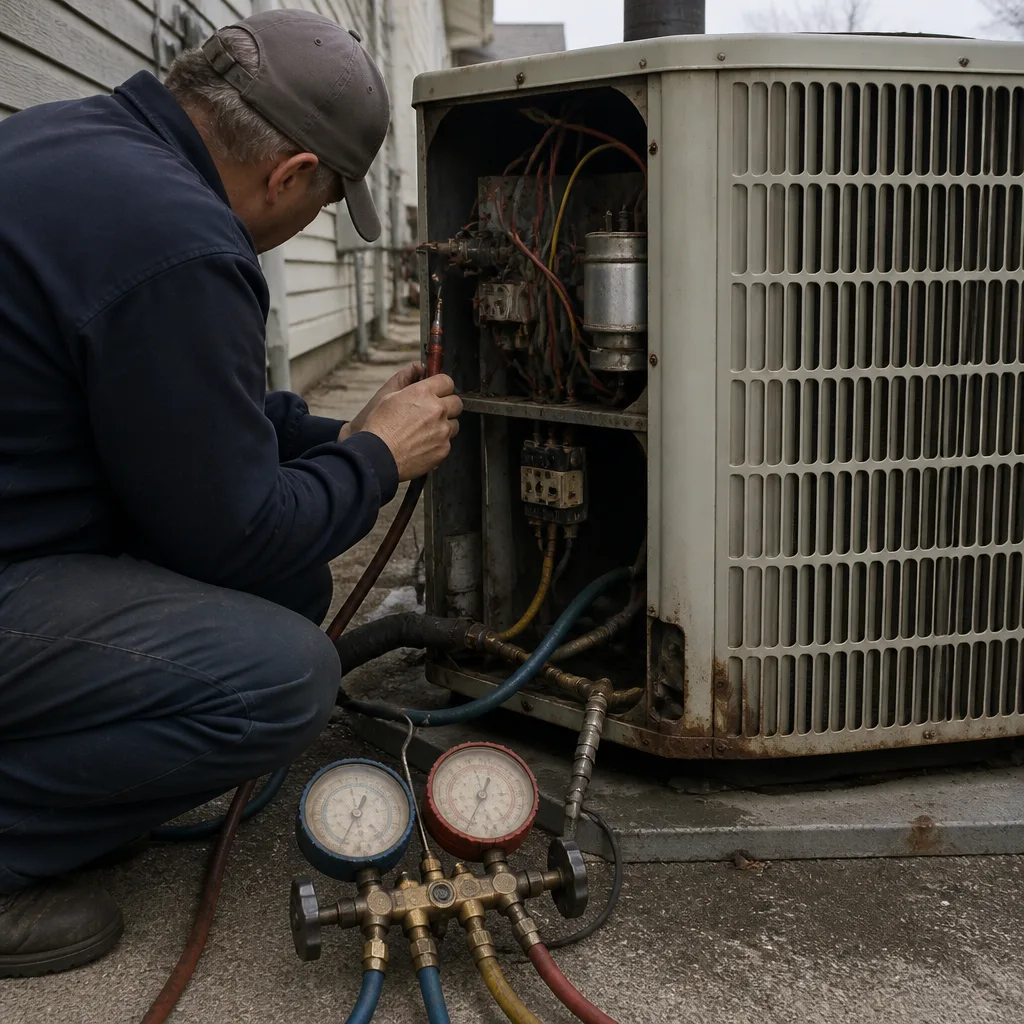
 After
 Before
 After
When to Call a Professional
Call a professional when the roof disconnect is on, the thermostat is calling, and the unit still sits dead. Call when a breaker won’t stay reset, when a high-pressure lockout trips, when refrigerant is involved, or when a control fault returns after a clean reboot. Call if a zone serving a server room or a walk-in cooler fails, because those losses escalate by the hour. And call if you’re simply not sure, because guessing on energized commercial equipment is the expensive path. Ray’s Heating & Air Paradise offers free estimates in Paradise, and the phone is answered by a live person around the clock. Call (855) 664-5714.
Frequently Asked Questions
Sometimes, yes, for three specific things: confirming the thermostat or BAS is calling, checking that the rooftop disconnect is in the ON position, and doing a proper control reboot. Anything involving refrigerant, a repeated breaker trip, or a safety lockout should go to a technician. The line is simple: you can observe and reboot, but refrigerant and line-voltage work belong to a trained pro. If you’re not certain, call (855) 664-5714 and describe what you’re seeing.
High-pressure trips usually come from a dirty condenser coil, a failed condenser fan motor, restricted airflow, or an overcharge. In Paradise, dust-caked coils and long 100-degree stretches are the usual culprits. Don’t clear the lockout to see if it holds. Something caused it, and restarting against that condition can damage the compressor. Have a technician find the cause first.
No. A zone that won’t respond is often a building automation system or thermostat communication fault, not a dead unit. If multiple zones go down at once, or a recent power blip came first, suspect the controls. Power the zone controller or BAS head-end down at its breaker, wait two full minutes, power back up, and let it re-establish before you touch anything. If the fault returns after that, call for service.
Server and telecom rooms and refrigeration come first, occupied comfort spaces second, storage last. Heat destroys electronics permanently and spoils product fast, so those zones get every bit of attention while the rest ride it out. Tell the technician which zones are critical when you call, and that reshapes how the repair gets prioritized.
Yes. We handle emergency and commercial HVAC in Paradise, and the phone is answered by a live person around the clock. Tell us what’s down, what’s critical, and what you’ve already checked so we can show up ready. Call (855) 664-5714 for a free estimate.
A refrigerant issue tracks outdoor heat: the space struggles most on the hottest afternoons. An economizer problem shows up in mild weather too, running mechanical cooling when it shouldn’t or leaving the space stuffy on a cool morning. That one difference, without opening anything, usually tells you which way to look.
The Bottom Line
Most commercial HVAC emergencies fall into two buckets: the five-minute checks nobody did, and the well-meaning troubleshooting that made things worse. Check the thermostat, check the indoor breaker, and never forget the roof disconnect. Know that a dead zone is often a control glitch a clean reboot fixes, and know that a high-pressure lockout is a warning you ignore at your compressor’s peril. Protect server rooms and refrigeration first. Gather what you can safely observe, then hand off the refrigerant and electrical work. Whether you’re in Paradise or anywhere nearby, if you want a straight answer and a face you’ll see again, Ray’s Heating & Air Paradise is a call away at (855) 664-5714.
Written by the team at Ray’s Heating & Air Paradise.