
Last updated November 18, 2026
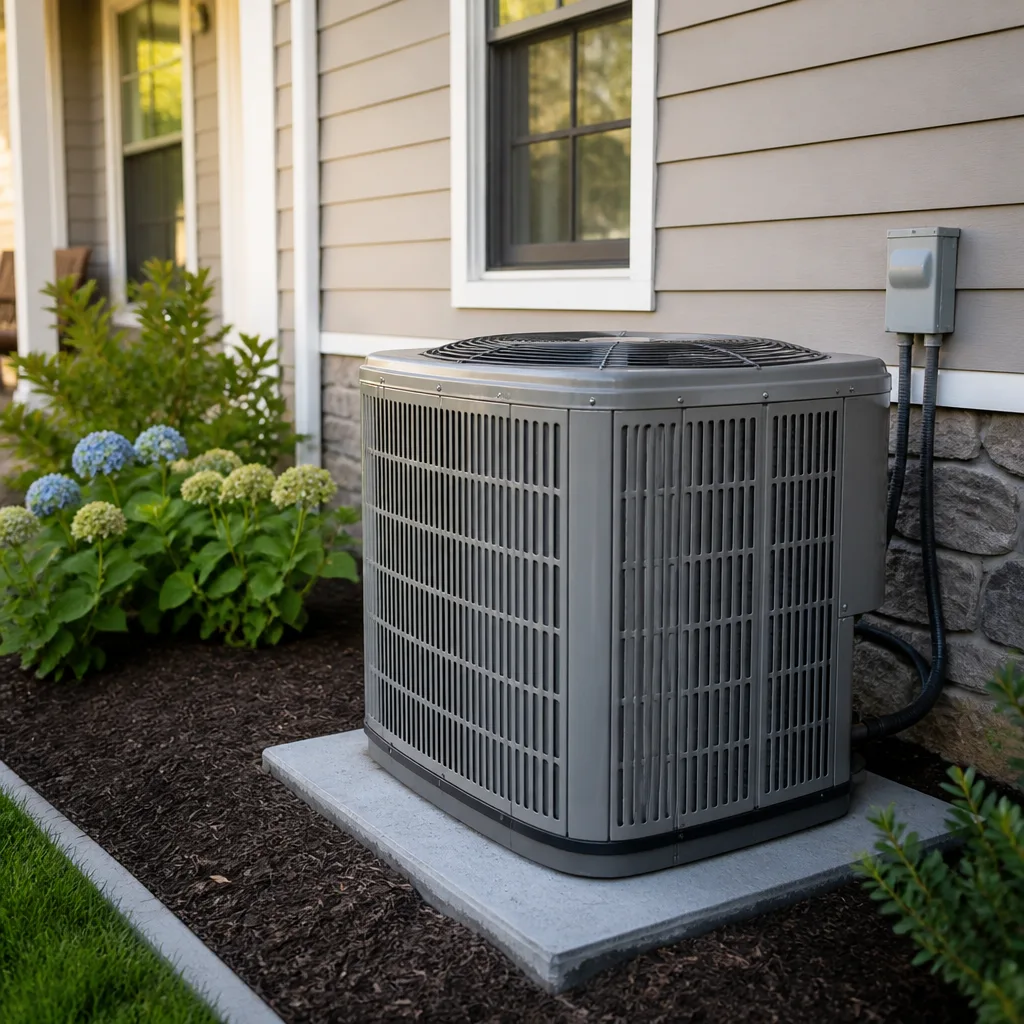 AC repair
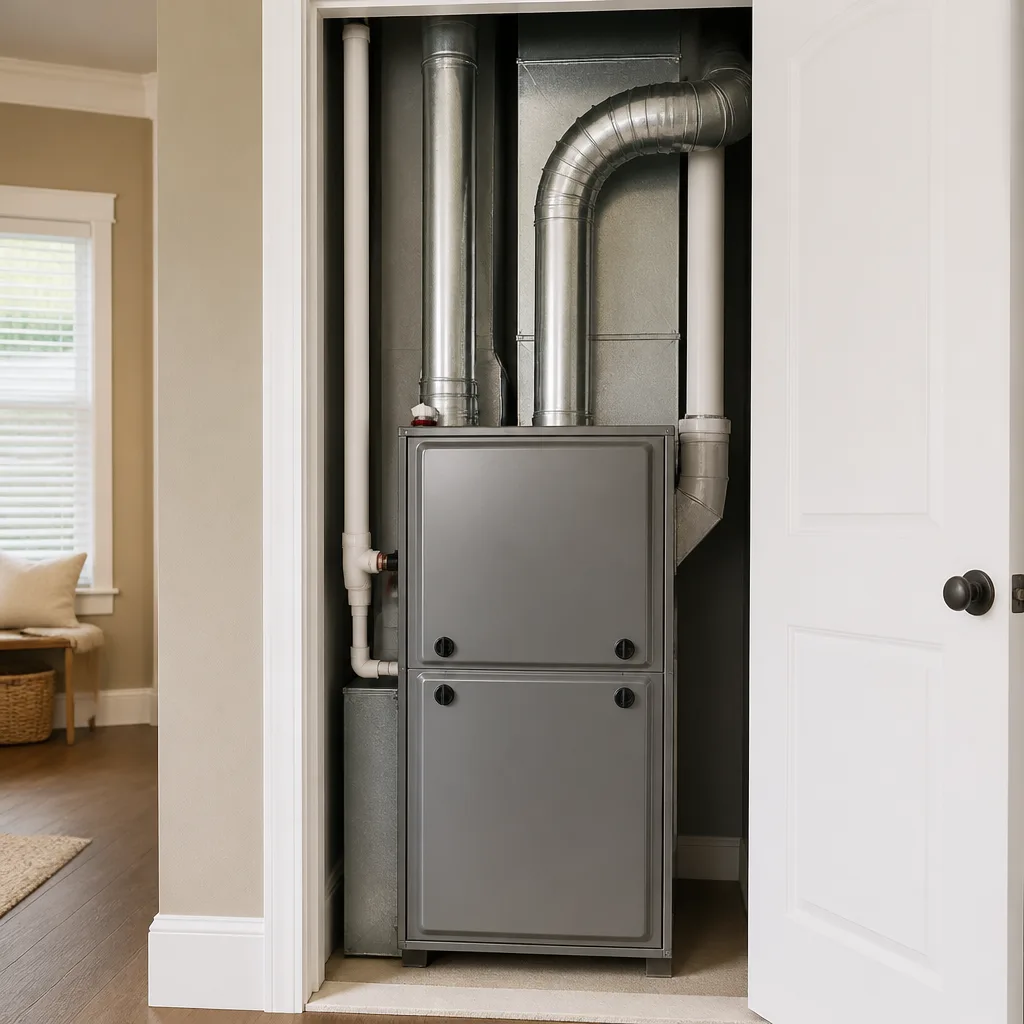 Furnace & heating
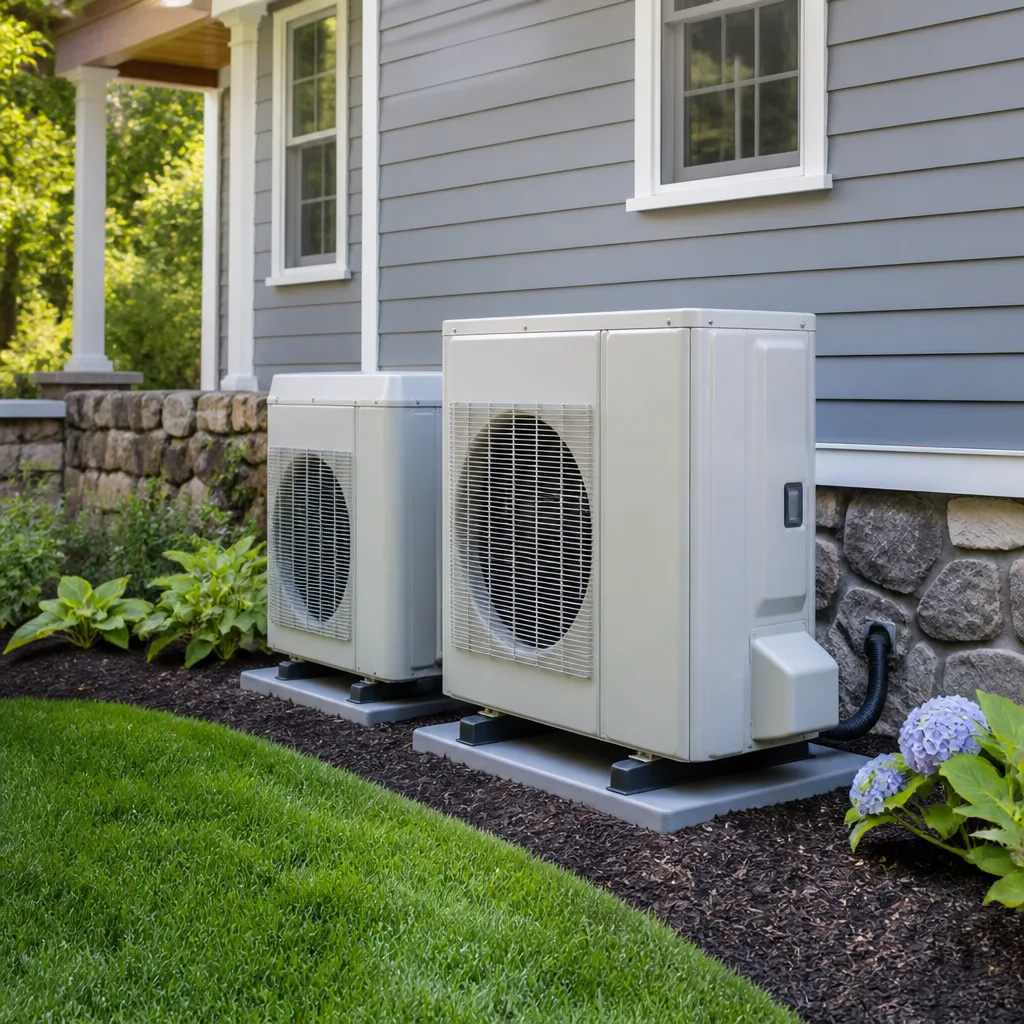 Heat pumps
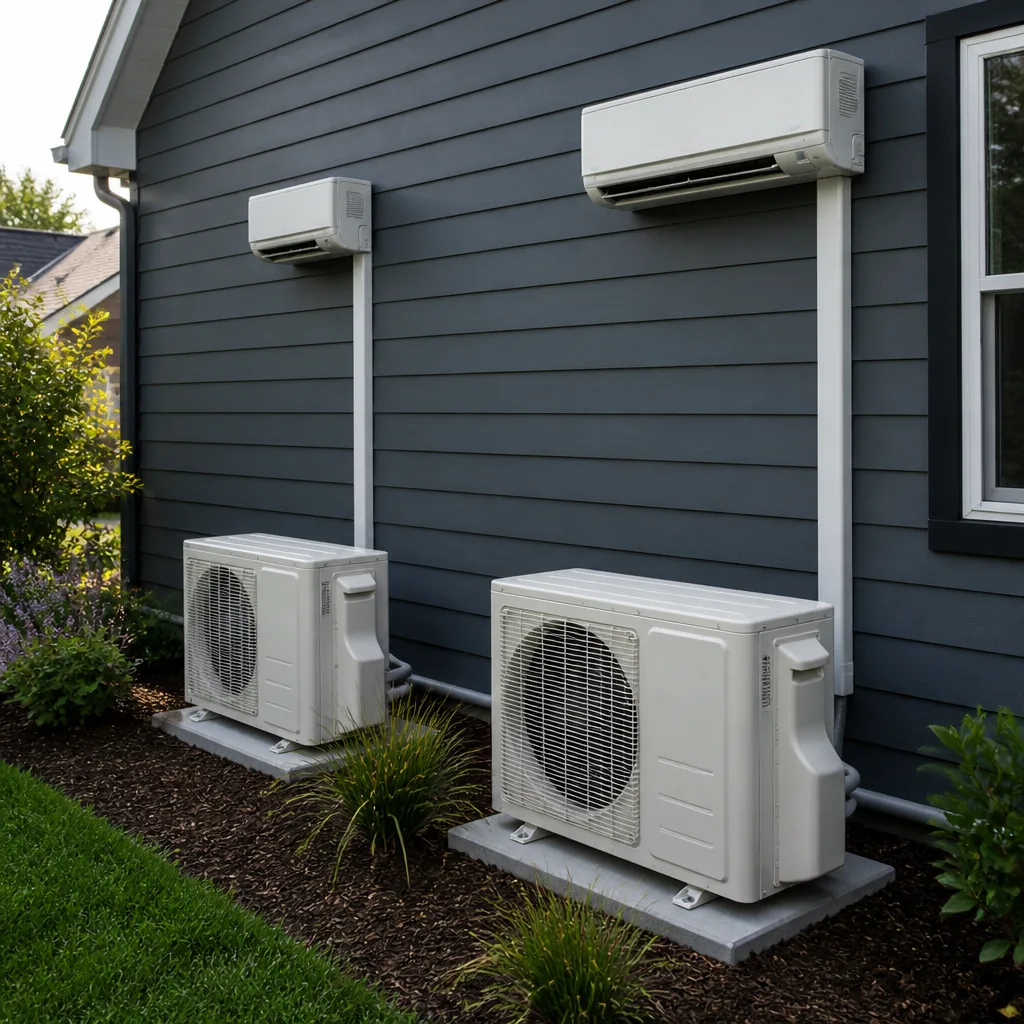 Ductless mini splits
 Carrier
 Trane
 Goodman
Seasonal tune-up and full diagnostic on your Carrier, Trane, or Goodman system - readings shown to you before any repair is proposed
Diagnosis first, numbers second - you approve the repair price before a single part goes in.
Get your free estimateEmergency & Commercial HVAC Maintenance Schedule: What to Do and When
Ray has walked into more than one Paradise small business with a full maintenance log on the wall and a condenser coil so clogged it looked like it was wearing a sweater. The log said “quarterly PM – completed.” The coil said nobody had touched it in two years. That gap is the whole problem with commercial HVAC maintenance schedules: the manufacturer manual assumes someone is actually tracking and doing each item, and in our experience the businesses that end up with a July emergency at 4:50 on a Friday are almost always the ones with a binder full of completed maintenance that nobody verified. This guide is about closing that gap.
Quick Answer
A commercial HVAC maintenance schedule in Paradise runs four quarterly visits a year, with monthly walkthroughs by onsite staff in between: spring for coil cleaning and cooling checks, summer for filter and refrigerant monitoring, fall for heat exchanger and ignition checks, winter for freeze protection and belt inspection. The categories that matter most (coil cleaning, drain pans, belts, bearings) need licensed work and real disassembly, not a 45-minute contract visit. The rest is monthly walkthroughs any facilities person can handle with basic training.
Styles & brands we work with
- AC repair
- Furnace & heating
- Heat pumps
- Ductless mini splits
- Carrier
- Trane
- Goodman
Table of Contents
- The Quarter-by-Quarter Task List for Paradise
- The Maintenance Contract on Paper vs. What Actually Happens
- Belt, Bearing, and Drain Pan: The Skipped Checks That Cost the Most
- Building a Verification Checklist a Non-HVAC Manager Can Use
- Annual Licensed Work vs. Monthly Walkthroughs
- What an HVAC Emergency Call Actually Looks Like
- Questions to Ask Before You Sign a Maintenance Contract
The Quarter-by-Quarter Task List for Paradise
Paradise summers hit hard and dry, with swings that go from 60s in the morning to over 105 by afternoon. That cycle is brutal on coils and belts, and the timing of each task matters more here than it does in a coastal climate. Coil cleaning before June is not optional in Paradise; it’s the difference between surviving August and not.
Here’s the schedule we’d recommend to any small business owner in Paradise, from a strip center on the north side to a restaurant off the main drag.
- March-April (spring): condenser and evaporator coil cleaning, refrigerant charge check, condenser fan blade inspection, thermostat calibration, filter replacement, drain line flush.
- May-June (pre-summer): belt tension check on rooftop units, bearing lubrication on supply and return fans, economizer damper check, contactor and capacitor test, duct leakage walkthrough.
- July-August (peak monitoring): filter changes every 30-45 days (not quarterly), supply and return delta-T readings, outdoor unit clearance check, condensate pan inspection after every heavy load week.
- September-October (fall): heat exchanger inspection (licensed work), ignition and burner cleaning, gas pressure check, inducer motor and flue vent inspection, belt replacement if more than a small crack is visible.
- November-December (winter prep): freeze stat test, pipe insulation check, outdoor unit heater tape, safety switch test, defrost cycle check on heat pumps.
- January-February (quiet season): motor current draw readings, bearing re-lube, damper and louver inspection, filter rack seal, full documentation of every reading.
Every task on that list has to be logged with a reading, not a checkmark. A capacitor that reads 32 microfarads when it’s rated 35 is a checkmark on most logs; it’s a replacement in ours. That’s the kind of thing that gets caught before the peak week instead of on the hottest day of the year.
The Maintenance Contract on Paper vs. What Actually Happens
A commercial maintenance contract is a piece of paper that promises a set of tasks. The problem is that a lot of contracts sold in Paradise and the surrounding counties are built around a 45-minute visit that can’t possibly address what’s on the list. Forty-five minutes is enough to change a filter and glance at the coil. It’s not enough to pull a belt guard, test a bearing, and open a drain pan to look at what’s growing in it.
When we look at a commercial contract, we ask three things right away:
- How many rooftop units are covered per visit, and how many hours? A four-unit property with a 45-minute contract visit works out to eleven minutes per unit. Nobody can check a belt in eleven minutes.
- Does the contract list tasks or readings? “Inspected” is a task. “Belt tension: 0.5-inch deflection; bearing temp: 128F; capacitor: 34.2 microfarads against a 35 rating” is a reading. Demand readings.
- Who actually shows up? We’ve seen businesses on their third service tech in six months, each one introducing themselves like it’s a first visit. Continuity matters on commercial equipment because every unit has a history.
The difference between “the contract covers it” and “the tech did it” is usually a question of access. A coil cleaning on a packaged rooftop Lennox unit requires pulling the panel, not just hosing from the outside. If the contract time doesn’t allow the panel pull, the cleaning gets skipped and the checkmark still goes in. That’s how a Paradise restaurant ends up calling for emergency service in July on a coil that was “cleaned” in April.
If you want a second look at what a contract is really covering, we offer a free second opinion on any written estimate. Call (855) 664-5714 and Ray will look at the contract with you.
Belt, Bearing, and Drain Pan: The Skipped Checks That Cost the Most
Three items get skipped on commercial units more than any others, and all three for the same reason: they require disassembly. In our experience those three skipped items are also where the most expensive failures come from.
Belts
A worn belt on a rooftop Goodman or Rheem blower will eventually snap under peak load. When it does, the fan stops, the compressor may run without airflow, and the high-pressure switch trips – or worse, the compressor overheats. A belt replacement is one of the cheapest parts on the unit. The failure it causes is one of the most expensive repairs on the ticket. Belt tension and wear need to be checked with the guard pulled off, and that’s a task that gets skipped when the schedule is tight.
Bearings
Supply and return fan bearings need lubrication on many older belt-drive units. Newer direct-drive motors are sealed, but plenty of Paradise rooftops still run belt-drive equipment with grease fittings. A spinning bearing that’s never been greased will seize, throw the belt, and sometimes take the motor shaft with it. The bearing grease is pennies. The motor is not.
Drain Pans and Lines
Paradise’s dry climate means we see less condensate volume than the coast, so drain pans get forgotten. But when they do fill – and they will during a monsoon push – a clogged drain line leaves water in the pan, then on the roof deck, then leaking through your ceiling. A quarterly pan flush and a drain line inspection prevents the ceiling call. It also gives you a chance to see whether the pan itself has rusted through, which is common on older equipment past the ten-year mark.
None of these three items can be checked properly without pulling a panel and spending real time on the unit. That’s the whole point of asking how many hours the contract actually books. If your current provider can’t answer that, we can help you figure out what’s really being done. Our AC Repair & Installation in Paradise page covers what we look at on the cooling side of the checklist.
Building a Verification Checklist a Non-HVAC Manager Can Use
You don’t need to know how to diagnose a compressor to confirm that a maintenance visit actually happened. You need five minutes, a clipboard, and a system. Here’s the walkthrough we hand to facilities managers at Paradise properties who want to verify the work themselves between visits.
- Check the filter date sticker. Every filter we change gets a date written on the frame edge. If the sticker doesn’t have a fresh date after a service visit, the filter wasn’t changed.
- Look at the outside coil. From the ground, you should see daylight through the fins. If the coil face looks like it’s wearing a sweater, the coil was not cleaned.
- Open the drain pan access panel. Look for water standing in the pan. Dry pan, clean line, no rust-through – good. Water or slime – call for service.
- Read the thermostat. Compare the setpoint to the actual room temperature at the start of the day and again at the end. A five-degree delta between setpoint and reading across a day of load is a warning sign.
- Ask for the readings sheet. No readings, no proof. The visit either came with a documented sheet of capacitor readings, motor amp draws, and delta-T numbers, or it didn’t happen in the way the contract promised.
- Listen at start-up. A belt squeal, a rattle, or a compressor that sounds like it’s straining is worth a call whether or not the log says “completed.”
None of that requires HVAC training. It requires a routine, and a manager who won’t accept a checkmark without a reading behind it. We build these walkthroughs into our commercial service because it’s the only way the schedule stays honest between visits – the log on the wall should match the equipment on the roof.
Annual Licensed Work vs. Monthly Walkthroughs
There’s a hard line between what a facilities person can do monthly and what needs a licensed tech annually. Getting that line wrong is either wasted money (paying a tech to change filters) or a genuine safety problem (a non-licensed person poking at a gas valve).
Monthly walkthroughs any trained facilities person can handle
- Filter inspection and replacement
- Thermostat setpoint and reading checks
- Outdoor unit clearance (leaves, debris, mulch piled against the cabinet)
- Visual drain pan inspection through the access door
- Belt visual check (wear cracks, fraying) with the guard in place
- Logging any noise, vibration, or water where it shouldn’t be
Annual or quarterly licensed work only
- Any refrigerant handling – EPA certification required
- Gas pressure, burner, and heat exchanger inspection
- Electrical panel and disconnect work inside the unit
- Capacitor and contactor testing and replacement
- Belt tension adjustment and bearing re-lubrication with the guard pulled
- Coil cleaning with panel removal and chemical treatment
- Refrigerant circuit diagnostics or charge adjustment
Gas-side work in particular is not something we recommend attempting onsite. A burner that’s running with a cracked heat exchanger can put carbon monoxide into your building, and only a trained tech with a combustion analyzer will catch it. If your facility uses a gas-fired York or Lennox rooftop, that annual inspection is not the item to save money on. The Heating & Furnace in Paradise page has more detail on what that inspection covers.
Heat pumps need their own annual routine because the reversing valve and defrost cycle add complexity. If your building runs heat pump equipment, the Heat Pump & Mini Split in Paradise page has the full seasonal checklist for that system type.
What an HVAC Emergency Call Actually Looks Like
An HVAC emergency on commercial equipment is one of four things: no cooling during business hours on a hot day with a full house of customers, water coming through the ceiling from a failed drain, a burning smell or smoke at the unit, or a carbon monoxide alarm. Every one of those is a call right away. Every one of those should be preventable with a schedule that gets done and verified.
When we get an emergency call in Paradise, the sequence is: we answer live (always, at any hour), we ask what the unit is doing, and the person who picks up is the same one who walks the door. We test the capacitor first because in our experience more than a third of “the compressor is dead” calls are actually a bad capacitor. Readings first, numbers second. You see every reading before anyone says a word about replacement cost.
The three emergency scenarios we see most often in Paradise commercial buildings:
- Peak afternoon no-cool: almost always a tripped high-pressure switch or a frozen coil from a filter that should have been changed a month earlier.
- Drain pan overflow: a line that clogged during the first monsoon of the season, or a pan that rusted through on an older unit.
- Belt snap on a belt-drive blower: the belt that had visible cracks at the last visit and never got replaced.
Every one of those is a schedule failure, not an equipment failure. That’s the point of the whole guide: emergencies are what you get when the schedule doesn’t match the equipment.
If it’s two in the morning and your building is melting, call (855) 664-5714. A live person picks up every time, including Ray himself when he’s the one on call. There’s no overtime charge for emergencies, and there’s no trip charge inside the county on scheduled calls.
Questions to Ask Before You Sign a Maintenance Contract
Before you put a commercial maintenance contract on the wall, ask five things:
- “What’s the total technician hours per visit?” Divide the total hours by the number of units. If it’s under 20 minutes per unit, the schedule is a filter change and a glance.
- “What readings come with each visit?” You want capacitor readings, motor amp draws, supply and return temperatures, belt tension, and refrigerant pressures if applicable. No readings, no proof.
- “Who’s the technician assigned to my building?” Continuity matters. A provider who can’t name the tech probably rotates them.
- “What’s covered and what’s additional?” Belt replacements and coil cleanings sometimes fall outside the base contract. Get the list in writing.
- “What happens when the unit fails between visits?” Confirm the response time, whether there’s an after-hours charge, and whether emergency calls are answered live.
We offer a free second opinion on any written estimate or contract, including maintenance contracts. If you’re comparing two and you want a straight read on what each one actually covers, call (855) 664-5714.
Common Mistakes to Avoid
- Treating the maintenance log as proof. A binder full of checkmarks doesn’t tell you anything about what happened on the roof. Ask for readings, not initials.
- Skipping coil cleaning before June in Paradise. Coil cleaning in April is cheaper than emergency service in July. Every year we get calls in peak heat from businesses whose coil was “cleaned” in name only.
- Running filters the full quarter through summer. In Paradise, July and August filters need changes every 30-45 days. Once a quarter through the peak is how you get a frozen coil.
- Ignoring the drain pan because the climate is dry. When monsoon push does hit, a forgotten pan is the ceiling leak. Check the pan quarterly even when it looks fine.
- Letting a belt go to “cracks but not broken.” The belt is the cheapest part on the unit. The compressor it can take with it is not.
- Signing a commercial contract with no hours listed. A contract without hours is a filter change and a signature. Ask how the time breaks down by unit.
- Skipping the annual gas inspection on older equipment. A cracked heat exchanger on a 15-year-old Lennox or York rooftop is a carbon monoxide issue and a shutdown. The annual inspection is not the item to skip.
See the difference
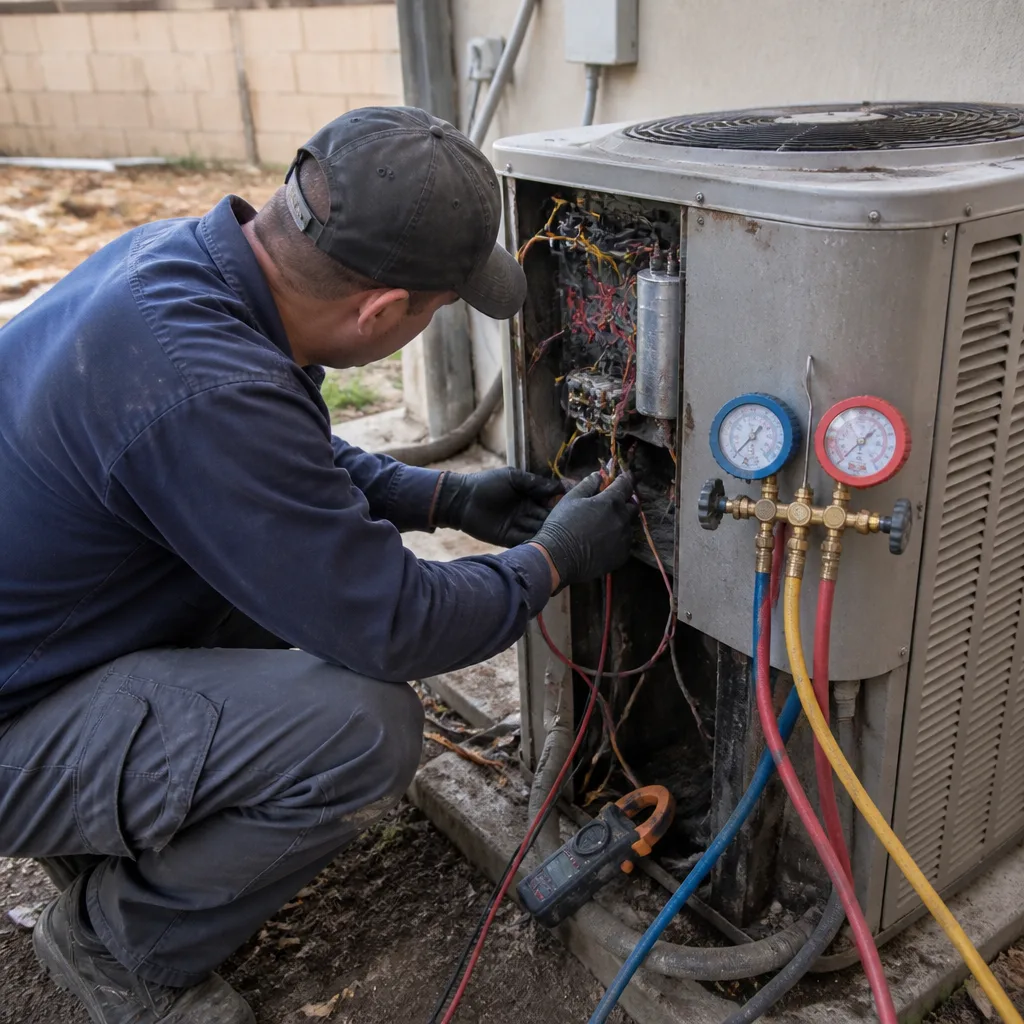
 Before
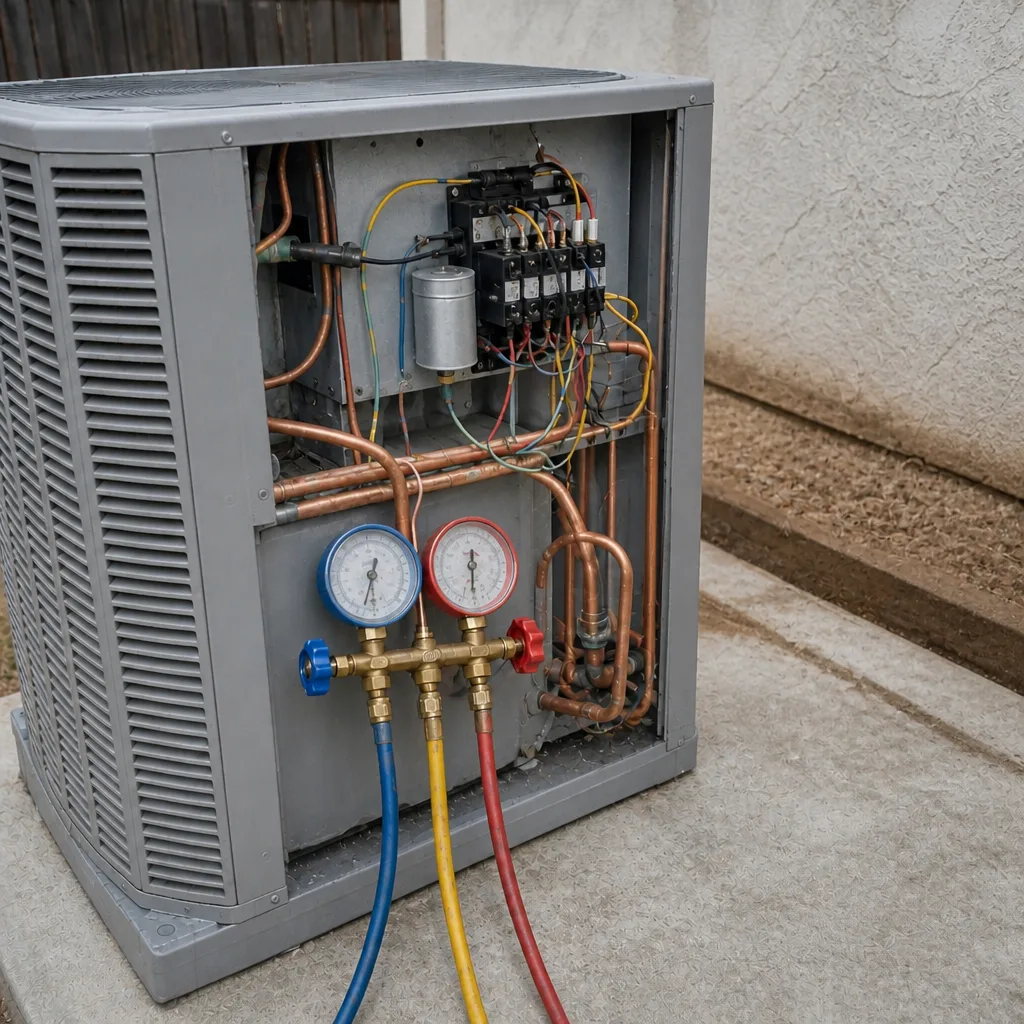 After
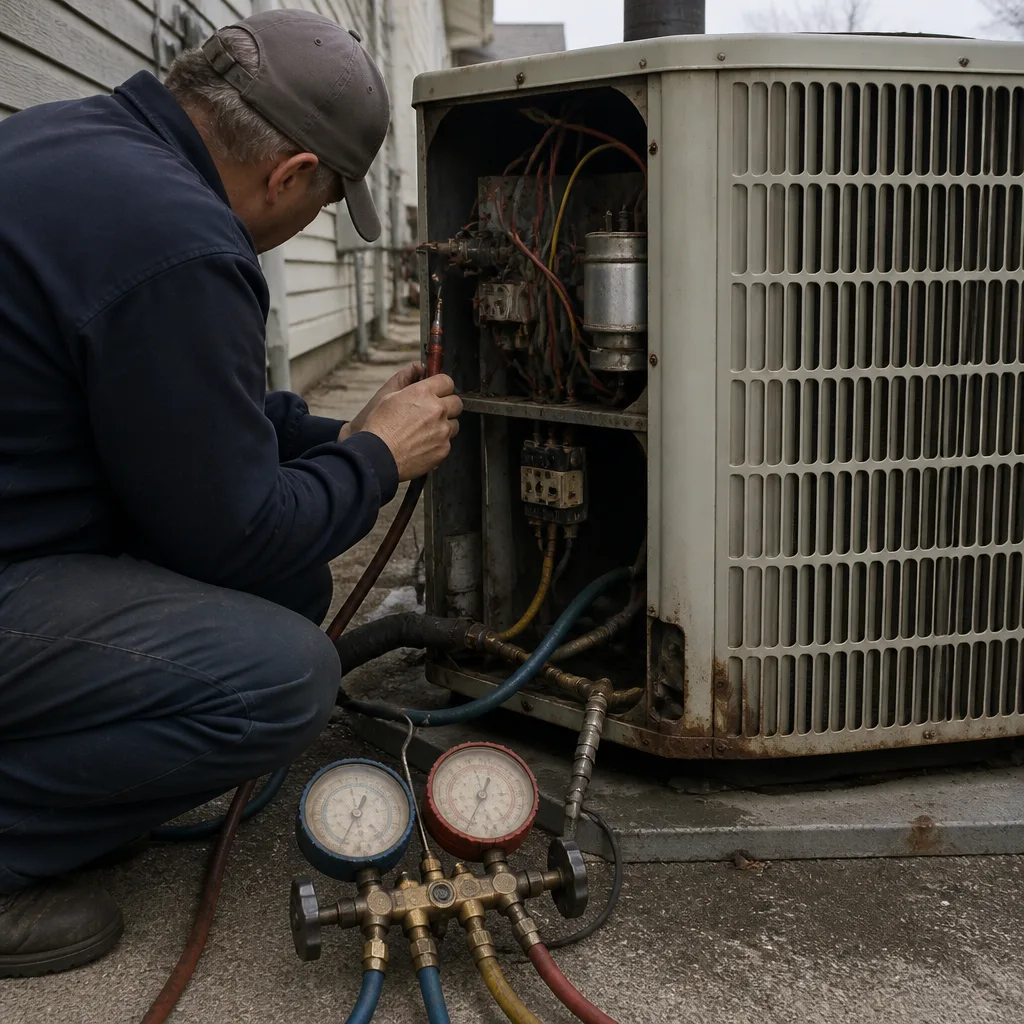
 Before
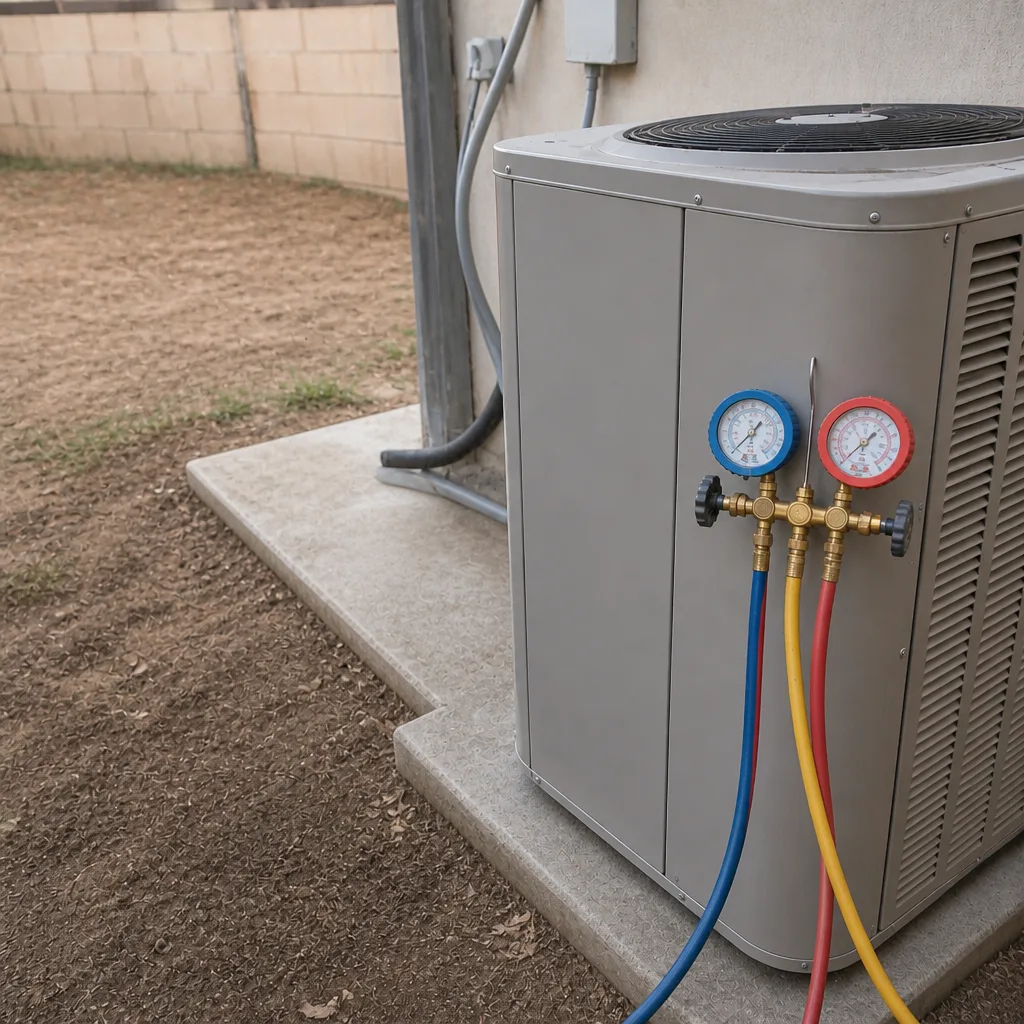 After
 Before
 After
When to Call a Professional
Call for a professional visit when you see: water in a drain pan or dripping from a ceiling below a rooftop unit, a belt with visible cracks or fraying, a compressor that sounds like it’s straining on start-up, a capacitor reading below rating, any refrigerant-related symptom, a carbon monoxide alarm, or a burning smell at the unit. Call for emergency service if the building loses cooling on a hot day with customers inside, or if you see smoke or smell gas. Those aren’t “schedule next week” items. Ray’s Heating & Air Paradise offers free estimates in Paradise – call (855) 664-5714. No trip charge inside the county, and a live person answers every call, any hour.
For a broader look at how we handle each type of system, our Ray’s Heating & Air Paradise home page covers the full range of residential and commercial work we take on. We service all major brands including Carrier, Trane, Lennox, Goodman, Rheem, York, Daikin, Bryant, and American Standard, so whatever is on your roof, we’ve worked on it.
Frequently Asked Questions
Quarterly for most commercial rooftops, with monthly filter changes during July and August when the load is highest. Small businesses with restaurants, retail, or medical space benefit from a fifth visit in late May to catch coil and belt issues right before peak season. Heat pump equipment follows the same quarterly schedule with an extra defrost cycle check in late fall.
It should include a stated number of technician hours per visit, a defined list of tasks per unit, documented readings per unit, and a named technician assigned to the property. If the contract doesn’t include hours and readings, it’s a filter change with a signature. Ask to see a sample readings sheet before you sign anything.
Monthly walkthroughs and filter changes, yes. Anything involving refrigerant, gas, or opening the electrical panel of the unit, no – those are licensed work. Coil cleaning, belt tension adjustment, and bearing lubrication also need a trained tech because they require panel removal and, on some equipment, energized-component safety procedure. The walkthrough checklist we covered above is the safe line.
Because the log records that a visit happened, not what the tech actually did. In our experience the July failures come from a coil that was “cleaned” without a panel pull, a belt that was checked from the outside, or a drain pan that was never opened. The fix is asking for readings, not initials.
No overtime charge for emergency calls, and no trip charge for scheduled calls inside the county. Phones are answered live around the clock, including by Ray himself. Call (855) 664-5714 and a person answers immediately.
All major commercial brands, including Carrier, Trane, Lennox, Goodman, Rheem, York, Daikin, Bryant, and American Standard. If you’ve got a rooftop unit that’s more than 15 years old and no longer made, we can usually still source parts or recommend a replacement path that fits your operational timing.
The Bottom Line
A commercial HVAC maintenance schedule is only as good as the verification behind it. The four quarterly visits are the frame; the readings are the proof. Coil cleaning before June in Paradise is not optional – it’s what gets you through August. Belt, bearing, and drain pan checks are the three that get skipped because they need disassembly, and they’re the three that cost the most when they fail. And if your current contract can’t tell you the hours per unit, ask. If they can’t answer, we’ll help you figure out what’s actually being done – free second opinion, no trip charge inside the county, live answer any hour. Call (855) 664-5714.
Written by the team at Ray’s Heating & Air Paradise.